Understanding the Parts of an Earring: A Beginner's Anatomy Guide
Learn the essential parts of an earring, from posts and backs to bezels and prongs. Our beginner-friendly anatomy guide helps you shop smarter.

Why Earring Anatomy Matters
Whether you are shopping for your first pair of diamond studs, upgrading your cartilage stack, or simply trying to figure out why your current earrings cause irritation, understanding the parts of an earring is essential. Jewelry is not just about the decorative front; the engineering of the post, the security of the backing, and the metallurgy of the components all dictate how the piece wears, feels, and heals.
For beginners, the terminology can feel like a foreign language. What is the difference between a friction back and a La Pousette? Why do professional piercers insist on internally threaded posts? This comprehensive, beginner-friendly explainer breaks down the exact anatomy of earrings, equipping you with the knowledge to make safe, comfortable, and high-quality purchasing decisions.
The Front: Decorative Elements and Settings
The front of the earring, often called the "head" or "motif," is the visual focal point. However, how the gemstone or metal design is held together drastically impacts its longevity and security.
Prong and Bezel Settings
According to the Gemological Institute of America (GIA), the setting type determines both the security of the stone and the amount of light that enters it.
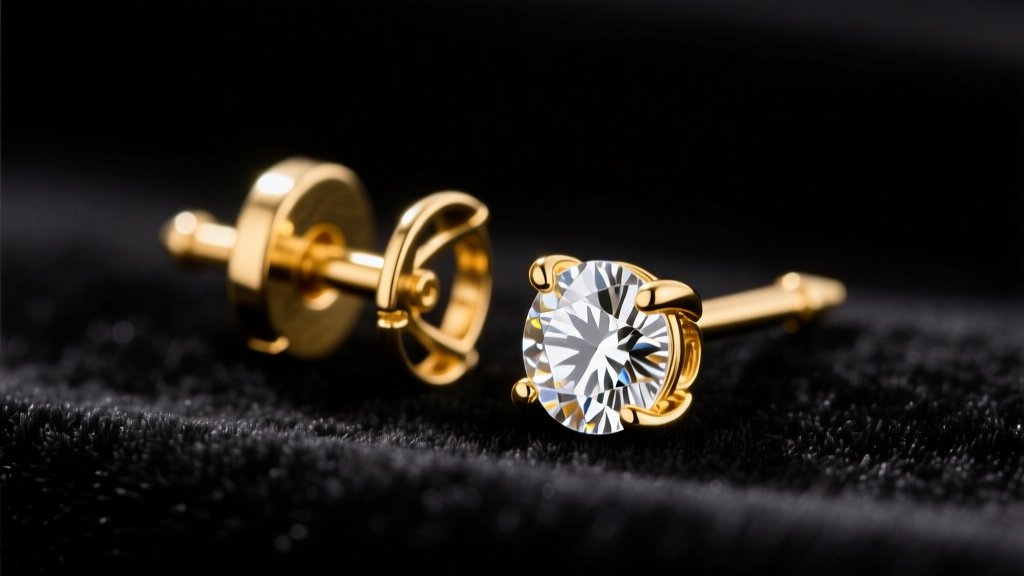
- Prong Settings: Metal claws (usually four or six) grip the gemstone. This allows maximum light exposure, making diamonds and cubic zirconia sparkle brilliantly. However, prongs can snag on hair or clothing if they are not properly filed and polished.
- Bezel Settings: A continuous metal rim surrounds the gemstone. Bezels offer superior protection for the stone's girdle and are highly recommended for active lifestyles or helix piercings where snagging is a risk.
- Tension Settings: The metal's natural spring-like tension holds the stone in place. While modern and sleek, these require precise engineering and high-quality metals like platinum or 18k gold to maintain structural integrity over time.
The Gallery and Basket
Look closely at a high-quality stud earring, and you will see a metal framework beneath the stone. This is the gallery or basket. A well-crafted gallery reduces the overall weight of the earring, preventing the front from drooping on the earlobe, while allowing light to enter the pavilion (bottom) of the gemstone.
The Post and Wire: Connecting the Elements
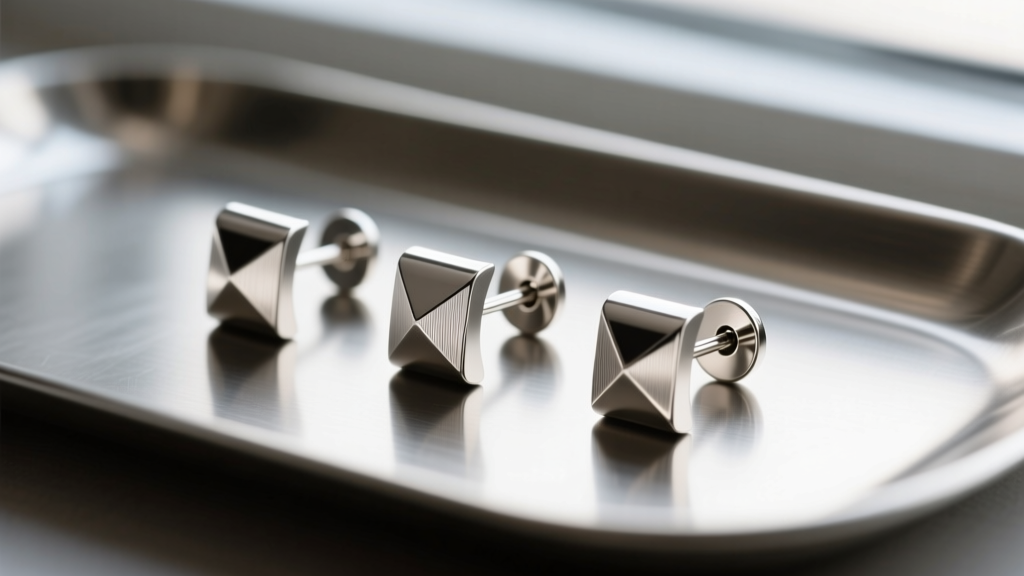
The post or wire is the structural bridge that passes through your piercing fistula (the tunnel of healed skin). The thickness, threading, and material of this component are critical for comfort and tissue health.
Understanding Wire Gauges
Earring thickness is measured in gauges (G). Counterintuitively, the higher the gauge number, the thinner the wire. Wearing a post that is too thin for your piercing can cause the "cheese-cutter effect," where the jewelry slowly migrates and slices through the tissue.
| Gauge (G) | Millimeter (mm) | Common Applications |
|---|---|---|
| 22G | 0.64mm | Very fine vintage jewelry (not recommended for fresh piercings) |
| 20G | 0.81mm | Standard earlobe studs, lightweight fashion earrings |
| 18G | 1.02mm | Standard cartilage, nose studs, sturdy earlobe hoops |
| 16G | 1.29mm | Professional cartilage piercings, daith, rook, tragus |
| 14G | 1.60mm | Conch, industrial barbells, snug piercings |
Threading Mechanics: External vs. Internal vs. Threadless
If you are buying earrings with removable ends, the way the front attaches to the post matters immensely.
- Externally Threaded: The screw pattern is cut into the post itself. As it passes through the piercing, the sharp threads can micro-tear the delicate fistula tissue. The Association of Professional Piercers (APP) strongly advises against externally threaded jewelry for initial piercings or sensitive ears.
- Internally Threaded: The screw pattern is inside the decorative end, and the post is completely smooth. This allows for a seamless, trauma-free insertion.
- Threadless (Push-Pin): A modern favorite, threadless jewelry uses a tiny, bent metal pin on the decorative end that slides into a hollow post. The tension of the bent pin against the inner wall of the post holds it securely in place without any screwing mechanisms.
The Back: Securing Your Jewelry
The earring back is the unsung hero of jewelry anatomy. A heavy gold front paired with a flimsy backing will result in a drooping earring and eventual loss.
Friction Backs (Butterfly Clutches)
The most common backing found in commercial jewelry. A metal or silicone piece with two loops that grip the notched post via friction. While inexpensive and easy to use, they can accumulate dead skin and soap residue, and they frequently loosen over time, leading to lost earrings.
La Pousette and Locking Backs
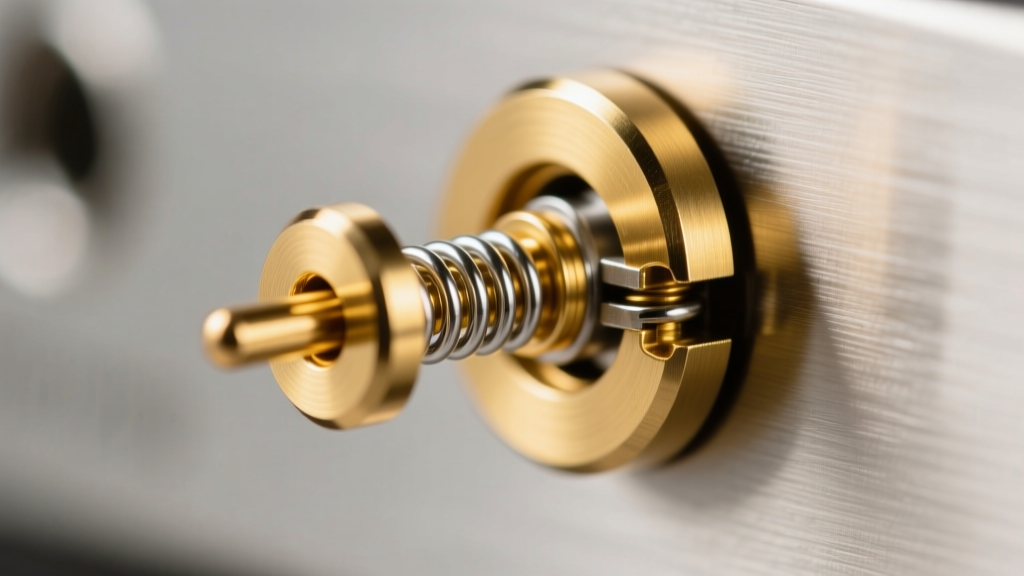
For valuable diamond studs, the La Pousette back is the gold standard. It functions like a tiny mechanical lock. You push the sides to slide it onto the post, and when you release, internal spring-loaded discs lock into the post's groove. It is practically impossible for a La Pousette back to fall off accidentally.
Screw Backs and Flat Discs
Screw backs feature a threaded backing that screws onto an externally or internally threaded post, offering high security. Flat disc backs (commonly used on labret posts for cartilage) sit flush against the back of the ear, eliminating the sharp poke of a traditional post and providing a much more comfortable sleeping experience.
Specialty Components: Hinges, Clickers, and Cuffs
When moving beyond standard studs and into hoops, huggies, and ear cuffs, the anatomy shifts to accommodate movement and specific ear geometries.
Hinges and Snap Closures
Huggies and small hoops often utilize a hinged mechanism. The front half of the hoop swings open, and a curved wire snaps into a hollow catch on the opposite end. High-quality hinged earrings will emit a distinct, satisfying "click" when closed, indicating a secure latch.
Clicker Rings
Popular in septum and daith piercings, clicker rings feature a straight or slightly curved post that clicks securely into a hinged segment. The "clicker" mechanism relies on precise tension and machining; if the metal is too soft, the clicker will eventually warp and fail to close securely.
Ear Cuffs and Tension Bands
Ear cuffs require no piercing at all. They rely on a C-shaped tension band that grips the outer helix or conch ridge of the ear. The anatomy of a good ear cuff includes a slightly adjustable gap and rounded, polished edges to prevent pinching the cartilage.
Material Grades for Sensitive Ears
Knowing the parts of an earring is only half the battle; knowing what those parts are made of is equally crucial. If you experience itching, redness, or flaking, you are likely reacting to nickel or brass alloys hidden in the metal.
"Implant-grade titanium (ASTM F136) and niobium are the most highly recommended materials for initial piercings and individuals with metal sensitivities, as they contain no nickel."
— Association of Professional Piercers (APP) Material Guidelines
When shopping, look for these specific material designations:
- Implant-Grade Titanium (ASTM F136): The absolute best choice for sensitive ears and fresh piercings. It is lightweight, hypoallergenic, and can be anodized to create vibrant colors without using surface dyes.
- 14k or 18k Solid Gold: Ensure it is solid, not gold-plated or gold-filled. Plating wears off over time, exposing the base metal (often brass or nickel) to your skin. Note that rose gold contains copper, which can cause reactions in a small subset of people.
- Niobium: A highly biocompatible, reactive metal similar to titanium, often used for seamless rings and clickers.
- Avoid "Surgical Steel": This is an unregulated marketing term. While 316L stainless steel is common, it still contains trace amounts of nickel that can trigger contact dermatitis in sensitive individuals.
Conclusion
Mastering the anatomy of your jewelry transforms you from a passive buyer into an informed collector. By paying close attention to the parts of an earring—from the security of a bezel setting and the smooth glide of an internally threaded post to the reliable lock of a La Pousette back—you ensure that your jewelry is not only beautiful but also safe, comfortable, and built to last a lifetime. Next time you shop, look past the sparkle and examine the engineering.


