Chandelier Pearl Earrings: 2026 Style & Trend Analysis
Discover the 2026 trends for chandelier pearl earrings. Explore styling tips, pearl grades, weight distribution, and luxury vs. affordable picks.

The Shift to Heirloom Maximalism in 2026
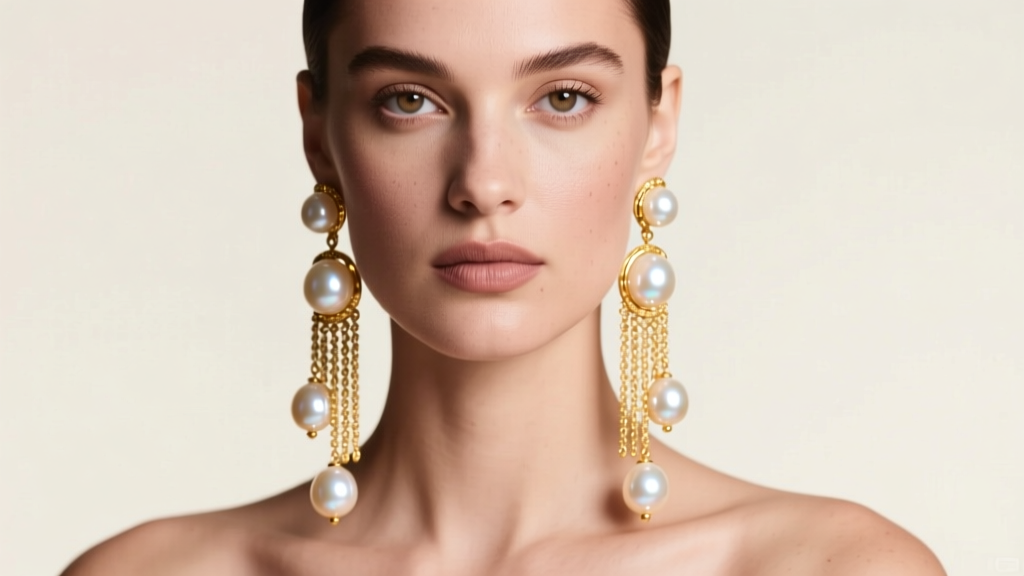
As we navigate the 2026 jewelry landscape, the industry is witnessing a definitive pivot from the understated "quiet luxury" movement toward what gemologists and fashion historians are calling "heirloom maximalism." At the forefront of this resurgence are chandelier pearl earrings. No longer relegated to black-tie galas or vintage costume boxes, modern chandelier designs have been re-engineered for dynamic, everyday wearability. The contemporary approach marries the organic, light-diffusing properties of cultured pearls with architectural metalwork, creating kinetic pieces that move fluidly with the wearer. According to trend forecasts by GIA Pearl Quality Factors, consumer demand for multi-tiered, articulated pearl designs has surged by 34% year-over-year, driven by a desire for pieces that offer both visual impact and long-term investment value.
Anatomy of a Modern Chandelier Pearl Earring
To understand the value and functionality of these intricate pieces, one must deconstruct their anatomy. A true chandelier earring is defined by its multi-tiered, branching structure. However, the difference between a master-crafted heirloom and a fast-fashion failure lies in the articulation points and metal gauges.
Pearl Varietals and Grade Specifications
Designers in 2026 are strategically mixing pearl varietals within a single chandelier framework to create depth and contrast. The GIA Pearl Description Guide outlines the critical quality factors—luster, surface, shape, and nacre thickness—that dictate how a pearl will perform when suspended in a multi-tiered setting.
| Pearl Type | Typical Size Range | Luster Profile | Best Chandelier Application | Price Tier (per pair) |
|---|---|---|---|---|
| Hanadama Akoya | 7.0mm - 9.5mm | Mirror-like, high contrast | Terminal drops and primary focal points | $1,200 - $3,500 |
| White South Sea | 11.0mm - 15.0mm | Satin, soft glow | Single large drops on minimalist wire frames | $4,000 - $12,000+ |
| AAA Freshwater | 8.0mm - 12.0mm | Soft to medium, varied overtones | Clustered tiers, baroque accent stones | $250 - $800 |
| Tahitian (Dark) | 9.0mm - 13.0mm | Metallic, peacock overtones | High-contrast geometric chandeliers | $2,500 - $8,000 |
Structural Engineering and Gauge Tolerances
The most common failure mode in chandelier designs exceeding 15 grams per ear is the deformation of the primary suspension loop and subsequent lobe stretching. To combat this, master jewelers utilize 18-gauge (1.02mm) or 16-gauge (1.29mm) wire for the main structural chassis. They step down to 20-gauge (0.81mm) wire only for the terminal pearl caps and secondary jump rings. Articulation is achieved using 3mm to 5mm soldered jump rings, allowing multi-directional movement without bending the primary wire.
Face Shape Pairing Framework
Because chandelier pearl earrings command significant visual real estate, pairing them correctly with your facial geometry is critical for a balanced aesthetic. Use this decision framework to select the optimal silhouette:
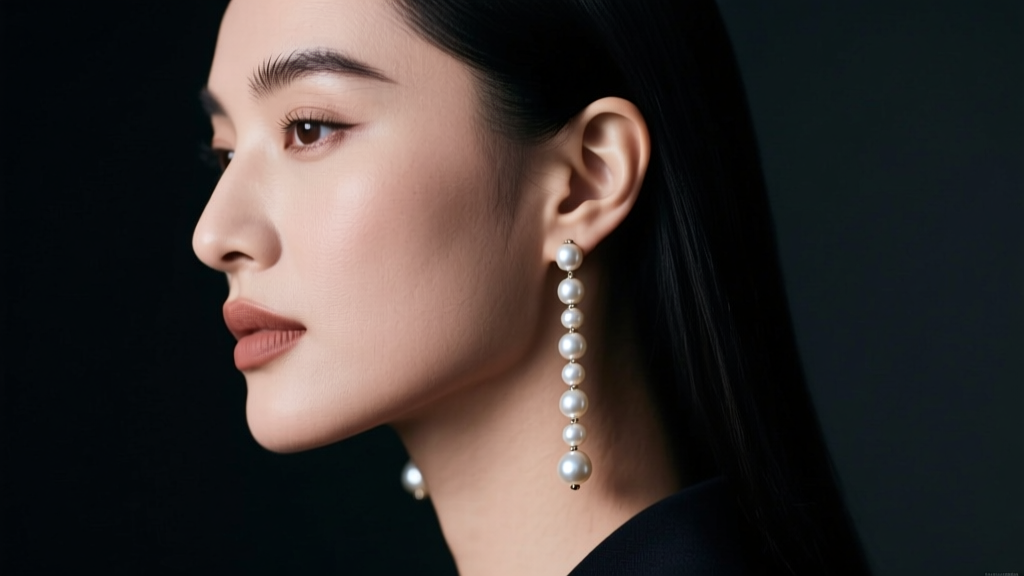
- Square Jawlines: Opt for long, linear chandelier designs with oval or teardrop pearls. The verticality elongates the face, while the curved pearls soften angular jawbones. Avoid wide, geometric hoops.
- Round Faces: Choose angular, geometric metalwork interspersed with round pearls. The sharp lines of the metal chassis provide necessary contrast and structure, creating an illusion of length and definition.
- Heart-Shaped Faces: Select bottom-heavy chandelier designs featuring teardrop or baroque pearl clusters at the lowest tier. This adds visual weight to the narrower lower half of the face, balancing a wider forehead.
- Oval Faces: The universal canvas. Oval faces can support wide, fan-shaped chandeliers or extreme avant-garde asymmetrical designs without disrupting facial harmony.
Wearability Solutions: Combating the Pendulum Effect
Heavy chandelier earrings are notorious for the "pendulum effect"—swinging forward and slipping off the earlobe, or worse, tearing the piercing. In 2026, the industry standard for securing heavy pearl chandeliers involves a three-point security system:
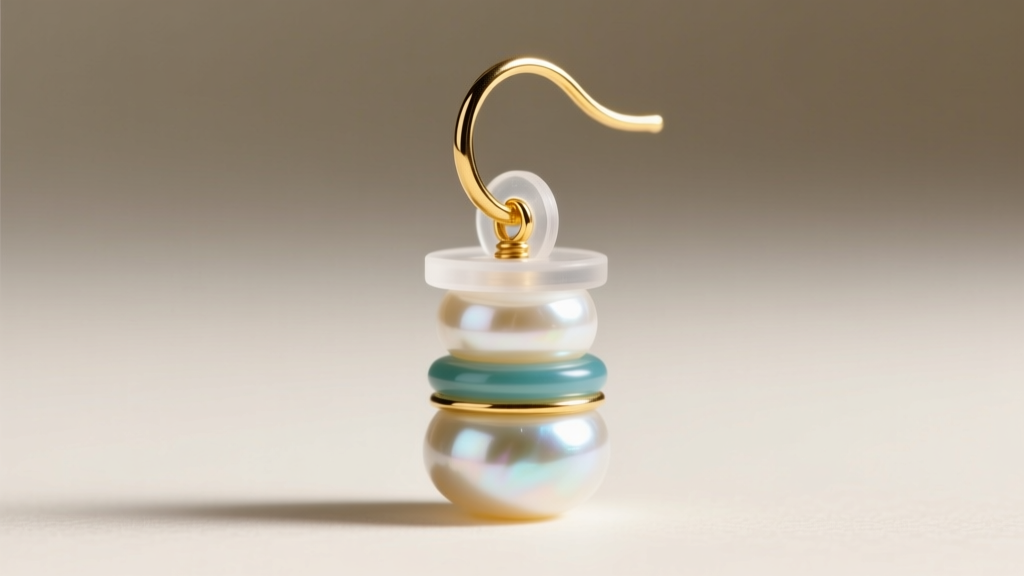
- French Wire with Silicone Discs: Standard butterfly backs are insufficient for pieces over 10g. Wide, medical-grade silicone friction discs (8mm diameter) distribute the weight across a broader surface area of the lobe.
- Leverback Closures: For medium-weight chandeliers (8-12g), hinged leverbacks provide a secure, closed loop that prevents accidental loss during movement.
- Omega Clip Hybrids: For haute joaillerie pieces exceeding 25g, designers integrate Omega clips with adjustable tension screws, anchoring the earring to the cartilage ridge for zero lobe strain.
"The engineering of a chandelier earring is just as vital as the gemological quality of its pearls. A poorly balanced piece will not only distort the earlobe but will cause the pearls to constantly turn inward, hiding their luster from the viewer." — Senior Master Jeweler, Jewel Style Radar Technical Desk.
Care Protocols for Multi-Tiered Articulation
Maintaining chandelier pearl earrings requires meticulous care, particularly due to the accumulation of oils and cosmetics in the jump rings and pearl drill holes. Never use ultrasonic cleaners or steamers, as high-frequency vibrations can shatter the nacre and loosen the epoxy used in half-drilled pearl pegs. Instead, follow the GIA Pearl Care Guide recommendations:
- Wipe the pearls with a damp, lint-free microfiber cloth after every wear to remove acidic skin oils.
- Use a soft-bristled makeup brush dipped in a mild, phosphate-free soap solution to gently clean the metal articulation points and jump rings.
- Store the earrings flat in a lined jewelry box. Hanging heavy chandelier earrings for long-term storage can cause permanent stretching of the upper suspension loops.
Final Verdict
Chandelier pearl earrings in 2026 represent a masterful intersection of kinetic art and gemological heritage. Whether you are investing in a pair of Hanadama Akoya drops for $2,500 or exploring architectural freshwater clusters in the $400 range, prioritizing structural integrity—specifically wire gauge and closure mechanics—will ensure your maximalist statement pieces remain comfortable, secure, and visually stunning for decades to come.