Expert Guide: Cleaning & Caring for Textured Hoop Earrings
Learn expert techniques to clean textured hoop earrings. Discover safe solutions, tools, and material-specific care to restore shine and prevent buildup.

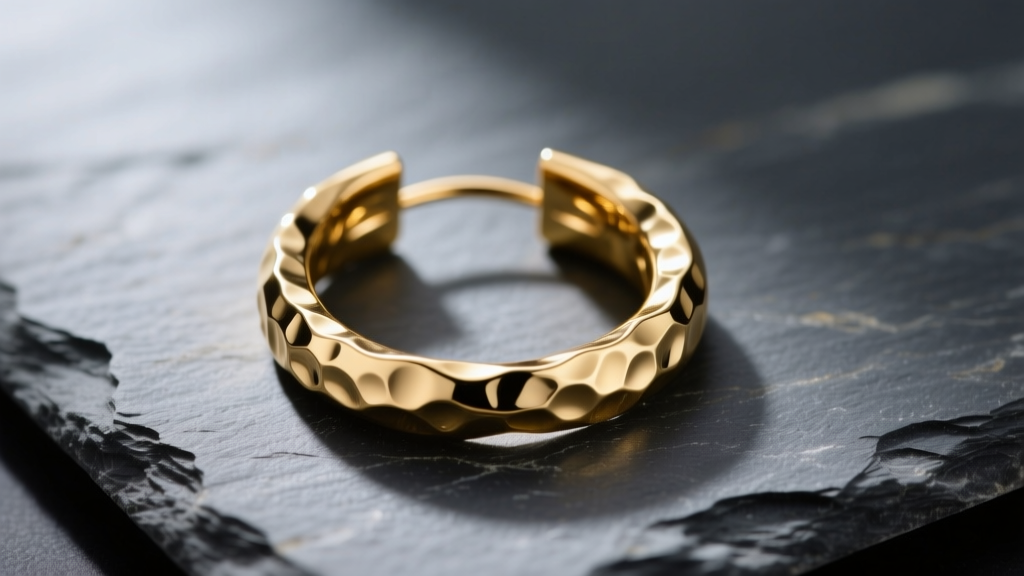
Textured hoop earrings—featuring hammered, twisted, rope, sandblasted, or bark finishes—are statement pieces that add incredible depth and light-play to any jewelry collection. However, the very crevices and ridges that give these earrings their unique character also make them notorious traps for sebum (skin oils), dead skin cells, cosmetic residues, and environmental dust. Because textured surfaces can increase the total surface area of the metal by up to 40%, they require a highly specific approach to maintenance. Standard quick-wipe methods simply push debris deeper into the grooves, leading to dullness and potential skin irritation.
The Unique Challenge of Textured Metal Surfaces
To understand how to properly care for textured hoop earrings, you must first understand the chemistry of the buildup. Human sebum has a melting point of approximately 30°C (86°F). At room temperature, these oils remain semi-solid, acting like a microscopic adhesive inside the hammered divots or twisted rope grooves of your hoops. When combined with the silica found in makeup powders or the aerosolized polymers from hairspray, this mixture hardens into a stubborn, waxy film that resists simple wiping. Furthermore, aggressive cleaning methods that work for smooth, high-polish metals can permanently alter or flatten delicate textures. Protecting the integrity of the texture while extracting deep-seated debris requires a strategic, multi-step protocol.
Material-Specific Cleaning Protocols
Not all textured hoop earrings are created equal. A hammered solid 18k gold hoop requires a vastly different approach than an oxidized sterling silver bark-texture hoop. Using the wrong chemical agent can strip intentional patinas or dissolve delicate plating layers.
| Metal / Finish | Safe Cleaning Agents | Strictly Avoid |
|---|---|---|
| Solid Gold (14k/18k) & Platinum | Mild pH-neutral dish soap, warm water, isopropyl alcohol (for spot cleaning) | Chlorine bleach, abrasive polishing pastes |
| Gold Vermeil & Plated | Lukewarm water, baby shampoo, microfiber cloth | Ultrasonic cleaners, silver dips, hard rubbing |
| Oxidized / Antiqued Silver | Distilled water, mild soap (applied only to high-polish accents) | Silver dip (thiourea), baking soda pastes, ultrasonic |
| Raw Brass & Copper | Lemon juice & salt (for intentional brightening), mild soap | Ammonia-based cleaners (can cause stress corrosion cracking) |
Handling Oxidized and Sandblasted Finishes
If your textured hoop earrings feature an intentional dark oxidation in the grooves to create contrast, you must never use commercial silver dips. These thiourea-based chemicals will strip the dark patina in seconds, leaving you with a flat, unnaturally bright earring. Similarly, sandblasted textures are highly porous; avoid thick polishing creams that will dry into a white, chalky residue inside the microscopic pores, which is nearly impossible to extract.
Step-by-Step Deep Cleaning Routine
For standard solid gold, platinum, or sterling silver textured hoops (without intentional oxidation or delicate gemstone settings), follow this professional-grade deep cleaning routine to restore their original luster without damaging the metalwork.
Step 1: The Degreasing Soak
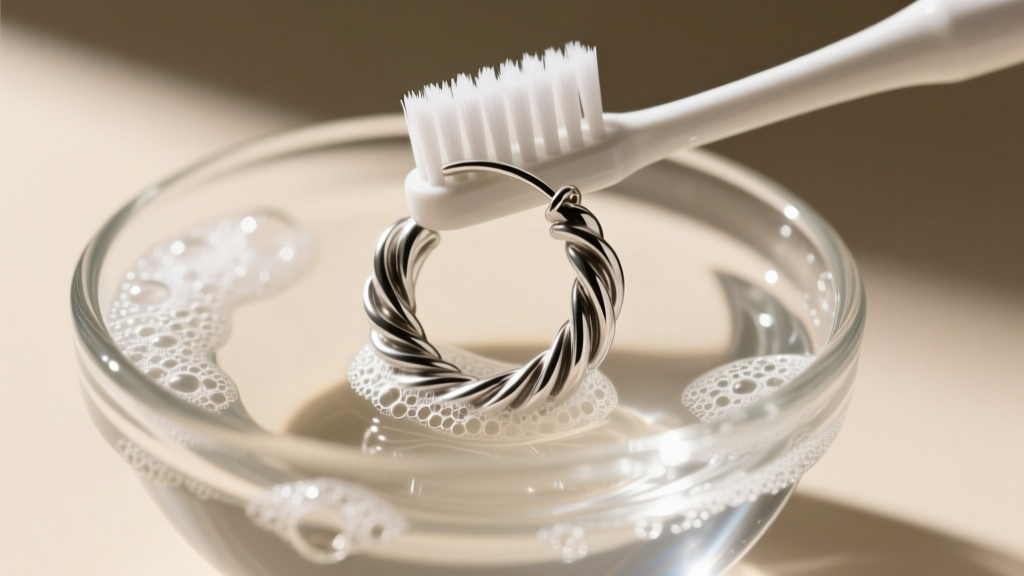
Fill a small glass bowl with lukewarm water (never hot, as extreme heat can warp thin gauge wires) and add three drops of a pH-neutral, degreasing dish soap like Dawn. Submerge the earrings for exactly 3 to 5 minutes. This allows the surfactants to break down the surface tension of the hardened sebum trapped in the crevices. Do not exceed 5 minutes, especially if your hoops have any soldered joints or tension settings.
Step 2: Precision Agitation
Remove the earrings from the soak and use an extra-soft baby toothbrush. The bristles on a standard adult toothbrush are typically 0.2mm or thicker, which is too stiff and can act as an abrasive on high-karat gold. A baby toothbrush features ultra-fine 0.1mm bristles capable of reaching into micro-grooves. Scrub using small, circular motions rather than linear back-and-forth strokes. Linear scrubbing can inadvertently polish down the sharp ridges of a hammered or diamond-cut texture over time, softening the design.
Step 3: The Distilled Rinse
Rinse the earrings thoroughly under a gentle stream of distilled water. Tap water contains dissolved calcium and magnesium salts. When tap water evaporates inside the deep grooves of a textured hoop, it leaves behind microscopic hard water spots that cause a cloudy, dull appearance. Distilled water ensures a completely mineral-free rinse.
Step 4: Advanced Drying Techniques
Never use tissue paper or cotton swabs to dry textured jewelry; they will shed micro-lint that becomes hopelessly tangled in the textures. Instead, use a can of compressed air. Hold the can at a 45-degree angle and spray from a distance of 6 inches. Holding the can upright and too close risks spraying liquid propellant, which can instantly freeze and potentially stress-crack delicate metalwork or shatter any inset gemstones.
What to Avoid: Common Mistakes That Ruin Textures
According to the Gemological Institute of America (GIA), improper cleaning techniques cause more damage to jewelry than daily wear. When dealing with textured hoop earrings, avoid these critical errors:
- Ultrasonic Cleaners: While 40kHz ultrasonic cavitation is excellent for dislodging dirt from smooth diamond settings, the microscopic shockwaves can literally chip, pit, or smooth out soft metal textures like high-karat gold or delicate electroformed finishes. It will also instantly strip oxidized patinas.
- Toothpaste: Toothpaste contains silica and baking soda with a high Relative Dentin Abrasivity (RDA). Using it on textured metal acts like liquid sandpaper, permanently dulling the sharp facets of hammered or twisted designs.
- Steam Cleaners: High-pressure steam can force moisture into the microscopic pores of sandblasted or bark-textured metals, leading to hidden corrosion or verdigris (green tarnish) in brass and copper alloys over time.
Daily Maintenance & Storage Strategies
Preventing buildup is always easier than deep cleaning. To maintain the intricate details of your textured hoop earrings between deep cleans, adopt a proactive storage and maintenance routine.
After every wear, gently wipe the earrings with a clean, dry microfiber cloth to remove the day's accumulation of skin oils and environmental pollutants before they have a chance to harden. For storage, never toss textured hoops loosely into a communal jewelry box where they can scratch against other pieces, flattening their raised ridges.
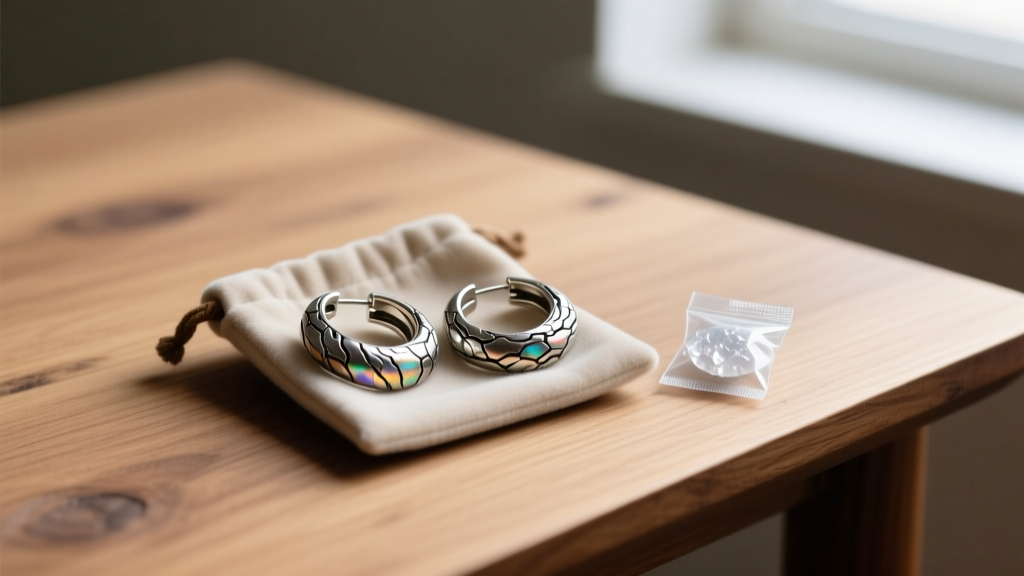
Store each pair individually in an anti-tarnish flannel pouch, such as Pacific Silvercloth, which is embedded with microscopic silver particles that absorb corrosive gases before they reach your earrings. Include a small silica gel desiccant packet in your storage drawer or box to keep the ambient relative humidity below 40%, drastically slowing the oxidation process for silver and copper-alloy hoops. By combining mindful daily habits with the correct deep-cleaning chemistry, your textured hoop earrings will retain their dimensional brilliance and structural integrity for decades.
For further insights into metal properties and professional jewelry maintenance, Rio Grande jewelry supply experts offer extensive technical guides on how different alloys react to environmental stressors, reinforcing the importance of matching your cleaning method to your specific metal grade.


