Checkered Earrings Buying Guide: Styles, Materials & Fit
Discover what to look for when buying checkered earrings in 2026. Compare enamel vs. inlay, gauge sizes, base metals, and craftsmanship red flags.

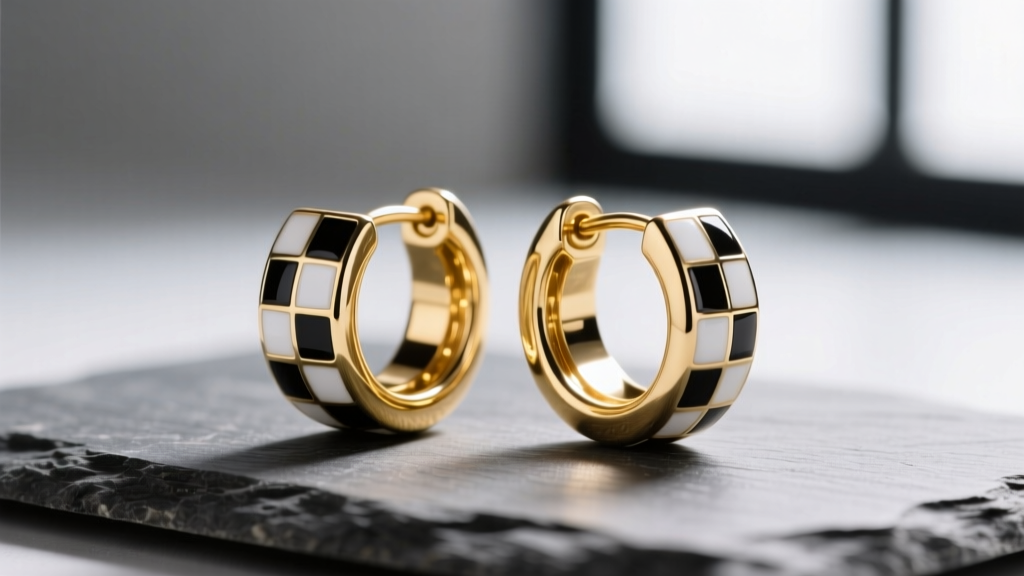
The checkerboard motif has evolved far beyond its nostalgic streetwear and ska-punk roots to become a defining staple of contemporary fine jewelry. In 2026, checkered earrings are dominating the market, offering a perfect balance of retro nostalgia and modern geometric elegance. However, the surge in popularity has also flooded the market with mass-produced, low-quality pieces that tarnish, chip, and irritate sensitive skin.
Whether you are looking for bold checkered drop earrings, subtle enamel studs, or intricate gemstone inlay huggies, understanding the material science and structural anatomy of these pieces is critical. This comprehensive buying guide breaks down exactly what to look for, from base metal grades and gauge sizing to the crucial differences between cold enamel and vitreous glass.
The Anatomy of High-Quality Checkered Earrings
The longevity of any patterned earring relies entirely on its foundation. The base metal dictates not only the piece's durability but also its biocompatibility with your skin.
Base Metals: What to Demand
- 925 Sterling Silver: The industry standard for mid-tier fine jewelry. It must be stamped "925". Ensure it is nickel-free, as some cheap alloys use nickel as a hardener, which causes contact dermatitis.
- Solid 14k or 18k Gold: The premium choice. 14k gold offers superior scratch resistance for daily-wear checkered hoops, while 18k provides a richer, warmer yellow hue that contrasts beautifully with black onyx or dark enamel.
- Gold Vermeil vs. Gold Plated: Never settle for standard "gold plated" brass. According to the Jewelers of America, true gold vermeil must feature a sterling silver base coated with a minimum of 2.5 microns of 10k gold or higher. Anything less will wear off within months, exposing the reactive base metal beneath.
The Checkered Pattern: Enamel vs. Stone Inlay
The method used to create the checkered grid drastically impacts the price, weight, and care requirements of the earrings. Manufacturers typically use one of three techniques:
| Material / Technique | Process | Durability | 2026 Price Range | Best For |
|---|---|---|---|---|
| Cold Enamel (Epoxy Resin) | Poured resin cured at room temperature. | Low. Prone to yellowing, scratching, and peeling. | $30 - $85 | Trend-driven, seasonal wear. |
| Vitreous Enamel | Crushed glass fired at 1,400°F+ to fuse with metal. | High. Glass-like finish, UV resistant, won't yellow. | $120 - $450 | Heirloom quality, daily wear studs and huggies. |
| Stone Inlay (Onyx/MOP) | Hand-cut onyx and mother-of-pearl set into metal bezels. | Very High. Requires precise prong/bezel work. | $250 - $900+ | Luxury statement pieces, formal drop earrings. |
Sizing, Gauge, and Placement Guide
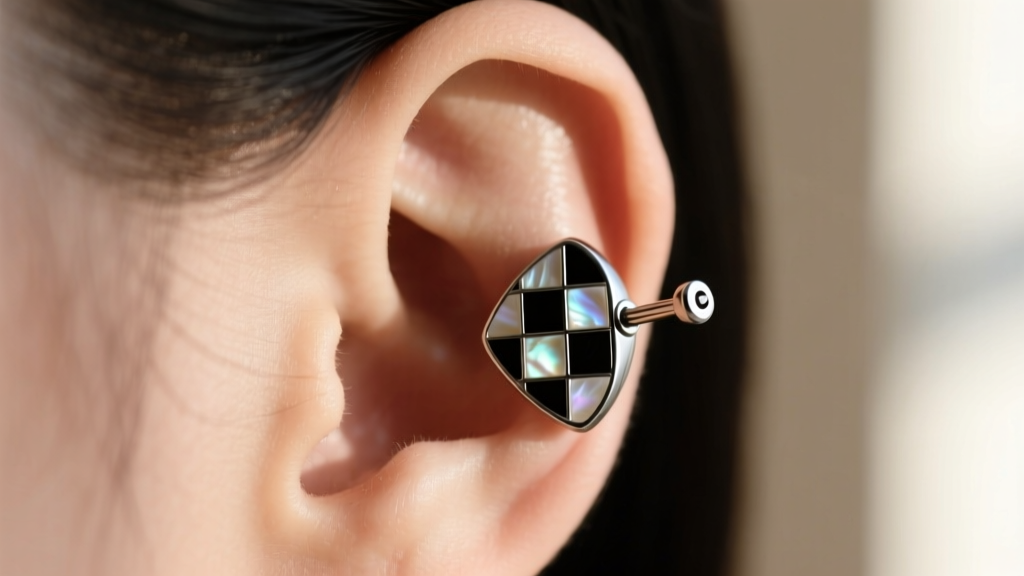
A common failure point when buying checkered earrings online is ignoring gauge thickness and inner diameters, particularly for cartilage placements. A standard lobe huggie will not fit a helix piercing, and a thick post will tear a delicate lobe.
Gauge Standards
- 20G (0.8mm) & 18G (1.0mm): The standard for traditional earlobe piercings. Most checkered dangles and drop earrings utilize 18G wires for structural integrity.
- 16G (1.2mm) & 14G (1.6mm): The standard for cartilage (helix, tragus, conch). If you are buying checkered flat-back studs or cartilage huggies, you must verify the post is 16G. Forcing a 14G post into a 16G piercing will cause micro-tears and scar tissue buildup.
Huggie Inner Diameters (ID)
If you are purchasing checkered huggie hoops, the Inner Diameter (ID) is more critical than the outer width. For a standard earlobe, look for an ID of 10mm to 12mm. For upper cartilage (helix) or tragus placements, you need a snugger fit with an ID of 8mm to 9mm to prevent the earring from catching on hair and clothing.
How to Spot Poor Craftsmanship (Red Flags)
When evaluating checkered earrings, the grid pattern itself acts as a magnifying glass for the jeweler's skill. Because the human eye is highly attuned to geometric symmetry, flaws in checkered designs are immediately obvious. Watch out for these critical red flags:
- Bleeding Intersections: In both enamel and resin pieces, the lines separating the squares must be razor-sharp. If the black color bleeds into the white (or gold), it indicates poor masking during the manufacturing process.
- Uneven Grid Proportions: True checkerboard patterns require perfect 1:1 square ratios. Mass-produced stamped pieces often result in elongated rectangles near the curves of a hoop earring. High-end jewelers will taper the grid or use laser-cut inlays to maintain visual symmetry.
- Friction Backs on Heavy Drops: If you are buying heavy checkered drop earrings made with stone inlay, standard butterfly friction backs are a liability. The weight of the onyx will cause the earring to droop, stretching the piercing. Always look for secure screw-backs, lever-backs, or omega clasps for heavy statement pieces.
Styling Checkered Earrings for Your Face Shape
The high-contrast nature of checkered earrings draws immediate attention to the sides of the face. Leveraging the geometry of the earring can help balance your natural features.
Round and Oval Faces
For round faces, avoid large, circular checkered hoops which can exaggerate facial width. Instead, opt for angular checkered drop earrings or rectangular dangles. The vertical lines elongate the face and draw the eye downward. Oval faces possess natural balance and can effortlessly pull off oversized checkered geometric studs or wide huggies.
Square and Heart Faces
Square jawlines benefit from softened edges. Look for checkered enamel hoops or huggies with rounded edges. The continuous curve of the hoop softens angular features. For heart-shaped faces (wider forehead, narrow chin), teardrop-shaped checkered earrings or chandeliers that add visual weight to the lower half of the face are highly recommended.
Care and Maintenance Protocols
Maintaining the pristine contrast of a checkered pattern requires specific care routines, particularly when dealing with porous materials or fired glass.
Cleaning Enamel vs. Stone Inlay
Never use ultrasonic jewelry cleaners or harsh chemical dips on checkered earrings. The Gemological Institute of America (GIA) explicitly warns that ultrasonic vibrations can fracture natural stone inlays like onyx, mother-of-pearl, or malachite, and can cause cold enamel to crack or detach from the metal base.
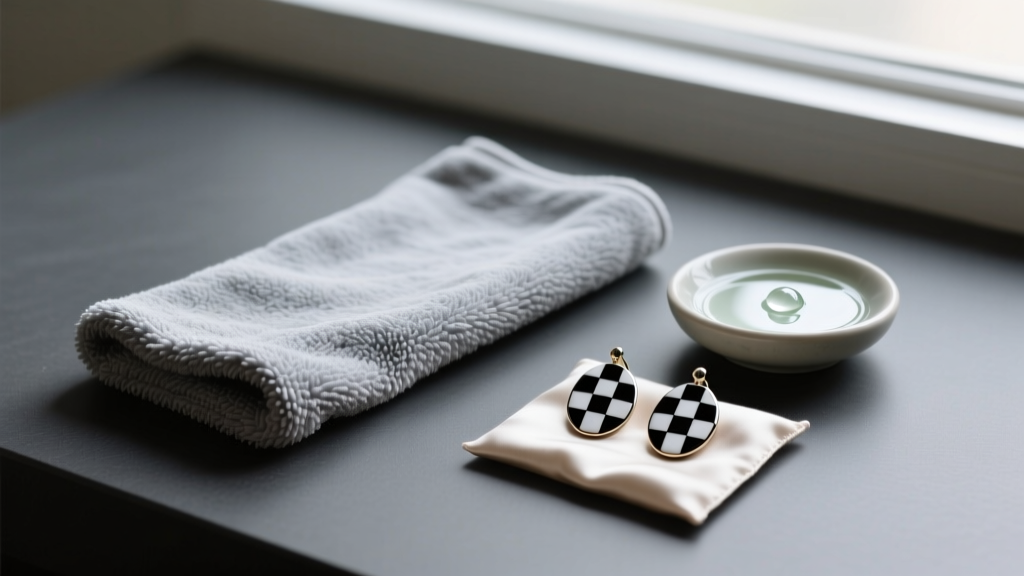
- For Vitreous Enamel: Clean with a soft microfiber cloth and a mild, pH-neutral dish soap diluted in warm water. Dry immediately to prevent water spots on the glass finish.
- For Stone Inlay: Use a dry, soft-bristled makeup brush to gently sweep dust out of the metal bezels separating the checkered squares. Avoid soaking mother-of-pearl in water, as it can degrade the natural nacre over time.
- Storage: Always store checkered earrings in individual anti-tarnish pouches. The high contrast of black and white materials means that even minor silver tarnish on the grid lines will instantly ruin the visual impact of the design.
By prioritizing premium base metals, verifying exact gauge measurements, and understanding the material differences between enamel and inlay, you can invest in checkered earrings that remain vibrant, structurally sound, and effortlessly stylish for years to come.


