Chili Pepper Earrings: The Ultimate Buying Guide & Style Tips
Discover how to buy the perfect chili pepper earrings. Compare materials, gauge sizes, and weights to find durable, stylish statement pieces.

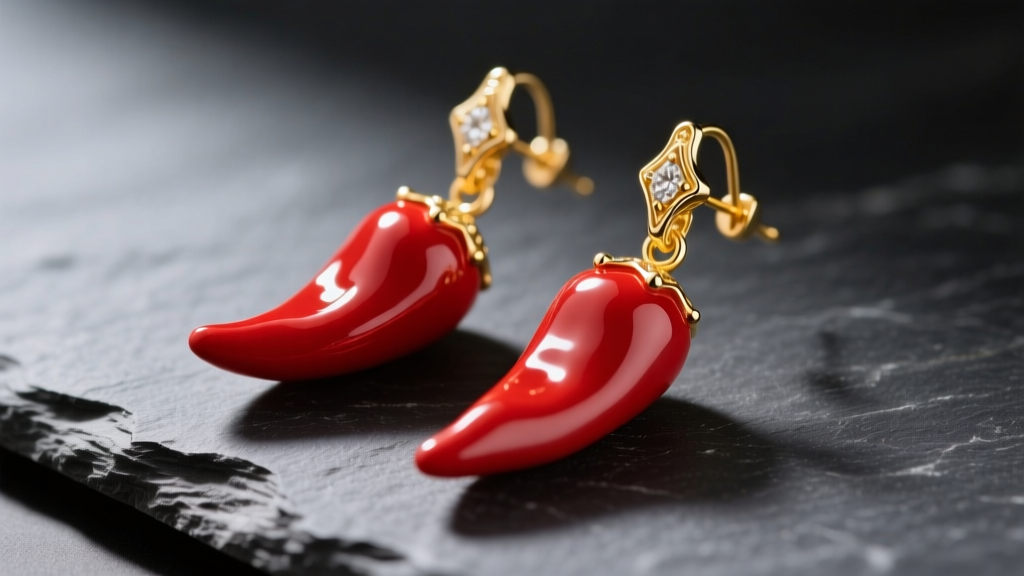
Why Chili Pepper Earrings Are a Staple Statement Piece
As we navigate the bold, personality-driven accessory trends of 2026, chili pepper earrings have cemented their status as more than just a passing novelty. Rooted in cultural symbolism representing protection, passion, and culinary heritage, these fiery motifs offer a vibrant pop of color that instantly elevates a wardrobe. However, the market is flooded with everything from $5 brass-alloy trinkets to $2,000 artisan-crafted gold and vitreous enamel masterpieces. If you are investing in chili pepper earrings, you need to look past the initial aesthetic and evaluate the structural integrity, material safety, and ergonomic design of the piece. This comprehensive buying guide will equip you with the exact specifications, material grades, and sizing metrics required to make an informed purchase.
Decoding Materials: The Science of the Red Hue
The signature 'heat' of a chili pepper earring relies entirely on the red coloration, which is almost exclusively achieved through enameling. Understanding the difference between cold enamel and vitreous enamel is the single most critical factor in determining the longevity and value of your purchase.
Cold Enamel vs. Vitreous Enamel
Cold enamel is actually a pigmented epoxy resin. It is poured into metal cavities and cured at room temperature. While it offers a bright, uniform gloss and is highly resistant to chipping from minor drops, it degrades under UV exposure and harsh chemicals over time. Vitreous enamel, conversely, is finely ground glass fused to a metal base at temperatures exceeding 1,400°F. According to the Gemological Institute of America (GIA), vitreous enamel possesses a depth, luminosity, and scratch resistance that resin simply cannot replicate, though it is brittle and can shatter if dropped on a hard surface.
| Material Combination | Enamel Type | Price Range | Durability & Failure Modes |
|---|---|---|---|
| Brass / Copper Base | Cold Enamel (Resin) | $10 - $35 | Prone to base metal tarnish; resin yellows after 1-2 years of UV exposure. |
| Sterling Silver (925) | Cold Enamel (Resin) | $40 - $90 | Hypoallergenic post; resin remains bright but can peel if exposed to acetone. |
| 14k Solid Gold | Vitreous (Glass) | $300 - $1,200+ | Lifetime durability; glass will shatter upon high-impact drops on tile or stone. |
When shopping, always check the product specifications for the terms 'vitreous', 'guilloché', or 'plique-à-jour'. If the listing simply says 'enamel' on a piece priced under $50, you are purchasing cold resin.
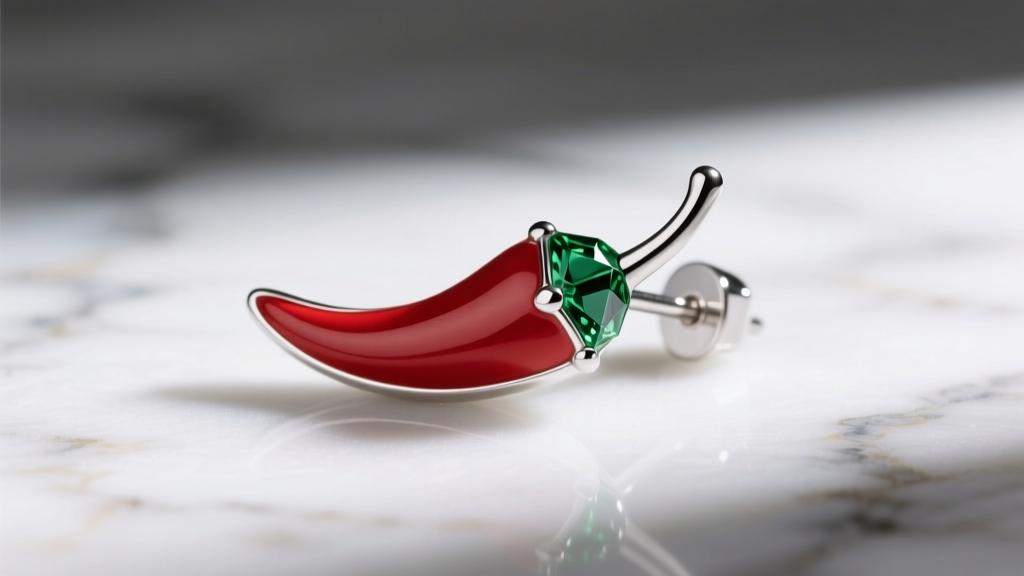
Gauge Sizes and Hardware: Avoiding the 'Green Ear' Effect
The post—the part of the earring that actually pierces your skin—is where many novelty jewelry brands cut corners. Standard lobe piercings are typically 20-gauge (0.81mm) or 18-gauge (1.02mm). If you are buying heavy chili pepper dangles, you must opt for an 18-gauge post. A thinner 20-gauge or 22-gauge wire bearing the weight of a large enameled pepper will create a 'cheese-cutter' effect, slowly migrating downward and stretching your piercing hole over time.
Base Metal Reactions
The dreaded 'green ear' is caused by copper chloride, a chemical reaction that occurs when the copper in brass or low-karat gold alloys mixes with the salts and acids in your sweat. To avoid this, ensure the earring post is explicitly listed as surgical steel, titanium, rhodium-plated sterling silver, or solid 14k/18k gold. Never buy chili pepper earrings with uncoated brass posts for everyday wear, especially in humid climates or during summer months.
Weight Distribution: Protecting Your Lobes from Dangles
Chili pepper silhouettes are naturally elongated, making them prime candidates for dangle and drop earring styles. However, gravity is the enemy of the earlobe. A solid metal and glass enamel dangle can easily exceed 12 grams per earring. Wearing earrings heavier than 7 grams on a daily basis leads to micro-tears in the earlobe tissue, resulting in permanent sagging.
- Studs (8mm - 15mm): Typically weigh 1 to 3 grams. Safe for 24/7 wear and sleeping.
- Standard Drops (25mm - 40mm): Weigh 4 to 8 grams. Ideal for daytime wear; use silicone friction backs to distribute pressure.
- Statement Dangles (50mm+): Can weigh 10 to 18 grams. Reserve for evening wear and utilize an earring support patch behind the lobe to prevent stretching.
According to the Jewelers of America, proper weight distribution and routine cleaning of the earring backing are the primary defenses against earlobe sagging and localized contact dermatitis.
Choosing the Right Backing and Silhouette
The hardware securing your chili pepper earrings dictates both their safety and their visual drape. For stud styles, standard butterfly friction backs are sufficient, provided the post has adequate tension notches. For dangles, avoid fishhook wires unless they are paired with secure silicone O-rings. The superior choice for heavy chili pepper drops is the leverback or the French wire with a secure locking mechanism. Leverbacks feature a hinged clasp that snaps shut, ensuring that your expensive vitreous enamel peppers do not end up lost on a restaurant floor.
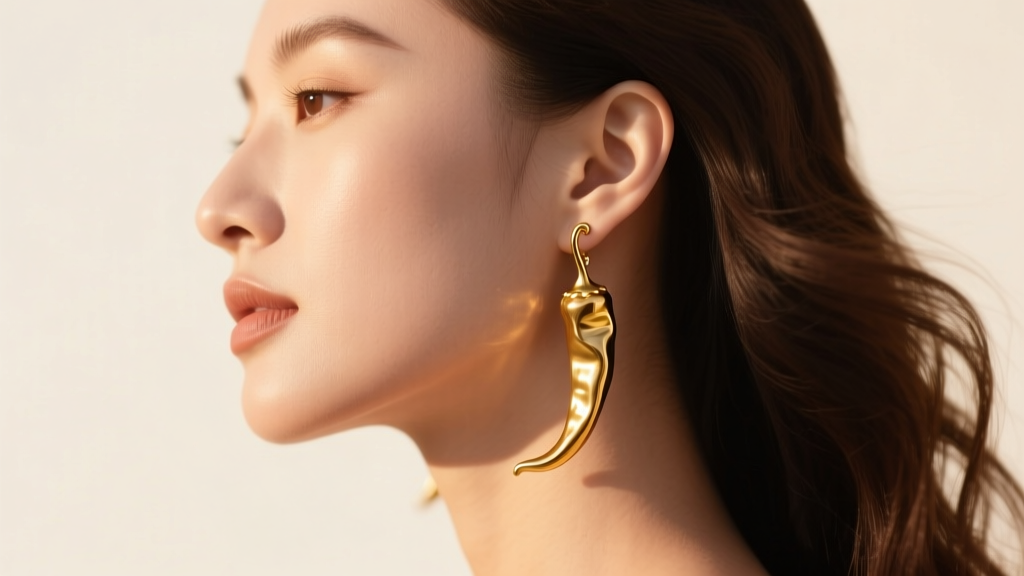
Styling Chili Pepper Earrings for Your Face Shape
Because the chili pepper is an inherently linear and tapered shape, it interacts uniquely with different facial structures. Selecting the right orientation and size is key to achieving a harmonious look.
Round and Square Faces
If you have a round or square jawline, lean into the natural elongation of the chili pepper. Opt for long, slender drop earrings (40mm to 60mm) that hang straight down. This vertical line draws the eye downward, creating an optical illusion that lengthens the neck and softens angular or wide jawlines. Avoid wide, chunky chili pepper hoops, which will only add unwanted horizontal volume.
Oval and Heart-Shaped Faces
Oval faces can pull off virtually any silhouette, but medium-sized chili pepper studs (12mm to 20mm) or curved chili huggies offer a balanced, playful aesthetic without overwhelming the chin. For heart-shaped faces, where the forehead is broader and the chin is narrow, teardrop-shaped chili peppers or chandelier styles that add volume at the bottom of the earlobe help to visually widen the lower half of the face, achieving perfect symmetry.
Care and Maintenance to Prevent Enamel Chipping
Maintaining the pristine, glossy finish of chili pepper earrings requires specific care protocols that differ from standard gemstone jewelry. The most common failure mode for high-end chili pepper earrings is the shattering of vitreous enamel due to thermal shock or ultrasonic vibrations.
- Never Use Ultrasonic Cleaners: The high-frequency sound waves used in ultrasonic jewelry baths will cause microscopic fractures in glass enamel, eventually leading to chipping or complete delamination from the metal base.
- Avoid Chemical Solvents: Hairspray, perfume, and acetone will degrade the epoxy resin in cold enamel, causing it to lose its gloss and turn cloudy. Always apply your beauty products before putting on your earrings.
- The Microfiber Method: To clean your earrings, use a few drops of mild, phosphate-free dish soap and lukewarm water. Gently agitate with a baby-hair brush, rinse, and immediately dry with a lint-free microfiber cloth to prevent water spots on the enamel surface.
By prioritizing material transparency, respecting gauge and weight limits, and adhering to proper enamel care, your chili pepper earrings will remain a vibrant, structurally sound staple in your collection for years to come.


