How to Choose Comfortable Earrings for Sleeping: Step Guide
Learn how to select comfortable earrings for sleeping. Our step-by-step guide covers safe metals, exact gauge sizes, and flat-back styles.
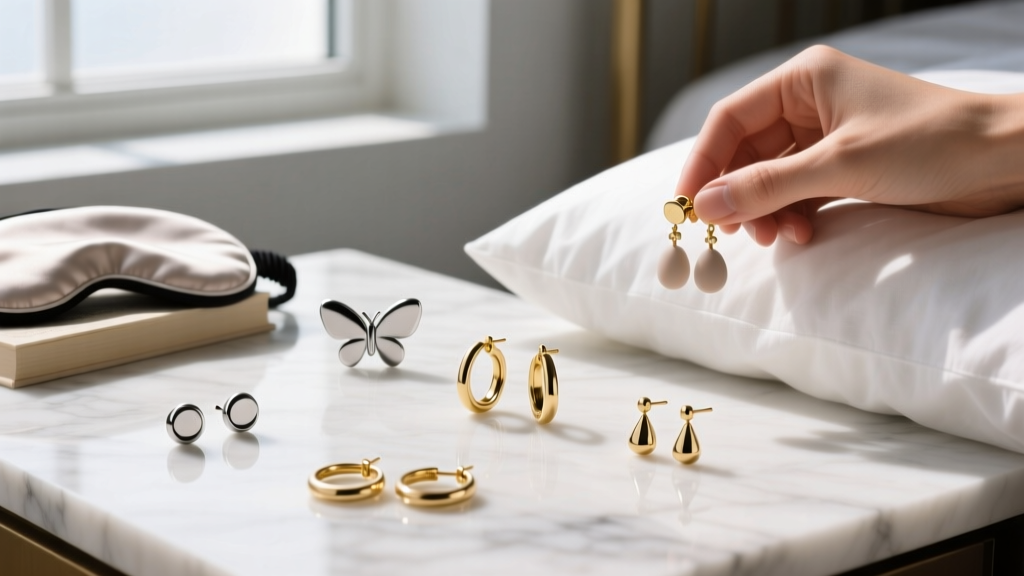
The Biomechanics of Sleep-Safe Jewelry
Finding the right jewelry to wear to bed is not just about comfort; it is a critical component of piercing aftercare and long-term tissue health. When you lay your head on a pillow, the ear is subjected to prolonged lateral pressure, friction, and trapped heat. Wearing the wrong style or metal can lead to pressure necrosis, irritation bumps, or severe contact dermatitis. According to the Association of Professional Piercers (APP), selecting appropriate jewelry geometry and material is the single most effective way to prevent sleep-related piercing complications. This step-by-step guide will teach you exactly how to choose comfortable earrings for sleeping, whether you are nursing a fresh cartilage piercing or looking for everyday staples for healed lobes.
Step 1: Match the Earring Style to Your Healing Stage
The architecture of your earring must align with the biological reality of your piercing fistula. What works for a five-year-old lobe piercing will cause immediate trauma to a three-month-old conch piercing.
Fresh Piercings (0-6 Months)
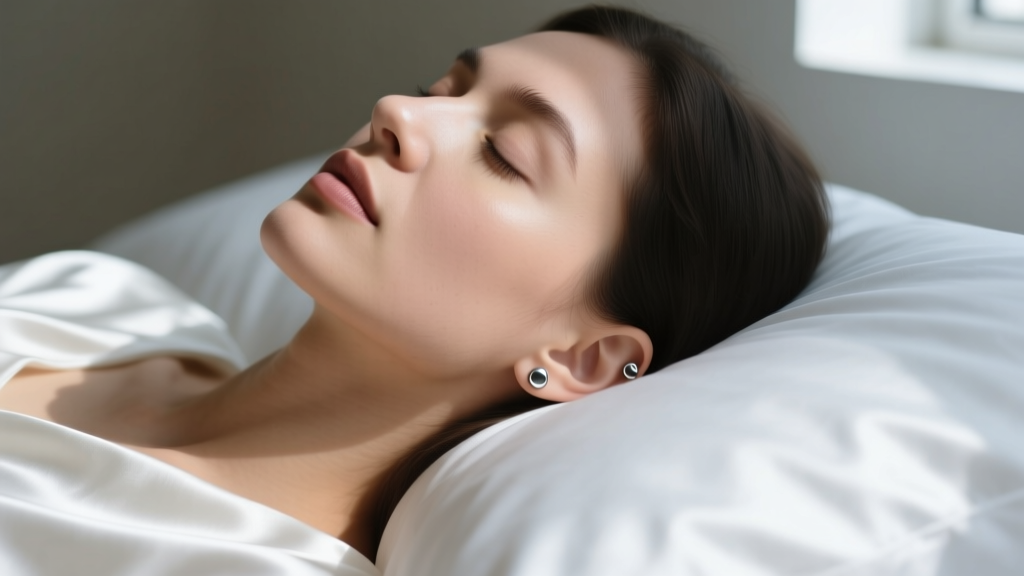
For any piercing that is still in the inflammatory or early proliferative healing phase, the only acceptable style is a flat-back labret. Flat-back earrings feature a completely flush, smooth disc that rests against the back of the ear. This design eliminates the sharp prongs found on traditional butterfly backs, which can dig into the mastoid area when you sleep, causing localized tissue death (pressure necrosis) and embedding. Furthermore, flat-backs do not rotate or move, keeping the healing fistula completely undisturbed throughout the night.
Fully Healed Lobes and Cartilage
Once your piercing is fully mature (typically 6-12 months for lobes, 12-24 months for cartilage), you have more flexibility. However, if your primary goal is finding comfortable earrings for sleeping, you should still prioritize low-profile options. Continuous sleeper hoops (made from a single piece of wire that snaps into a hollow tube) or micro-huggies with a flat, recessed clasp are excellent choices. Avoid large hoops, dangles, or any earring with a protruding hinge, as these will easily snag on pillowcases or hair, risking traumatic tearing.
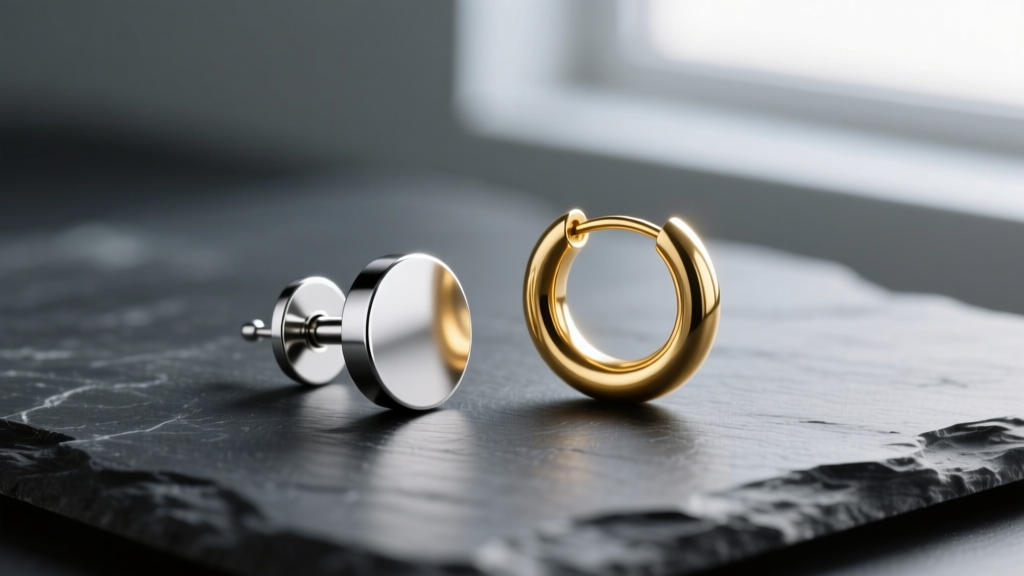
Step 2: Decode the Metallurgy (What Actually Prevents Irritation)
The American Academy of Dermatology (AAD) identifies nickel as the leading cause of allergic contact dermatitis. When you sleep, your skin temperature rises, and microscopic sweat accumulates around the earring post. This moisture accelerates the leaching of nickel ions from inferior metals directly into your bloodstream. To avoid waking up with itchy, swollen, or weeping earlobes, you must be ruthless about material selection.
| Material Grade | Nickel Content | Best Use Case | Average Price Range |
|---|---|---|---|
| Implant-Grade Titanium (ASTM F136) | 0.0% | Fresh piercings, highly sensitive skin, MRI-safe | $25 - $60 |
| Niobium (99.9% Pure) | 0.0% | Fresh piercings, metal allergies, can be anodized | $20 - $45 |
| 14k or 18k Solid Gold (Nickel-Free) | 0.0% (if alloyed correctly) | Fully healed piercings, luxury everyday wear | $80 - $300+ |
| Surgical Steel (316L) | 8% - 10% | Healed piercings ONLY (avoid if sensitive) | $10 - $25 |
Expert Note: Never sleep in mystery metal fashion jewelry or silver-plated pieces. Silver tarnishes rapidly when exposed to nighttime sweat, and the underlying base metals often contain high levels of nickel and lead.
Step 3: Dial in the Exact Gauge and Post Length
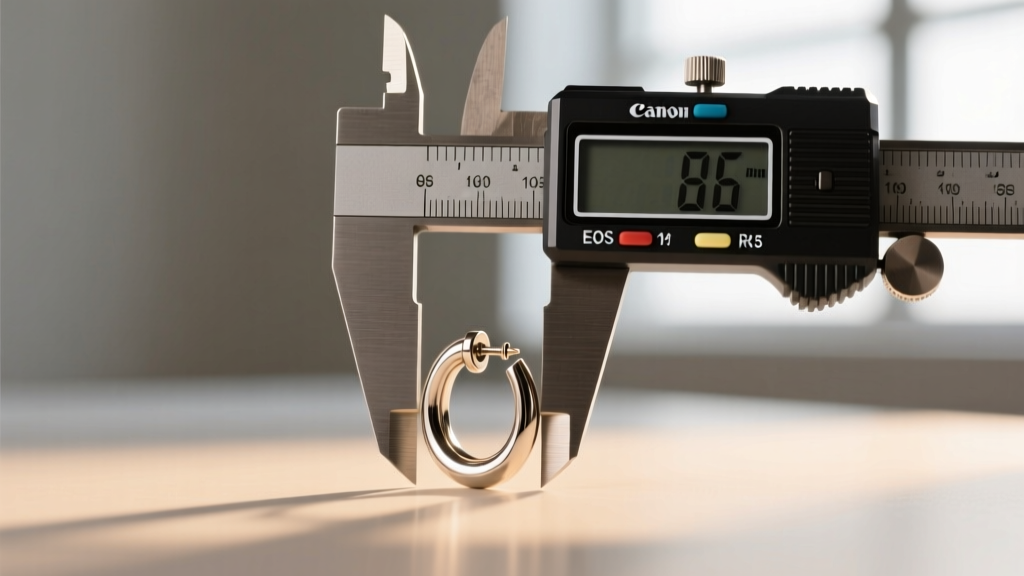
Comfort is a mathematical equation. If your post is too long, it will act as a lever, catching on bedding and torquing the piercing. If it is too short, the jewelry will compress the tissue, leading to embedding. You must measure your jewelry using digital calipers.
- Standard Lobe Gauge: 20g (0.8mm) or 18g (1.0mm). Most commercial earrings are 20g, but 18g provides better stability for sleeping.
- Standard Cartilage Gauge: 16g (1.2mm) or 14g (1.6mm). Thicker gauges resist bending and reduce the cheese-cutter effect if you roll onto your ear.
- Post Length for Fresh Piercings: 5/16" (8mm) to accommodate initial swelling.
- Post Length for Healed Piercings (Downsized): 1/4" (6mm) or 5/32" (5mm). A properly downsized post will sit flush against the skin with less than 1mm of clearance.
Step 4: Master the Lock-In Mechanism
How your earring secures to the post is just as vital as the metal itself. Traditional push-pins and butterfly backs are notorious for failing during sleep, leaving you with a lost diamond and a bleeding earlobe.
For the ultimate security, transition to threadless jewelry. Threadless systems use tension to hold the decorative end onto the post. The pin on the decorative end is slightly bent (usually at a 10 to 15-degree angle) before being pushed into the hollow post. This creates immense internal friction. To remove it, you must twist and pull simultaneously. Threadless earrings will not fall out in your sleep, no matter how much you toss and turn.
If you prefer internally threaded jewelry (where the screw is on the post, not the decorative end), ensure you are using a high-quality piece. Never use externally threaded jewelry; forcing the rough threads through your fistula every time you change the earring causes micro-tears and scar tissue buildup.
Troubleshooting Common Sleep-Piercing Failures
'The most common sleep-related issue I see in the studio is the irritation bump caused by pressure trauma. Clients sleep on long, un-downsized posts, and the constant leverage angle forces the jewelry to sit crookedly, resulting in a localized granuloma.' — Senior APP-Certified Piercer
- Problem: Waking up with crusties or dried lymph.
Solution: Your pillowcase is harboring bacteria, or your earring backing is trapping dead skin cells. Switch to a silk or satin pillowcase to reduce friction, and ensure you are using a flat-back labret instead of a butterfly clutch. - Problem: The earring feels stuck or embedded in the morning.
Solution: Your post is too short, or you are experiencing nocturnal swelling due to high sodium intake or hormonal fluctuations. Visit a piercer immediately to have the post swapped to a longer length to restore blood flow. Do not attempt to force it out yourself. - Problem: Cartilage aches after sleeping on it.
Solution: Cartilage lacks its own blood supply and relies on surrounding tissue for healing and inflammation reduction. Sleeping directly on a cartilage piercing restricts this flow. Invest a U-shaped piercing pillow (a travel neck pillow) and sleep with your ear in the center hole.
Your Nightly 3-Minute Earring Care Routine
To maintain the comfort and hygiene of your sleep-safe earrings, adopt this rapid nightly protocol:
- Inspect the Fit: Run a clean finger behind your ear. The flat-back disc should feel completely flush. If you feel a gap or a sharp edge, the jewelry has loosened or is the wrong size.
- Clear the Debris: Use a sterile, lint-free gauze pad lightly misted with 0.9% sterile saline solution. Gently wipe the front and back of the earring to remove daytime sebum, hair products, and environmental pollutants.
- Dry Thoroughly: Moisture trapped behind a flat-back disc can lead to fungal or bacterial overgrowth. Use a piece of non-woven gauze to gently pat the area completely dry before your head hits the pillow.
- Secure Your Hair: Tie long hair in a loose, high bun or braid using a silk scrunchie. This prevents hair strands from wrapping around the earring post and creating a tourniquet effect while you sleep.
By treating your nighttime jewelry selection as a precise science rather than an afterthought, you will drastically extend the lifespan of your piercings and eliminate the morning discomfort that plagues so many jewelry lovers. Prioritize implant-grade metals, exact post measurements, and flush-fitting geometry, and you will finally experience truly comfortable earrings for sleeping.


