How to Choose Round Diamond Dangle Earrings: Step-by-Step
Master the art of selecting round diamond dangle earrings with our step-by-step guide covering face shapes, diamond grades, and secure backing types.

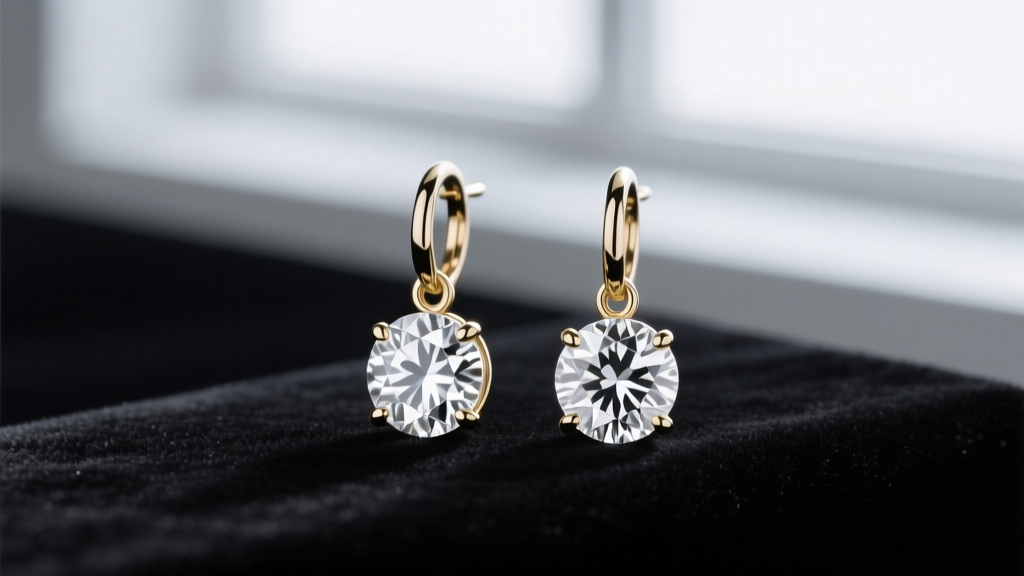
The Anatomy of Round Diamond Dangle Earrings
Unlike static studs, round diamond dangle earrings are kinetic jewelry. Their movement catches ambient light from multiple angles, creating a continuous scintillation that static pieces simply cannot replicate. However, this pendulum motion introduces unique structural challenges regarding earlobe health, backing security, and diamond grading priorities. Whether you are investing in natural earth-mined stones or exploring the expansive 2026 lab-grown diamond market, selecting the perfect pair requires a methodical approach. This step-by-step guide will walk you through the technical and aesthetic considerations necessary to make a masterful purchase.
Step 1: Match the Dangle Length to Your Face Shape
The vertical drop of a dangle earring dramatically alters facial proportions. The goal is to create visual balance rather than echoing your natural face shape. Round diamonds, with their soft, continuous circumference, are exceptionally forgiving, but the overall silhouette of the dangle dictates the final effect.
| Face Shape | Recommended Drop Length | Ideal Diamond Arrangement |
|---|---|---|
| Round | 2.0 to 3.0 inches | Linear drops with a single large round diamond at the terminus to elongate the face. |
| Square | 1.5 to 2.0 inches | Curved chandelier or clustered round diamonds to soften strong jawlines. |
| Oval | 1.0 to 2.5 inches | Highly versatile; teardrop silhouettes featuring a halo of round diamonds work beautifully. |
| Heart | 1.5 to 2.5 inches | Bottom-heavy designs with larger round diamonds at the base to balance a wider forehead. |

Step 2: Evaluate Diamond Quality (The 4Cs for Movement)
Grading diamonds for dangle earrings requires a different strategic approach than grading a center engagement ring stone. Because the earrings are positioned further from the observer's eye and are in constant motion, you can optimize your budget without sacrificing visual impact.
Cut: The Non-Negotiable Metric
According to the Gemological Institute of America (GIA), cut is the primary driver of a diamond's brilliance. For round diamond dangle earrings, you must insist on an "Excellent" or "Ideal" cut grade. The kinetic movement of the earring will ruthlessly expose poor proportions, creating dead spots where light leaks out the bottom of the stone. A poorly cut diamond will look like dull glass when swinging.
Clarity: The Distance Advantage
Because dangles sit two to six inches away from an observer's face, you do not need to pay the premium for Flawless (FL) or Internally Flawless (IF) stones. A clarity grade of VS2 to SI1 is the sweet spot. Inclusions in this range are completely invisible to the naked eye at conversational distances, allowing you to reallocate budget toward a larger carat weight or superior cut.
Color: Masking Warmth Through Motion
While D-F colorless diamonds are stunning, G-H near-colorless grades are exceptionally smart for dangles. The continuous movement and the reflective nature of the metal setting mask slight warmth. If you are setting the stones in 18k yellow or rose gold, you can safely drop down to I-J colors, as the metal's reflection will blend seamlessly with the diamond's body color.
Step 3: Select the Metal and Setting for Maximum Light Return
The metal framework of your earrings dictates both their durability and their weight. Weight is a critical factor; heavy earrings will stretch the earlobe piercing over time, causing the ear to droop and the earring to tilt forward, which ruins the visual alignment of the diamonds.
- Platinum: Extremely durable and hypoallergenic, but dense and heavy. Best reserved for smaller, lighter dangle designs or reinforced earlobes.
- 18k White Gold: The industry standard for diamond jewelry. It offers a brilliant white rhodium-plated surface that enhances diamond color while remaining lighter than platinum.
- 14k Gold: An excellent choice for larger, more elaborate dangles where minimizing overall gram weight is necessary to prevent lobe fatigue.
For the setting itself, prong settings (specifically four-prong or six-prong) are vastly superior to bezel settings for dangles. Prongs allow ambient light to enter the pavilion (bottom) of the round diamond from all sides, maximizing the scintillation that makes dangle earrings so captivating.
Step 4: Choose the Right Backing and Post Gauge
The most common failure mode for fine jewelry is losing an earring due to an inadequate backing. The pendulum motion of dangle earrings creates a levering effect that slowly pushes standard friction backs (butterfly backs) off the post.
Expert Rule of Thumb: If your round diamond dangle earrings weigh more than 3.5 grams per ear, standard push-backs are a liability. You must upgrade to a mechanical closure.
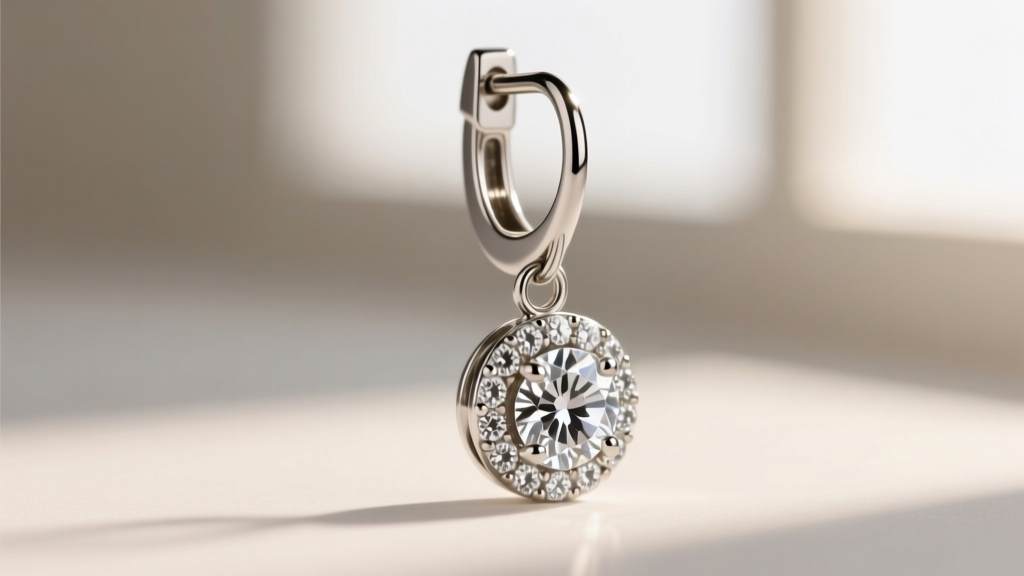
Backing Types for Dangles
Leverbacks: The gold standard for dangles. A hinged wire snaps securely into a catch at the back of the ear. They accommodate the natural swelling of the earlobe and are virtually impossible to lose during normal wear.
Omega Backs: Often used for heavier, clip-on style dangles or larger posts. They clamp securely against the earlobe and distribute the weight of the earring across a wider surface area, reducing piercing strain.
The Importance of Post Gauge
Most standard earrings use a 20-gauge (0.81mm) post. However, for heavy round diamond dangle earrings, a 20-gauge wire is too thin. The combination of heavy diamonds and swinging motion creates a "cheese-cutter" effect, which can slowly slice through the earlobe tissue. Always look for 18-gauge (1.02mm) or even 16-gauge (1.29mm) posts for substantial dangles to ensure the structural integrity of your piercing.
Step 5: Maintenance and Cleaning Routine
Because dangle earrings swing through your hair and brush against your neck, they accumulate skin oils, hairspray, and lotions faster than studs. This grime coats the pavilion of the diamond, killing its brilliance.
According to Jewelers of America, regular at-home cleaning is essential, but you must be cautious with your methods. Never use ultrasonic cleaners on your dangle earrings unless you are absolutely certain the diamonds are not fracture-filled or clarity-enhanced. The high-frequency vibrations of an ultrasonic bath can shatter the glass-like resin used in fracture filling, destroying the stone.
Instead, use a dedicated jewelry degreaser or a mild solution of warm water and ammonia-free dish soap. Soak the earrings for 15 minutes, then gently agitate the round diamonds with a soft-bristled baby toothbrush, paying special attention to the underside of the stones where grease accumulates. Finally, because dangles frequently snag on sweaters and hair, you must have a jeweler inspect the prongs under magnification every six months to ensure the kinetic stress hasn't lifted the metal away from the diamond's girdle.
Final Thoughts on Your Selection
Choosing the perfect pair of round diamond dangle earrings is an exercise in balancing aesthetic grace with mechanical engineering. By prioritizing an Ideal cut, leveraging the visual forgiveness of distance for clarity and color, and insisting on robust 18-gauge leverback closures, you ensure that your earrings will remain secure, brilliant, and structurally sound for a lifetime of wear.


