Louis Earrings Value Assessment: 2026 Buyer & Budget Guide
Assessing the true value of Louis earrings in 2026. We break down material grades, pricing tiers, resale potential, and smart budget alternatives.

The 'Louis Earrings' Premium: Brand Cachet vs. Material Reality
When consumers search for 'Louis earrings,' they are typically navigating the complex intersection of luxury fashion branding and fine jewelry investment. As of 2026, the luxury jewelry market has seen a distinct bifurcation: buyers are either seeking entry-level brand association or investing in intrinsic material value. Assessing the true value of Louis Vuitton earrings requires stripping away the marketing veneer and examining the exact metallurgy, craftsmanship, and secondary market performance of these pieces. Are you paying for a timeless heirloom, or simply renting a monogram? This comprehensive value assessment breaks down the pricing tiers, material realities, and budget-smart alternatives for prospective buyers.
According to the Bain & Company Luxury Study, the 'hard luxury' segment (fine jewelry and watches) has shown remarkable resilience and value retention compared to 'soft luxury' and fashion accessories. This macroeconomic trend directly impacts how we should evaluate designer earrings. A piece crafted from solid 18k gold behaves as a financial asset with a predictable price floor, whereas brass-based fashion jewelry behaves as a depreciating consumer good. Understanding this distinction is the first step in making a budget-conscious decision.
Material Breakdown: What Are You Actually Paying For?
To accurately assess value, we must categorize Louis earrings into their two primary manufacturing tiers. The brand strictly separates its 'Fashion Jewelry' from its 'Fine and High Jewelry' collections, and the material science behind each dictates its longevity, skin compatibility, and ultimate value.
Fashion & Fine Fashion Lines (Brass, Enamel, Resin)
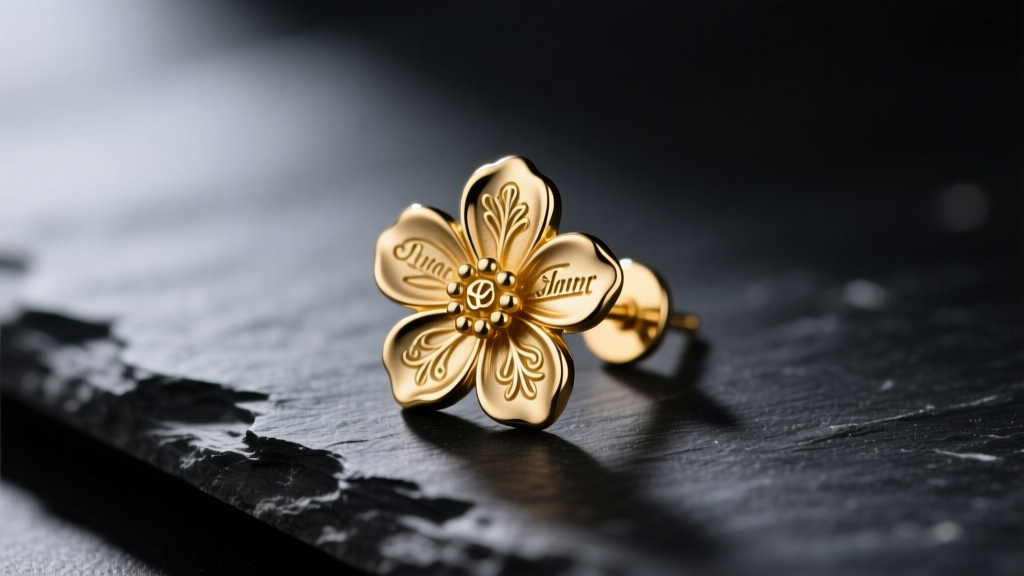
The entry-level Louis earrings—such as the iconic Monogram Flower studs or the B Blossom hoops—are predominantly crafted from a brass base metal. This brass is then plated with a gold-tone or silver-tone metallic finish. The inlays are typically made from epoxy resin, lacquer, or glass-based enamel. While the visual impact is undeniable, the material reality presents long-term value concerns. Brass is highly reactive. Once the microscopic plating on the earring post wears away from the friction of daily insertion, the exposed brass can oxidize and cause green discoloration or contact dermatitis on sensitive earlobes. Furthermore, glass-based enamel, while beautifully opaque, is brittle and prone to micro-fractures if dropped on hard surfaces like bathroom tile.
High Jewelry & Fine Lines (18k Gold, Precious Stones)
Conversely, the Color Blossom and Volt fine jewelry lines utilize solid 18k gold (75% pure gold alloyed with copper, silver, or zinc for durability). The posts on these earrings are also solid 18k gold, making them entirely hypoallergenic and safe for continuous wear, even in fresh cartilage piercings. The inlays feature genuine malachite, onyx, and mother-of-pearl. According to the Gemological Institute of America (GIA), organic gems like mother-of-pearl require meticulous care, as their Mohs hardness is only 2.5 to 4.5, making them susceptible to scratching from standard jewelry boxes. However, the intrinsic melt value of the 18k gold provides a permanent financial safety net that brass simply cannot offer.
2026 Pricing Tiers & Depreciation Analysis
To quantify the 'brand tax,' we analyzed current retail prices against average secondary market returns on platforms like Vestiaire Collective. The data reveals a stark contrast in value retention based on material composition.
| Category | Base Material | 2026 Retail Price Range | Avg. Resale Retention | Value Verdict |
|---|---|---|---|---|
| Entry Fashion (e.g., Monogram Studs) | Brass, Resin, Lacquer | $400 - $650 | 30% - 45% | Poor long-term value; high brand tax. |
| Fine Fashion (e.g., B Blossom Hoops) | Brass, Metal Pearls, Enamel | $700 - $1,200 | 35% - 50% | Moderate; better aesthetic longevity. |
| Fine Jewelry (e.g., Color Blossom 18k) | Solid 18k Gold, Onyx, MOP | $2,800 - $5,500 | 60% - 75% | Strong; backed by intrinsic gold value. |
| High Jewelry (e.g., Diamonds, Platinum) | Platinum, 18k Gold, VVS Diamonds | $15,000+ | 40% - 60% | Niche; depreciates initially but rare. |
As the table illustrates, spending $500 on brass fashion jewelry results in an immediate loss of over 50% of your capital the moment you leave the boutique. In contrast, a $3,200 pair of 18k gold and onyx earrings retains a much larger percentage of its value because the secondary market prices the piece based on its gold weight and gemstone quality, not just the logo.
Budget Alternatives: Capturing the Aesthetic Without the Markup
For buyers who love the geometric, floral, and bold aesthetic of Louis earrings but cannot justify the 800% markup on brass, the 2026 market offers exceptional alternatives. The key is to redirect your budget from 'brand licensing' to 'superior metallurgy.' Here is a practical framework for finding high-value alternatives:
1. Prioritize Gold Vermeil Over Gold Plating
Standard gold plating (often used by fast-fashion brands) applies a microscopic layer of gold (less than 0.5 microns) over cheap base metals like nickel or copper. Gold vermeil, legally required to be at least 2.5 microns thick, is plated exclusively over a sterling silver (925) base. Sterling silver is a precious metal that will not turn your skin green if the gold eventually wears thin. A pair of thick 18k gold vermeil floral studs from a specialized direct-to-consumer jeweler will cost between $80 and $150, offering a vastly superior lifespan to $450 brass designer studs.
2. Match the Gauge and Post Mechanics
Designer fashion earrings often use thick, rigid posts that can stretch delicate lobe piercings. Standard lobe piercings are typically 20G (0.81mm) or 18G (1.02mm). When sourcing budget alternatives, ensure the posts are 20G or 18G to maintain piercing health. Furthermore, look for alternatives that utilize secure 'la pousette' (butterfly) backs with silicone stoppers, or screw-backs for cartilage and huggie styles, mimicking the secure fit of high-end luxury jewelry without the luxury price tag.
3. Opt for Lab-Grown Diamond Accents
If you are drawn to the diamond-accented LV fine jewelry lines, consider independent jewelers who utilize lab-grown diamonds set in solid 14k or 18k gold. Lab-grown diamonds possess the exact same chemical and optical properties as mined diamonds but cost 70-85% less. This allows you to acquire solid gold, genuine diamond earrings for the same price as LV's brass and resin fashion pieces.
Authentication & Avoiding Counterfeits on the Secondary Market
If your budget strategy involves purchasing pre-owned Louis earrings to capture a better price point, you must navigate a market flooded with sophisticated counterfeits. In 2026, counterfeiters have mastered the visual weight and color of LV's gold-tone finishes, but they consistently fail on microscopic details. Use this checklist to protect your investment:
- The Post Stamp: Authentic LV earring posts are stamped with 'Louis Vuitton' and a material mark (e.g., 'made in France' or a specific hallmark for fine jewelry). The font should be crisp, with the 'O's perfectly round and the 'L' featuring a very short tail. Counterfeits often use elongated 'O's and deep, messy laser etching.
- The Butterfly Back: On authentic fashion lines, the butterfly back is weighted and features a clean, stamped LV logo. Fakes often use lightweight, generic stamped backs that feel flimsy and lack the precise tension required to hold the earring securely.
- Enamel vs. Paint: Run your fingernail gently over the colored inlays. Authentic LV enamel is fired glass, sitting perfectly flush or with a precise, intentional dome. Counterfeits often use painted resin that sits slightly proud of the metal casing and shows brush strokes or bubbling under a 10x jeweler's loupe.
The Verdict: How to Maximize Your Investment
Are Louis earrings worth the investment? The answer depends entirely on which tier you are buying. If you are purchasing the brass-based fashion jewelry lines purely for the unboxing experience and the immediate brand recognition, you are paying a premium for a depreciating accessory. From a strict budget and value perspective, these pieces fail to deliver long-term material ROI.
However, if your budget allows for the Fine Jewelry collections—specifically the solid 18k gold pieces featuring malachite, onyx, or mother-of-pearl—you are acquiring a legitimate luxury asset. These pieces offer hypoallergenic security, exceptional craftsmanship, and a strong secondary market floor backed by precious metal commodities. For the budget-conscious buyer who loves the aesthetic but demands material integrity, the smartest move in 2026 is to bypass the monogram entirely and invest in heavy gold vermeil or solid 14k gold alternatives from independent artisans, ensuring your earrings remain a staple of your wardrobe, not just a fleeting status symbol.