How to Choose and Style Asscher Cut Earrings Perfectly
Learn how to choose, evaluate, and style asscher cut earrings. Our step-by-step guide covers the 4Cs, face shapes, and setting types for 2026.

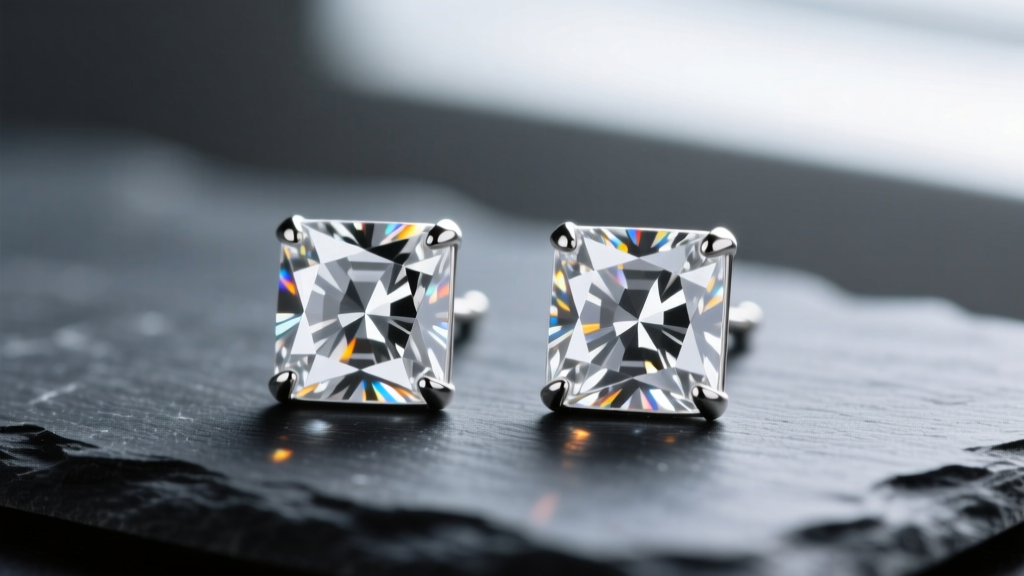
The Resurgence of the Art Deco Step Cut
As we navigate the jewelry landscape of 2026, the demand for geometric precision and vintage-inspired elegance has pushed asscher cut earrings to the forefront of fine jewelry trends. Originally developed in 1902 by the Asscher Brothers of Holland, this striking step cut is famous for its 'hall of mirrors' effect and cropped corners. However, selecting the perfect pair requires a deep understanding of gemology, hardware mechanics, and facial aesthetics. Unlike brilliant cuts that hide imperfections in their fiery facets, the Asscher cut is unforgiving. This step-by-step guide will teach you exactly how to evaluate, purchase, and style these sophisticated earrings with absolute confidence.
Step 1: Master the Gemological Anatomy
Before evaluating any stone, you must understand what makes an Asscher cut unique. According to the Gemological Institute of America (GIA), the standard Asscher cut features 58 facets, though the patented Royal Asscher cut boasts 74. The defining characteristic is its square shape with deeply cropped corners, creating an octagonal outline.
Critical Proportions to Check
- Length-to-Width Ratio: For a perfectly square appearance, demand a ratio between 1.00 and 1.05. Anything above 1.08 will look noticeably rectangular, bleeding into emerald cut territory.
- Depth Percentage: Ideal depth lies between 60% and 68%. Stones cut too deep will carry 'dead weight' in the pavilion, making a 1.00-carat stone look like a 0.80-carat stone from the top down.
- Table Percentage: Keep the table between 60% and 65% to preserve the concentric square 'windmill' pattern that gives the stone its mesmerizing optical illusion.
Step 2: Evaluate the 4Cs for Step Cuts
The most common mistake buyers make is applying brilliant-cut grading standards to step cuts. Because the Asscher features large, open, parallel facets, it acts like a clear window directly into the center of the stone. Inclusions and color tints are magnified.
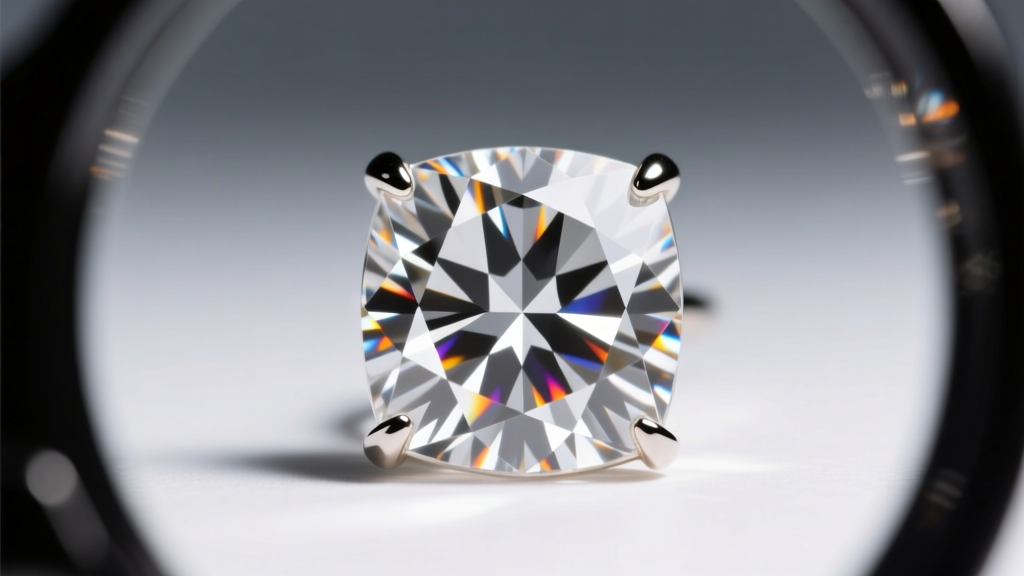
2026 Buyer's Matrix: Natural vs. Lab-Grown
With lab-grown diamonds dominating the 2026 market, buyers can achieve higher clarity grades for a fraction of the cost. Below is the strict minimum grading framework you should accept when shopping for asscher cut earrings.
| Grading Factor | Natural Diamond Minimum | Lab-Grown Diamond Minimum | Expert Notes |
|---|---|---|---|
| Clarity | VS1 | VVS2 | Step cuts show carbon spots easily. Avoid SI grades unless verified eye-clean by a gemologist. |
| Color (White Metal) | G | F | Platinum and white gold amplify warmth. Stick to near-colorless or better. |
| Color (Yellow Gold) | J | H | Yellow gold settings mask slight warmth, allowing you to budget for higher clarity. |
| Cut/Symmetry | Very Good | Excellent | Symmetry is non-negotiable; misaligned step facets destroy the windmill effect. |
Step 3: Select the Right Setting and Hardware
The structural integrity of your earrings is just as important as the stones themselves. Asscher cut diamonds are often dense, and larger carat weights require robust hardware to prevent drooping or loss.
Prong Configuration
For asscher cut earrings, you generally have two setting choices:
- 4-Prong Setting: The most popular choice. The four prongs should be placed exactly at the cropped corners, reinforcing the square geometry and allowing maximum light entry.
- 8-Prong Setting: Offers superior security for stones over 1.50 carats each, but can clutter the clean, Art Deco lines of the stone.
- Bezel Setting: A sleek metal rim surrounds the stone. While highly secure and modern, it reduces the stone's face-up spread by roughly 5% and limits light return.
Post Gauge and Backings
Do not settle for flimsy wire. Standard fashion earrings use 20-gauge (0.81mm) or 22-gauge posts. However, if your asscher cut earrings exceed 1.00 carat total weight (CTW), you must insist on an 18-gauge (1.02mm) or 16-gauge (1.29mm) solid post. Heavy step-cut stones will bend thin posts over time, causing the earring to sit crookedly on the lobe. Furthermore, upgrade from standard friction backs to La Pousette backs or threaded screw backs to ensure the heavy geometric stones remain securely fastened throughout the day.
Step 4: Match Asscher Earrings to Your Face Shape
The stark, geometric lines of the Asscher cut interact differently with various facial structures. Styling asscher cut earrings requires balancing angles and proportions.
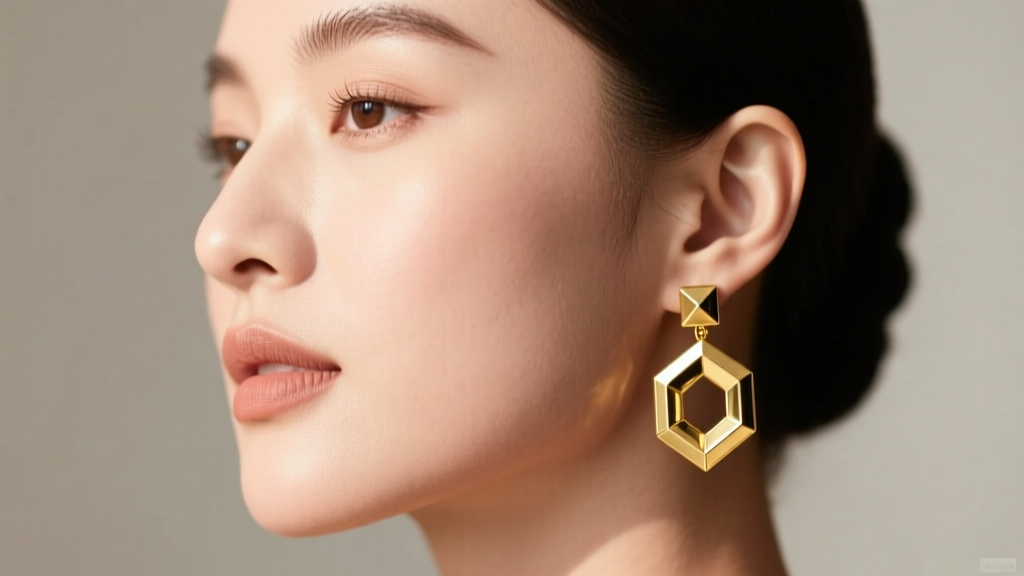
Styling Framework by Face Shape
- Round Faces: Avoid wide, bare Asscher studs, which will emphasize facial width. Instead, opt for Asscher cut drop earrings or dangles. The vertical elongation of a drop setting draws the eye downward, creating a slimming, lengthening illusion.
- Square Faces: A strong jawline pairs beautifully with the Art Deco vibe, but placing a square stone directly on the lobe can look overly blocky. Choose Asscher studs encircled by a round brilliant halo. The circular halo softens the angles while amplifying the overall carat weight.
- Oval and Heart Faces: You have the versatility to pull off almost any style. Classic 4-prong Asscher studs sit perfectly on the lobe, highlighting the cheekbones without overwhelming your natural proportions.
- Long/Oblong Faces: Wide Asscher studs or geometric Asscher huggies are your best friend. The horizontal visual weight adds necessary balance to a longer face shape.
Step 5: The Step-Cut Maintenance Protocol
Because the Asscher cut features a large, flat table facet and open step pavilions, it is notoriously prone to showing sebum, lotion, and fingerprint grease. A dirty Asscher stone will look dull and glassy within hours of wear.
How to Clean Asscher Earrings Safely
- Daily Wipe: Keep a microfiber polishing cloth in your bag. Gently wipe the table facet after every wear to remove skin oils.
- Weekly Deep Clean: Mix a solution of warm distilled water and a few drops of ammonia-free dish soap. Soak the earrings for 10 minutes.
- The Brush Technique: Use an ultra-soft baby toothbrush to gently agitate the pavilion (the back of the stone). Grease accumulates heavily in the stepped corners of the pavilion. Never scrub the top table aggressively, as microscopic dust particles can cause micro-scratches on the surface.
- Ultrasonic Warnings: While ultrasonic cleaners are excellent for removing grime from diamond settings, never use them if your Asscher earrings feature emeralds, sapphires, or fracture-filled diamonds. The high-frequency vibrations can shatter included step-cut gemstones or loosen the tension in vintage-style milgrain settings.
Final Thoughts on Sourcing
Purchasing asscher cut earrings is an exercise in precision. By prioritizing symmetry, demanding high clarity grades, and ensuring your hardware is thick enough to support the stone's weight, you secure a piece of jewelry that bridges the gap between 1920s glamour and 2026 modern minimalism. For further education on step-cut proportions and light performance, consult the Blue Nile Asscher Cut Education Guide to visually compare depth percentages before making your final investment.


