How to Choose Earring Patterns: A Quality Buying Guide
Discover how to evaluate earring patterns, from filigree metalwork to guilloché enamel. Learn what to look for regarding craftsmanship, gauge sizes, and fit.

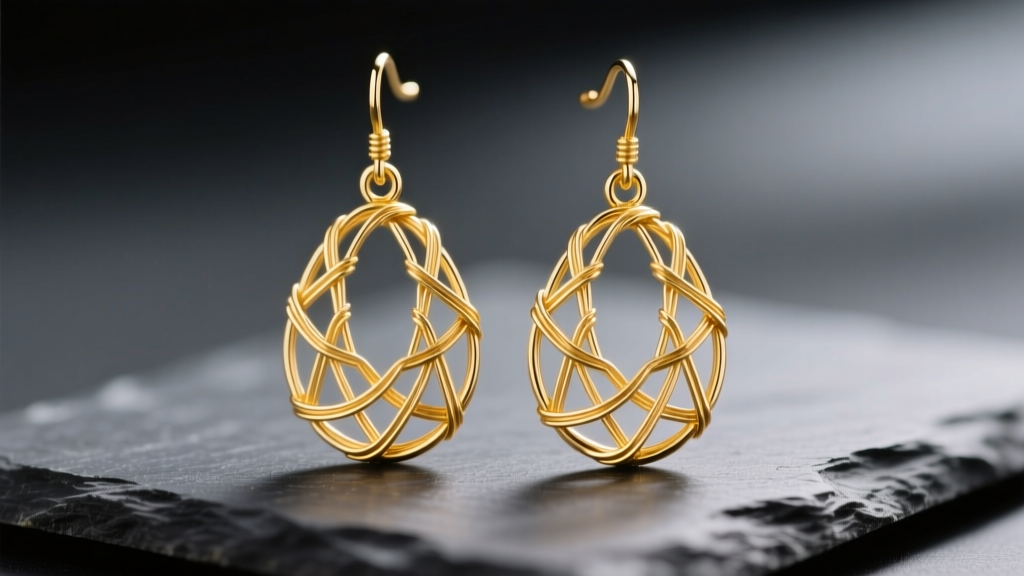
When shopping for fine jewelry, the term 'earring patterns' encompasses far more than simple visual aesthetics. It refers to the intricate metalwork, enamel techniques, and gemstone arrangements that define a piece's character and structural integrity. As we navigate the jewelry market in 2026, the resurgence of artisanal metalwork and heritage enameling has flooded the market with both masterfully crafted heirlooms and mass-produced, structurally compromised imitations. Whether you are investing in Art Deco-inspired geometric drops, delicate floral filigree studs, or a curated ear constellation, understanding the mechanics behind these patterns is crucial.
This comprehensive buying guide will teach you how to evaluate the quality of earring patterns, decode manufacturing techniques, and match specific motifs to your facial anatomy and ear structure. According to the GIA Gem Encyclopedia, the longevity of patterned jewelry relies heavily on the precision of its foundational metalwork and the chemical stability of its decorative inlays.
Decoding Metalwork Patterns: Filigree, Milgrain, and Granulation
Metalwork patterns are the backbone of vintage and artisanal earring designs. However, the method used to create these patterns dictates their durability, weight, and price point.
Filigree: Cast vs. Hand-Fabricated
Filigree involves twisting and curling fine threads of precious metal into lace-like patterns. When buying filigree earrings, you must determine if the piece is die-struck, hand-fabricated, or cast.
- Cast Filigree: Created by pouring molten metal into a mold. Cast pieces often suffer from 'porosity' (tiny air bubbles) and feature thick, muddy wires with rounded edges. The wires are typically 18-gauge to 20-gauge, making the earrings heavier and less detailed.
- Hand-Fabricated & Die-Struck: These methods use physical force or hand-soldering to shape 22-gauge to 24-gauge wires (0.64mm to 0.51mm). The resulting patterns are incredibly crisp, lightweight, and structurally superior. Expect to pay a 40% to 60% premium for genuine hand-fabricated filigree over cast alternatives.
Milgrain and Granulation
Milgrain consists of tiny metal beads lining the edges of an earring, while granulation involves fusing microscopic metal spheres to the surface in geometric or floral patterns. When inspecting milgrain under a jeweler's loupe, look for uniform bead spacing and distinct, unmerged spheres. In mass-produced earrings, milgrain is often stamped or cast, resulting in flat, smeared beads that wear away within months. High-quality milgrain is applied using a specialized knurling tool that displaces the metal, ensuring the pattern is deeply rooted and highly resistant to friction.
Enamel and Inlay Patterns: Guilloché and Cloisonné
Enameling introduces vibrant, glass-like patterns to earring designs. The two most coveted historical techniques are Guilloché (engine-turned patterns beneath translucent enamel) and Cloisonné (opaque enamel separated by fine wire partitions).
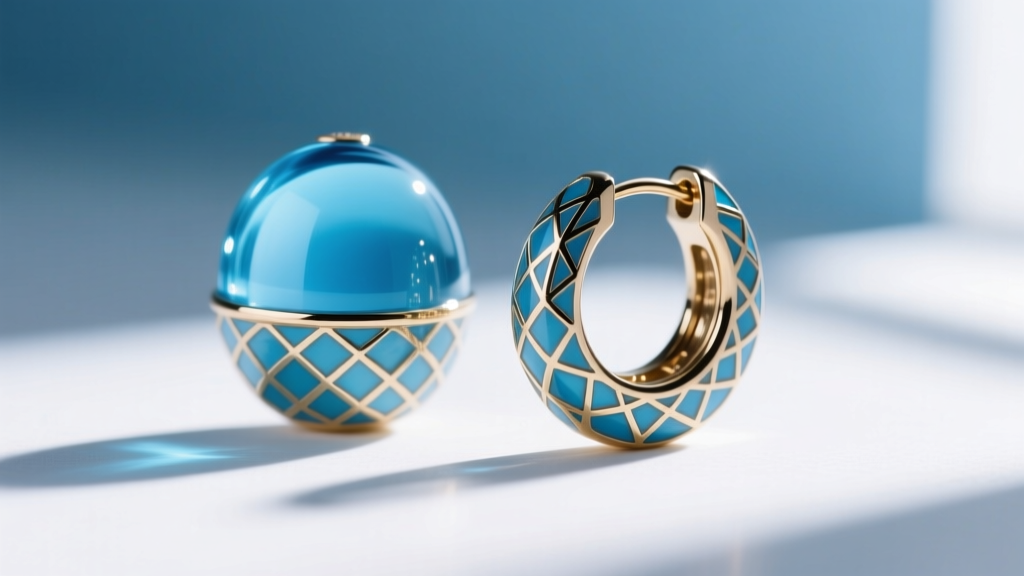
The most critical buying decision here is distinguishing between vitreous (kiln-fired) enamel and cold (epoxy/resin) enamel. As noted by Jewelers of America, material transparency is vital for consumer protection in the modern market.
| Feature | Vitreous (Kiln-Fired) Enamel | Cold (Epoxy/Resin) Enamel |
|---|---|---|
| Composition | Fused silica and metal oxides | Synthetic polymer resins |
| Durability | Glass-hard; chips only under severe impact | Scratches easily; yellows over 3-5 years |
| Visual Depth | Luminous, refractive, deep optical depth | Flat, plastic-like appearance |
| Price Range | $150 - $800+ per pair | $30 - $90 per pair |
| Repairability | Can be re-fired by a master enamelist | Cannot be repaired; must be stripped |
Pro Tip: To test for cold enamel, gently tap the surface with a metal pin. Vitreous enamel will produce a high-pitched, glassy 'clink,' while epoxy will emit a dull, plastic 'thud.'
Matching Visual Patterns to Face Shapes and Ear Anatomy
The scale and geometry of earring patterns should complement your facial structure. Heavy, dense patterns draw the eye differently than open, airy motifs.
The Face Shape Framework
- Round Faces: Opt for angular, linear patterns like Art Deco geometric steps or elongated chevron motifs. Avoid dense, circular floral patterns that mimic the face's natural curvature.
- Square Faces: Curvilinear patterns, such as organic floral vines, teardrop guilloché, and soft filigree hoops, help soften strong jawlines.
- Oval Faces: Highly versatile. You can carry off dense, heavy patterns like large cloisonné chandeliers or tightly packed granulation clusters.
- Heart-Shaped Faces: Choose bottom-heavy patterns, such as triangular inlays or chandelier earrings where the visual weight and pattern density concentrate at the lower third of the design.
Anatomy and Gauge Considerations
Pattern density directly impacts weight. Intricate, solid-cast patterned dangles can easily exceed 8 grams per earring. If you are wearing heavy patterned drops in the earlobe, ensure the post is at least 18-gauge (1.0mm) or 16-gauge (1.2mm). Standard 20-gauge (0.8mm) posts on heavy earrings will cause the 'cheese-cutter effect,' where the thin metal slowly migrates downward through the earlobe tissue, causing permanent stretching and tearing.
The Curated Ear: Arranging Earring Patterns in a Constellation

In 2026, the 'curated ear' has evolved from a random assortment of studs into a deliberate, patterned layout. When designing a constellation across your lobe and cartilage, you must balance pattern complexity with anatomical limitations.
The Rule of Pattern Distribution
A successful curated ear relies on a hierarchy of patterns. Follow the 1-2-3 framework:
- One Anchor Pattern: A complex, high-detail piece (e.g., a 14k gold filigree huggie or a geometric diamond cluster) placed in the primary lobe piercing. This should be 14-gauge or 12-gauge to support the visual and physical weight.
- Two Supporting Patterns: Medium-complexity pieces (e.g., milgrain-edged bezel studs or simple guilloché drops) placed in the upper lobe or lower cartilage (flat or helix). These should be 16-gauge.
- Three Minimalist Accents: Simple, unpatterned or micro-patterned pieces (e.g., plain titanium balls or tiny granulated dots) for the higher cartilage (conch, rook, or daith). These are typically 16-gauge or 14-gauge to minimize migration risks in dense cartilage tissue.
Material Warning for Cartilage: When placing patterned earrings in fresh or healing cartilage piercings, avoid sterling silver or low-karat gold alloys. The intricate crevices in filigree or milgrain patterns can harbor bacteria and trap moisture. Always use implant-grade titanium (ASTM F136) for cartilage patterns, as it can be anodized to create microscopic oxide layers that resist bacterial adhesion.
Red Flags: What to Avoid When Buying Patterned Earrings
When evaluating patterned earrings, whether in a boutique or online, watch out for these critical manufacturing flaws:
- Solder Bloom on Filigree: If you see thick, sloppy blobs of metal at the joints of a filigree pattern, it indicates poor soldering. This adds unnecessary weight and obscures the delicate wirework.
- Snag Hazards: Run the earring pattern over a piece of fine silk or sheer fabric. If it catches, the prongs, milgrain, or wire ends are improperly finished. Snagging is the leading cause of earlobe tearing with patterned dangles.
- Epoxy Bleed in Cloisonné: In low-quality cloisonné, the colored resin will often bleed over the gold or silver partition wires, creating a muddy, undefined pattern. The metal wires should be perfectly flush and highly polished.
- Hollow-Back Castings: Many large, patterned hoop earrings are hollowed out in the back to save on metal costs. While this reduces weight, it makes the earrings highly susceptible to denting and crushing if dropped or slept on.
Final Thoughts on Investing in Patterned Earrings
Earring patterns are a testament to the jeweler's technical mastery and artistic vision. By looking beyond the surface design and scrutinizing the gauge thickness, manufacturing method, and material composition, you can build a collection that is both visually stunning and structurally enduring. Whether you are drawn to the mathematical precision of engine-turned guilloché or the organic romance of hand-soldered filigree, demanding quality craftsmanship ensures your earrings will remain wearable art for decades to come.


