How to Choose and Style Mens Large Earrings: A Guide
Discover the ultimate buying guide for mens large earrings. Learn about gauge sizes, durable materials, clasp types, and face shape styling tips.

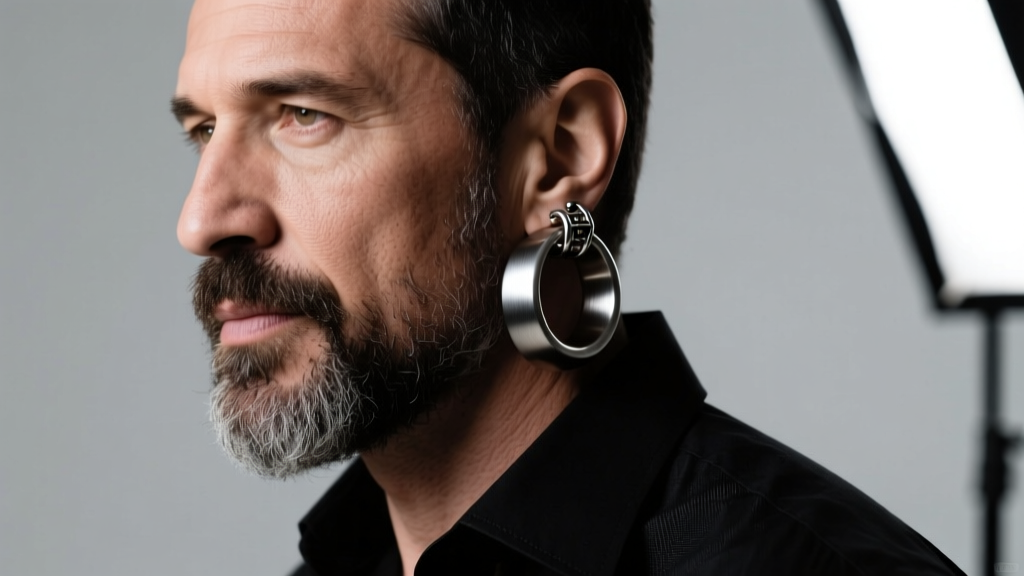
The landscape of men's jewelry has shifted dramatically over the last decade. As we navigate the streetwear and high-fashion crossover trends of 2026, statement pieces are heavier, more architectural, and significantly more prominent than the subtle studs of the past. However, buying mens large earrings requires a completely different approach than purchasing a standard 5mm stud. When you scale up the size of an earring, you are no longer just dealing with aesthetics; you are dealing with physics. Gravity, momentum, material fatigue, and earlobe health all become critical factors in your purchasing decision.
This comprehensive buying guide cuts through the marketing fluff to give you the exact metallurgical, structural, and stylistic specifications you need to invest in large-scale men's earrings that look incredible and won't destroy your piercings.
The Physics of Heavy Earrings: Gauge and the "Cheese Cutter" Effect
The most common mistake men make when buying large hoops or heavy dangle earrings is ignoring the wire gauge. Standard earlobe piercings are typically done at 20G (0.8mm) or 18G (1.0mm). While a lightweight 18G stud is perfectly fine for a healed lobe, a large, heavy hoop acts as a pendulum. Every time you pull a hoodie over your head, bump your ear against a car seat, or simply walk briskly, the weight of the earring creates kinetic momentum.
If that momentum is concentrated on a thin 1.0mm wire, it creates what professional piercers call the "cheese cutter effect." Over time, the thin wire will slowly slice through the bottom of your earlobe, causing irreversible stretching, tearing, and scarring.
Minimum Gauge Requirements for Large Earrings
- 16G (1.2mm): The absolute minimum wire thickness for medium-to-large hoops (20mm to 35mm diameter). Provides a good balance of aesthetic delicacy and structural support.
- 14G (1.6mm): The gold standard for large, heavy statement hoops (40mm+) and heavy geometric dangles. The thicker wire distributes the weight across a wider surface area of the earlobe, virtually eliminating the cheese cutter effect.
- 12G (2.0mm) and above: Generally reserved for stretched lobes or custom heavy-gauge body jewelry. Requires a pre-stretched piercing.
Expert Tip: If you are buying a large dangle earring where the decorative face is wide but the post is thin, ensure the post itself is at least 14G. A heavy titanium geometric pendant on a flimsy 20G wire will tear your lobe within months.
Material Integrity: What Holds Up to Heavy Wear?
Large earrings are highly susceptible to bending, warping, and catching on clothing. The material you choose dictates not only the weight of the earring but also its structural memory and biocompatibility. According to the Association of Professional Piercers (APP), material porosity and alloy composition are paramount for long-term wear.
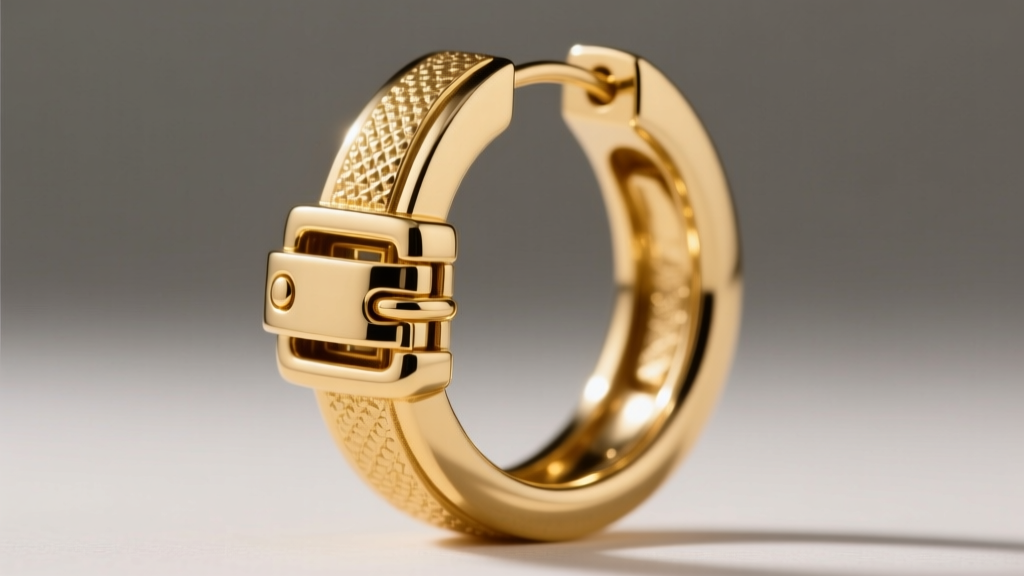
Top Tier: Implant-Grade Titanium (ASTM F136)
For large hoops and heavy drops, ASTM F136 Titanium is the undisputed champion. It is roughly 45% lighter than stainless steel, meaning you can wear a massive 50mm hoop without experiencing lobe fatigue. Furthermore, it possesses incredible tensile strength; if a titanium hoop gets snagged, it will resist warping far better than softer metals. It is also 100% nickel-free, eliminating the risk of contact dermatitis, which is a common issue when heavy metals rub against the sensitive skin of the earlobe.
Mid Tier: 14k Solid Gold
While 18k and 24k gold are highly prized for their rich color, they are too soft for large, structural earrings. A large 18k gold hoop will easily bend out of its perfect circle when you take off a t-shirt. The Gemological Institute of America (GIA) notes that alloying gold with metals like copper and silver increases its hardness. Therefore, 14k solid gold (which is 58.5% pure gold) offers the ideal compromise between luxury aesthetics and the structural rigidity required to maintain the shape of a large hoop.
Materials to Avoid for Large Earrings
- Sterling Silver (925): Far too soft. Large silver hoops will warp, bend, and tarnish rapidly. The copper content can also cause green discoloration on the earlobe when exposed to sweat.
- Plated Brass or Zinc Alloys: Often sold as cheap "statement pieces." The heavy base metal causes severe allergic reactions once the microscopic gold or silver plating wears off from friction against the earlobe.
Clasp Mechanics: Securing Large Hoops and Dangles
The clasp is the single biggest point of failure on any large hoop earring. A heavy earring puts constant downward and outward stress on the hinge and locking mechanism. Choosing the right clasp style is non-negotiable for securing your investment.
| Clasp Type | Security Level | Best Use Case | Failure Mode |
|---|---|---|---|
| Saddleback | Very High | Heavy, thick-gauge (14G/12G) hoops | Requires precise tension; can loosen if bent repeatedly |
| Threadless / Push-Pin | High | Custom heavy dangles and drops | Bending the pin too much can cause metal fatigue |
| Classic Latchback | Medium | Medium-weight statement hoops (16G) | Hinge pin can wear down, causing the clasp to pop open |
| Hinged Snap | Low to Medium | Lightweight, hollow, or thin-wire hoops | Snapping mechanism degrades quickly under heavy weight |
For the largest and heaviest hoops, always opt for a saddleback or a threadless system. Saddlebacks rely on the natural tension of the thick metal wire snapping into a secure groove, meaning there are no tiny, fragile hinges to break under the weight of the earring.
Proportions and Face Shape Guidelines
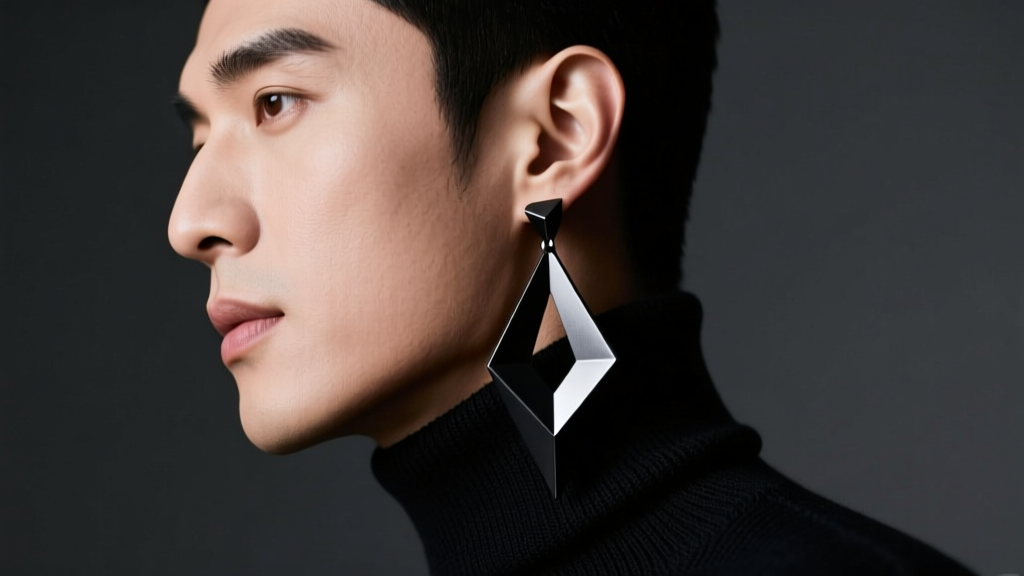
Scaling up earring size requires an understanding of facial proportions. Large earrings draw the eye immediately to the jawline and cheekbones. In 2026, the trend is moving away from generic oversized circles and toward intentional, architectural shapes that complement specific facial structures.
Styling by Face Shape
- Square Jawlines: Men with strong, angular jaws should look for large hoops with softened edges, such as oval hoops or rounded geometric drops. The curves in the metal will balance the sharp angles of the face. Avoid sharp, boxy dangles that over-emphasize the jaw's width.
- Round Faces: Opt for angular, linear drop earrings or rectangular/square hoops. The sharp vertical lines will elongate the face and provide a striking contrast to softer facial features. Avoid large, perfectly round hoops, which can make the face appear wider.
- Oblong / Long Faces: Wide, chunky hoops or shorter, wider geometric shapes work best. These add horizontal visual weight, balancing out the vertical length of the face. Avoid long, dangling chandelier styles that will drag the face down further.
Pricing Tiers: What to Expect in the Market
When shopping for large men's earrings, price is heavily dictated by material density and manufacturing precision. Because large earrings require significantly more raw material, the gap between cheap alloys and precious metals is vast.
Entry Level ($30 - $80)
At this tier, you will primarily find 316L Surgical Steel and PVD-coated titanium. While 316L is safe for most healed piercings, it is heavier than pure titanium. Watch out for: Brands that use thick decorative faces but hide a thin, weak 20G wire post to save on material costs. Always check the exact gauge specifications before purchasing.
Mid-Tier ($80 - $250)
This is the sweet spot for high-quality, everyday statement pieces. You will find solid 14k gold (in smaller, denser designs), premium ASTM F136 titanium from specialized body jewelry brands (like Anatometal or Industrial Strength, which offer large, plain, high-polish hoops), and expertly machined saddleback clasps. The finishing at this level is superior, meaning the metal won't harbor bacteria in microscopic scratches.
Luxury and Designer ($300+)
At the luxury tier, you are paying for brand prestige, intricate custom casting, and gemstone integration. Large diamond-paved hoops or custom-forged architectural pieces from high-end streetwear jewelers fall here. Ensure that even at this price point, the structural integrity (gauge and clasp) hasn't been sacrificed for the sake of intricate, fragile detailing.
Maintenance and Care for Heavy Pieces
Large earrings require more maintenance than small studs simply because they have more surface area to accumulate sebum, dead skin cells, and environmental dust. Furthermore, the constant movement of a heavy hoop can cause micro-abrasions inside the fistula (the piercing hole).
Clean your large earrings weekly using a mild, fragrance-free liquid soap and warm water. Avoid harsh chemical dips or ultrasonic cleaners if your large earrings feature tension-set stones, as the vibrations can loosen the settings. Always store large hoops hanging or laid perfectly flat in a velvet-lined box; tossing them loosely into a drawer guarantees they will become tangled, scratched, or bent out of their circular alignment.
Ultimately, investing in high-quality mens large earrings is about respecting both your personal style and your anatomy. By prioritizing a 14G or 16G thickness, choosing structurally sound materials like ASTM F136 titanium or 14k gold, and selecting the correct clasp mechanics, you can confidently wear bold, oversized statement pieces without compromising the health of your piercings.


