Claire's Baby Earrings: Material Safety & Healing Guide
Analyzing Claire's baby earrings materials, nickel risks, and gauge sizes against implant-grade titanium for safe infant ear piercing.


Piercing a baby’s ears is a major milestone for many families, often accompanied by a trip to a familiar mall retailer. When parents search for Claire's baby earrings, they are usually looking for convenience, cute designs, and the promise of 'hypoallergenic' safety. However, as of 2026, pediatric dermatologists and professional piercers are increasingly vocal about the metallurgical realities of commercial piercing jewelry. Understanding the exact material properties, gauge sizes, and mechanical safety features of these earrings is critical for preventing contact dermatitis, infection, and physical injury in infants.
The Metallurgical Reality of 'Surgical Steel'
The term 'surgical steel' is largely a marketing phrase rather than a strict metallurgical classification. Most standard Claire's baby earrings labeled as surgical stainless steel are manufactured from 316LVM (Vacuum Melted) stainless steel. While the vacuum melting process reduces surface inclusions and creates a smoother finish that resists bacterial adhesion, it does not remove nickel.
316LVM stainless steel typically contains between 8% and 10.5% nickel. For adults with established skin barriers, this may not trigger a reaction. However, an infant's stratum corneum (the outermost layer of skin) is significantly thinner and more permeable. When exposed to the saline environment of a healing piercing wound, the 316LVM alloy can leach nickel ions. The European Union’s Nickel Directive restricts nickel release from post-assembly jewelry to less than 0.5 µg/cm²/week. While many commercial earrings test just under this limit in laboratory settings, the acidic nature of human sweat and the prolonged moisture of a healing infant earlobe can accelerate ion release, leading to localized sensitization.
Material Comparison: Claire's vs. Implant-Grade Alternatives
To make an informed decision, parents must compare the off-the-shelf options against professional body jewelry standards. Below is a breakdown of the materials commonly found in mall retail environments versus the gold standard for initial piercings.
| Material | Nickel Content | Biocompatibility | Price Range | Best Use Case |
|---|---|---|---|---|
| Claire's Surgical Steel (316LVM) | 8 - 10.5% | Moderate (Risk of leaching in healing wounds) | $10 - $25 | Fully healed, older children |
| Claire's 14k Solid Gold | Trace to Low | High (Depends on specific alloy mix) | $40 - $85 | Healed lobes, nickel-sensitive skin |
| Claire's Gold-Plated / Filled | High (Base metal core) | Low (Plating wears off, exposing core) | $8 - $18 | Occasional wear in healed ears only |
| ASTM F136 Titanium (Professional) | 0% (Nickel-Free) | Exceptional (Implant-Grade, MRI safe) | $30 - $60 | Initial infant piercings, highly reactive skin |
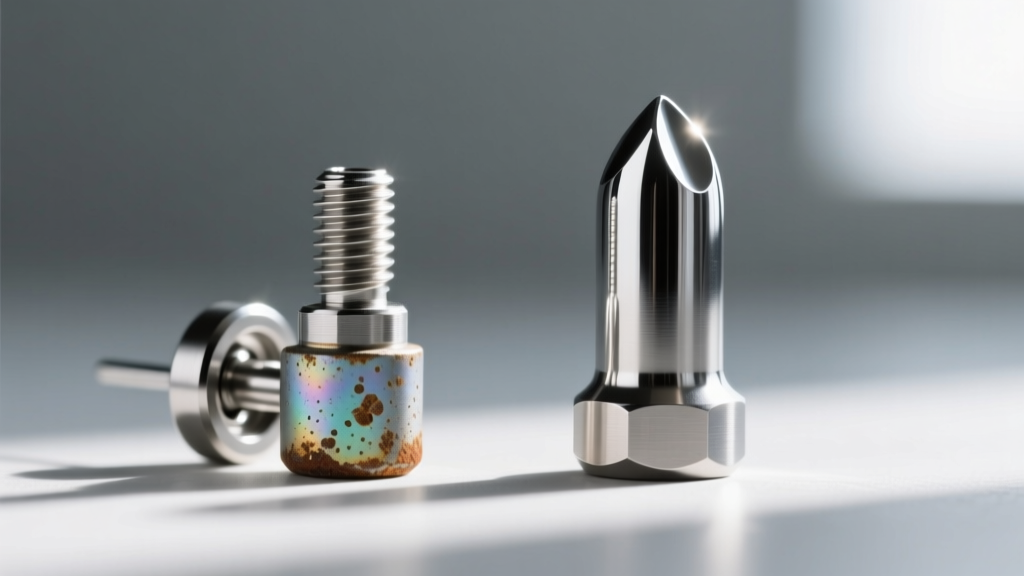
As the table illustrates, while Claire's 14k gold is a safer bet than their surgical steel, the absolute safest material for a brand-new piercing is ASTM F136 Implant-Grade Titanium (Ti-6Al-4V ELI). This specific titanium alloy contains zero nickel and is the same material used in orthopedic bone screws and pacemakers, ensuring total biocompatibility with human tissue.
Gauge Sizes and Post Mechanics for Infant Lobes
Beyond the metal alloy, the physical dimensions of the earring dictate how well the infant will tolerate the jewelry. Commercial baby earrings are typically manufactured in specific gauges and lengths that differ from professional body jewelry.
The 20G vs 18G Debate
Most Claire's baby earrings are manufactured at 20-gauge (0.81mm) or 18-gauge (1.02mm). A 20G post is thinner and generally causes less initial tissue displacement, making it a common choice for delicate infant lobes. However, professional piercers often advocate for 18G or even 16G (1.29mm) for initial piercings. Why? A thicker post provides more structural stability, reducing the 'cheese-cutter effect'—a phenomenon where a thin wire slowly migrates and slices through the delicate tissue of a healing earlobe if the baby pulls on it. If you are purchasing Claire's earrings for a healed piercing, 20G is perfectly acceptable. For a fresh piercing, an 18G titanium labret stud from a professional piercer offers superior mechanical stability.
Clutch Systems and Aspiration Hazards
The backing mechanism is arguably the most critical safety feature for infant jewelry. Standard 'butterfly' clutches are a massive choking and aspiration hazard for babies who frequently put their hands in their mouths. Furthermore, the sharp needle-like point of a standard post can scratch the infant's neck while they sleep.
- Push-In Safety Backs: Claire's often utilizes covered 'safety backs' that enclose the sharp point of the post. While this prevents neck scratching, the friction-fit mechanism can sometimes loosen over time due to the baby's movements and washing.
- Screw-In Flat Backs: The professional alternative is an internally threaded or threadless flat-back labret. These sit flush against the back of the earlobe, eliminating the sharp point entirely and requiring a specific tool or significant grip strength to remove, drastically reducing the risk of the baby pulling it out and swallowing it.
Navigating Nickel Allergies and Contact Dermatitis
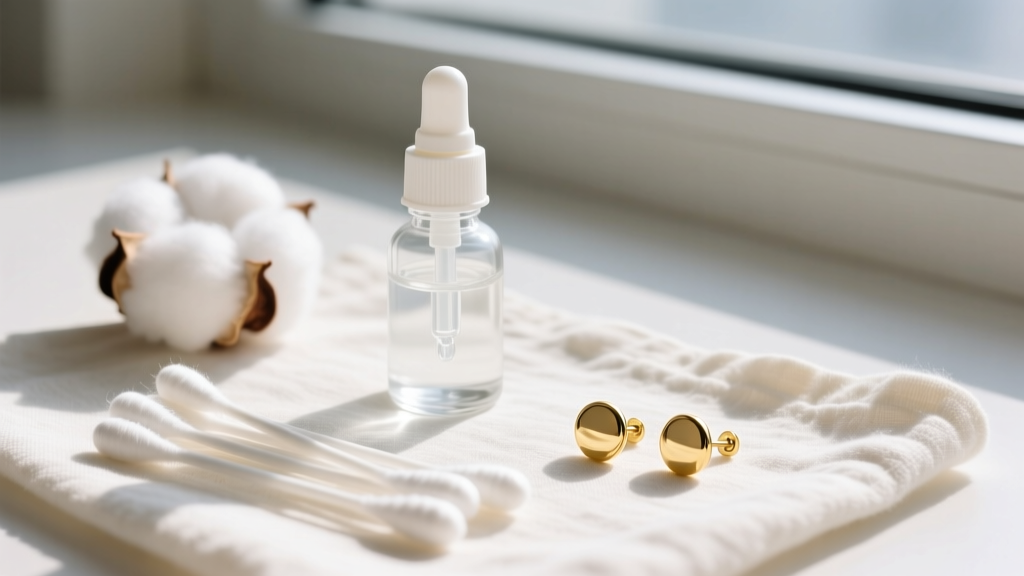
According to the Mayo Clinic, nickel allergy is one of the most common causes of allergic contact dermatitis. Symptoms include redness, itching, scaling, and in severe cases, weeping blisters. In infants, this is frequently misdiagnosed by parents as a standard 'piercing infection' (which is bacterial), leading to the unnecessary use of topical antibiotics that further irritate the skin.
Expert Troubleshooting Tip: If your baby's earlobes are red, itchy, and dry around the earring site, but there is no hot swelling or yellow/green pus, you are likely dealing with allergic contact dermatitis, not a bacterial infection. The American Academy of Dermatology recommends immediate removal of the offending metal and switching to a hypoallergenic barrier.
If you have already pierced your baby's ears at a mall retailer and notice these symptoms, do not simply take the earrings out and leave the holes empty, as they will close rapidly and trap the irritant inside the fistula. Instead, have a professional piercer or pediatrician swap the jewelry out for implant-grade titanium or bioplast retainers to keep the channel open while the allergy subsides.
Expert Verdict: When to Choose Claire's and When to Upgrade
Claire's baby earrings occupy a specific niche: they are highly accessible, feature age-appropriate and adorable designs (like tiny birthstones or animals), and are generally safe for already healed earlobes, provided you opt for their solid 14k gold lines or monitor for steel sensitivities.
The Actionable Framework for Parents:
- For the Initial Piercing: Skip the mall. Visit an APP-certified professional piercer who uses single-use, sterilized needles and ASTM F136 titanium flat-back labrets. This minimizes tissue trauma and eliminates nickel exposure during the vulnerable healing phase.
- For Jewelry Swaps (Post-Healing): Once the lobes are fully healed (typically 3 to 6 months for infants), Claire's 14k solid gold baby earrings are an excellent, budget-friendly option for everyday wear. Ensure you purchase the pairs with secure, covered safety backs.
- Avoid Gold-Plated Options: Never put gold-plated or gold-filled earrings in a baby's ear. The friction from sleeping and washing will wear through the microscopic gold layer within weeks, exposing the nickel-heavy brass or steel core directly to the child's skin.
By looking past the marketing terminology and focusing on exact material grades, gauge dimensions, and mechanical safety, parents can ensure their child's first jewelry experience is both beautiful and medically sound.


