How to Use Claire's Earring Cleaner: Step-by-Step Guide
Learn how to use Claire's earring cleaner for lobe and cartilage piercings. Follow our step-by-step aftercare guide to prevent infection and speed healing.

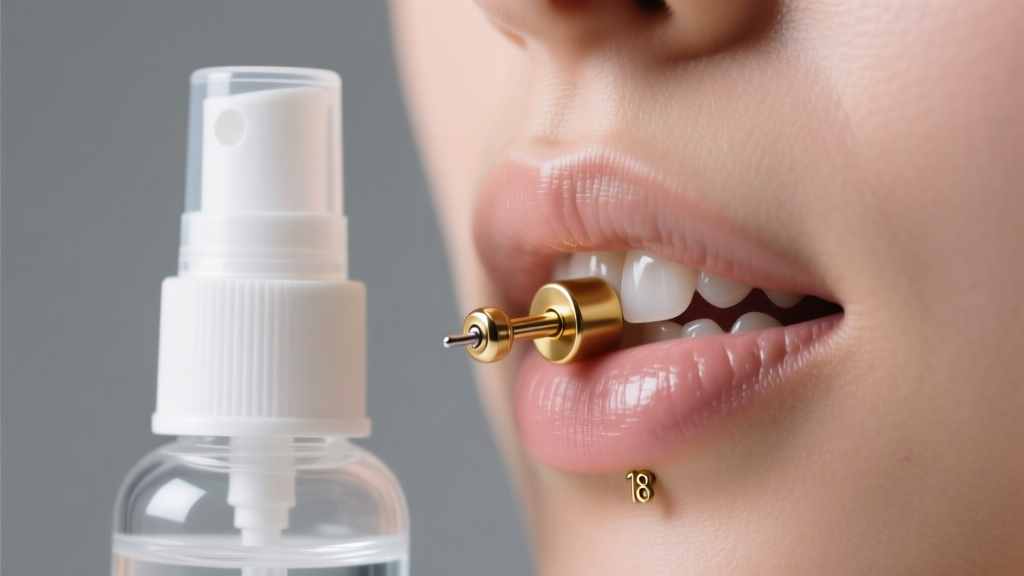
Introduction to Piercing Aftercare
Getting your ears pierced is a thrilling milestone, but the initial excitement must quickly transition into a disciplined aftercare routine. The healing process involves your body creating a fistula—a protective tube of skin tissue around the jewelry. Disrupting this delicate biological process with improper cleaning can lead to irritation bumps, prolonged healing, or infection. For decades, Claire's earring cleaner has been a staple in the starter-piercing market, widely used for both standard lobe and cartilage piercings. However, as dermatological and professional piercing standards have evolved through 2026, the way we approach commercial aftercare solutions requires a more nuanced, expert-level understanding.
This comprehensive, step-by-step guide will break down exactly how to use Claire's aftercare solutions effectively. We will explore the chemical differences between their product lines, adapt the cleaning routine for specific anatomical placements (like the avascular cartilage of the helix), and troubleshoot common healing complications using evidence-based methodologies.
Decoding the Formula: What Exactly is Claire's Earring Cleaner?
Before applying any solution to an open wound, you must understand its chemical composition. Claire's typically offers two distinct types of aftercare solutions, and confusing them is a primary cause of contact dermatitis in new piercings.
1. Sterile Saline Solution (0.9% Sodium Chloride)
The Association of Professional Piercers (APP) universally recommends sterile, preservative-free 0.9% saline as the gold standard for wound washing. Claire's standard piercing aftercare spray mimics this formulation. It is isotonic, meaning it matches the natural salinity of your body's tears and blood, allowing it to flush away lymph fluid and debris without damaging newly forming cells.
2. Antiseptic Formulas (Benzalkonium Chloride)
Some of Claire's 'Rapid Results' or specialized cleaners contain benzalkonium chloride or similar antiseptic agents. While these kill bacteria on contact, they are also cytotoxic to fibroblasts—the cells responsible for building your new fistula. Using harsh antiseptics on fresh cartilage can cause chemical burns, excessive dryness, and severe irritation bumps. Always check the active ingredients label; if you see antiseptics, reserve them only for fully healed piercings that need sanitization, not fresh wounds.
Step-by-Step Guide: Cleaning Standard Lobe Piercings
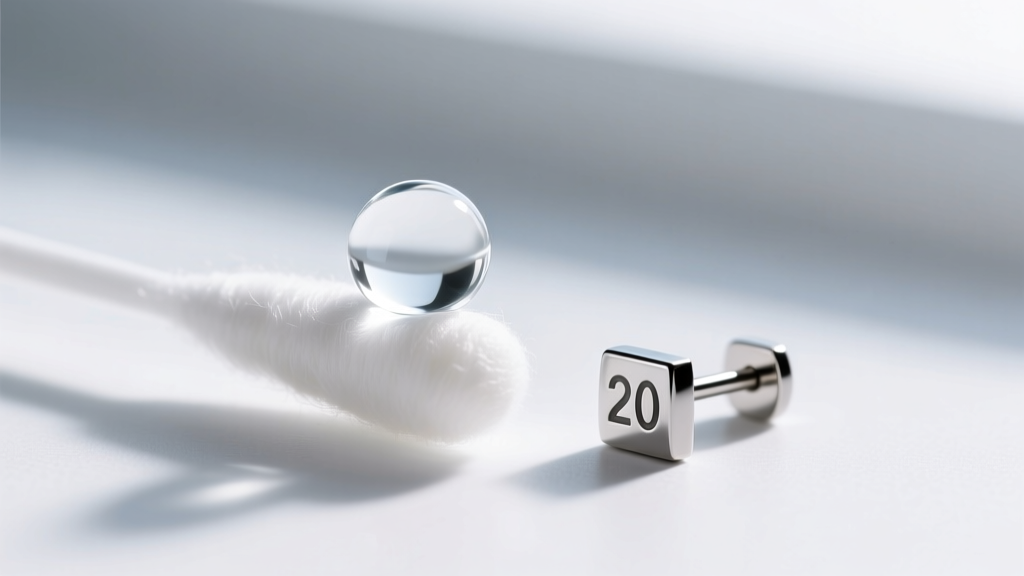
Standard earlobe piercings are highly vascular, meaning they have a rich blood supply that delivers white blood cells and nutrients to the wound site. This allows lobes to heal relatively quickly, typically within 6 to 8 weeks. When using a sterile saline-based Claire's earring cleaner on lobes, follow this exact protocol:
- Hand Hygiene: Wash your hands with antibacterial soap for a full 20 seconds. Never touch a fresh piercing with unwashed hands.
- Direct Application: Hold the spray nozzle about two inches from the ear. Spray the saline directly onto the front and back of the earring post for 3 to 5 seconds. The mechanical pressure of the spray helps dislodge dried lymph (crusties) without the need for abrasive wiping.
- Soak Time: Allow the solution to sit for 30 to 60 seconds. This softens any adhered debris.
- Gentle Drying: Using a piece of sterile, non-woven gauze, gently pat the area dry. Never use cotton balls or Q-tips, as they shed microscopic fibers that can wrap around the 20G or 18G earring post, leading to embedding and irritation.
- Frequency: Perform this routine exactly twice a day—once in the morning and once before bed. Over-cleaning strips the skin's natural microbiome and causes maceration (over-wetting), which weakens the tissue.
Adapting the Routine for Cartilage Piercings
Cartilage piercings (such as the helix, tragus, or conch) are fundamentally different from lobes. Cartilage is avascular; it lacks direct blood vessels and relies on surrounding tissue for nutrient exchange. Consequently, cartilage takes 6 to 12 months to fully heal and is highly prone to hypertrophic scarring (irritation bumps) if subjected to trauma or harsh chemicals.
If you had your cartilage pierced at a mall kiosk or Claire's using their standard 18G or 16G stud, you must be exceptionally gentle. Stick strictly to the sterile saline version of Claire's earring cleaner. Avoid any formulas containing alcohol, hydrogen peroxide, or benzalkonium chloride, as these will severely dry out the cartilage and stall the healing process.
| Variable | Standard Earlobe | Cartilage (Helix/Conch) |
|---|---|---|
| Typical Gauge Size | 20G (0.8mm) or 18G (1.0mm) | 18G (1.0mm) or 16G (1.2mm) |
| Full Healing Time | 6 - 8 Weeks | 6 - 12 Months |
| Cleaning Frequency | 2x Daily (Saline) | 1x to 2x Daily (Strictly Saline) |
| Primary Complication | Minor migration / Allergic reaction | Irritation bumps / Prolonged swelling |
| Sleeping Precaution | Travel pillow for first week | Travel pillow mandatory for 3+ months |
Troubleshooting Common Aftercare Issues
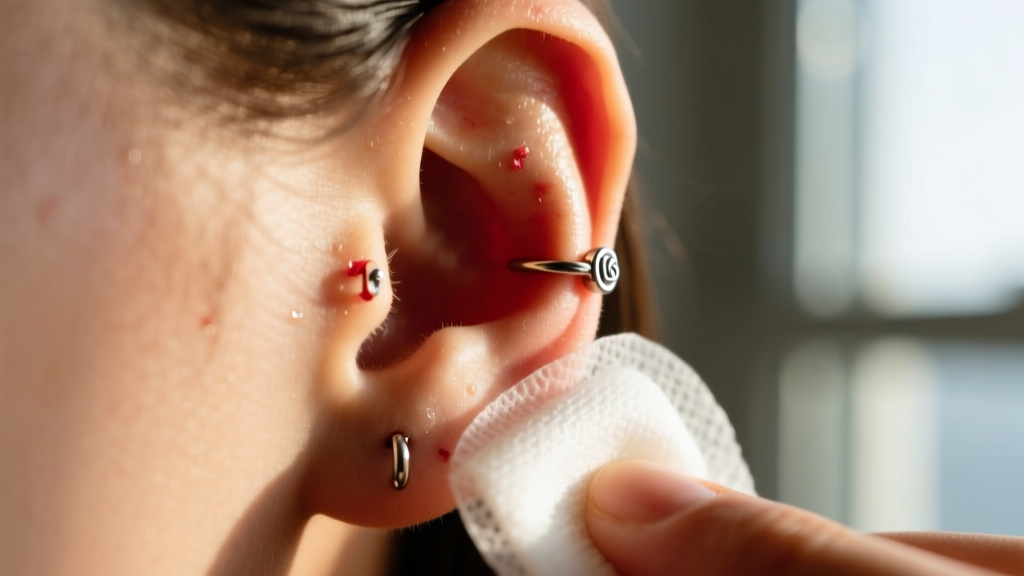
Even with perfect application of Claire's earring cleaner, complications can arise. According to the Mayo Clinic's guidelines on piercing care, distinguishing between normal healing symptoms and actual infections is critical for proper intervention.
Dealing with 'Crusties' (Lymph Fluid)
Waking up with yellowish or white crust around the earring post is entirely normal. This is lymph fluid, a byproduct of your immune system repairing the wound. Do not pick it off with your fingernails. Instead, spray the Claire's saline, let it soften the crust for a minute, and gently wipe it away with non-woven gauze.
Redness and Itching: The Nickel Factor
If your earlobe becomes intensely itchy, red, and flaky, the issue is rarely the cleaner itself. Most commercial starter earrings are made of 'surgical stainless steel,' an alloy that contains trace amounts of nickel. Up to 18% of the population has a nickel allergy. If you suspect contact dermatitis, consult a professional piercer about downsizing and upgrading your jewelry to ASTM F-136 implant-grade titanium, which is entirely nickel-free and biocompatible.
Irritation Bumps on Cartilage
Small, fleshy bumps next to the cartilage piercing hole are usually hypertrophic scars caused by pressure (sleeping on the ear) or angle issues, not infections. Saline sprays will keep the area clean, but the bump will only resolve once the physical pressure or jewelry angle is corrected by a professional.
Claire's Cleaner vs. DIY Sea Salt Soaks
A common debate in the piercing community is whether to use a commercial sterile spray or a homemade sea salt soak. While DIY soaks were popular in the early 2000s, modern experts strongly advise against them for several reasons:
- Imprecise Ratios: A proper saline solution requires exactly 0.9% sodium chloride. Mixing table salt or sea salt at home usually results in a hypertonic solution (too much salt), which dehydrates the wound and causes severe irritation.
- Lack of Sterility: Tap water and kitchen sea salt are not sterile. They can introduce environmental bacteria and amoebas to an open wound.
- Additives: Commercial sea salts often contain iodine, anti-caking agents, and trace minerals that are highly irritating to fistulas.
A commercially packaged, pressurized sterile saline spray (like the standard Claire's formula) guarantees a sterile, isotonic environment every time you press the nozzle, making it vastly superior to DIY kitchen mixtures.
When to Stop and Transition to Maintenance
Claire's earring cleaner is designed for wound care, not long-term jewelry maintenance. Once your fistula has fully matured—meaning the piercing is no longer tender, secreting lymph, or swelling—you must transition your routine. For healed lobes, this is around the 8-week mark. For cartilage, it may be a year or more.
Once healed, stop using wound wash. Instead, remove your earrings weekly and clean the jewelry itself using a mild, fragrance-free liquid soap and warm water, or a specialized jewelry polishing cloth for gold and silver pieces. Continuing to use saline on fully healed, closed skin offers no benefits and can leave a salty, drying residue on your earlobes.
Final Expert Takeaways
Mastering the use of Claire's earring cleaner comes down to reading the ingredient label and respecting your body's biological timelines. Opt for the pure 0.9% sterile saline formula, apply it with mechanical spray pressure rather than abrasive cotton swabs, and limit your cleaning to twice daily. By combining the right chemical solution with proper non-woven gauze techniques and an understanding of gauge-specific healing, you will ensure your new earrings remain a beautiful, complication-free addition to your personal style.


