Best Metals for Geometric Plane Earrings: A Material Guide
Compare the best metals for geometric plane earrings. Discover how titanium, 14k gold, and silver sheet gauges impact weight, comfort, and skin safety.

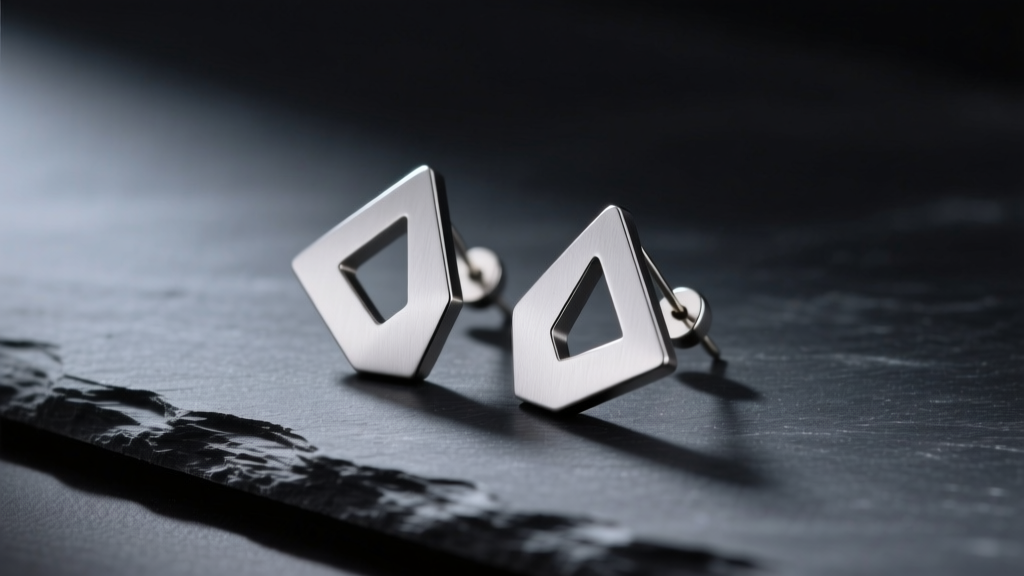
In the evolving landscape of minimalist jewelry, geometric plane earrings have cemented their status as a staple of modern adornment. Characterized by their flat, two-dimensional sheet-metal construction, these designs rely entirely on silhouette, light reflection, and material integrity. Unlike cast or wire-wrapped jewelry, flat plane earrings present unique structural challenges. The expansive surface area catches on hair and clothing, while the sheer weight of certain metals can cause irreversible lobe stretching over time. As we navigate the 2026 jewelry market, understanding the metallurgical properties of these flat designs is no longer optional—it is essential for both comfort and skin health.
The Anatomy of Plane Earrings: Why Sheet Gauge Matters
When evaluating plane earrings, the most critical specification after the metal alloy is the sheet gauge (thickness). Because these earrings lack three-dimensional structural reinforcement (like the curve of a hoop or the cylinder of a tube), they are highly susceptible to bending.
- 22-Gauge (0.64mm): Extremely lightweight but highly prone to warping. Only recommended for very small, delicate geometric studs under 10mm in diameter.
- 20-Gauge (0.81mm): The industry standard for medium-to-large flat dangles. It offers a beautiful, fluid drape on the earlobe without excessive weight.
- 18-Gauge (1.02mm): The sweet spot for structural rigidity. Ideal for oversized, architectural plane earrings that need to maintain a crisp, unbent silhouette.
- 16-Gauge (1.29mm): Reserved for heavy-duty cartilage flats or small, chunky geometric studs. Too heavy for large lobe dangles.
Material Comparison Chart: Density and Hypoallergenic Ratings
The surface area of a plane earring means more metal is resting against or dangling from the skin. This amplifies the risk of contact dermatitis if the alloy contains nickel or copper. Below is a comparative breakdown of the most common metals used in flat sheet jewelry.
| Material | Density (g/cm³) | Ideal Gauge | Nickel Release | Avg. Price Range |
|---|---|---|---|---|
| ASTM F136 Titanium | 4.43 | 18G - 16G | 0.00 µg/cm²/week | $35 - $85 |
| 14k Solid Gold | 12.90 | 20G - 18G | < 0.5 µg/cm²/week | $120 - $350 |
| Argentium Silver | 10.36 | 20G - 18G | 0.00 µg/cm²/week | $45 - $110 |
| Standard Brass | 8.53 | 22G - 20G | Variable (High) | $15 - $30 |
Note: Nickel release rates are based on the EU Nickel Directive standards for prolonged skin contact. High release rates correlate directly with allergic contact dermatitis.
Deep Dive: Top 3 Materials for Flat Plane Earrings
1. ASTM F136 Implant-Grade Titanium
For oversized, avant-garde plane earrings, titanium is the undisputed champion. With a density roughly one-third that of gold, titanium allows designers to create massive, ear-shielding geometric shapes that remain featherlight. However, not all titanium is equal. You must look for ASTM F136 certification, which guarantees the alloy is implant-grade and completely free of nickel. Furthermore, titanium flat planes can be anodized through electrolysis, creating vibrant, non-toxic surface colors (like deep purples and teals) without the use of chemical platings that eventually chip or wear off.
2. 14k Solid Gold (Nickel-Free Alloys)
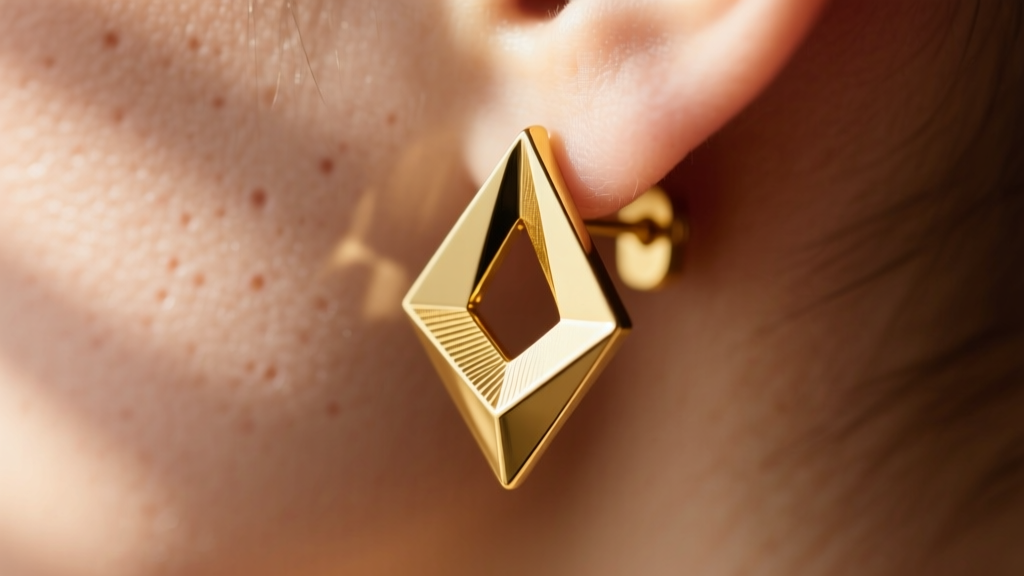
Gold offers unparalleled luster and reflects light beautifully across a flat, polished plane. However, its high density is a major drawback for large 2D designs. A 50mm circular plane earring in 18-gauge 14k gold can weigh upwards of 8 grams per ear—enough to cause lobe fatigue and stretching over a full day of wear. If you prefer gold, opt for 20-gauge sheets or choose designs that incorporate geometric cutouts (negative space) to reduce overall mass. Always verify that white gold is alloyed with palladium rather than nickel, as the flat surface area maximizes skin contact and allergy risks.
3. Argentium Sterling Silver (935 Grade)
Traditional 925 sterling silver tarnishes rapidly, and on a broad, flat plane, oxidation is immediately visible as a dull, grayish film. Argentium silver, which replaces some of the copper alloy with germanium, is highly tarnish-resistant. This makes it the superior choice for minimalist plane earrings that require a consistently bright, mirror-like finish with minimal maintenance. It also features a higher melting point and is naturally hypoallergenic, making it an excellent mid-tier option for sensitive ears.
Lobe vs. Cartilage: Placement and Hardware Dynamics
The placement of your plane earring dictates the necessary hardware and metal rigidity. For standard earlobe dangles, a simple 20-gauge sheet suspended from a lightweight french wire is sufficient. However, if you are wearing a flat plane design as a cartilage stud (such as in the conch or flat piercing), the mechanics change entirely.
Cartilage plane earrings require a flat-back labret post, typically in 16G or 14G, to provide a stable anchor. The flat decorative top is usually laser-welded to the post. Because cartilage is highly sensitive to pressure, the flat top must be perfectly flush and polished. Any micro-burrs left from the laser-cutting process will irritate the healing or healed fistula. Always ensure cartilage plane earrings are internally threaded or threadless (push-pin) to avoid tissue damage during insertion.

The Crucial Role of Edge Finishing
One of the most overlooked aspects of buying geometric plane earrings is edge finishing. Flat sheet metal is typically cut using high-powered fiber lasers. While precise, laser cutting leaves behind microscopic dross and sharp, 90-degree micro-burrs along the perimeter. If you run your finger along the edge of a poorly finished plane earring and it feels like a dull knife, it will eventually slice into your earlobe or catch and tear your hair.
High-quality jewelers employ a multi-step finishing process for flat planes:
- Barrel Tumbling: The cut sheets are tumbled in ceramic media to round off the sharp 90-degree corners, creating a soft, micro-beveled edge.
- Hand Filing: For thicker 16G or 14G planes, artisans hand-file the edges to ensure a smooth transition.
- Magnetic Polishing: The pieces are submerged in a magnetic field with fine stainless steel pins, which burnish the flat surfaces to a mirror shine without altering the crisp geometric geometry.
Pricing and Value: What Should You Pay in 2026?
When shopping for plane earrings, you are paying primarily for the raw material weight and the precision of the laser cutting. Beware of brands charging premium prices for 22-gauge brass or copper plated in thin layers of gold. These will inevitably bend and the plating will wear off the high-friction edges within months.
For a high-quality pair of 18-gauge titanium geometric dangles, expect to pay between $45 and $85. For solid 14k gold, the price scales directly with the surface area; a modest 15mm geometric stud should cost around $90 to $130, while expansive, ear-crawling 40mm plane designs will easily exceed $300 due to the gold weight. Always ask the retailer for the exact gram weight and gauge thickness before purchasing.
Final Verdict: Choosing Your Ideal Plane Earring
Geometric plane earrings are a masterclass in minimalist design, but their simplicity demands rigorous material standards. If your priority is lightweight comfort and absolute hypoallergenic safety for oversized shapes, ASTM F136 titanium is your best investment. If you desire the timeless warmth and prestige of gold, stick to 20-gauge sheets and incorporate negative space to manage the weight. By paying close attention to sheet gauge, edge finishing, and metal density, you can curate a collection of flat, architectural earrings that remain pristine, comfortable, and structurally sound for a lifetime.


