Classic Stud Earrings: The Ultimate Budget & Value Guide
Discover how to evaluate classic stud earrings for true value. Compare lab-grown vs natural diamonds, metal grades, and pricing tiers in our expert guide.

The True Cost-Per-Wear Metric
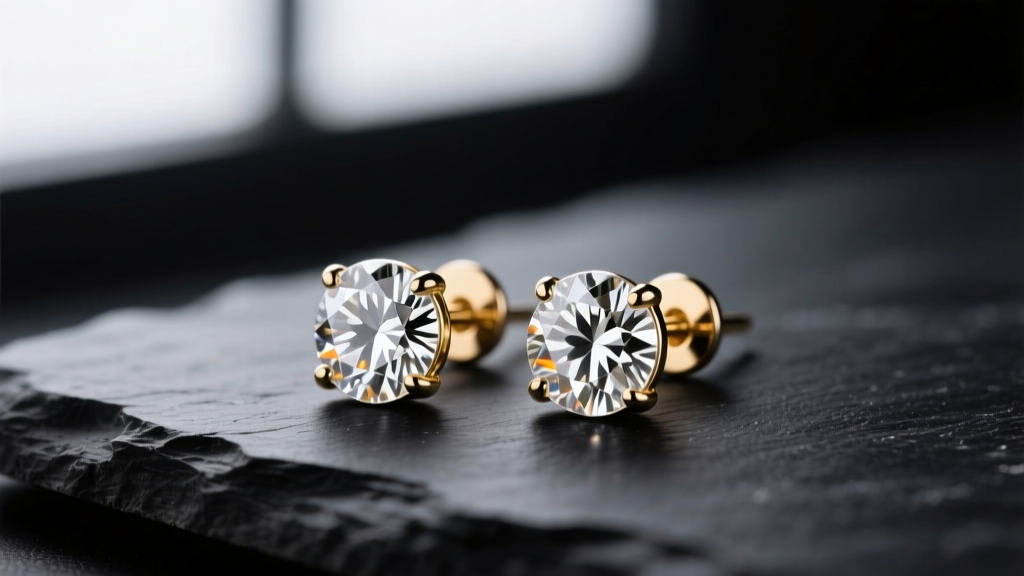
When building a fine jewelry wardrobe, few pieces offer the relentless versatility of classic stud earrings. Unlike statement dangles or seasonal hoops, a high-quality pair of studs can be worn daily, transitioning seamlessly from corporate boardrooms to evening events. However, the jewelry market is saturated with options ranging from $100 fashion alternatives to $20,000 luxury assets. To accurately assess the budget and value of classic stud earrings, we must move beyond brand prestige and evaluate the piece through a strict cost-per-wear and material integrity lens. In 2026, the divergence between lab-grown and natural diamond pricing, combined with fluctuating precious metal markets, makes this assessment more critical than ever for the savvy consumer.
Metal Alloys: Where Budget Meets Durability
The setting and post of your earrings represent the structural foundation of your investment. The choice of metal drastically impacts both the upfront budget and the long-term maintenance costs. Here is how the primary precious metals stack up for daily-wear studs:
- 14k Gold (58.5% Pure Gold): The undisputed champion of value and durability. The higher alloy content (usually mixed with copper, silver, or zinc) makes 14k gold highly resistant to scratching and bending. For heavy diamond studs, a 14k gold post is less likely to warp over time. It is also the most budget-friendly precious metal option.
- 18k Gold (75% Pure Gold): Prized for its rich, saturated yellow hue and higher intrinsic value. However, 18k gold is noticeably softer than 14k. If you are purchasing studs with a heavy center stone (e.g., over 1.50 carats total weight), an 18k gold post may slowly bend under the weight, requiring periodic straightening by a jeweler.
- Platinum (95% Pure Platinum): The premium choice for hypoallergenic needs and ultimate security. Platinum is dense, heavy, and naturally white, meaning it will never require rhodium plating. However, choosing platinum over 14k white gold will add roughly $300 to $600 to the setting cost alone, which may not be justifiable for a strict budget.
Value Trap Alert: If you choose 14k or 18k white gold, remember that the metal is naturally yellowish and is plated with rhodium to achieve a bright white finish. This plating wears off every 12 to 18 months with daily wear, requiring re-plating that costs between $50 and $100 per service. Over a decade, this maintenance cost can eclipse the initial savings of choosing white gold over platinum.
The Centerpiece: Lab-Grown vs. Natural Diamonds
The most significant budget decision you will make concerns the origin of the diamonds. The market for lab-grown diamonds has matured, and they are now optically, chemically, and physically identical to mined diamonds. According to the Federal Trade Commission's Jewelry Guides, lab-created stones must be clearly disclosed, ensuring transparency in the market. For buyers focused purely on visual impact and budget maximization, lab-grown diamonds offer an undeniable advantage.
| Total Carat Weight (CTW) | Natural Diamond (G/VS2) | Lab-Grown Diamond (G/VS2) | Value Proposition |
|---|---|---|---|
| 0.50 ct | $1,200 - $1,600 | $350 - $500 | Lab wins for budget; Natural holds minor resale value. |
| 1.00 ct | $3,500 - $4,800 | $600 - $900 | Lab offers a massive visual upgrade for the exact same price point. |
| 2.00 ct | $9,000 - $14,000 | $1,100 - $1,800 | Natural is a luxury asset class; Lab is pure, unapologetic adornment. |
If your goal is to maximize the physical size of the earrings on your earlobe, allocating your budget toward a 1.50 CTW lab-grown pair rather than a 0.75 CTW natural pair is the superior financial move for everyday wear. Natural diamonds only make sense if you view the purchase as a store of wealth or an heirloom asset intended for future liquidation.
Recalibrating the 4Cs for Ear Adornments
A common budget mistake is applying engagement ring grading standards to earrings. The Gemological Institute of America (GIA) grading system is absolute, but human vision is relative. Engagement rings are viewed from a distance of 12 to 18 inches. Earrings are viewed from a conversational distance of 2.5 to 3 feet. This optical reality allows for aggressive budget optimization.
1. Cut: The Non-Negotiable Metric
Never compromise on cut. A poorly cut diamond will look dead and glassy, even from across the room. Always demand an "Excellent" or "Ideal" cut grade. The light return (brilliance and scintillation) is what catches the eye from a distance, not the microscopic clarity characteristics.
2. Color: The Sweet Spot
For white gold or platinum settings, G or H color diamonds face up completely white to the naked eye at a conversational distance. Dropping from a D (colorless) to an H (near-colorless) can save you 20% to 30% on the stone cost with zero visible difference once the earring is in the ear. If you are setting the studs in 14k or 18k yellow gold, you can safely drop to J or K color, as the warm reflections of the gold will mask the faint yellow tint of the diamond.
3. Clarity: The Budget Unlock
Because the diamonds are in constant motion and viewed from afar, inclusions that would be unacceptable in a center engagement ring are perfectly fine for studs. SI1 (Slightly Included) and even eye-clean SI2 diamonds are exceptional values. As long as the diamond is "eye-clean" from a distance of 12 inches, you are paying for microscopic perfection that no one will ever see.
Post Gauge and Backing Mechanics: The Hidden Value Factors
A $5,000 pair of diamond studs is a terrible value if they fall out and are lost in a parking lot. The mechanical hardware of the earring is a critical component of its overall value assessment.
Understanding Post Gauge
The thickness of the metal post is measured in gauges. The industry standard for classic studs is 20-gauge (0.81mm). This is perfectly adequate for studs under 1.00 carat total weight. However, if you are purchasing heavier studs (1.50 CTW and above), you must upgrade to an 18-gauge (1.02mm) post. A 20-gauge post supporting a heavy diamond will slowly droop forward, causing the stone to point downward rather than facing outward, ruining the visual impact of the jewelry.
Securing the Asset: Backing Types
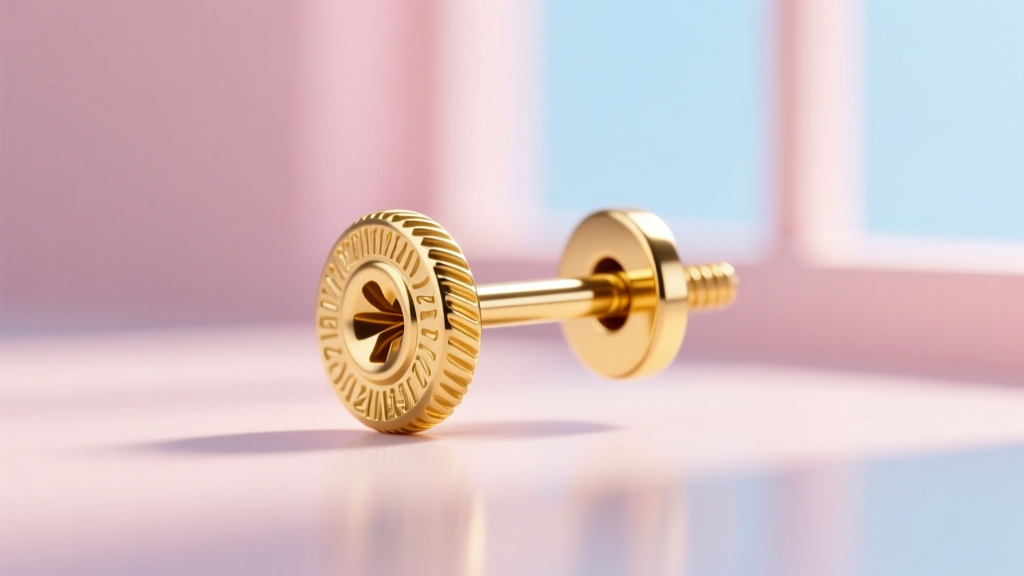
- Friction Backs (Butterfly): The standard, low-cost option. They rely on tension to stay on the post. Over time, the metal loops stretch out, and they are easily snagged on hair or sweaters. High risk of loss.
- Screw Backs: The post is threaded, and the backing screws on. Highly secure, but the threads can strip if cross-threaded, and they are tedious to put on and take off daily.
- La Pousette (Locking) Backs: The gold standard for security. These feature a mechanical locking mechanism that clicks securely into a groove on the post. They add $100 to $200 to the total cost of the earrings, but they virtually guarantee the earrings will not fall off. For any stud valued over $2,000, La Pousette backs are a mandatory investment to protect your capital.
Sourcing and Avoiding Retail Markups
Where you buy is just as important as what you buy. Traditional brick-and-mortar mall jewelers often carry a 100% to 200% markup on diamond stud earrings to cover high overhead, inventory holding costs, and aggressive sales commissions. To maximize your budget, look toward online bespoke jewelers or direct-to-consumer wholesale platforms that provide GIA or IGI grading reports for the exact stones being set.
Always demand a grading report for any natural diamond stud over 0.50 CTW. For lab-grown diamonds, an IGI or GCAL report is standard and provides the necessary assurance that the 4Cs you are paying for are accurate. Avoid "diamond studs" sold without a certificate based purely on an in-house appraisal, as this is a primary vector for over-grading and inflated pricing.
Final Verdict: The Value Formula
To achieve the ultimate budget-to-value ratio for classic stud earrings in today's market, the optimal configuration is a pair of 1.00 CTW Lab-Grown Diamonds (G Color, SI1 Clarity, Excellent Cut), set in 14k White or Yellow Gold with 18-gauge posts and La Pousette locking backs. This specific combination delivers maximum visual impact, structural integrity, and daily security, all while keeping the total investment well under the $1,500 threshold. By understanding the optical physics of how earrings are viewed and the mechanical realities of how they are worn, you can bypass marketing illusions and purchase a piece of fine jewelry that offers unparalleled cost-per-wear value.


