The Ultimate Guide to Cleaning White Jade Earrings Safely
Learn how to safely clean, store, and maintain your white jade earrings. Discover expert tips to protect the stone's luster and metal settings.

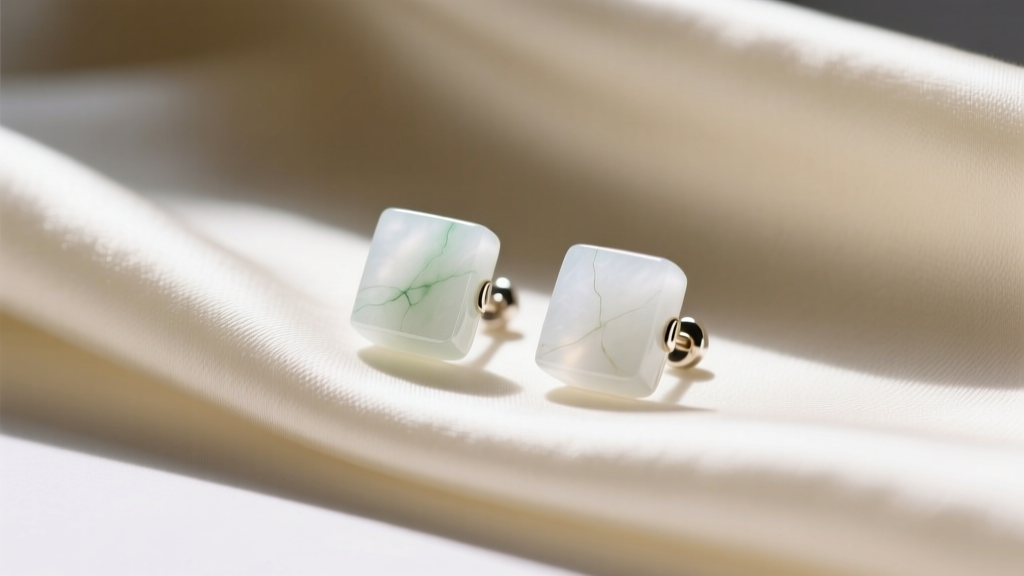
White jade earrings, whether carved from nephrite or jadeite, possess an ethereal, milky translucency that catches the light unlike any other gemstone. However, their organic-looking beauty belies a complex mineral structure that requires highly specific care. Unlike diamonds or sapphires, jade is a porous, relatively soft aggregate mineral that can easily lose its luster, suffer micro-fractures, or undergo chemical degradation if cleaned using standard jewelry methods. In this comprehensive guide, we explore the exact metallurgical and mineralogical protocols for maintaining your white jade earrings, ensuring they remain pristine for generations.
Mineralogy Matters: Nephrite vs. Jadeite
Before applying any cleaning solution to your white jade earrings, you must understand the specific mineral you are dealing with. The term "jade" is an umbrella term for two distinct metamorphic rocks:
- Nephrite: A calcium magnesium iron silicate. It ranks between 6.0 and 6.5 on the Mohs hardness scale. Nephrite is incredibly tough due to its interlocking fibrous crystal structure, making it highly resistant to chipping, but its slightly softer surface is more prone to micro-scratches and losing its high polish over time.
- Jadeite: A sodium aluminum silicate. It ranks between 6.5 and 7.0 on the Mohs scale. Jadeite is harder, takes a much higher, glass-like polish, and exhibits the prized "Ice" or "Glass" species translucency. High-quality Type A white jadeite (often called "mutton fat" jade) can command prices upwards of $5,000 to $50,000+ per carat, making proper care a matter of serious financial preservation.
According to the Gemological Institute of America (GIA), both varieties are sensitive to sudden temperature changes and harsh acids, but their internal structural differences dictate how they respond to mechanical stress and chemical exposure.
The "Type" Classification and Chemical Vulnerabilities
The most critical E-E-A-T factor in jade maintenance is understanding the gemological "Type" classification, particularly for white jadeite. The market is flooded with treated stones, and using the wrong cleaner on a treated stone will permanently destroy it.
Type A: 100% Natural and Untreated
Type A jade has only been cut, carved, and polished, sometimes with a traditional, harmless plum-wax coating to enhance the final shine. This is the only type of jade that can safely withstand mild, long-term wear and standard gentle cleaning protocols.
Type B: Acid-Bleached and Polymer-Impregnated
To achieve a flawless, stark white appearance, lower-quality brownish jadeite is soaked in hydrochloric acid to strip impurities, then vacuum-impregnated with a polymer resin to restore its structural integrity. Warning: If you use alcohol, acetone, or heat on Type B jade, the polymer resin will melt and degrade, leaving the stone cloudy, brittle, and structurally compromised.
Type C: Dyed Jade
Type C jade has been artificially colored. While less common in white jade (which is prized for its natural lack of color), some pale stones are bleached and dyed to mimic high-end white jadeite. Harsh chemicals and heat will cause the dye to bleed and fade rapidly.
The Enemies of White Jade: What to Avoid
To protect the structural integrity and surface polish of your white jade earrings, you must completely avoid the following common jewelry cleaning methods:
- Ultrasonic Cleaners: The high-frequency cavitation bubbles created by ultrasonic machines will aggressively exploit microscopic internal inclusions and cleavage planes in the jade, leading to catastrophic shattering.
- Steam Cleaners: Thermal shock from high-pressure steam can cause immediate fracturing. Furthermore, the heat will melt the polymer resins in Type B treated jade.
- Chlorine and Bromine: Swimming pools, hot tubs, and household bleach contain halogens that actively pit the surface polish of jade and weaken the molecular structure of the stone over time.
- Citrus-Based Degreasers: Dish soaps containing d-limonene (citrus extract) or heavy degreasing agents will strip the natural waxes applied during the final polishing stage of jade carving, leaving it looking dull and chalky.
Step-by-Step Cleaning Protocol for White Jade
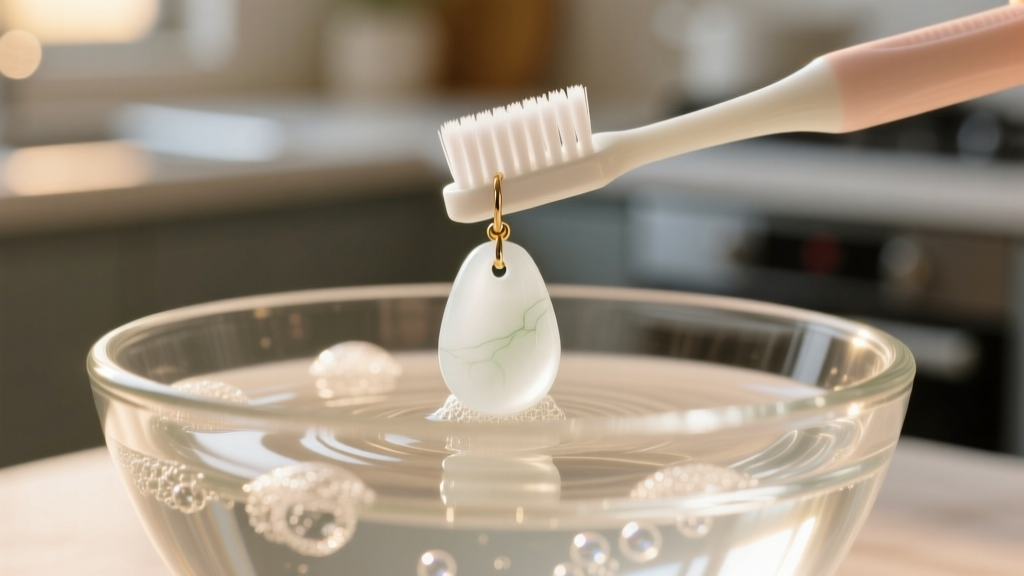
Follow this exact protocol to safely remove sebum, cosmetic residue, and environmental dust from your white jade earrings without damaging the stone or its metal setting.
1. Preparation and Solution Mixing
Fill a small glass or ceramic bowl with lukewarm distilled water. Tap water contains calcium and magnesium ions that can leave hard water spots in the microscopic pores of the jade. Add two drops of a pH-neutral cleaner, such as unscented baby shampoo or pure liquid castile soap. Avoid any soap with moisturizing beads or exfoliants.
2. The Brief Soak
Submerge the white jade earrings in the solution for exactly 2 to 3 minutes. Do not leave jade soaking for hours, as prolonged water exposure can weaken the adhesive used in bezel or prong settings, especially if the earrings utilize epoxy resins to secure the stone.
3. Gentle Agitation
Using a soft-bristled baby toothbrush or a clean, soft makeup blending brush, gently sweep the bristles over the surface of the jade and the metal setting. Pay special attention to the back of the earring where skin oils and dead skin cells accumulate. Never apply heavy pressure; let the bristles do the work.
4. The Distilled Rinse
Rinse the earrings under a gentle stream of lukewarm distilled water to wash away the suspended dirt and soap residue.
5. Drying and Buffing
Pat the earrings dry with a clean, lint-free microfiber cloth. Do not use paper towels or tissue paper, as the wood fibers in paper products are hard enough to inflict micro-scratches on the polished surface of nephrite and lower-grade jadeite.
Caring for the Metal Settings and Posts
White jade is frequently set in 925 sterling silver, 14k/18k solid gold, or gold vermeil. Because white jade earrings can be surprisingly heavy due to the density of the stone (specific gravity of 3.0 to 3.3), they often utilize thicker 18-gauge or 16-gauge earring posts to support the weight and prevent the earlobe from tearing.
Cleaning the Post: You can sanitize the metal earring post using a cotton swab dipped in 70% isopropyl alcohol. Crucial: Ensure the alcohol does not drip onto the jade itself, especially if you suspect the stone might be a polymer-treated Type B jadeite.
Polishing Tarnished Silver: If your white jade is set in sterling silver, the silver will inevitably tarnish due to sulfur exposure in the air. Use a treated silver polishing cloth to gently buff the metal. Fold the cloth so you can use a pointed corner to get into the prongs or bezel, but avoid rubbing the polishing cloth over the jade, as the mild abrasives in the cloth will dull the stone's finish over time.
Cleaning Agents & Jade Safety Matrix
| Cleaning Agent | Safety Level | Effect on Jade & Setting |
|---|---|---|
| Lukewarm Distilled Water | Safe | Ideal base for cleaning; prevents mineral deposits. |
| pH-Neutral Baby Shampoo | Safe | Gently lifts sebum without stripping natural waxes. |
| Isopropyl Alcohol | Dangerous | Melts polymer resins in Type B jade; dries out stone. |
| Bleach / Chlorine | Severe Danger | Pits surface polish; degrades metal solder joints. |
| Ultrasonic Vibrations | Severe Danger | Causes catastrophic micro-fractures and shattering. |
| Silver Polish Liquid | Dangerous | Chemicals will stain the porous surface of the jade. |
Proper Storage and Long-Term Preservation
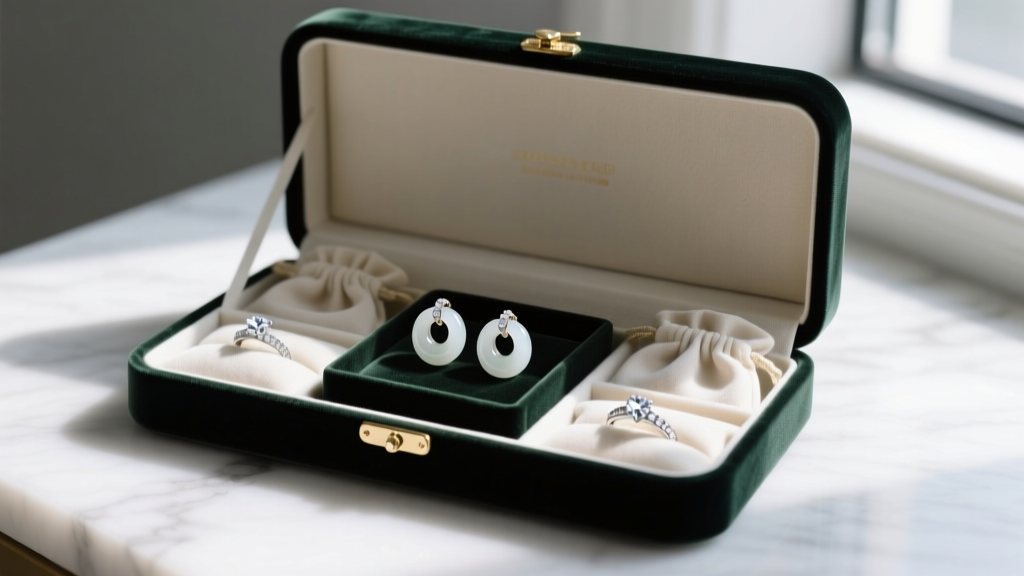
How you store your white jade earrings when they are not being worn is just as important as how you clean them. Jade is an aggregate mineral, meaning it is tough, but its surface hardness (6.0 - 7.0) is significantly lower than that of diamonds (10), sapphires (9), and even quartz (7).
The Scratch Hazard
If you toss your white jade earrings into a communal jewelry box alongside diamond studs or sapphire rings, the harder gemstones will effortlessly scratch the surface of the jade, leaving permanent white, cloudy abrasions. Always store white jade earrings in their own individual anti-tarnish flannel pouches or a dedicated compartment lined with soft velvet.
Humidity and Temperature Control
Unlike opals, which require specific hydration levels to prevent crazing, jade is relatively stable. However, extreme, prolonged dry heat (such as leaving them on a dashboard in summer or near a radiator) can cause the natural moisture within the stone's micro-structure to evaporate, leading to a dull, chalky appearance. Store them in a climate-controlled room with normal ambient humidity.
The "Human Element": Nourishing the Jade
There is an ancient Chinese proverb that states: "Jade nourishes the human, and the human nourishes the jade" (Ren Yang Yu, Yu Yang Ren).
From a gemological perspective, this poetic proverb holds scientific weight for Type A nephrite and jadeite. The microscopic pores on the surface of natural, untreated white jade interact with the natural sebum (oils) produced by human skin. Over months and years of regular wear, these natural oils slowly penetrate the outermost layer of the stone, acting as a continuous, organic polish. This process enhances the stone's translucency and gives it a deep, rich "wet" luster that cannot be replicated in a factory. Therefore, the absolute best way to maintain the beauty of high-quality, untreated white jade earrings is simply to wear them often.
Troubleshooting Common Issues
My White Jade Looks Cloudy and Dull
If your Type A jade has lost its luster, it is likely coated in a microscopic layer of hardened cosmetics, hairspray, or dead skin cells. Repeat the distilled water and baby shampoo cleaning protocol, but allow the stone to soak for a full 5 minutes before gently brushing. If the cloudiness is internal, you may have purchased Type B treated jade that is beginning to degrade; unfortunately, this cannot be reversed.
I Scratched the Surface of the Jade
Because jade is carved and polished rather than faceted, surface scratches disrupt the smooth, domed cabochon surface. Do not attempt to buff it out yourself with commercial polishing compounds like jeweler's rouge, as these contain chemicals that can stain the stone. Take the earrings to a professional lapidary who specializes in jade; they can safely re-polish the stone using diamond paste and traditional buffalo leather wheels without altering the carving's geometry.
For more detailed information on identifying and caring for specific gemstone varieties, consult the GIA's official Jade Care and Cleaning guide. By respecting the unique mineralogical properties of white jade, your earrings will retain their ethereal, milky glow for a lifetime.


