How to Clean Black Hoop Earrings With Diamonds Safely
Learn expert techniques to clean black hoop earrings with diamonds without damaging the dark metal finish or loosening the settings.

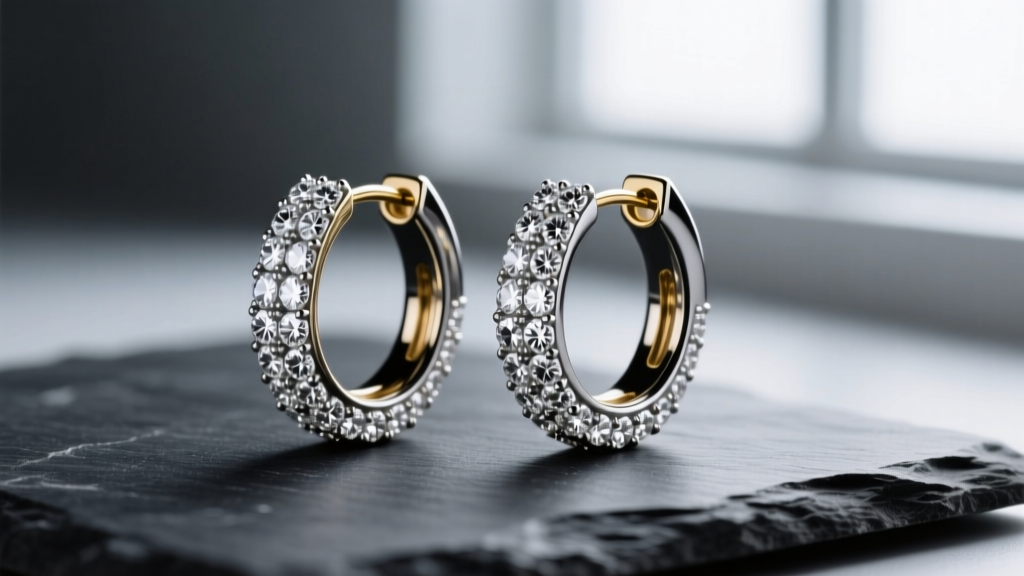
The striking contrast of black hoop earrings with diamonds makes them a staple in modern jewelry collections. Whether you are wearing a pair of 14-gauge blackened titanium huggies or 18k gold hoops plated in black rhodium, the dark metal amplifies the brilliance of the diamonds. However, this specific combination presents a unique metallurgical challenge. Diamonds are highly oleophilic (oil-attracting) and require thorough degreasing to maintain their sparkle, while black metal finishes are notoriously fragile and susceptible to stripping, scratching, and chemical degradation.
Standard jewelry cleaning advice—such as using ultrasonic machines, silver polishing cloths, or harsh ammonia-based dips—can permanently ruin the dark patina or plating of your hoops. In this comprehensive 2026 care guide, we break down the exact protocols for maintaining the structural integrity of your hoop hinges, preserving the blackened finish, and restoring the light return of your diamonds.
The Chemistry of Blackened Metals vs. Diamond Grime
To properly care for your earrings, you must first understand the materials involved. Diamonds naturally attract sebum, lotions, and cosmetic oils. This microscopic layer of grease acts as a barrier, preventing light from entering the pavilion of the stone and resulting in a dull, cloudy appearance. According to the Gemological Institute of America (GIA), regular degreasing is essential for diamond maintenance.
However, the black metal surrounding the diamond is rarely solid black. It is usually achieved through one of three methods:
- Black Rhodium Plating: A thin layer (0.1 to 0.5 microns) of rhodium alloyed with darkening agents like ruthenium, applied over white gold or platinum.
- Oxidized Sterling Silver: A chemical patina (often using liver of sulfur) forced into the recesses of silver to create an antique black look.
- Black PVD (Physical Vapor Deposition):strong> A modern, highly durable vacuum-coating process increasingly used in 2026 for titanium and stainless steel hoops.
While diamonds can withstand almost any chemical solvent, black rhodium and oxidized silver cannot. Ammonia, bleach, and abrasive polishing compounds will strip the black finish, revealing the bright white or yellow metal underneath.
Identifying Your Black Metal Finish
Before applying any cleaning solution, identify your hoop's base material and finish. Use the table below to determine the vulnerability of your specific earrings.
| Material / Finish | Durability | Cleaning Vulnerability | Repair / Re-Plating |
|---|---|---|---|
| Black Rhodium (Gold/Platinum) | Low to Medium | Highly vulnerable to friction, ammonia, and ultrasonic cavitation. | Requires professional re-plating by a jeweler when worn. |
| Oxidized Sterling Silver | Medium | Polishing cloths and silver dips will strip the black oxidation entirely. | Can be re-oxidized at home using liver of sulfur solutions. |
| Black PVD (Titanium/Steel) | Very High | Resistant to most chemicals, but can be scratched by diamond dust or diamond files. | Cannot be easily repaired; requires factory re-coating. |
| Black Ceramic | High (but brittle) | Chemically inert, but vulnerable to shattering from hard impacts. | Cannot be repaired if cracked or chipped. |
Step-by-Step Cleaning Protocol
Follow this exact methodology to safely clean black hoop earrings with diamonds without compromising the dark finish.
Step 1: The Dry Dusting
Never apply liquid to dusty jewelry. Dust contains microscopic silica particles that can scratch both the metal and the diamond's girdle. Use a clean, dry, ultra-soft makeup brush to gently sweep away loose debris from the pave settings and the hoop's hinge.
Step 2: The Lukewarm Degreasing Bath
Mix a few drops of pH-neutral, lotion-free dish soap (such as original Dawn) into a bowl of distilled lukewarm water. Avoid tap water, as the chlorine and hard minerals can leave a film on the diamonds and react with oxidized silver. Submerge the hoops for exactly 3 to 5 minutes. This allows the surfactants to break down the oleophilic oils trapped beneath the diamond culets.
Step 3: Targeted Diamond Brushing
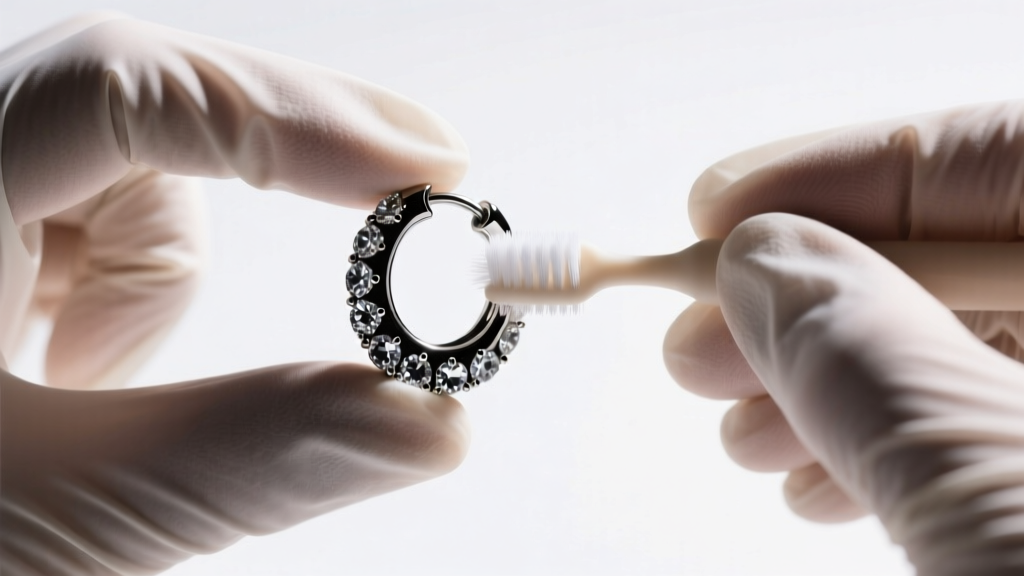
Using a brand-new, extra-soft baby toothbrush, gently brush only the diamonds. Use circular motions on the crown (top) of the stone, and carefully sweep the bristles under the pavilion (bottom) where grease accumulates. Crucial: Do not scrub the black metal shanks or the prongs. Let the soapy water do the work on the metal; friction will wear away black rhodium plating.
Step 4: The Distilled Rinse and Pat-Dry
Rinse the hoops under a gentle stream of distilled water. Place them on a lint-free microfiber cloth and pat them dry. Avoid rubbing the metal. Use a wooden toothpick or a blast of compressed air to remove trapped water from the hoop's clasp mechanism.
The Dangers of Ultrasonic and Steam Cleaners
Many jewelers recommend ultrasonic cleaners for diamonds, but they are a massive risk for black hoop earrings with diamonds. Here is why you must avoid them:
"Ultrasonic waves create microscopic cavitation bubbles that implode with immense force. While this is excellent for blasting dirt out of secure prong settings, it can literally vibrate the microscopic layers of black rhodium plating right off the gold substrate." — American Gem Society Care Guidelines
Furthermore, if your hoops feature black diamonds rather than white diamonds set in black metal, ultrasonics are strictly prohibited. Most commercial black diamonds are heavily included natural stones that have been irradiated or fracture-filled to achieve their uniform dark color. The high-frequency vibrations of an ultrasonic cleaner can exploit these internal fractures, causing the diamond to crack or shatter entirely.
Similarly, steam cleaners expose the jewelry to sudden thermal shocks. If your hoop hinges contain microscopic lubricants, or if the black finish is achieved via certain chemical patinas, the 212°F (100°C) steam can cause the finish to blister or peel.
Maintaining Hoop Hinges and Prong Settings
Hoops and huggies rely on mechanical hinges—such as the popular clicker, saddleback, or latch-back closures. Dirt and skin cells accumulate inside the 14-gauge or 16-gauge wire tubing of the hinge, causing the clasp to stick or fail to snap shut securely.
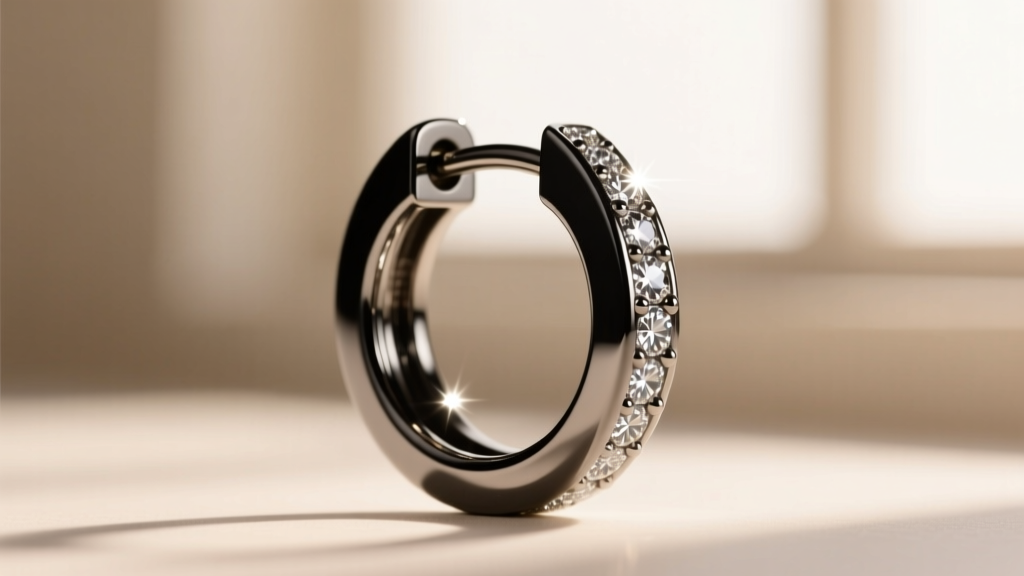
To clean the hinge without damaging the black exterior, dip a cotton swab in 91% isopropyl alcohol and carefully swab the inside of the clasp mechanism. Isopropyl alcohol evaporates quickly and will not cause rust or tarnish on the internal steel springs often found in clicker hoops. Never use oil or WD-40 to lubricate a sticky jewelry hinge; oils will attract more dirt and eventually ruin the diamonds set near the closure.
Regarding the prongs: Black settings often utilize blackened prongs to hide the metal and make the diamonds appear as though they are floating. Because blackened prongs show wear much faster than bright white prongs, inspect them monthly with a 10x jeweler's loupe. If you see bright white metal showing through the prong tips, the setting is wearing thin and requires professional re-tipping and re-plating before a diamond is lost.
Long-Term Storage and Preservation
How you store your black diamond hoops is just as critical as how you clean them. Diamonds are a 10 on the Mohs hardness scale, meaning they will easily scratch the black rhodium, PVD, or oxidized silver of your hoops if they are tossed loosely into a jewelry box.
- Individual Pouches: Always store each hoop in its own soft flannel or anti-tarnish pouch.
- Climate Control: Oxidized silver hoops should be stored with silica gel packets to prevent moisture from altering the patina.
- Friction Avoidance: Never sleep in black-plated hoops. The friction against cotton pillowcases will accelerate the wear of the black rhodium on the bottom shank of the hoop.
By adhering to these targeted, material-specific cleaning protocols, your black hoop earrings with diamonds will maintain their bold, high-contrast aesthetic and structural security for years to come.


