The Silver Earrings Circle: Technical Guide to Hoop Geometry
Explore the metallurgy, wire gauges, and closure mechanics of the silver earrings circle. An expert technical guide to hoop geometry and piercing health.

The Biomechanics and Metallurgy of the Circular Hoop
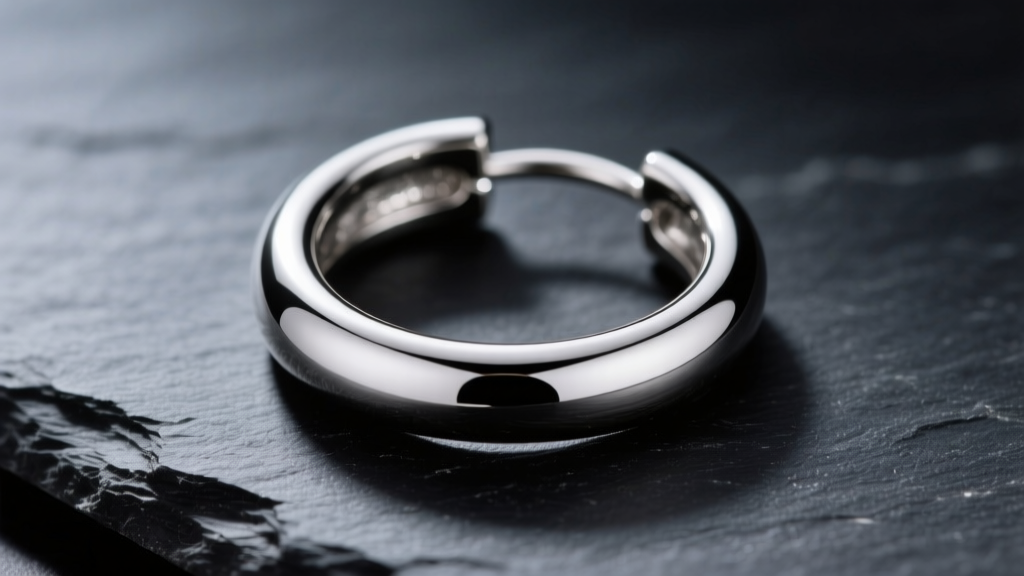
When evaluating the structural integrity of body jewelry, the geometry of the piece is just as critical as the material itself. The classic silver earrings circle remains a staple in both lobe and cartilage piercings, but its continuous curved architecture introduces unique mechanical stresses. Unlike straight barbells or flat-back labrets, a circular hoop acts as a lever, transferring kinetic energy and gravitational torque directly into the fistula (the piercing channel). For jewelers and piercing enthusiasts alike, understanding the intersection of silver metallurgy and circular geometry is essential for ensuring long-term tissue health and jewelry longevity.
In this technical deep dive, we will deconstruct the material science of silver alloys, analyze the structural failure points of hoop closures, and provide a definitive framework for sizing and maintaining circular silver jewelry.
Metallurgical Breakdown: Fine, Sterling, and Argentium Silver
Not all silver is created equal, and the specific alloy used drastically alters the performance of a circular earring. According to the Gemological Institute of America (GIA), pure silver is highly malleable, which is detrimental to hoop jewelry that requires structural memory.
999 Fine Silver
Fine silver (99.9% pure) possesses a Vickers hardness of roughly 25 HV. While it is completely hypoallergenic and highly resistant to tarnish, it lacks the tensile strength required for hoop jewelry. A fine silver continuous ring will easily warp into an oval shape under the minor stress of daily wear, making it unsuitable for any silver earrings circle design intended for long-term use.
925 Sterling Silver
Sterling silver (92.5% silver, 7.5% copper) increases the hardness to approximately 65 HV. The copper matrix provides the necessary rigidity to maintain a perfect circular geometry. However, the copper content introduces a critical flaw: it reacts with atmospheric sulfur to form silver sulfide (tarnish). In the humid, saline microclimate of a healing or irritated piercing, this tarnish can cause localized tissue staining and discomfort.
960 Argentium Silver
For premium hoop jewelry, Argentium silver is the superior choice. By replacing a portion of the copper alloy with germanium, Argentium achieves a hardness of 80 HV (when heat-treated) and forms a transparent germanium dioxide layer on the surface. This makes it highly tarnish-resistant and significantly safer for sensitive fistulas, aligning with the strict material guidelines recommended by the Association of Professional Piercers (APP) for healed piercings.
Wire Gauge and Structural Integrity Matrix
The thickness of the silver wire (gauge) must be carefully matched to the diameter of the circle and the anatomical placement. A wire that is too thin will suffer from metal fatigue at the closure point, while a wire that is too thick can cause the "cheese-cutter effect" in delicate cartilage.
| Gauge (AWG) | Thickness (mm) | Best Application | Structural Limitations |
|---|---|---|---|
| 20G | 0.81mm | Standard earlobe, delicate helix | Prone to bending in diameters over 20mm; high torque risk. |
| 18G | 1.02mm | Lobes, conch, rook | Ideal balance of flexibility and rigidity for medium hoops. |
| 16G | 1.29mm | Cartilage, daith, snug | Requires specialized tools for continuous ring closure. |
| 14G | 1.63mm | Healed lobes, industrial hoops | Heavy; requires reinforced hinge mechanisms to prevent snap. |
Closure Mechanics: Where Circular Geometry Fails
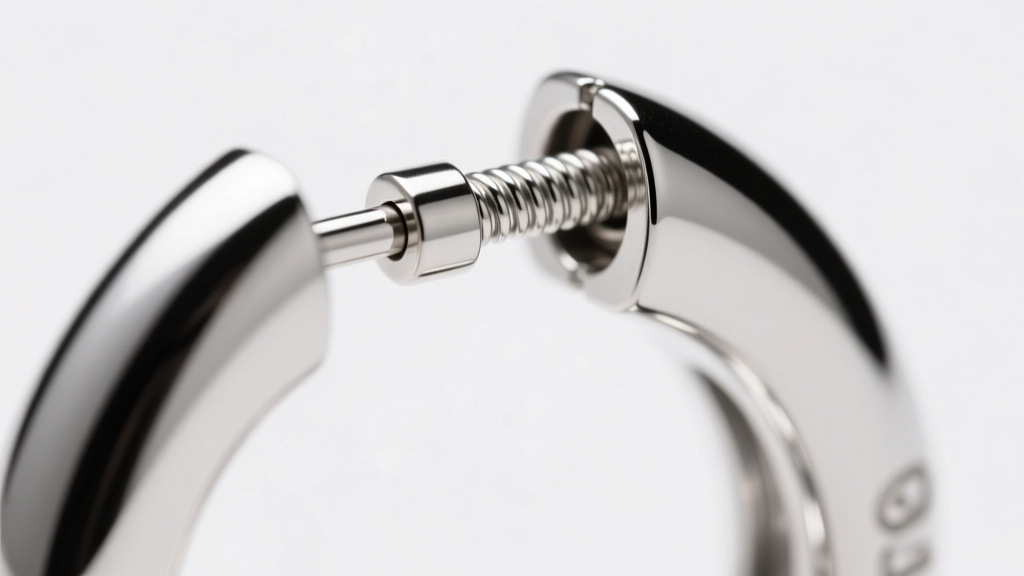
The weakest point of any silver earrings circle is the mechanism that bridges the gap in the continuous loop. The mechanical stress concentrated at these junctions dictates the lifespan of the earring.
Continuous Segment Rings
These rely on a removable segment that snaps into place via the tension of the silver wire. Failure Mode: Repeated opening and closing causes work-hardening at the stress points, eventually leading to micro-fractures and wire snap. Furthermore, the segment can easily be lost if the tension weakens.
Hinged Clickers (Snap Closures)
Common in huggies and daith rings, clickers use a machined hinge and a locking clasp. Failure Mode: In lower-quality sterling silver, the locking tab can wear down over time, resulting in a failure to "click" securely. High-end manufacturers use laser-welded hinges and precision-milled locking grooves to ensure a permanent snap.
Latch-Back and Saddle Closures
Often seen in larger, traditional hoop earrings. Failure Mode: The thin silver post that feeds through the ear can bend if the earring is snagged on clothing. Because the post is usually 20G or thinner to fit through the latch mechanism, it is highly susceptible to permanent deformation.
The Physics of Weight Distribution and Torque
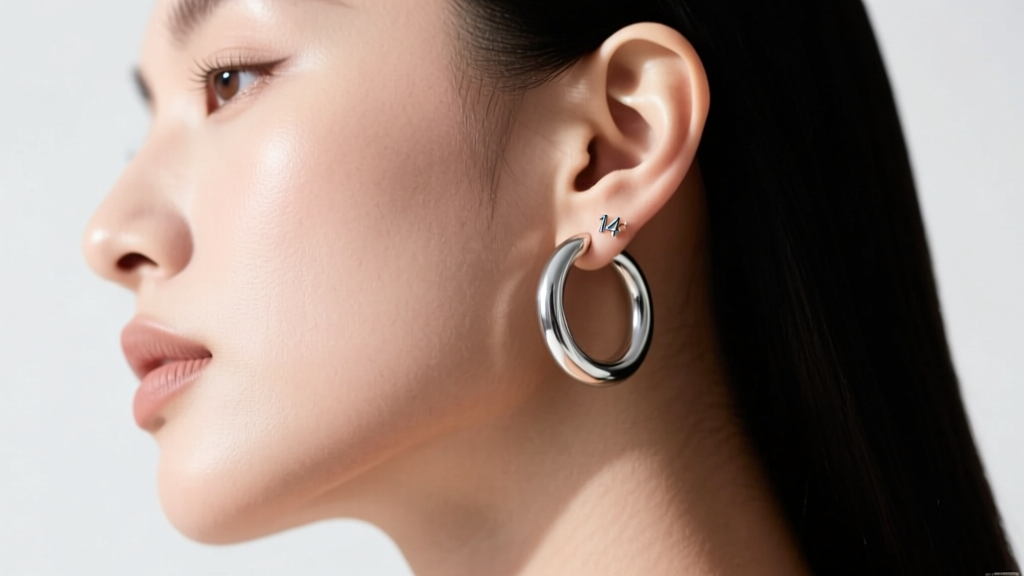
One of the most overlooked aspects of hoop jewelry is the pendulum effect. When a large-diameter silver hoop is worn in a standard lobe piercing, gravity pulls the bottom of the circle downward. This creates a rotational force (torque) around the axis of the fistula.
The formula for this torque is roughly proportional to the radius of the hoop multiplied by its mass. A 50mm diameter 14G sterling silver hoop exerts significantly more downward and outward pull on the bottom of the piercing channel than a 15mm huggie. Over time, this constant torque can lead to fistula migration, where the piercing slowly tears downward through the earlobe tissue. To mitigate this, expert jewelers will taper the wire—making it thicker at the top (where it rests in the piercing) and slightly thinner at the bottom arc—to redistribute the center of mass and reduce rotational torque.
Sizing the Circle: Inner Diameter (ID) vs. Outer Diameter (OD)
A common point of confusion for consumers and novice jewelers is the measurement of the circle. For body jewelry, Inner Diameter (ID) is the only metric that matters for anatomical fit.
- Outer Diameter (OD): The total width of the hoop, including the thickness of the wire.
- Inner Diameter (ID): The empty space inside the circle. This dictates how much tissue can fit inside the hoop without compression.
For cartilage piercings like the helix or conch, a hoop with an ID that is too small will compress the tissue, causing pressure necrosis and irritation bumps. An expert fitter will always measure the swollen or healed tissue and select a silver earrings circle with an ID that provides at least 2mm to 3mm of clearance to accommodate natural fluctuations in tissue volume.
Expert Maintenance: Reversing Silver Sulfide Tarnish
Because sterling silver contains copper, it will inevitably tarnish when exposed to sulfur compounds in the air, sweat, and cosmetics. Abrasive polishing cloths remove the tarnish but also strip away microscopic layers of silver, eventually dulling the precision of machined closures.
Instead, utilize an electrochemical reduction bath. Line a glass bowl with aluminum foil (shiny side up), add boiling water, and dissolve two tablespoons of sodium bicarbonate (baking soda). Submerge the silver hoops so they touch the aluminum foil. The chemical reaction transfers the sulfur from the silver to the aluminum, instantly reverting the silver sulfide back to pure silver without removing any base metal. Rinse thoroughly with distilled water and dry completely before reinserting into the piercing to prevent alkaline irritation.
"The perfect hoop is an exercise in compromise: rigid enough to hold its geometry, yet forgiving enough to move with the body. Master the metallurgy, and the circle will never break." — Master Bench Jeweler


