How to Style Flower Statement Earrings: A Step-by-Step Guide
Learn how to style flower statement earrings for any face shape. Discover weight limits, gauge sizes, and material care in our step-by-step guide.

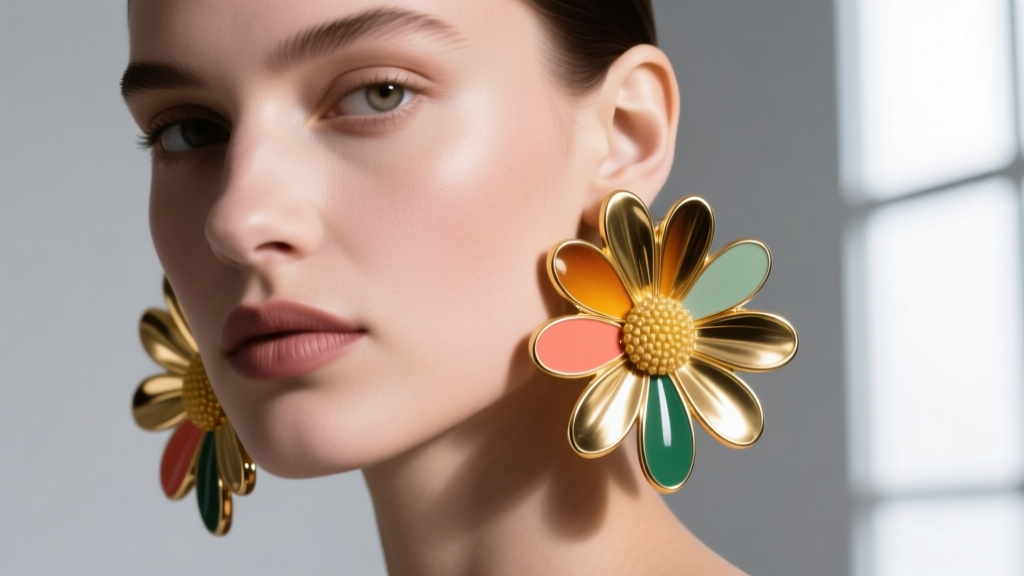
Understanding the Anatomy and Weight of Floral Earrings
Flower statement earrings are a masterclass in botanical jewelry, transforming organic silhouettes into bold, architectural accessories. However, styling oversized floral designs—ranging from cascading wisteria drops to broad sunflower studs—requires more than just an eye for color. It demands a technical understanding of jewelry mechanics, weight distribution, and piercing health. In 2026, the trend has shifted toward hyper-realistic resin florals and matte vitreous enamels, which, while stunning, often introduce significant weight to the earlobe.
A standard stud earring weighs between 2 to 4 grams. In contrast, elaborate flower statement earrings frequently weigh between 15 and 35 grams per ear. If the hardware connecting the floral face to the piercing is too thin, the metal will slice through the tissue—a painful phenomenon known in the body modification community as the "cheese-cutter effect." To prevent this, always inspect the post or wire gauge. Standard lobe piercings are typically 20G (0.81mm) or 18G (1.0mm). For any floral earring exceeding 15 grams, you must ensure the post is at least 16G (1.29mm) or, ideally, 14G (1.63mm) to safely distribute the load across the fistula.
Step 1: Match the Silhouette to Your Face Shape
The first step in styling flower statement earrings is mapping the botanical silhouette to your underlying bone structure. Because floral jewelry inherently draws the eye outward and downward, choosing the wrong geometry can overwhelm your features or throw off your facial proportions. Use the framework below to select the optimal floral architecture for your face shape.
| Face Shape | Ideal Floral Silhouette | Example Botanical Motifs | Styling Rationale |
|---|---|---|---|
| Round | Angular, Geometric, Elongated | Bird of Paradise, Star Jasmine | Sharp petals and vertical drops create the illusion of length, adding necessary structure to soft jawlines. |
| Square | Soft, Rounded, Cascading | Peony, Camellia, Rose | Curved, overlapping petals soften strong mandibular angles and balance a prominent forehead. |
| Heart | Teardrop, Chandelier, Bottom-Heavy | Wisteria, Fuchsia, Bluebell | Volume at the bottom of the earring compensates for a narrow chin, creating visual equilibrium. |
| Oval | Broad, Symmetrical, Stud-Style | Sunflower, Dahlia, Lotus | Oval faces can carry extreme width and bold proportions without risking facial elongation or distortion. |
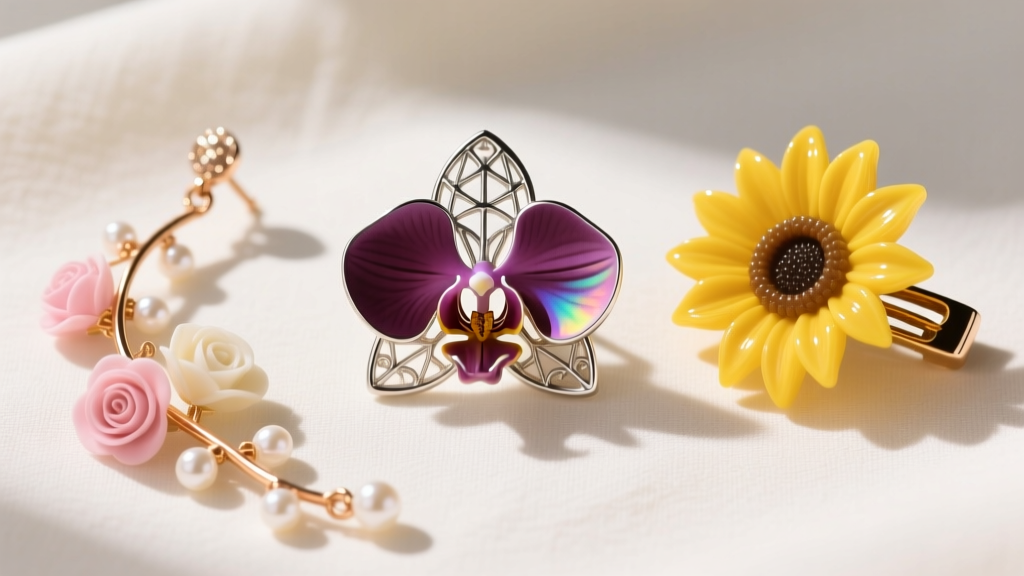
Step 2: Secure Heavy Floral Drops (The Hardware Check)
Once you have selected the correct silhouette, you must secure the hardware. Heavy flower statement earrings naturally pull forward due to the center of gravity resting away from the lobe. Relying on standard butterfly friction backs is a recipe for lost jewelry and stretched piercings. Follow this step-by-step hardware upgrade protocol:
- Upgrade to Silicone O-Rings: Swap metal butterfly backs for thick, medical-grade silicone O-rings or jumbo silicone discs. These provide a wider surface area against the back of the earlobe, reducing point-pressure and increasing grip.
- Utilize Earring Support Patches: For broad floral studs (like oversized hibiscus or magnolia designs), apply an adhesive earring support patch (such as BlingDots or Levears) to the back of your earlobe before inserting the post. These invisible stickers feature a reinforced center hole that prevents the metal post from drooping and tearing the piercing channel.
- Locking Backs for Dangles: If your floral earrings utilize a fishhook wire, secure the tip with a silicone locking back (often called a "SureStay" back) that slides completely over the wire's curve, preventing the earring from catching on hair or winter scarves.
Step 3: Coordinate Metals and Enamels with Your Wardrobe
Floral jewelry is inherently expressive, but material coordination separates a cohesive look from a costume-y one. According to the Gemological Institute of America (GIA), the interplay between metal alloys and surface treatments like enamel drastically alters the light reflection and perceived value of a piece.
In 2026, the market is dominated by two primary floral finishes: vitreous enamel and epoxy cold enamel. Vitreous enamel is essentially powdered glass fused to metal at high temperatures. It offers a brilliant, scratch-resistant finish but can shatter if dropped on tile. Cold enamel (resin) is more forgiving and allows for hyper-realistic, translucent petal effects, but it is prone to UV yellowing over time. When styling:
- Matte Gold & Dark Enamel: Pair matte 18k gold vermeil floral earrings featuring deep burgundy or forest green vitreous enamel with rich, textured fabrics like velvet, heavy silk, or winter wools. The low-reflectivity gold allows the dark botanical tones to anchor the outfit.
- High-Polish Silver & Translucent Resin: Opt for rhodium-plated sterling silver with translucent, pastel cold enamel for spring and summer wardrobes. These catch natural sunlight beautifully and complement linen, chiffon, and lightweight cottons.
"True statement jewelry shouldn't demand a compromise between comfort and impact. The secret lies in distributing the center of gravity closer to the lobe and matching the enamel finish to the texture of your garments."
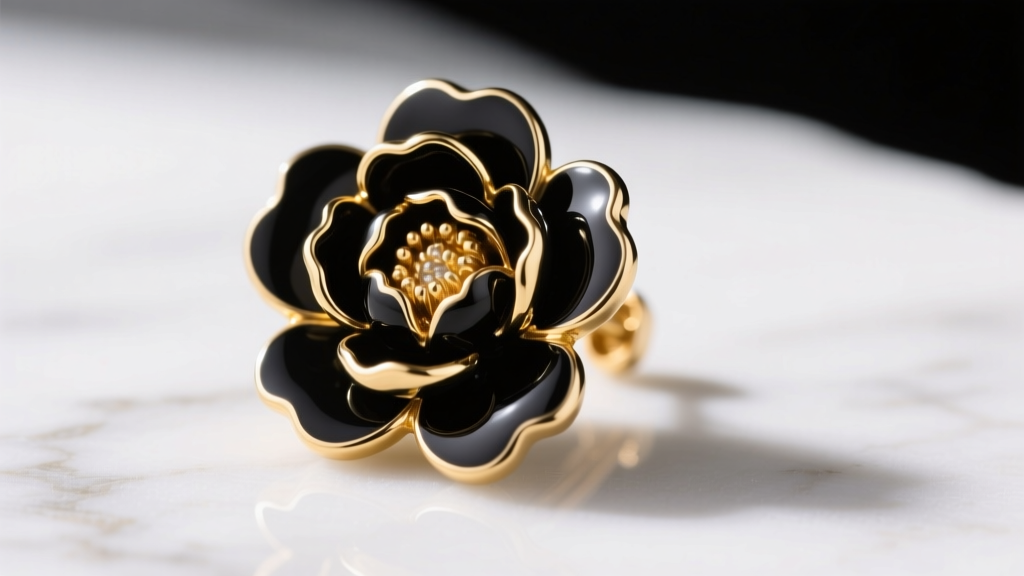
Step 4: Prevent Lobe Fatigue and Piercing Stretch
The Association of Professional Piercers (APP) consistently warns against the prolonged wear of heavy jewelry to prevent tissue migration and irreversible lobe stretching. Flower statement earrings, particularly those crafted from solid brass or heavily cast bronze, can easily exceed 25 grams. To maintain the structural integrity of your piercings while enjoying bold florals, implement a strict wear-time protocol.
Limit heavy floral drops (20g+) to a maximum of 4 to 6 hours of continuous wear. If you are attending an all-day event, such as a garden wedding or an outdoor festival, bring a pair of lightweight, complementary floral studs to swap into the piercing during downtime. Additionally, never sleep in statement earrings; the lateral pressure applied to the post when your head rests on a pillow can easily bend 16G wires and traumatize the healing or settled fistula.
The Flat-Back Labret Conversion Trick
For those with exceptionally heavy, front-loaded floral studs that persistently droop forward despite using support patches, consider a professional jewelry conversion. A skilled piercer can remove the standard post and solder or thread a 14G or 12G flat-back labret post to the floral face. The flat titanium disc sits flush against the back of the earlobe, providing a massive surface area that completely eliminates the forward tilt, allowing you to wear 30g+ floral studs comfortably all day.
Advanced Troubleshooting: Fixing Drooping and Enamel Chips
Even with careful styling, structural failures can occur. Here is how to troubleshoot the most common issues associated with flower statement earrings:
Problem: The Floral Face Droops Downward
Diagnosis: The center of gravity is too far forward, or the post is too thin (likely 20G or 18G) to support the floral head. Solution: If the earring uses a friction post, bend the post slightly upward (about 10 degrees) using nylon-jaw pliers to compensate for the downward pull. Avoid using metal pliers, which will scratch the gold vermeil or silver plating. If the earring uses a hook, add a tiny, clear silicone O-ring right behind the floral face to act as a spacer, pushing the weight distribution slightly back toward the ear.
Problem: Vitreous Enamel Petals are Chipping
Diagnosis: Vitreous enamel is glass; it chips upon impact with hard surfaces or when exposed to sudden temperature shocks. Solution: Never clean enameled floral earrings in an ultrasonic cleaner, as the high-frequency vibrations will micro-fracture the glass-to-metal bond. Instead, use a soft, lint-free microfiber cloth lightly dampened with distilled water and a drop of pH-neutral dish soap. Store them individually in soft cotton pouches to prevent the metal stems of other earrings from striking the delicate enamel petals.
Problem: Cold Enamel (Resin) is Yellowing or Clouding
Diagnosis: UV degradation or exposure to harsh chemicals like perfume, hairspray, or sunscreen. Solution: Always apply your hair and skin products before putting on your resin floral earrings. If the clouding is superficial, you can gently buff the resin with a specialized plastic polish (like Novus 1) to restore the translucent, glass-like clarity of the petals. Once restored, apply a micro-thin layer of carnauba wax to seal the resin against future UV exposure.


