Complete Care & Cleaning Guide for Olivia Burton Earrings
Learn how to properly clean, store, and maintain your Olivia Burton earrings. Expert tips to protect gold plating, enamel, and glued gemstones.

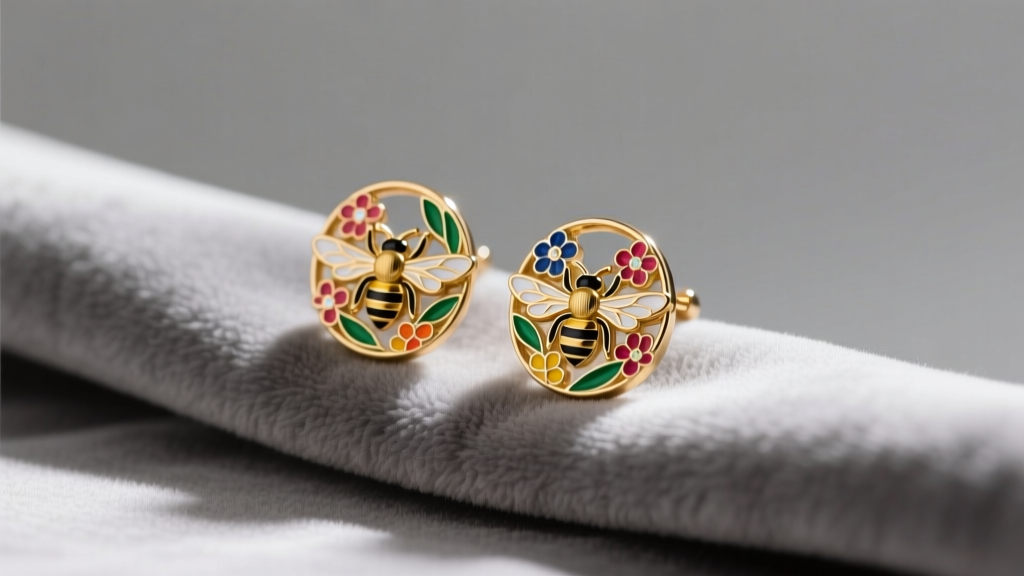
Olivia Burton earrings are globally recognized for their whimsical, vintage-inspired aesthetics, frequently featuring intricate motifs like honeybees, daisies, and celestial elements. However, because these pieces are classified as fashion jewelry rather than fine jewelry, they require a highly specific, scientifically grounded approach to maintenance. As of 2026, understanding the exact material composition of your earrings is the difference between preserving their magic for years and accidentally stripping their finish in a single cleaning session. This comprehensive guide provides actionable, expert-level protocols for cleaning, storing, and troubleshooting your Olivia Burton earrings.
The Anatomy of Olivia Burton Fashion Jewelry
To care for these earrings, you must first understand their physical construction. Olivia Burton typically utilizes a brass base alloy—primarily a mixture of copper and zinc—due to its excellent malleability for casting intricate floral and animal shapes. This brass core is then electroplated with either 14k/18k gold, silver, or rhodium. According to the Federal Trade Commission (FTC) Jewelry Guides, fashion jewelry often relies on 'flash plating' (a very thin layer of gold, usually under 0.5 microns) or light micron plating. This thin veneer is highly susceptible to abrasive friction.
Furthermore, the brand's signature colorful accents are achieved using 'cold enamel' (an epoxy-based resin) rather than traditional vitreous enamel (fused glass). Cold enamel is cured at low temperatures, making it sensitive to heat and harsh chemical solvents. Finally, the cubic zirconia, faux pearls, and glass crystals featured in their drop and dangle styles are predominantly secured with industrial jewelry adhesives rather than traditional metal prong settings.
The Chemistry of Tarnish: Why Brass Bases React
Tarnish is not dirt; it is a chemical reaction. The copper within the brass base of your earrings is highly reactive to sulfur compounds in the atmosphere and the lactic acid present in human sweat. When these elements combine, they form copper sulfide and copper chloride, manifesting as a dull, dark, or greenish film on the surface. If the gold or silver plating wears thin due to friction, the exposed brass will oxidize rapidly. Preventing this chemical reaction is the primary goal of your daily maintenance routine.
The Safe Cleaning Protocol for Plated & Enamel Pieces
When your Olivia Burton earrings accumulate skin oils, cosmetic residue, or environmental dust, you must clean them using a non-abrasive, chemically neutral method. Follow this exact protocol to protect both the flash plating and the cold enamel:
- Step 1: Dry Dusting. Before introducing any moisture, use a clean, dry, ultra-soft microfiber cloth to gently wipe away surface dust. This prevents scratching the plating with microscopic hard particles during the wet wash.
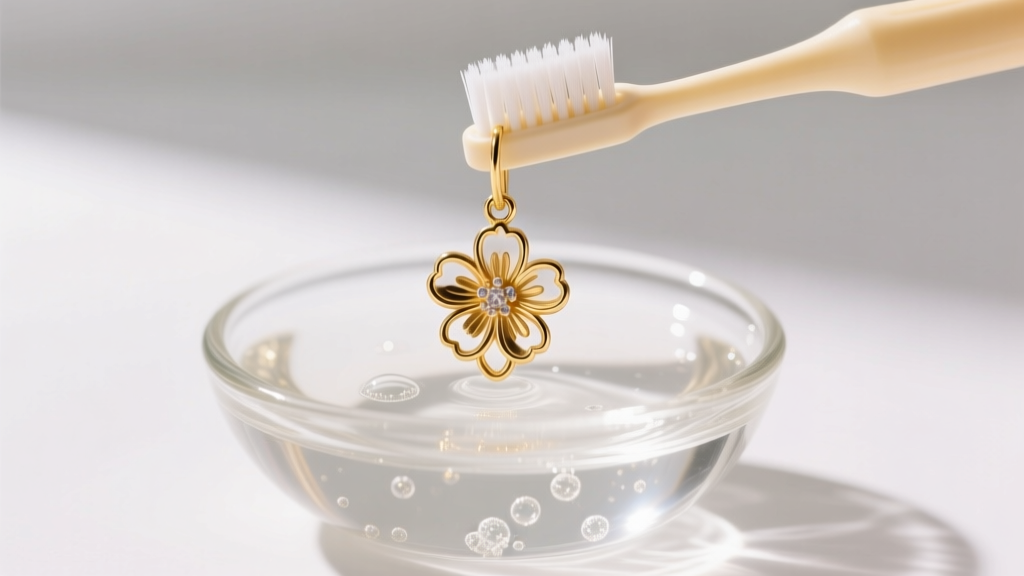
- Step 2: The Neutral Wash. Mix three drops of pH-neutral, lotion-free dish soap (such as original blue Dawn) into a small glass bowl of distilled water. Distilled water is critical; tap water contains chlorine and hard minerals that can leave microscopic calcified spots on the plating.
- Step 3: Gentle Agitation. Dip an extra-soft baby toothbrush into the solution and gently sweep over the metal and enamel. Do not scrub. Let the bristles do the work of lifting oils from the intricate crevices of the bee or floral castings.
- Step 4: The Rinse and Dry. Dip the earrings briefly in a separate bowl of clean distilled water to rinse. Immediately dry them using a can of compressed air (held at least six inches away) to blow water out of the earring posts and stone settings. Finish by patting gently with a lint-free microfiber cloth.
The 'Never-Use' List: Avoiding Catastrophic Damage
The Gemological Institute of America (GIA) warns against using aggressive cleaning methods on treated or plated surfaces. Never use the following on Olivia Burton earrings:
- Ultrasonic Cleaners: These machines use high-frequency sound waves to create microscopic cavitation bubbles. When these bubbles collapse, they generate localized shockwaves that will shatter cold enamel and instantly dissolve the adhesive holding cubic zirconia stones in place.
- Silver Polishing Cloths: Cloths treated with jeweler's rouge or anti-tarnish chemicals contain micro-abrasives. Using these on gold-plated brass will literally sand off the thin gold layer, exposing the raw brass underneath.
- Rubbing Alcohol & Acetone: Solvents will degrade the epoxy resin used in cold enamel, causing it to cloud, crack, or peel away from the metal backing.
- Baking Soda Pastes: Highly alkaline and physically abrasive, baking soda will scratch the rhodium and gold finishes beyond repair.
Strategic Storage to Halt Oxidation
Proper storage is arguably more important than cleaning. Because brass is prone to oxidation, leaving your earrings exposed to ambient air on a bathroom counter or bedroom vanity guarantees premature tarnishing. Moisture and sulfur are the enemies.
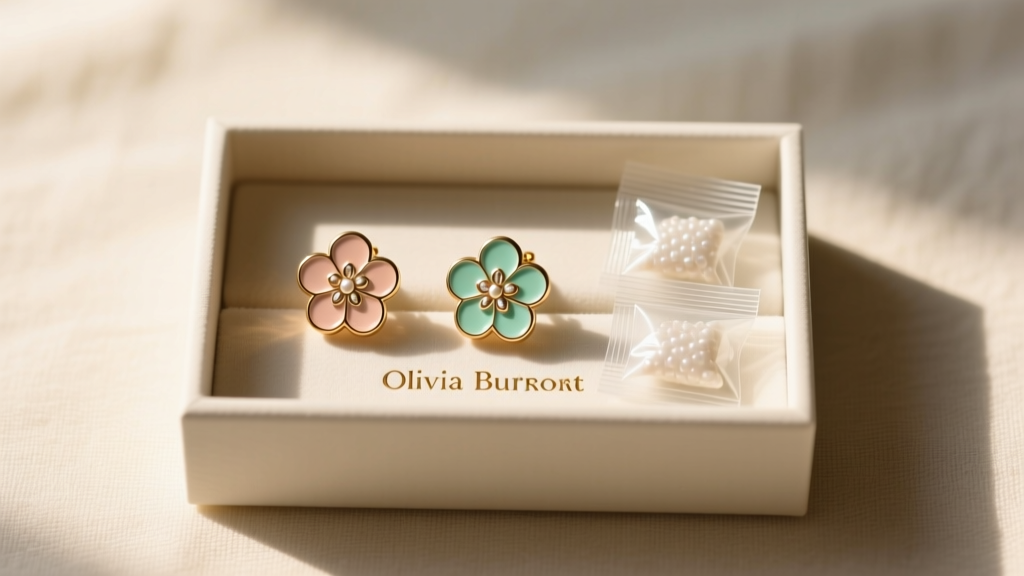
Store each pair of earrings individually in small, airtight polyethylene zip-lock bags. Squeeze out as much air as possible before sealing. Inside each bag, include a small 3M anti-tarnish strip, which actively absorbs sulfur gases and neutralizes the environment. Additionally, drop a miniature silica gel desiccant packet into your main jewelry box to control ambient humidity. Never store fashion jewelry in cardboard boxes or wooden drawers, as the glues and varnishes used in these materials off-gas sulfur compounds that accelerate brass tarnishing.
Troubleshooting: Replating and Stone Replacement
Even with meticulous care, fashion jewelry experiences wear. If the gold plating on the ear posts or high-friction areas fades, exposing the brass, you have two options. You can take the piece to a local bench jeweler for a 're-dip' or electroplating service, which typically costs between $35 and $60 depending on the complexity of the casting. Be sure to instruct them to use a non-cyanide plating solution if the piece features cold enamel, as harsh plating acids can damage the resin.
If a faux pearl or cubic zirconia falls out, do not use super glue (cyanoacrylate), which dries brittle and fogs the stones. Instead, purchase a tube of GS Hypo Cement or E6000 jewelry adhesive. Apply a microscopic dot using a toothpick, seat the stone, and let it cure undisturbed for 24 hours.
Cleaning Agent Compatibility Matrix
| Cleaning Agent | Safe for Plating? | Safe for Enamel? | Safe for Glued Stones? | Expert Notes |
|---|---|---|---|---|
| Mild Dish Soap & Distilled Water | Yes | Yes | Yes | The only recommended wet cleaning method. |
| Ultrasonic Cleaners | Yes | No | No | Cavitation will destroy resin and glue bonds. |
| Jeweler's Polishing Cloths | No | No | Yes | Abrasives will strip flash plating instantly. |
| Rubbing Alcohol | Yes | No | No | Dissolves epoxy cold enamel and adhesives. |
| Baking Soda Paste | No | No | Yes | Highly abrasive; causes micro-scratches. |
Expert Takeaway: Treat your Olivia Burton earrings like delicate museum artifacts rather than everyday hardware. By respecting the chemical limitations of flash plating and cold enamel, and by strictly controlling their storage environment, you can preserve their whimsical charm and structural integrity for years to come.