The Anatomy of Sunshine Earrings: Gemology & Metalcraft Guide
Discover the technical anatomy of sunshine earrings. Explore gemstone grading, sunburst ray articulation, and 18k gold alloy specs for celestial jewelry.

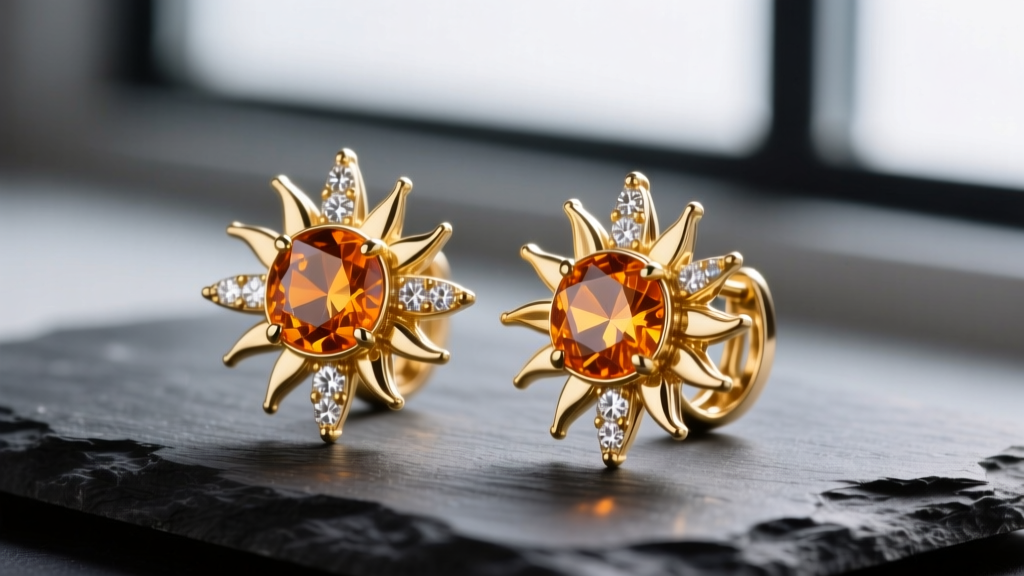
Sunshine earrings, characterized by their radial symmetry and luminous center stones, represent a unique intersection of celestial aesthetics and precision micro-engineering. Unlike standard studs or hoops, the sunburst motif requires meticulous attention to weight distribution, hinge mechanics, and light performance. For jewelry collectors and horology enthusiasts, understanding the technical anatomy of sunshine earrings transforms a simple purchase into an informed acquisition of wearable art. This deep dive explores the metallurgy, gemological science, and structural biomechanics that define high-quality sunburst ear jewelry.
The Geometry of Sunburst Articulation
The defining feature of sunshine earrings is the 'rays' emanating from the center stone. How these rays are attached to the central chassis dictates the earring's durability, movement, and light reflection. There are two primary construction methods used by master jewelers:
Fixed Cast Rays
In entry-level or vintage reproduction pieces, the sunburst rays are cast as a single, solid unit with the center bezel. While this eliminates moving parts and reduces the risk of mechanical failure, it creates a rigid structure. Fixed rays are prone to catching on hair and clothing, which can transfer torque directly to the earring post, leading to bending or lobe tearing over time.
Articulated Hinged Rays
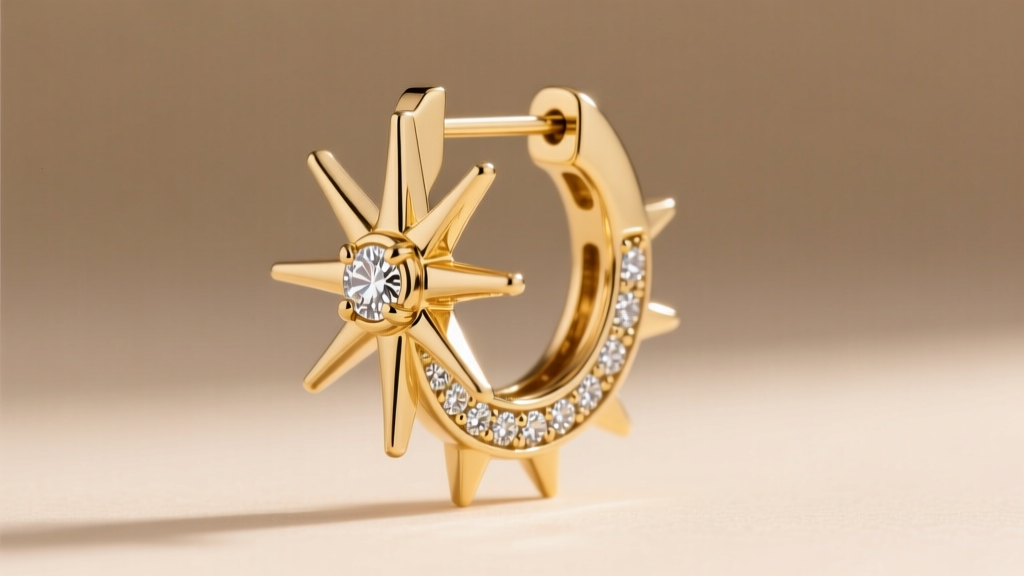
High-end sunshine earrings utilize articulated rays, where each individual beam is connected to the center setting via micro-jump rings. A standard luxury specification involves 1.5mm outer diameter (OD) jump rings crafted from 0.25mm thick wire. This articulation allows the rays to ripple and catch light dynamically as the wearer moves. However, the failure mode here is metal fatigue at the hinge point. To mitigate this, premium manufacturers use laser welding rather than traditional torch soldering to close the jump rings, ensuring a seamless, stress-resistant connection that withstands the pendulum effect of walking.
Metallurgy of the Sunshine Hue
The 'sunshine' aesthetic relies heavily on the specific alloy composition of the gold used. The warmth and depth of the yellow tone are not accidental; they are the result of precise metallurgical ratios. According to the World Gold Council, the alloying metals dictate both the color and the tensile strength of the piece.
- 18k Yellow Gold (75% Au): The industry standard for luxury sunshine earrings. The remaining 25% is typically split evenly between copper (12.5%) and silver (12.5%). This exact 1:1 ratio of copper to silver yields the richest, warmest 'true sunshine' hue without veering into the pinkish tint of rose gold or the pale, brassy tone of lower karats.
- 14k Yellow Gold (58.5% Au): Offers higher tensile strength, making it suitable for the micro-prongs holding diamonds in the sunburst rays. However, the higher copper content required for structural integrity often results in a slightly cooler, less saturated yellow.
- White Gold Contrast: Many contemporary sunshine earrings utilize a bi-metal approach. The center stone is set in 18k yellow gold to enhance warmth, while the diamond-set rays are crafted in rhodium-plated 14k white gold. This high-contrast framing forces the eye to the center stone and amplifies the brilliance of the white diamonds.
Gemological Centerpieces: Citrine vs. Yellow Sapphire
The center stone is the 'sun' of the earring. Selecting the right gemstone requires balancing refractive index (RI), hardness, and budget. The Gemological Institute of America (GIA) provides extensive data on how these stones interact with light, which is critical for the sunburst effect.
| Gemstone | Mohs Hardness | Refractive Index | Specific Gravity | Avg. Price/Carat |
|---|---|---|---|---|
| Golden Citrine | 7.0 | 1.54 - 1.55 | 2.65 | $15 - $40 |
| Yellow Sapphire | 9.0 | 1.76 - 1.77 | 4.00 | $200 - $800 |
| Canary Diamond | 10.0 | 2.42 | 3.52 | $2,500+ |
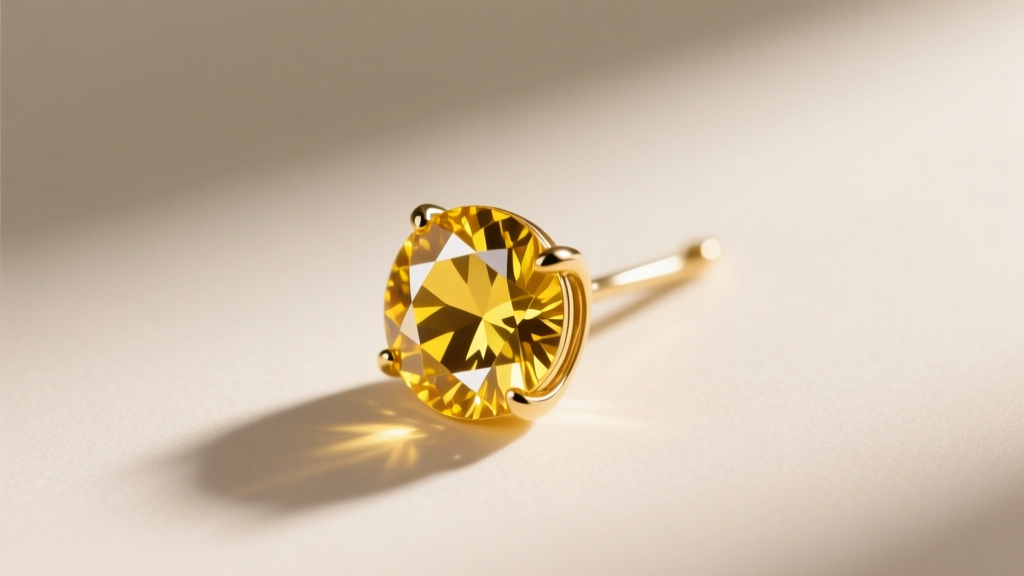
While citrine is the most common choice due to its affordability and large crystal yield, its lower refractive index means it lacks the internal 'fire' of a sapphire. Yellow sapphire, with an RI of 1.76, bends light more aggressively, creating a sharper, more brilliant glow that perfectly complements the sharp geometric lines of the surrounding gold rays. For daily wear, the Mohs 9 hardness of sapphire also prevents the micro-abrasions that can make citrine look cloudy over years of wear.
Prong Settings and Light Performance
The setting of the center stone dictates its ability to mimic a glowing sun. A common technical error in mass-produced sunshine earrings is the use of a closed-back bezel or a solid gallery wire beneath the stone.
Expert Insight: Always inspect the underside of a sunshine earring. A closed-back setting traps dead skin cells, lotions, and sebum against the pavilion of the gemstone. Because gemstones like citrine and yellow sapphire rely on light entering through the pavilion to reflect back through the crown, a dirty, closed back will reduce light return by up to 60%, making the 'sun' look muddy and lifeless.
Premium pieces utilize an open-gallery setting with a minimum of four to six rounded prongs. For sunburst designs featuring marquise-cut diamond rays, jewelers must employ V-prongs at the pointed tips of the marquise stones to prevent chipping, as the girdle thickness at the points of a marquise cut is often less than 0.10mm.
Gauge, Weight, and Lobe Biomechanics
Sunshine earrings with 12 to 16 articulated diamond rays can easily weigh between 4.5 and 8.5 grams per ear. This mass introduces significant biomechanical stress on the earlobe.
Post Gauge Specifications
Standard earring posts are 20-gauge (0.81mm thick). At this thickness, a 7-gram sunshine earring will inevitably bend under its own weight when the wearer lies down or removes a sweater. Technical specifications for heavy sunburst earrings demand an upgrade to an 18-gauge (1.02mm) or even 16-gauge (1.29mm) post. This increases the cross-sectional area of the metal, exponentially increasing its resistance to bending moments.
Backings and Weight Distribution
Standard butterfly friction backs are insufficient for heavy sunshine earrings. The small surface area concentrates the weight on a single point behind the lobe, causing 'ear droop' and eventual stretching of the piercing fistula. Expert recommendations include:
- Jumbo Silicone Discs: 10mm to 12mm diameter discs that distribute the 8-gram load across a wider area of the posterior lobe.
- Omega Backs: Hinged, lever-backed closures that clamp against the ear, providing structural support that bypasses the piercing hole entirely, transferring the weight to the cartilage ridge.
Maintenance and Ultrasonic Cleaning Risks
Maintaining the brilliance of sunshine earrings requires an understanding of gemstone treatments. Many commercial citrines used in sunburst designs are heat-treated or fracture-filled with lead glass to improve clarity. Submerging fracture-filled citrine in an ultrasonic cleaner will cause high-frequency cavitation bubbles to shatter the glass filler, effectively destroying the stone.
Furthermore, the micro-pave diamonds set into the sunburst rays are held by tiny beads of metal raised by a graver. Ultrasonic vibrations can loosen these beads over time. The safest, most technically sound cleaning protocol involves soaking the earrings in a warm solution of distilled water and a few drops of ammonia-free degreasing dish soap for 15 minutes, followed by gentle agitation with a soft-bristled baby toothbrush, paying special attention to the open gallery beneath the center stone.


