Silver Floral Earrings: Expert Guide to Alloys, Casting & Structure
Discover the metallurgy, casting techniques, and structural engineering behind fine silver floral earrings in this expert technical deep dive.

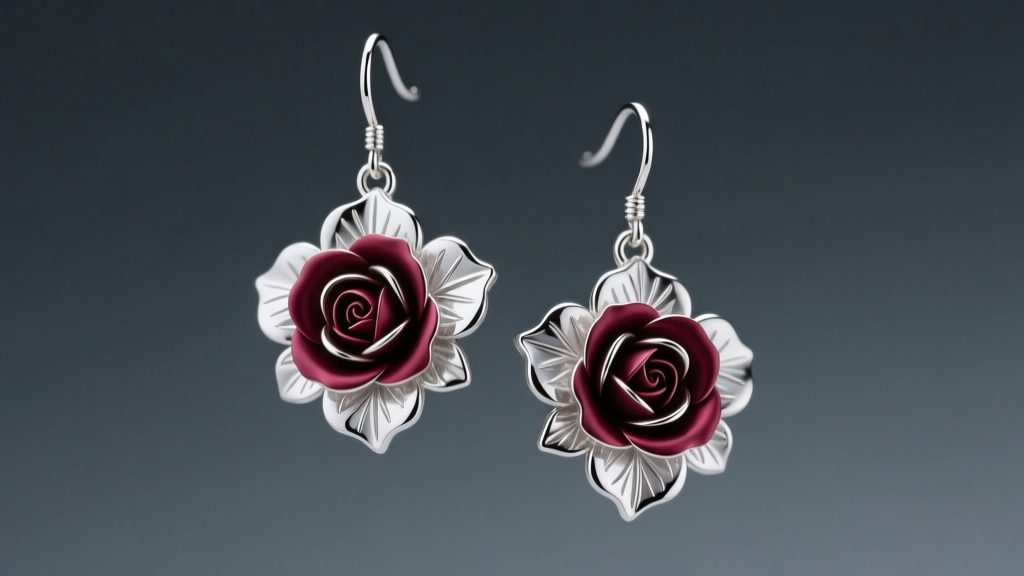
When evaluating fine jewelry, botanical motifs present unique metallurgical and structural challenges. Silver floral earrings are not merely stamped pieces of metal; they are complex, three-dimensional sculptures that require precise alloy selection, advanced casting techniques, and rigorous structural engineering to survive daily wear. As a jewelry industry specialist, I frequently see consumers purchase delicate botanical pieces only to face warped petals, snapped posts, or irreversible tarnish damage due to a lack of technical understanding. This expert deep dive deconstructs the anatomy of high-quality silver floral earrings, examining everything from silver sulfide chemistry to gauge thickness tolerances.
The Metallurgy of Botanical Jewelry: Sterling vs. Argentium
The foundation of any premium silver floral earring is its alloy composition. Pure silver (99.9%) is too malleable for intricate floral structures; a delicate petal cast in pure silver would bend under the slightest pressure. Therefore, alloying metals are introduced to increase tensile strength.
Standard Sterling Silver (925)
Traditional sterling silver consists of 92.5% silver and 7.5% copper. While the copper provides necessary hardness, it is highly reactive to sulfur compounds in the air and human sweat, resulting in silver sulfide (tarnish). In floral designs, which feature deep undercuts, stamen crevices, and overlapping petals, this tarnish accumulates rapidly and is notoriously difficult to polish out without removing intentional antiquing.
Argentium Silver (935/960)
For high-end silver floral earrings, Argentium is the superior technical choice. By replacing a portion of the copper with germanium, Argentium creates a transparent, protective layer of germanium dioxide on the surface. According to metallurgical data from Rio Grande, this makes Argentium up to seven times more tarnish-resistant than standard sterling. For botanical designs with heavy textural crevices, Argentium drastically reduces long-term maintenance while offering a brighter, whiter base color that mimics platinum.
Manufacturing Techniques: Lost-Wax Casting vs. Electroforming
The method used to form the floral geometry dictates the earring's weight, detail resolution, and durability. Mass-market floral earrings are often die-struck, resulting in flat, lifeless profiles. True botanical depth requires advanced forming techniques.
| Technique | Detail Resolution | Weight Profile | Durability | Best Use Case |
|---|---|---|---|---|
| Lost-Wax Casting | Up to 0.05mm | Solid / Heavy | High (with proper gauge) | Intricate stud earrings, heavy dangles |
| Electroforming | Microscopic (0.01mm) | Hollow / Ultra-Light | Low (crush-prone) | Oversized statement floral hoops |
| Die-Striking | Low (1.0mm+) | Thin Sheet | Medium (prone to bending) | Flat, minimalist floral silhouettes |
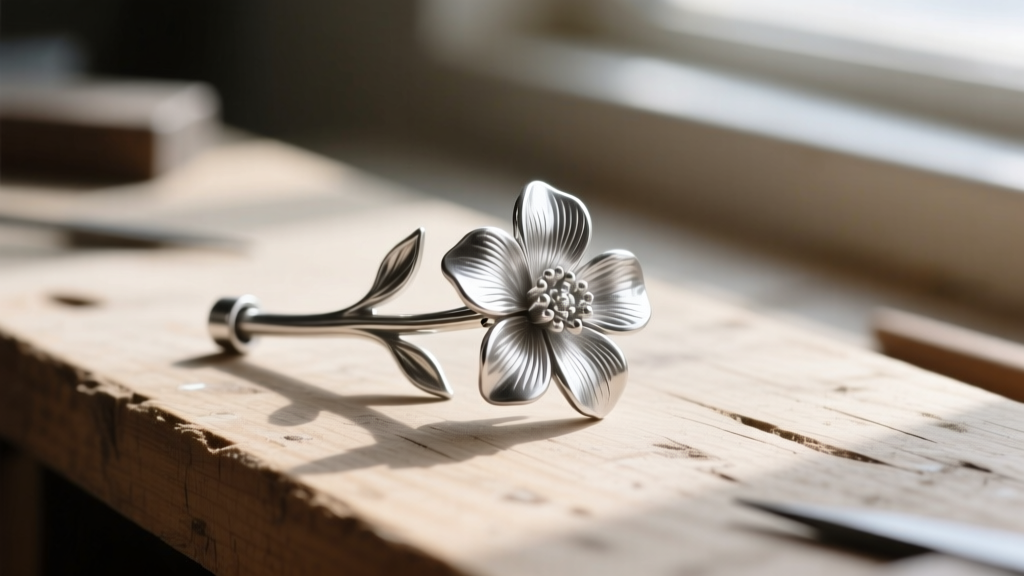 Lost-wax casting remains the industry standard for high-fidelity silver floral earrings. A master model is carved or 3D-printed in castable resin, encased in investment plaster, and burned out in a kiln at 1,350°F. Molten silver is then centrifugally forced into the microscopic voids. This captures the exact cellular structure of a real flower petal. Electroforming, conversely, deposits silver atom-by-atom over a wax model in an electrolytic bath. While it yields incredible realism and lightweight comfort, the resulting hollow shells are fragile and can dent if dropped on a hard surface.
Structural Integrity: Gauge Thickness and Prong Security
A beautiful floral design will fail if the underlying hardware cannot support its geometry. The most common failure mode in botanical dangles is post-shear or petal-warping.
Preventing Petal Warping and Snagging
For cast floral elements, the base thickness of any protruding petal must not fall below 0.8mm. Anything thinner risks warping during the quenching phase of casting or bending when caught on clothing. Furthermore, the edges of the petals must be 'comfort-fitted'—tumbled and hand-filed to remove microscopic burrs that act like saws against hair and textiles.
Post Gauge and Clutch Mechanics
Standard earring posts are 20-gauge (0.81mm). However, a complex silver floral dangle weighing more than 5 grams will cause a 20-gauge wire to bend downward, creating an awkward profile on the earlobe. Expert bench jewelers will upgrade heavy floral pieces to an 18-gauge (1.02mm) or even 16-gauge (1.29mm) post. Pairing these thicker posts with silicone disc backs or threaded screw-backs ensures the weight is distributed evenly across the lobe, preventing the 'drooping' effect common in top-heavy botanical designs.
Patina and Tarnish Management in Creviced Designs
Floral earrings rely on contrast. The deep recesses between petals are often intentionally oxidized (blackened) using liver of sulfur to create depth, while the high-polish edges catch the light. Improper cleaning destroys this deliberate contrast.
The Danger of Chemical Dips
Commercial liquid tarnish removers (like Tarn-X) rely on thiourea and harsh acids. While they strip tarnish instantly, they also strip the intentional oxidation from the floral crevices, leaving the piece flat and lifeless. Worse, these chemicals leave behind a microscopic porous surface on the silver, which actually accelerates future tarnishing.
The Electrolytic Cleaning Protocol
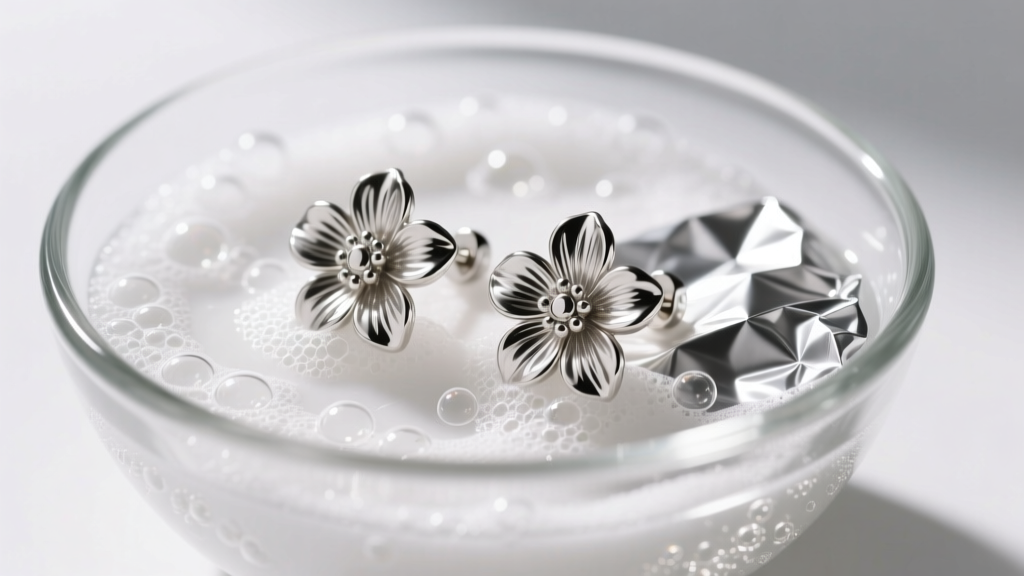
To safely clean silver floral earrings without damaging the structural patina, utilize a mild electrolytic reaction. This method converts silver sulfide back into pure silver without abrasion:
- Line a glass bowl with aluminum foil (shiny side up).
- Add 1 tablespoon of baking soda (sodium bicarbonate) and 1 teaspoon of sea salt.
- Pour boiling water over the mixture to activate the electrolyte.
- Submerge the earrings, ensuring they touch the aluminum foil. The sulfur transfers from the silver to the aluminum.
- Remove after 3 minutes, rinse in distilled water, and dry with a microfiber cloth.
Note: Never use this method on floral earrings that feature porous gemstones like turquoise, pearls, or opals, as the heat and alkalinity will destroy the gems.
Sourcing and Hallmark Verification
When investing in fine botanical jewelry, verifying the metal's purity is non-negotiable. According to guidelines established by Jewelers of America, any piece stamped '925' or 'Sterling' must legally meet the 92.5% purity threshold. However, a quality hallmark will also include a Maker's Mark—a registered stamp identifying the manufacturer or artisan. This ensures accountability for the alloy's integrity. When examining silver floral earrings, use a 10x jeweler's loupe to inspect the stamping. A laser-engraved or sharply struck hallmark on the flat back of a floral stud indicates professional manufacturing, whereas blurry, shallow stamps often indicate counterfeit or sub-standard base metals merely plated in silver.
Expert Insight: Always inspect the solder joints where the earring post meets the floral body. A poorly fluxed solder joint will appear cloudy or pitted. In high-quality silver floral earrings, the solder seam should be virtually invisible, seamlessly blending into the petal's natural geometry.
Understanding the technical nuances of alloys, casting methods, and structural tolerances transforms the way you evaluate jewelry. By prioritizing Argentium silver, proper gauge thickness, and safe electrolytic maintenance, your silver floral earrings will remain structurally sound and visually striking for decades.


