The Ultimate Metal Guide for Earrings for Guys Studs
Discover the best metals for earrings for guys studs. Compare titanium, gold, and steel grades, gauge sizes, and threading for sensitive ears.


The landscape of men's jewelry has evolved dramatically, moving far beyond the standard, mass-produced mall kiosk accessories. Today, choosing the right earrings for guys studs requires a nuanced understanding of metallurgy, biocompatibility, and structural mechanics. Whether you are curating a minimalist lobe setup or exploring cartilage placements, the material resting against your skin dictates not only the aesthetic longevity of the piece but also the biological health of your piercing.
Many men experience chronic irritation, localized swelling, or contact dermatitis simply because they are wearing jewelry made from unverified alloys. This comprehensive guide breaks down the exact material grades, gauge specifications, and mechanical designs you need to know to build a premium, irritation-free stud collection.
Decoding the "Surgical Steel" Myth
The term "surgical steel" is largely a marketing fabrication rather than a regulated metallurgical standard. In the jewelry industry, it is frequently used to describe various grades of stainless steel that may or may not be suitable for long-term bodily contact. According to the Association of Professional Piercers (APP), the only acceptable steel for initial piercings and long-term wear in sensitive ears is ASTM F138 compliant steel.
However, even F138 steel contains trace amounts of nickel (typically between 10% and 14%) to provide corrosion resistance and structural integrity. While the nickel is bound within the alloy matrix, prolonged exposure to sweat, friction, and the micro-climate of a piercing channel can cause nickel ions to leach out. For the estimated 10-20% of the male population with a nickel sensitivity, steel studs will inevitably lead to redness, itching, and the formation of hypertrophic scarring.
"Contact dermatitis from nickel-releasing jewelry is one of the most common causes of allergic skin reactions in adult males, often misdiagnosed as a simple infection." — Journal of Clinical and Aesthetic Dermatology
Material Comparison Matrix for Men's Studs
To select the ideal stud, you must weigh biocompatibility against budget and aesthetic preference. Below is a definitive comparison of the top-tier metals used in high-end men's earrings.
| Material Grade | Biocompatibility | Weight | Average Price Range | Best Use Case |
|---|---|---|---|---|
| Implant-Grade Titanium (ASTM F136) | Exceptional (Nickel-Free) | Ultra-Light | $35 - $90 | Everyday wear, fresh piercings, sensitive lobes |
| Niobium (Pure Elemental) | Exceptional (Nickel-Free) | Medium | $30 - $75 | Color-anodized custom pieces, cartilage studs |
| 14k / 18k Solid Gold (Nickel-Free) | Excellent (Alloy Dependent) | Heavy | $150 - $800+ | Luxury aesthetics, heirloom pieces, formal wear |
| ASTM F138 Stainless Steel | Moderate (Contains Nickel) | Heavy | $15 - $45 | Budget-friendly options for fully healed, non-sensitive ears |
| Platinum (950 Pt) | Exceptional | Very Heavy | $400 - $1,500+ | Prestige luxury, extreme density requirements |
Why Titanium F136 is the Gold Standard
Specifically, Ti6Al4V ELI (Extra Low Interstitial) is the exact alloy used in aerospace engineering and medical joint replacements. It is entirely non-magnetic, MRI-safe, and impervious to the corrosive effects of human sebum and sweat. If you are buying your first pair of high-quality earrings for guys studs, implant-grade titanium with a mirror or matte finish is the most logical starting point.
Threading Mechanics and Gauge Sizing
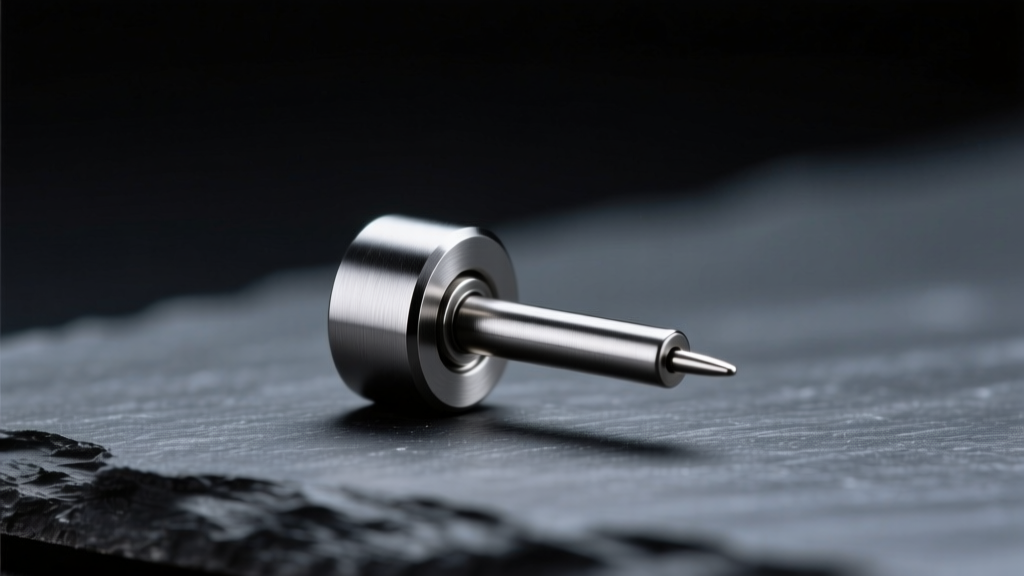
The material of the post is only half the equation; the mechanical engineering of the stud determines how it interacts with the delicate fistula (the piercing channel). Cheap studs often utilize external threading, where the screw-like ridges are carved into the post itself. Pushing an externally threaded post through the ear acts like a cheese wire, micro-tearing the tissue and introducing bacteria.
The Shift to Threadless (Press-Fit) Technology
The modern standard for premium men's studs is threadless jewelry. In this system, the decorative end features a slightly bent pin that inserts into a hollow, smooth titanium post. The tension created by the bent pin against the inner wall of the post creates a secure, friction-based lock.
- No micro-tearing: The smooth post glides through the tissue without snagging.
- Superior security: Threadless ends are significantly harder to accidentally dislodge during sleep or athletic activities compared to traditional screw-on backs.
- Modularity: You can purchase one high-quality 16G titanium post and swap out dozens of different decorative ends without removing the post from your ear.
Decoding Gauge Sizes for Men
Gauge refers to the thickness of the post. Understanding standard sizing prevents the dreaded "cheese-cutter effect," where a wire that is too thin slowly migrates through the lobe tissue under the weight of the jewelry.
- 20G (0.81mm) & 18G (1.0mm): Standard for commercial, mass-market earrings. Often too thin for long-term lobe health, leading to migration.
- 16G (1.2mm): The optimal standard for men's lobe and cartilage studs. Provides enough structural integrity to support heavier metal or stone tops without cutting the tissue.
- 14G (1.6mm): Ideal for larger, heavier statement studs or men who prefer a slightly more robust, industrial aesthetic in the lower lobe.
Surface Finishes: PVD Coating vs. Electroplating
When exploring black, gold, or rose-gold toned earrings for guys studs, you must scrutinize the coloring process. Electroplating involves dipping a base metal (like steel or brass) into a chemical bath to deposit a microscopically thin layer of gold or black rhodium. This layer will inevitably chip, flake, and wear away within months, exposing the reactive base metal to your piercing.
Instead, seek out PVD (Physical Vapor Deposition) coatings. PVD is a vacuum-chamber process that vaporizes titanium or zirconium and bonds it to the implant-grade titanium base at a molecular level. A black PVD titanium stud will not flake, will not trigger metal allergies, and can withstand years of daily friction and showering without degrading.
Troubleshooting Contact Dermatitis and Lobe Irritation
If your current studs are causing persistent itching, flaking, or a clear fluid discharge, you are likely experiencing allergic contact dermatitis or mechanical irritation. Follow this protocol to rescue your ear health:
- Remove the Offending Metal: Immediately take out any steel, sterling silver, or mystery-alloy studs. Silver, in particular, tarnishes rapidly and contains copper, which is highly toxic to healing fistulas.
- Downsize the Post Length: If you are wearing a standard "one-size-fits-all" post, it is likely too long. Excess post length allows the jewelry to tilt and move, creating friction bumps. Visit a professional piercer to have a custom-fitted, shorter titanium post installed.
- Switch to F136 Titanium or Pure Niobium: Give the tissue 6 to 8 weeks to calm down while wearing a simple, unadorned titanium ball stud.
- Cleanse with Sterile Saline: Avoid harsh chemicals like rubbing alcohol, hydrogen peroxide, or tea tree oil, which destroy healthy cellular regeneration. Use only a sterile 0.9% sodium chloride wound wash twice daily.
Investing in high-quality, properly engineered metals transforms the experience of wearing earrings. By prioritizing ASTM-certified titanium, threadless mechanics, and appropriate gauge thickness, your stud collection will remain a permanent, comfortable, and sharp addition to your personal style.


