How to Remove Rowan Earrings: Material Guide & Safe Steps
Learn how to remove Rowan earrings safely. Explore material properties, metal fatigue risks, and step-by-step techniques for 14k gold and vermeil hoops.

The Engineering Behind Rowan's Continuous Hoops
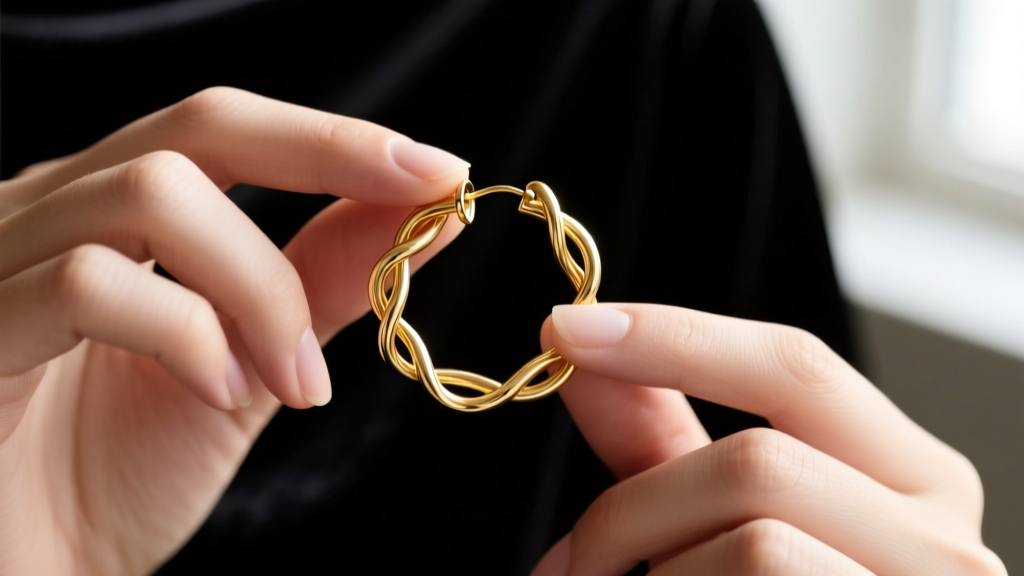
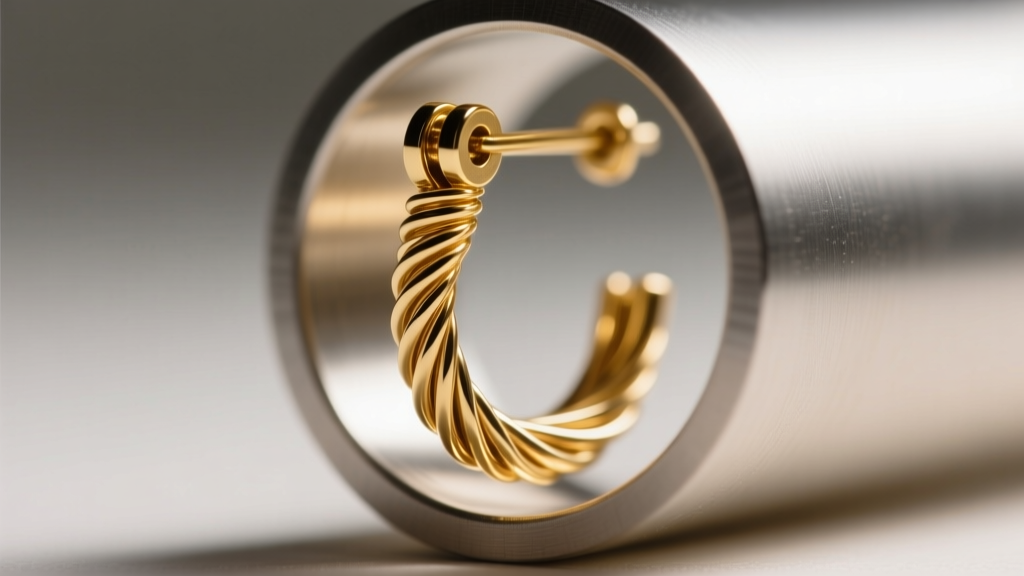
Rowan earrings have become a staple in minimalist jewelry collections, celebrated for their sleek, seamless aesthetic. However, their signature "continuous hoop" design—often mistaken for a simple endless wire—relies on a precise mechanical interference fit. Unlike standard hinged clickers or latch-back hoops that use a mechanical hinge and clasp, Rowan hoops feature a solid wire post that slides directly into a hollow tubing receptor. The tension between the slightly oversized wire and the hollow tube creates the "click" and holds the earring securely in the ear lobe or cartilage.
Understanding how to remove Rowan earrings requires a fundamental grasp of the materials used to craft them. Because there is no hinge to absorb lateral stress, the removal process places direct mechanical load on the metal's crystalline structure. Applying the wrong removal technique can lead to warped tubing, snapped wires, or a permanent loss of tension. In this guide, we break down the metallurgical properties of Rowan's most popular materials and provide a step-by-step framework for safe removal and long-term care.
Material Breakdown: 14k Solid Gold vs. Vermeil vs. Steel
The physical behavior of your Rowan earrings during removal is dictated by their material composition. Jewelry metals are rarely pure; they are alloys engineered for specific balances of malleability, tensile strength, and corrosion resistance. According to the Association of Professional Piercers (APP), understanding the base metal and its hardness is critical for preventing structural failure in body jewelry.
| Material | Core / Base Metal | Vickers Hardness (Approx) | Bending Risk | Removal Technique |
|---|---|---|---|---|
| 14k Solid Yellow Gold | Gold (58.5%), Copper, Silver, Zinc | 120 - 140 HV | Moderate (Malleable, bends before breaking) | Vertical Push-Pull |
| 14k Solid White Gold | Gold (58.5%), Nickel/Palladium | 130 - 160 HV | Low-Moderate (Stiffer than yellow gold) | Vertical Push-Pull |
| Gold Vermeil | Sterling Silver (92.5% Silver, 7.5% Copper) | 60 - 90 HV | High (Prone to work-hardening and snapping) | Strict Vertical Pull (No twisting) |
| Surgical Stainless Steel | Iron, Chromium, Nickel, Molybdenum | 150 - 200 HV | Low (High yield strength, resists bending) | Firm Vertical Push-Pull |
As noted by the Gemological Institute of America (GIA), 14k gold alloys are specifically formulated to withstand daily wear while retaining enough malleability to be worked by jewelers. Sterling silver (the base of vermeil), however, has a much lower fatigue limit. Repeated lateral bending will cause the silver's crystal lattice to lock up—a process known as work hardening—eventually leading to a brittle fracture.
Step-by-Step: How to Remove Rowan Earrings Safely
The most common mistake wearers make is treating a continuous hoop like a jump ring. Pulling the wire and tube apart laterally (side-to-side) ruins the circular memory of the metal. To safely remove your earrings, you must follow the natural vertical axis of the hoop's curve.
1. Preparation and Grip
Wash your hands and ensure your fingers are completely dry. Oils and lotions reduce friction, making the smooth metal difficult to grip. If your Rowan earrings are 20-gauge (0.81mm) or 18-gauge (1.02mm), the wire is exceptionally thin. Use your thumb and index finger to pinch the hollow tube receptor firmly, and use your other hand to grip the solid wire post just below the curve.
2. The Vertical Push-Pull Method
Instead of pulling the ends away from each other, imagine the earring is a clock face. If the seam is at 6 o'clock, you want to push the wire up toward 12 o'clock while simultaneously pulling the tube down toward 6 o'clock. This vertical motion slides the wire out of the hollow tube without stressing the lateral curve of the hoop.
3. The Release
Once the wire clears the lip of the tube, gently guide it out of your piercing. Never yank the earring out while the wire is still partially seated in the tube, as this can scrape the interior of the hollow receptor and create metal burrs that will prevent a smooth click in the future.
Troubleshooting Stuck or Warped Earrings
Even with perfect technique, environmental factors and natural body chemistry can interfere with the mechanical fit of continuous hoops. Here is how to troubleshoot common issues based on material properties.
The Wire is Stuck Inside the Tube
If the earring refuses to slide out, do not use pliers. Pliers will crush the hollow tube or mar the gold plating on vermeil pieces. The culprit is usually a buildup of sebum, dead skin cells, and hardened soap residue inside the receptor.
- The Fix: Submerge the earring seam in a small cup of warm water and mild dish soap for 10 minutes. Use a soft-bristled baby toothbrush to gently agitate the seam. The debris will soften, allowing the wire to slide out with standard vertical pressure.
The Earring No Longer "Clicks" Shut
Loss of tension is common in 14k solid gold due to its malleability. If the wire has been slightly bent outward, it will no longer create an interference fit with the tube.
- The Fix for Solid Gold: Gently curve the wire back toward the center of the hoop's circle using your thumbs. Test the click. Because 14k gold is ductile, it can be carefully re-shaped without breaking.
- The Fix for Vermeil: Do not attempt to bend vermeil wires repeatedly. Sterling silver work-hardens quickly. If a vermeil wire has lost its tension, it is safer to retire the pair or take it to a professional jeweler who can anneal the silver (heat it to soften the crystal structure) before reshaping it.
Understanding Metal Fatigue and Work Hardening
To truly master how to remove Rowan earrings, you must understand the enemy of continuous jewelry: metal fatigue. When you bend a piece of metal back and forth, you are forcing its crystalline grains to slide past one another. Over time, these grains lock together, increasing the metal's hardness but drastically reducing its ductility. This is why bending a paperclip back and forth eventually causes it to snap.
Gold vermeil earrings are highly susceptible to this. The sterling silver core is relatively soft, but the repeated stress of improper lateral removal will cause micro-fractures beneath the gold plating. Once the silver core snaps, the earring is irreparably broken. Surgical steel and 14k white gold (which is often alloyed with nickel or palladium for stiffness) resist this fatigue much better, but they are not immune. Always respect the vertical axis of the hoop to maximize the lifespan of your jewelry.
Expert Insight: If you wear your Rowan continuous hoops in cartilage piercings (like the helix or tragus), the natural swelling of the tissue can put outward pressure on the hoop. This swelling can warp the circular shape of the metal over time. For fresh or easily irritated cartilage piercings, we recommend switching to a standard hinged clicker or a flat-back labret stud until the tissue is fully settled, preserving the structural integrity of your continuous hoops for lobe wear.
Long-Term Material Care and Storage
Proper storage is just as critical as proper removal. When storing your Rowan earrings, always ensure they are fully closed and "clicked" shut. Storing them open puts continuous stress on the wire's curve. Keep them in a dedicated jewelry box with individual compartments to prevent heavier pieces from crushing the hollow tubing. For gold vermeil, store the earrings in an anti-tarnish cloth pouch to slow the oxidation of the underlying sterling silver, ensuring the tension mechanism remains free of corrosive buildup.


