Gold Rainbow Earrings: The Science of Enamel & Gems
An expert technical deep dive into gold rainbow earrings, covering vitreous enamel metallurgy, PVD coatings, and multi-gemstone setting integrity.

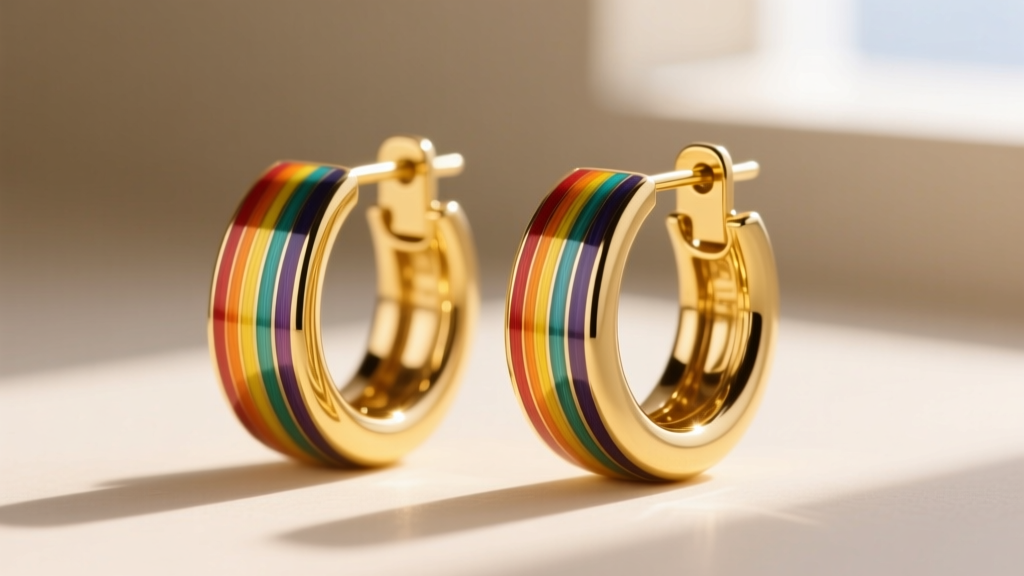
The Metallurgy of the Base: 14k vs. 18k Gold for Rainbow Enamel
When evaluating gold rainbow earrings featuring vitreous enamel, the karat weight of the underlying gold is not merely a measure of value; it is a critical metallurgical variable that dictates the structural integrity of the glass-to-metal bond. Vitreous enamel is essentially powdered glass fired at temperatures between 750°C and 850°C. The behavior of the gold alloy during this thermal shock determines whether the enamel will adhere permanently or micro-fracture over time.
In 2026, master jewelers overwhelmingly prefer 18k gold (75% pure gold) for high-end plique-à-jour* and champlevé enamel work. The alloying metals in 14k gold (typically copper, silver, and zinc) are highly susceptible to oxidation at enameling temperatures. When copper oxidizes, it creates a dark, brittle layer of cupric oxide at the interface between the gold and the enamel, leading to eventual delamination. 18k gold, possessing a higher noble metal content, resists this oxidation, ensuring a pristine chemical bond with the silica-based enamel.
"The coefficient of thermal expansion (CTE) between the enamel and the gold substrate must be matched within a margin of 0.5%. If the enamel contracts faster than the 18k gold base during cooling, the rainbow glass layer will develop microscopic crazing, compromising the earring's structural integrity." — The Ganoksin Project on Vitreous Enamel
Gemological Breakdown: Natural Rainbow Stone Combinations
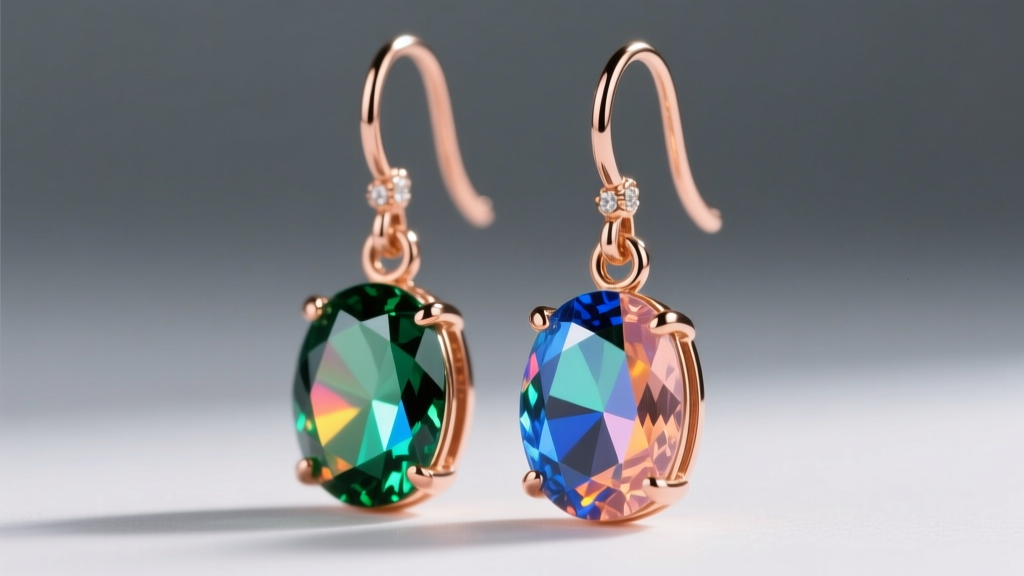
For gold rainbow earrings that rely on gemstones rather than enamel, the technical challenge shifts to lapidary consistency and setting mechanics. A true "rainbow" gradient requires sourcing stones with identical refractive indices and cutting styles to ensure uniform light return. The most technically sound combinations utilize briolette-cut tourmaline and sapphire.
| Gemstone | Mohs Hardness | Refractive Index | Setting Risk in 14k Gold |
|---|---|---|---|
| Rainbow Sapphire | 9.0 | 1.76 - 1.77 | Low. Requires significant prong pressure; may cause metal fatigue if prongs are too thin. |
| Multicolor Tourmaline | 7.0 - 7.5 | 1.62 - 1.64 | Moderate. Tourmaline is highly pyroelectric and can attract dust; prone to cleavage if prong tension is uneven. |
| Precious Opal | 5.5 - 6.5 | 1.44 - 1.46 | High. Never set opal adjacent to sapphire in a shared prong; the sapphire will abrade the opal over time. |
| Citrine / Amethyst | 7.0 | 1.54 - 1.55 | Low. Excellent for bezel settings, though prolonged UV exposure can fade certain treated amethysts. |
According to the GIA Gem Encyclopedia, mixing stones with a Mohs hardness disparity greater than 1.5 in a shared-bead or shared-prong rainbow drop earring is a critical failure point. The harder stone will act as an abrasive against the softer stone during normal kinetic movement.
PVD and Ion Plating: The "Rainbow Gold" Illusion
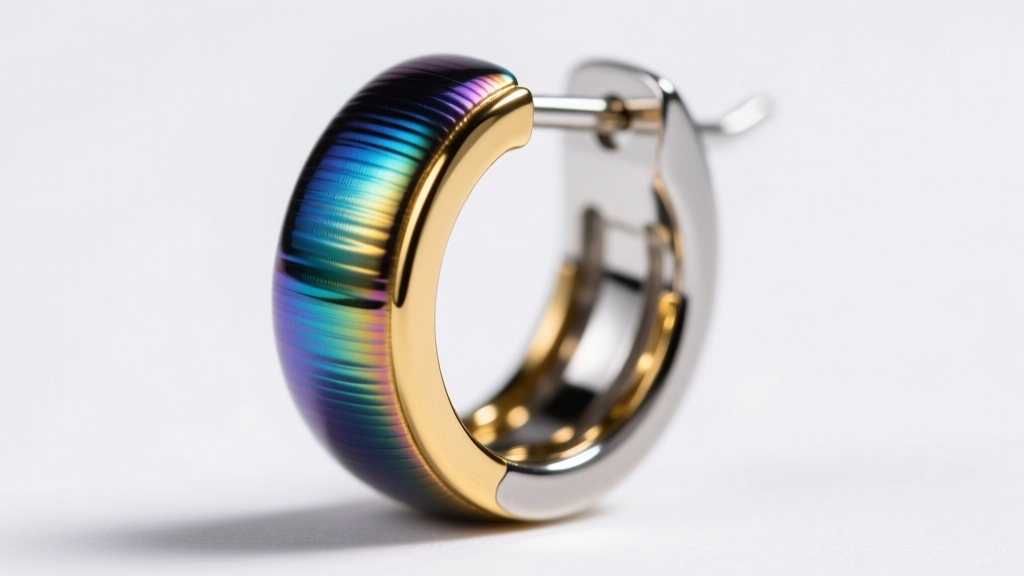
A frequent point of confusion in the 2026 market is the term "rainbow gold." Pure gold and standard karat gold alloys cannot be anodized to produce a rainbow effect; anodizing relies on the growth of an oxide layer, a chemical property specific to reactive metals like titanium and niobium. When consumers encounter "gold rainbow earrings" that appear metallic and iridescent, they are looking at Physical Vapor Deposition (PVD) or Ion Plating.
The PVD Layering Process
To achieve a rainbow metallic finish on a gold-toned earring, manufacturers utilize a multi-stage vacuum chamber process:
- Substrate Preparation: The base is usually 316L surgical steel or titanium, polished to a mirror finish (Ra < 0.05 µm).
- Base Coat: A layer of Titanium Nitride (TiN) is applied to mimic the color of 14k or 18k yellow gold. This layer is typically 0.5 to 1.0 microns thick.
- Rainbow Topcoat: A secondary, ultra-thin layer (0.1 to 0.3 microns) of titanium oxides or clear PVD coating is applied. By precisely controlling the oxygen flow and voltage in the plasma chamber, manufacturers create thin-film interference, resulting in the iridescent rainbow spectrum.
While materials science data on PVD coatings confirms these layers are highly scratch-resistant (often exceeding 2000 HV on the Vickers hardness scale), the rainbow topcoat is incredibly thin. Friction from hair or frequent handling can eventually wear through the interference layer, revealing the static gold TiN layer beneath.
Structural Integrity: Metal Fatigue in Multi-Stone Drops
A standard rainbow drop earring may feature 7 to 12 individual gemstones linked by gold jump rings or articulated hinges. The cumulative weight of these stones, combined with the pendulum effect of walking, places immense shear stress on the topmost gold connector.
In cast 14k gold, microscopic porosity from the investment casting process can act as a stress concentrator. Expert fabricators mitigate this by utilizing CNC-milled or die-struck 14k gold findings for the structural linkages of rainbow drop earrings. Die-struck gold possesses a compressed grain structure, yielding a tensile strength up to 40% higher than cast gold, drastically reducing the risk of the top loop snapping under the dynamic load of a heavy, multi-stone rainbow gradient.
Care and Degradation: UV and Chemical Vulnerabilities
Maintaining the technical brilliance of gold rainbow earrings requires an understanding of their specific material vulnerabilities. Ultrasonic cleaners, operating at frequencies of 40 kHz, generate cavitation bubbles that can shatter vitreous enamel and fracture internal inclusions in emeralds or tourmalines often used in rainbow arrays. Furthermore, the porous nature of opals means they can absorb the chemical surfactants in cleaning solutions, leading to irreversible clouding. For enamel and multi-gemstone rainbow pieces, the only approved maintenance protocol is gentle agitation in a neutral pH solution with a soft-bristled brush, followed by immediate drying to prevent water spotting on the high-refractive-index gemstone facets.


