Traditional Indian Earrings: A Material & Metal Properties Guide
Compare metals for traditional Indian earrings. Explore 22k gold, oxidized silver, and brass alloys, plus gauge sizes and earlobe support tips.

The Physics of Heritage: Why Metal Choice Dictates Comfort
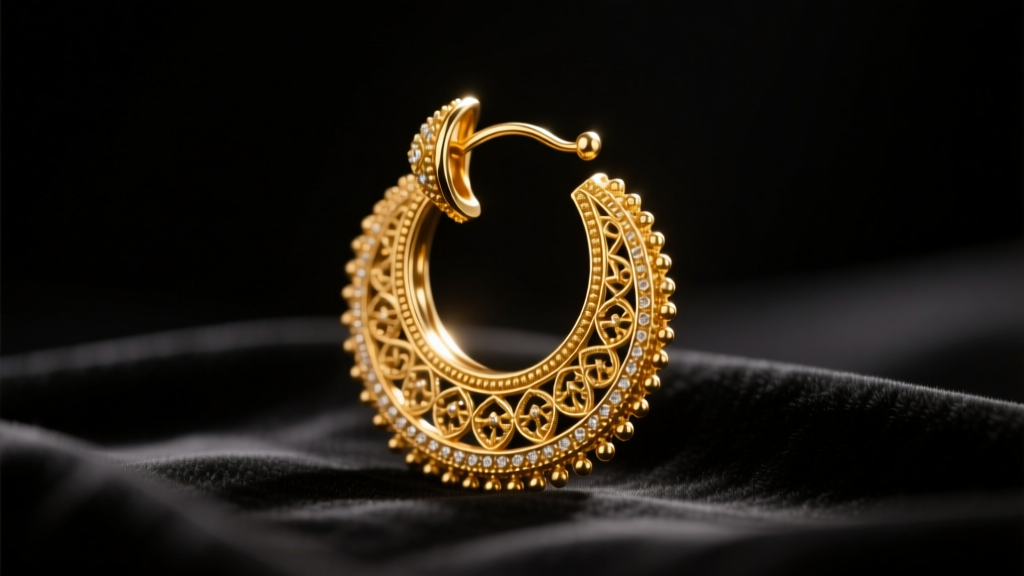
When selecting traditional Indian earrings—such as Jhumkas, Chandbalis, or elaborate Polki drops—most buyers focus on the aesthetic intricacy of the Kundan or Meenakari work. However, as a jewelry metallurgist, I look first at the structural metallurgy. Heritage Indian jewelry is notoriously heavy, with bridal Chandbalis frequently weighing between 30 and 50 grams per ear. This immense weight creates a pendulum effect, generating severe shear force on the earlobe's adipose and collagen tissues. The metal chosen for both the decorative body and the structural findings (hooks, posts, and domes) dictates not only the earring's longevity but also the physical safety of your piercings. In this guide, we break down the exact material properties, alloy grades, and hardware specifications you need to know before investing in traditional Indian earrings.
22K vs. 18K Gold: The Purity vs. Tensile Strength Dilemma
In the Indian jewelry market, 22-karat gold (stamped with the 916 hallmark, indicating 91.6% pure gold) is the cultural standard. It offers a rich, buttery yellow hue and exceptional hypoallergenic properties. However, from a structural engineering perspective, 22K gold is remarkably soft. According to the Gemological Institute of America (GIA), pure 24K gold has a Vickers Hardness (HV) of roughly 25-30, while 22K gold (alloyed with copper and silver) reaches only about 70-90 HV.
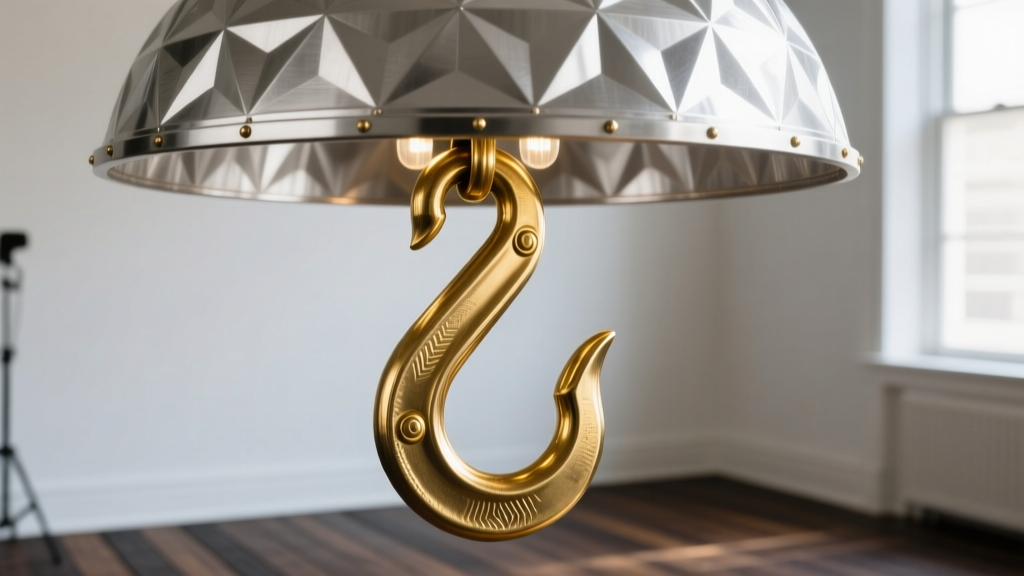
For a lightweight stud, 22K is perfectly adequate. But for a 40-gram Jhumka, an 18-gauge (1.02mm) 22K gold hook will slowly stretch, deform, and eventually snap under the dynamic load of walking or dancing. The primary failure point in gold Indian earrings is the solder joint connecting the hook to the dome cap. Because 22K gold requires a lower-temperature solder to avoid melting the intricate filigree, these joints are inherently brittle.
The Expert Solution: High-end heritage jewelers now employ a bi-metal construction. The decorative body, granulation, and Kundan settings are crafted in 22K gold for color and purity, while the structural armature, the dome cap, and the ear wire are forged from 18K gold (75% purity, 750 hallmark). 18K gold boasts a Vickers Hardness of 120-150 HV, providing the necessary tensile strength to support heavy drops without warping.
Oxidized Silver & Brass Alloys: Temple Jewelry and Kemp Work
Not all traditional Indian earrings are solid gold. South Indian oxidized silver jewelry and Kemp (imitation stone) temple jewelry are massive categories, offering bold, tribal, and bridal aesthetics at a fraction of the cost. Understanding the base metals here is critical for skin safety.
Sterling Silver (925) and the Oxidation Process
Sterling silver is 92.5% silver and 7.5% copper. The copper provides essential work-hardening strength, but it is also responsible for tarnish. In traditional oxidized silver earrings, artisans intentionally expose the metal to liver of sulfur (potassium sulfide) to create a blackened patina that highlights the silver relief work. While visually striking, the copper content can cause contact dermatitis in sensitive wearers. Always ensure the earring post—the part that actually passes through the earlobe—is rhodium-plated or high-polished to seal the copper away from your skin.
Brass and Copper Bases (Kemp & Temple Jewelry)
Kemp jewelry utilizes brass or copper alloys as a base, set with glass or synthetic stones and finished with gold foil. The danger with cheap brass alloys is twofold: first, the potential presence of nickel in the solder (a severe allergen), and second, the reaction between copper and acidic sweat, which produces copper chloride—commonly known as verdigris (the green stain on your skin). Premium Kemp artisans mitigate this by applying a 1-micron gold flash plating over a certified nickel-free brass base, followed by a clear epoxy lacquer on the earring backs.
Metallurgical Comparison Chart
| Material / Alloy | Purity / Grade | Hardness (HV) | Primary Risk | Ideal Earring Style |
|---|---|---|---|---|
| 22K Yellow Gold | 91.6% Au (916) | 70 - 90 | Hook deformation, brittle solder joints | Lightweight Jhumkas, Studs |
| 18K Yellow Gold | 75.0% Au (750) | 120 - 150 | Higher cost, slightly paler color | Heavy Bridal Chandbalis, Polki Drops |
| Sterling Silver | 92.5% Ag (925) | 60 - 140 (Work-hardened) | Copper-induced tarnish and skin staining | Oxidized Tribal Hoops, Dangles |
| Nickel-Free Brass | Cu/Zn Alloy | 100 - 130 | Verdigris, lacquer wear, allergic solder | Kemp Temple Jewelry, Stage Wear |
Findings, Gauges, and Earlobe Biomechanics
The most overlooked aspect of traditional Indian earrings is the wire gauge of the hook or post. Standard fashion earrings use 20-gauge (0.81mm) or 22-gauge (0.64mm) wires. When you hang a 25-gram Chandbali on a 20-gauge wire, the pressure per square millimeter against the bottom of your earlobe piercing is immense, acting like a cheese wire that will slowly slice through the tissue.
For any traditional Indian earring exceeding 15 grams, you must demand a 16-gauge (1.29mm) or 14-gauge (1.63mm) ear wire. Furthermore, the closure mechanism matters. Standard push-backs (butterfly clutches) are useless for heavy drops; they will slide off under the weight. Look for traditional Indian screw-backs (often called 'chabalis' or 'screw-back jhumkas'), which thread securely onto the post, or heavy-duty lever-backs that lock into place with a satisfying click.
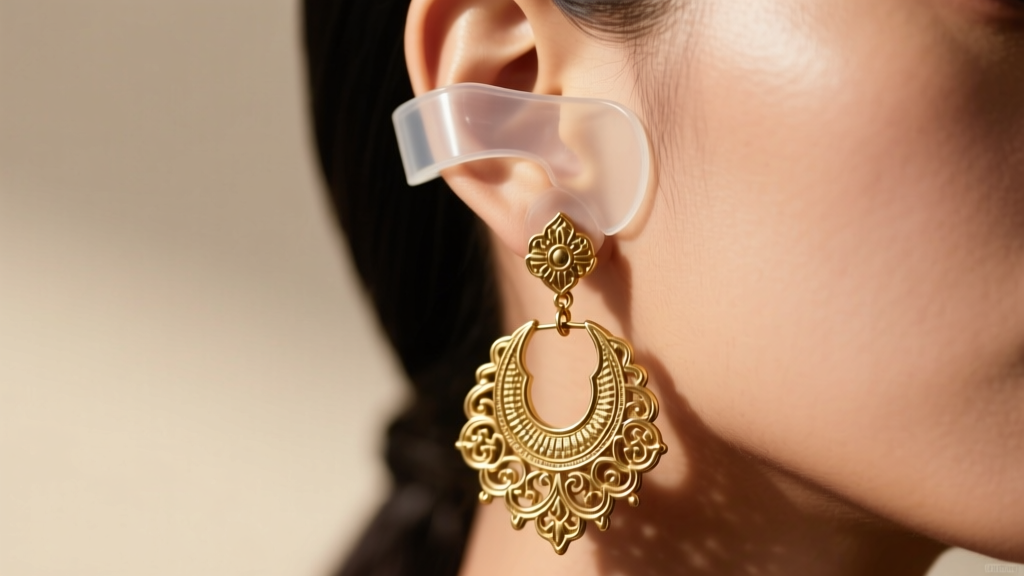
Pro-Tip for Heavy Earrings: If you must wear 40+ gram heritage pieces, invest in medical-grade silicone earlobe support patches (such as Lobe Wonder). These adhesive pads distribute the sheer force across a 2-inch radius behind the ear, preventing permanent lobe elongation and tearing.
Patina, Tarnish, and Long-Term Maintenance
The materials used in Indian earrings require highly specific maintenance protocols. According to The Silver Institute, silver tarnishes when exposed to sulfur compounds in the air. For oxidized Indian silver earrings, you must never use liquid silver dips or ultrasonic cleaners, as these will strip the intentional black patina from the crevices, ruining the contrast. Instead, use a dry, soft-bristled polishing brush to gently buff only the raised, high-relief areas.
For 22K gold Jhumkas featuring uncut diamonds (Polki) or glass enamel (Meenakari), ultrasonic cleaners are equally destructive. The high-frequency vibrations can shatter the delicate glass enamel or loosen the natural resin (lac) used to back the Polki stones. Clean these pieces only with a mild, phosphate-free dish soap, lukewarm water, and a microfiber cloth, taking care not to soak the stone settings.
Expert Verdict: Matching Metal to Occasion
Choosing the right metal for traditional Indian earrings is an exercise in balancing cultural authenticity with biomechanical reality. If you are purchasing a lightweight, everyday Jhumka for office wear, 22K gold remains the supreme choice for its rich heritage color and hypoallergenic nature. However, for heavy bridal Chandbalis or elaborate temple jewelry meant to be worn for 12-hour wedding ceremonies, prioritize structural integrity: opt for 18K gold findings, thick 16-gauge wires, and utilize silicone support patches. By understanding the metallurgy behind the artistry, you ensure your heritage jewelry remains both a visual masterpiece and a comfortable, wearable treasure for generations.