How to Design a Custom Earring Holder Card for Jewelry
Learn how to design, print, and cut custom earring holder cards. Discover ideal dimensions, hole spacing for studs and hooks, and paper weight tips.

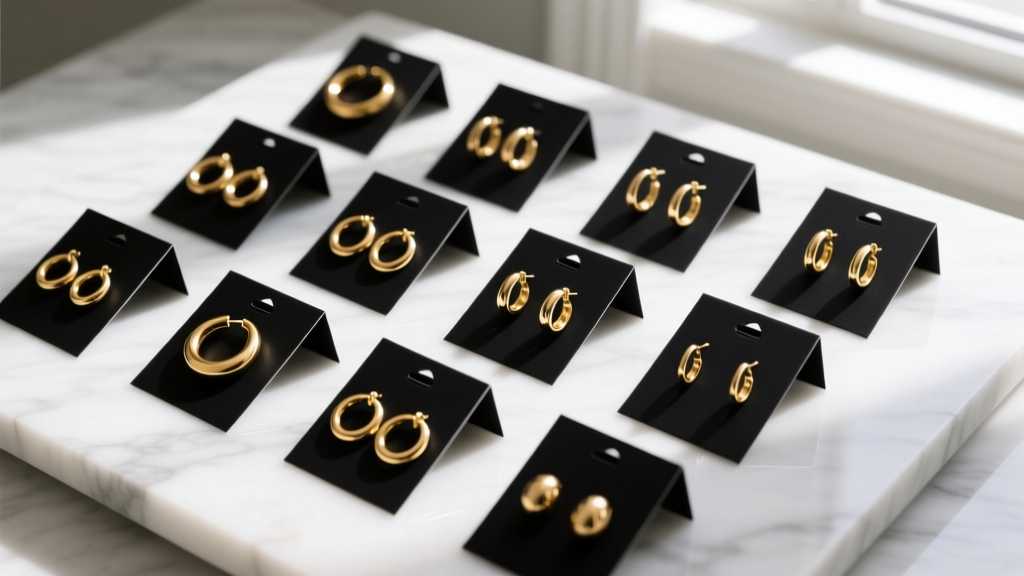
When selling or gifting handmade jewelry, the unboxing experience is just as critical as the piece itself. A flimsy, poorly proportioned backing can cheapen the perceived value of a meticulously crafted pair of earrings. Designing a custom earring holder card requires a precise understanding of material weights, structural integrity, and the specific mechanical needs of different earring findings. Whether you are a small-batch jewelry artisan or scaling an e-commerce brand, this step-by-step guide will walk you through engineering the perfect earring holder card that protects your inventory and elevates your brand identity.
Step 1: Selecting the Right Cardstock Weight and Finish
The most common mistake emerging jewelry makers make is selecting a paper weight that is too thin. Standard printer paper is roughly 80 GSM (grams per square meter), while basic crafting cardstock hovers around 200 GSM. Neither of these will support the weight of heavy brass dangles or glass drop earrings without bowing or tearing during transit.
For professional jewelry packaging, you must look at cover stocks measured in points (pt) or higher GSM ratings. According to packaging industry standards detailed by PakFactory, a 16pt cardstock (approximately 350 GSM) provides a rigid, premium feel suitable for most lightweight studs and small hoops. However, if your inventory includes heavy statement pieces or long chain dangles, upgrading to an 18pt or 24pt (400-600 GSM) cotton-blend board is essential to prevent the card from snapping at the hole punch site.
Finish Considerations
- Uncoated / Matte: Ideal for artisans who hand-stamp logos, write batch numbers, or need to write prices directly on the card. It offers a highly tactile, organic feel.
- Soft-Touch Lamination: Provides a velvety, luxury finish that repels fingerprints and moisture. Best for high-end minimalist brands, though it cannot be written on with standard pens.
- Gloss UV Coating: Makes colors pop and provides excellent scuff resistance, but can sometimes look overly commercial or cheapen the aesthetic of handmade, earthy jewelry lines.
Step 2: Engineering Dimensions and Hole Spacing
The physical geometry of your earring holder card must accommodate the specific findings you use. A hole that is too small will tear when forcing a thick leverback through it; holes placed too close together will cause dangle earrings to tangle and scratch one another.
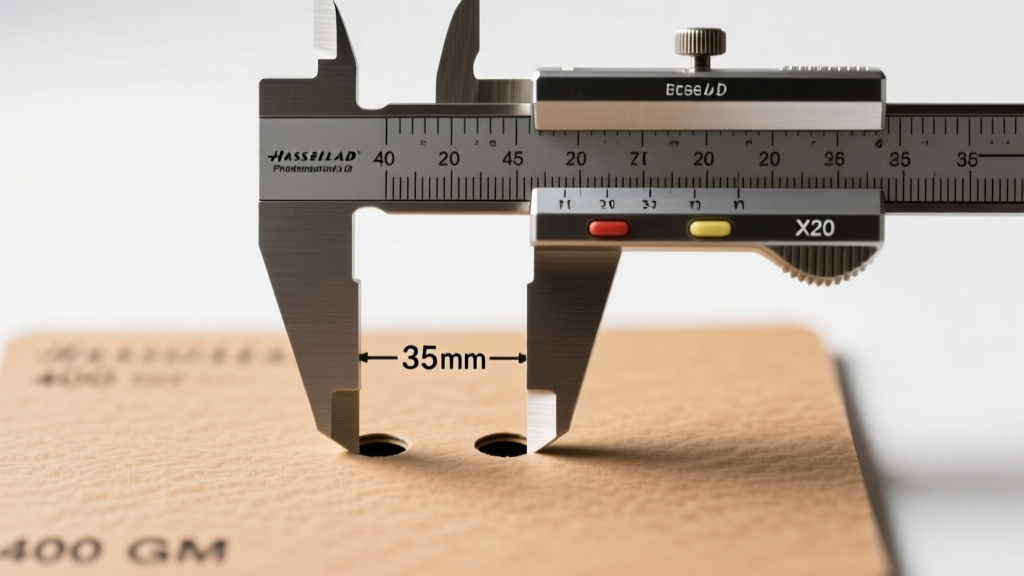
Below is a structural reference chart for designing your card templates based on standard jewelry findings:
| Earring Style | Hole Diameter | Minimum Hole Spacing | Recommended Card Height |
|---|---|---|---|
| Standard Studs (Friction Back) | 1.5mm | 15mm - 20mm | 2.0 inches |
| Wire-Wrapped Fishhooks | 2.5mm | 25mm | 2.5 inches |
| Leverbacks / Hinged Hoops | 3.0mm - 3.5mm | 35mm | 3.0 inches |
| Long Chain Dangles | 2.5mm | 40mm+ | 4.0+ inches |
Pro-Tip for Studs: Instead of a simple circular hole, consider designing an inverted 'V' slit or a 'T' slit. This allows the earring post to slide in easily without requiring extreme precision from the customer, and it accommodates varying post lengths (e.g., 8mm vs. 12mm posts) without the backing paper buckling.
Step 3: Designing the Layout and Branding Elements
When setting up your file in Adobe Illustrator, Canva, or InDesign, always design with a bleed area. A standard 3.5 x 2-inch card should be set up on a 3.625 x 2.125-inch artboard to ensure edge-to-edge color printing without unprinted white borders after trimming.
As highlighted in the Halstead jewelry business guides, packaging is a prime piece of marketing real estate. Do not clutter the front of the card. Keep the primary logo centered or aligned to the bottom third. Use the back of the card for essential business information:
- Social media handles and website URL.
- Material composition (e.g., '14k Gold Filled', 'Hypoallergenic Titanium', 'Recycled Sterling Silver'). This is not just good practice; it is a legal requirement in many jurisdictions regarding nickel content and metal purity.
- Care instructions. In 2026, many sustainable brands are omitting bulky paper inserts and instead printing a dynamic QR code on the back of the earring holder card that links directly to a digital care guide and authenticity certificate.
Step 4: Cutting, Punching, and Assembly Techniques
How you physically produce the cards will depend on your volume and budget. For small batches (under 500 units), manual die-cutting machines like the Sizzix Big Shot paired with custom steel rule dies offer a cost-effective way to achieve uniform shapes with clean edges. For the holes, a heavy-duty manual paper punch or a specialized jewelry card drill press ensures crisp, tear-free circles.
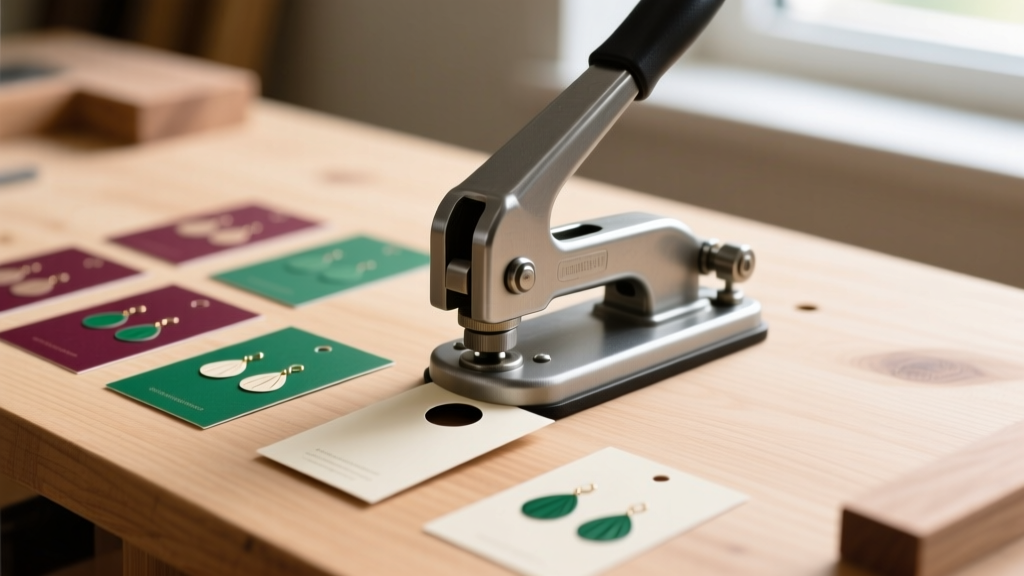
For larger production runs (1,000+ units), commercial laser cutting or flatbed die-cutting is required. Laser cutting is particularly useful if you are experimenting with non-traditional materials like 0.5mm acrylic, wood veneer, or vulcanized fiber, which are increasingly popular for waterproof jewelry lines. However, be aware that laser cutting thick cardstock can leave a slight scorch mark on the edges, which may require edge-painting or burnishing to maintain a premium aesthetic.
Troubleshooting Common Cardstock Failures
Warping and Bowing
If your cards are bowing when hung on a retail display rack, the grain direction of the paper is likely running parallel to the short edge. Always ensure the paper grain runs vertically (parallel to the longest edge) to maximize structural rigidity when hanging.
Tearing at the Punch Site
Tearing usually occurs when the punch tool is dull or when the paper is too dry and brittle. If you are hand-punching cotton paper, slightly humidifying the room or using a specialized sharp hollow punch with a brass mallet will yield much cleaner results than a standard lever-action office punch.
Final Thoughts on Sustainable Packaging
As consumer demand for eco-conscious packaging continues to dictate market trends, consider sourcing FSC-certified cardstocks or plantable seed paper for your earring holder cards. Seed paper (embedded with wildflower seeds) transforms the packaging into an interactive experience, allowing the customer to plant the card after removing the earrings. Just ensure the seed paper is at least 20pt thick, as the embedding process naturally weakens the paper's tensile strength. By marrying precise structural engineering with thoughtful, sustainable design, your custom earring holder cards will serve as a powerful extension of your jewelry brand.


