The Ultimate Buyer's Guide to Dangle and Drop Earrings
Discover how to choose the perfect dangle and drop earrings. Learn about weight limits, backing types, materials, and face shape pairing in our expert guide.

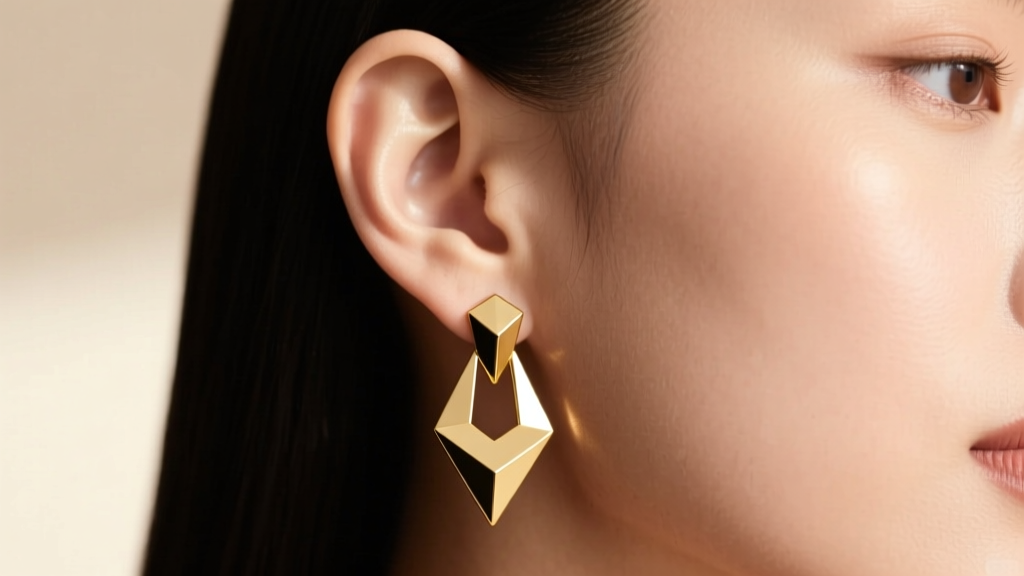
When building a versatile jewelry collection, understanding the structural and aesthetic nuances of dangle and drop earrings is essential. Unlike simple studs, these styles introduce movement, scale, and architectural presence to your look. However, their increased size and weight introduce unique challenges regarding earlobe health, material integrity, and long-term comfort. This comprehensive buying guide breaks down the exact specifications, material grades, and ergonomic factors you must evaluate before investing in your next pair of statement earrings.
Understanding the Difference: Drop vs. Dangle
While frequently used interchangeably in retail settings, 'drop' and 'dangle' refer to two distinct structural categories. Recognizing the difference is the first step in selecting a piece that aligns with your lifestyle and comfort threshold.
- Drop Earrings: These hang just below the earlobe and remain largely stationary. They are typically connected via a rigid post or a fixed jump ring. Because they do not swing, their center of gravity remains relatively stable, making them suitable for all-day wear in professional environments.
- Dangle Earrings: These feature hinges, chains, or multiple jump rings that allow the lower elements to swing and move freely with the wearer's motion. While visually dynamic, this kinetic movement creates shifting leverage on the earlobe piercing, requiring more robust backing systems and thicker wire gauges.
The Physics of Comfort: Weight and Gauge Specifications
The most common mistake buyers make with dangle and drop earrings is ignoring the physics of earlobe stress. The human earlobe is composed of soft tissue and fat, lacking cartilage support. When a heavy earring pulls downward on a thin wire, it creates the 'cheese-cutter effect'—a phenomenon where the wire slowly migrates through the tissue, causing permanent stretching or tearing.
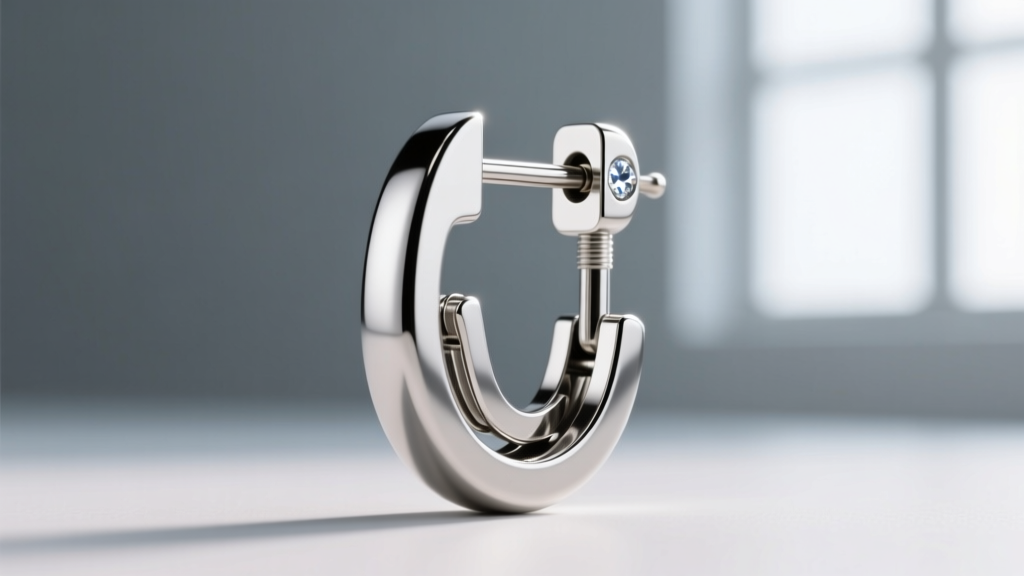
To prevent tissue damage, you must correlate the earring's total weight with the appropriate wire gauge (thickness). Standard fashion earrings are typically 20-gauge (0.81mm), which is entirely insufficient for heavy dangles. According to guidelines referenced by the Association of Professional Piercers (APP), heavier jewelry requires a thicker diameter to distribute the load across a wider surface area of the piercing fistula.
| Earring Weight | Recommended Gauge | Ideal Backing Type | Wear Time Limit |
|---|---|---|---|
| Under 5g | 20G (0.81mm) | Standard Friction Post | Unlimited |
| 5g - 12g | 18G (1.02mm) | Leverback or Omega Clip | 8-12 Hours |
| 12g - 20g | 16G (1.29mm) | Omega Clip + Silicone Pad | 4-6 Hours |
| Over 20g | 14G (1.63mm) or thicker | Specialized Earlift/Support | Under 2 Hours |
Expert Tip: Always check the product specifications for the exact gram weight. If a brand does not list the weight of a dangle earring exceeding two inches in length, consider it a red flag regarding their manufacturing transparency.
Material Grades and Hypoallergenic Standards
Because dangle and drop earrings exert continuous tension on the piercing, the metal in direct contact with the skin must be biocompatible. Micro-tears from heavy earrings can expose the bloodstream to alloy impurities, triggering severe contact dermatitis.
Approved Metals for Heavy Earrings
- ASTM F136 Titanium: The gold standard for body jewelry. It is entirely nickel-free, lightweight, and possesses a high strength-to-weight ratio, making it ideal for the structural hooks of heavy dangles.
- Niobium: A highly malleable, hypoallergenic reactive metal. It is slightly heavier than titanium but excellent for intricate, anodized drop earrings.
- Solid 14k or 18k Gold: Ensure the alloy is nickel-free (often alloyed with silver, copper, or palladium). The Gemological Institute of America (GIA) notes that lower karat gold (10k or 14k) may contain trace nickel depending on the manufacturer, so always request an alloy breakdown from the jeweler.
Metals to Avoid
Avoid 'surgical steel' or 'stainless steel' for heavy pieces. These are umbrella terms that often include 316L steel, which contains up to 14% nickel. Furthermore, avoid gold-plated brass or copper bases for dangles; the friction and sweat generated by swinging earrings will rapidly degrade the plating, exposing the reactive base metal to your piercing.
Choosing Backings for Heavy Styles
The earring backing is the unsung hero of comfort. Standard butterfly friction backs are entirely inadequate for dangle and drop earrings because they concentrate the weight on a tiny point behind the earlobe and frequently slip off due to the kinetic movement of the dangle.
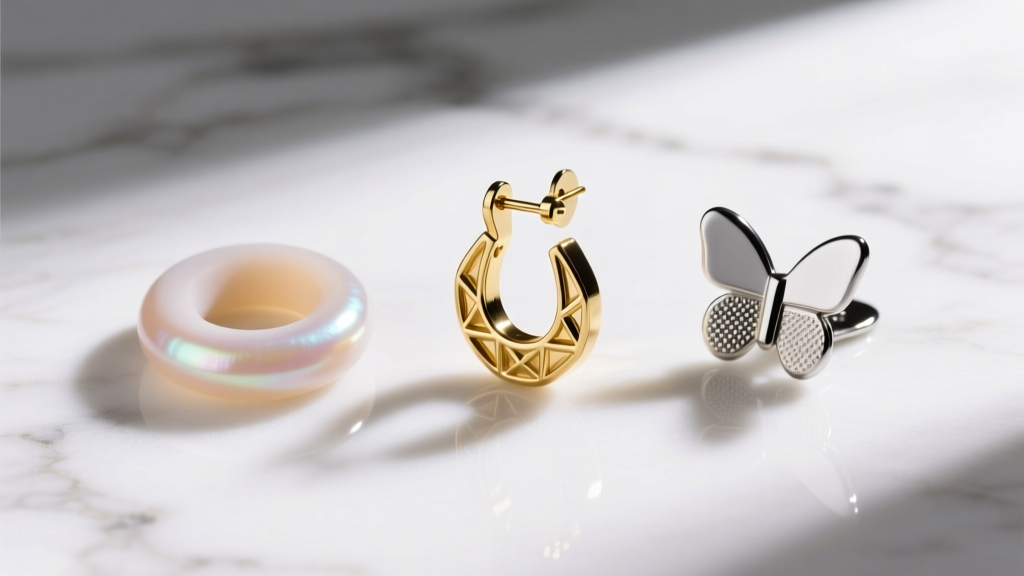
- Omega Clips: These feature a hinged, curved back that snaps over the post and rests flush against the earlobe. They distribute the weight of heavy drop earrings across a much wider surface area of the back of the ear, significantly reducing point-tension.
- Leverbacks: Ideal for dangle earrings, the leverback features a hinged wire that completely closes the loop. This prevents the earring from falling out during movement while providing a smooth, continuous curve through the piercing.
- Silicone O-Rings and Earlifts: For vintage or exceptionally heavy statement drops, pair the earring with a silicone O-ring or a specialized plastic 'earlift' disc. These discs sit behind the lobe, acting as a structural splint to keep the earring facing forward rather than drooping downward.
Face Shape Pairing Framework
Beyond ergonomics, the visual impact of dangle and drop earrings relies heavily on how their geometry interacts with your facial structure. Use this framework to select the most flattering silhouette:
- Round Faces: Opt for long, angular, and linear dangles. Rectangular drops or sharp geometric chandeliers help elongate the face and draw the eye vertically. Avoid circular hoops or short, bulbous drops that mirror the face's natural width.
- Square Faces: Choose drop earrings with soft, curved lines. Teardrop shapes, oval cabochons, and fluid, organic dangles soften a strong jawline. Avoid harsh, boxy geometric drops.
- Heart-Shaped Faces: Look for dangles that are wider at the bottom than the top. Chandelier earrings or inverted triangle drops add visual weight to the lower half of the face, balancing a narrower chin.
- Oval Faces: Highly versatile. You can wear almost any style, but medium-length drops and moderate dangles offer the most harmonious balance without overwhelming your natural proportions.
Maintenance and Storage Protocols
The intricate hinges, chains, and jump rings found in dangle earrings make them particularly susceptible to tangling and mechanical failure. Proper storage is non-negotiable.
Never toss dangle earrings into a communal jewelry box. The kinetic chains will inevitably knot around other pieces, leading to stress fractures in delicate jump rings. Instead, store them hanging from a dedicated jewelry organizer or individually in soft flannel pouches. If a dangle earring utilizes soft, porous gemstones like opals, pearls, or turquoise, avoid ultrasonic cleaners. The high-frequency vibrations can shatter inclusions or strip the nacre from pearls. Instead, clean the metal components with a soft microfiber cloth and a mild, phosphate-free dish soap solution, carefully avoiding direct contact with the gemstone settings.
By prioritizing gauge thickness, biocompatible materials, and ergonomic backings, you can confidently invest in dangle and drop earrings that offer both striking visual impact and uncompromising all-day comfort.


