How to Clean and Care for 14k Gold Amethyst Earrings
Learn the step-by-step process to safely clean, polish, and store your 14k gold amethyst earrings without damaging the gemstone or alloy.

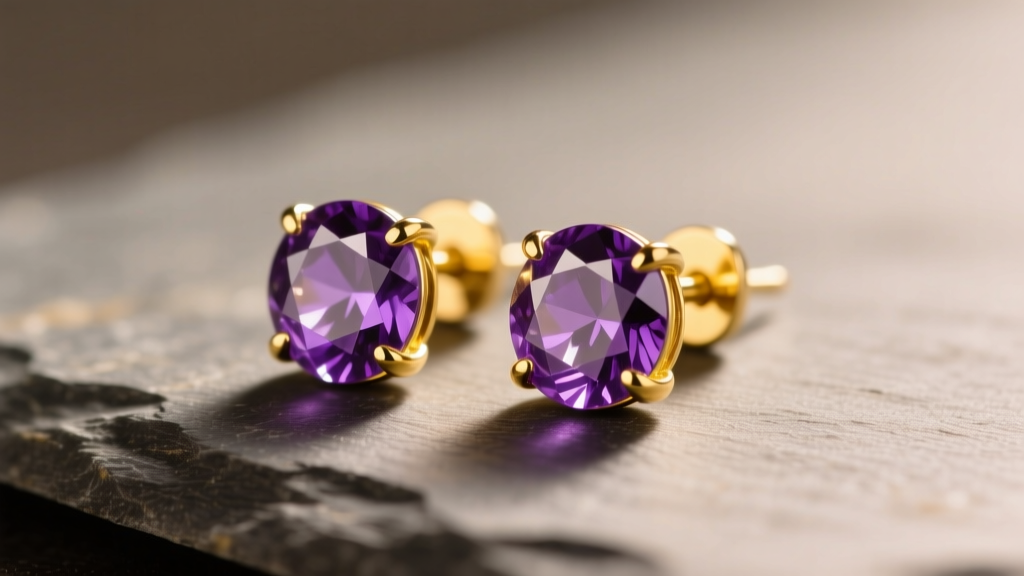
The Science of Your Materials: Why Amethyst and 14k Gold Require Special Care
Owning a pair of 14k gold amethyst earrings means possessing a beautiful intersection of organic geology and refined metallurgy. However, treating them like generic diamond studs or plain gold bands is a fast track to ruined gemstones and degraded alloys. To properly maintain your jewelry, you must first understand the physical limitations of the materials involved.
Amethyst is a purple variety of quartz, registering at a 7 on the Mohs hardness scale. While this makes it relatively durable for daily wear, it is critically vulnerable to airborne dust, which often contains microscopic quartz particles (also a 7 on the Mohs scale). Wiping a dusty amethyst with a dry cloth will result in micro-scratches that permanently dull the stone's polish. Furthermore, amethyst gets its purple hue from iron impurities and natural irradiation forming "color centers." Prolonged exposure to ultraviolet (UV) light or extreme heat can destabilize these centers, causing the vibrant purple to fade into a pale, washed-out yellow or grey.
On the metallurgical side, 14k gold is an alloy composed of 58.5% pure gold and 41.5% secondary metals—typically copper, silver, and zinc. Pure 24k gold is too soft for secure gemstone settings, so these alloying metals are added for tensile strength. However, the copper content makes 14k gold highly reactive to halogens. Exposure to chlorine (in swimming pools) or ammonia (in household cleaners) causes a chemical reaction known as stress corrosion cracking, which can literally cause the gold prongs holding your amethyst to become brittle and snap.
Step-by-Step Cleaning Guide for 14k Gold Amethyst Earrings
When your earrings lose their sparkle, it is usually due to a buildup of sebum, dead skin cells, and cosmetic products on the pavilion (the bottom facets) of the amethyst. Follow this precise protocol to restore their brilliance safely.
Step 1: The Loupe Inspection
Before introducing any liquids, inspect the settings. If your amethysts are cut in an emerald or pear shape, they should be set with V-prongs at the vulnerable corners. Use a 10x jeweler's loupe to check that all prongs are sitting flush against the gemstone's girdle. If you notice a lifted prong or a visible gap, stop immediately and take the earrings to a professional jeweler. Cleaning a loose stone can dislodge it entirely.
Step 2: The Lukewarm Soak
Fill a small glass bowl with distilled or filtered lukewarm water. Avoid tap water, as heavy minerals and chlorine treatments can leave microscopic deposits on the gold. Add exactly two drops of a mild, phosphate-free dish soap (such as original Dawn). Submerge the earrings and let them soak for 15 to 20 minutes. This gentle surfactant action will break down the lipid bonds of skin oils without attacking the gold alloy.
Step 3: Gentle Agitation and Brushing
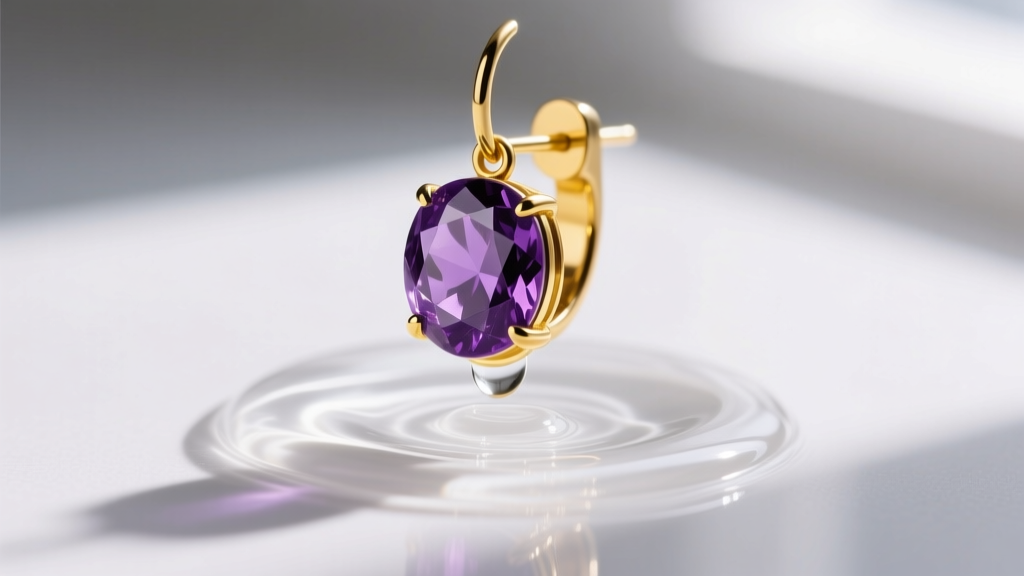
Remove the earrings from the soak and use an extra-soft baby toothbrush to gently agitate the surface. Focus specifically on the pavilion (the back of the stone) and the gallery wire beneath the setting, where debris accumulates. Brush in small, circular motions. Never use a standard adult toothbrush, as the stiffer nylon bristles can inflict microscopic abrasions on the gold and the gemstone's table facet.
Step 4: Rinsing and Drying
Rinse the earrings under a gentle stream of lukewarm distilled water. Ensure the drain is securely plugged or use a mesh strainer to prevent catastrophic loss. Pat the gold dry with a lint-free microfiber cloth. Allow the amethyst to air-dry completely before storing, as trapping moisture against the gold backing can accelerate localized oxidation over time.
What to Avoid: Common Mistakes That Ruin Amethyst
The jewelry industry is flooded with "quick-fix" cleaning gadgets that are actively harmful to colored gemstones. According to the Gemological Institute of America (GIA), improper cleaning methods are the leading cause of preventable damage to quartz-family gems.
- Ultrasonic Cleaners: These devices use high-frequency sound waves to create microscopic vacuum bubbles (cavitation) that implode against the jewelry. While great for diamonds, natural amethysts frequently contain liquid inclusions, negative crystals, or "tiger stripe" fractures. The violent shockwaves from an ultrasonic cleaner can expand these internal flaws, causing the gemstone to shatter from the inside out.
- Steam Cleaners: The sudden, intense heat of a jewelry steam cleaner can induce thermal shock. Amethyst is particularly sensitive to rapid temperature fluctuations, which can cause internal fracturing or alter the stone's color permanently.
- Chemical Dips and Silver Polishes: Never use commercial silver dip solutions or tarnish removers on 14k gold. These highly acidic formulas will strip the alloying metals from the surface of your gold, leaving it porous, discolored, and structurally compromised.
Troubleshooting: Diagnosing Amethyst Issues
If your earrings still look lackluster after a proper wash, use this diagnostic table to identify the underlying issue before attempting further intervention.
| Visual Symptom | Probable Cause | Actionable Solution |
|---|---|---|
| Dull, milky appearance under the table facet | Stubborn soap scum or lotion buildup on the pavilion | Repeat the lukewarm soak; use a wooden toothpick to gently dislodge debris from the prong corners |
| Faint, web-like white scratches on the surface | Abrasion from contact with harder materials or dust | Requires professional lapidary re-polishing; do not attempt to buff at home |
| Color appears pale, yellowish, or washed out | UV damage or heat exposure degrading color centers | Irreversible; consult a jeweler about potential low-heat irradiation treatment (rare and costly) |
| Gold setting looks reddish or heavily tarnished | Copper oxidation from exposure to chlorine or sweat | Professional polishing and ultrasonic cleaning (only if the jeweler confirms the amethyst is inclusion-free) |
Storage and Maintenance Schedule
Proper storage is just as critical as cleaning. Because amethyst is a 7 on the Mohs scale, it can be easily scratched by diamonds, sapphires, and rubies (which rank 9 and 10). Conversely, amethyst can scratch softer stones like opals or pearls. Always store your 14k gold amethyst earrings in isolation.
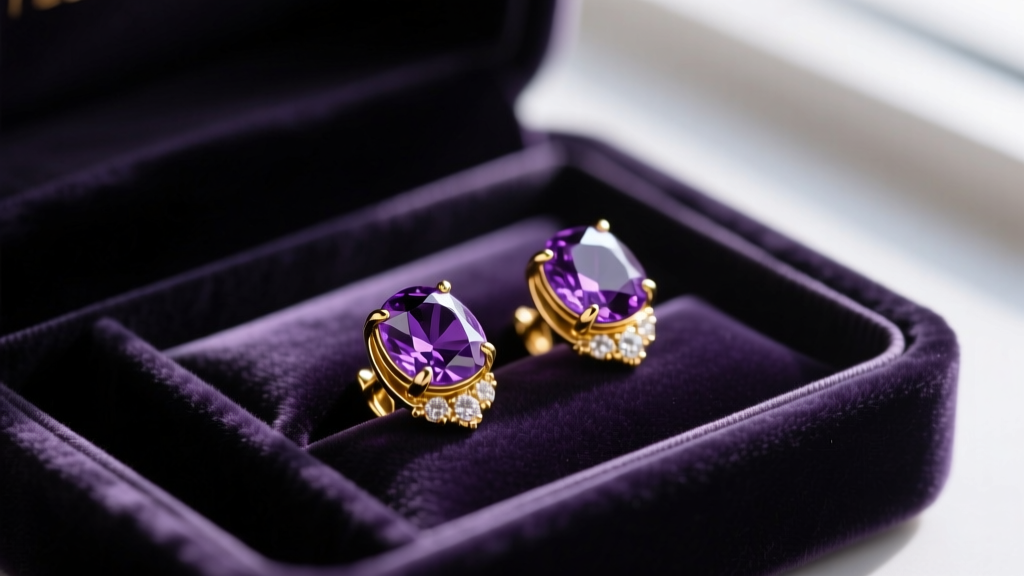
The Jewelers of America recommends a structured maintenance routine to ensure the longevity of fine jewelry. Adhere to the following schedule to keep your earrings in pristine condition:
| Frequency | Maintenance Action | Tools / Location |
|---|---|---|
| Weekly | Wipe down with a clean microfiber cloth to remove daily oils and cosmetics | At home |
| Monthly | Perform the full lukewarm soak and soft-brush cleaning protocol | At home |
| Bi-Annually | Inspect prongs with a 10x loupe for lifting, wear, or thinning | At home or local jeweler |
| Annually | Professional inspection, ultrasonic cleaning (if safe), and steam polishing of the gold | Professional bench jeweler |
Sourcing Replacement Parts and Professional Servicing
Even with meticulous care, the mechanical components of your earrings will experience wear. The friction of pushing and pulling earring backs (especially standard butterfly friction backs) slowly wears down the post groove and thins the gold over time. If your earring backs feel loose or slide off easily, it is time to replace them.
Consider upgrading to 14k gold "La Pousette" backs or secure locking clutch backs, which utilize a mechanical locking mechanism rather than relying on the friction of a bent metal tab. Expect to pay between $45 and $85 for a high-quality pair of solid 14k locking backs.
If your amethysts are set in 14k white gold, remember that white gold is naturally a pale, yellowish-grey alloy that is plated with rhodium to achieve a bright white finish. This rhodium plating wears off over time, particularly on the backs of earrings where they rub against the skin and hair. Budget approximately $35 to $60 to have your local jeweler re-plate the white gold settings every 12 to 18 months to maintain their brilliant, reflective luster without compromising the amethyst.
Expert Tip: Always remove your 14k gold amethyst earrings before applying hairspray, perfume, or lotions. The alcohols and aerosolized chemicals in these products can create a stubborn, cloudy film on the amethyst that requires professional polishing to remove, while simultaneously accelerating the tarnishing of the gold alloy.
By respecting the specific gemological and metallurgical properties of your jewelry, you ensure that your 14k gold amethyst earrings remain a vibrant, structurally sound staple in your collection for decades to come.


