Ultimate Care Guide for Beaded Brick Stitch Earrings
Learn how to properly clean, store, and maintain your delicate beaded brick stitch earrings to prevent thread fraying and bead tarnishing.

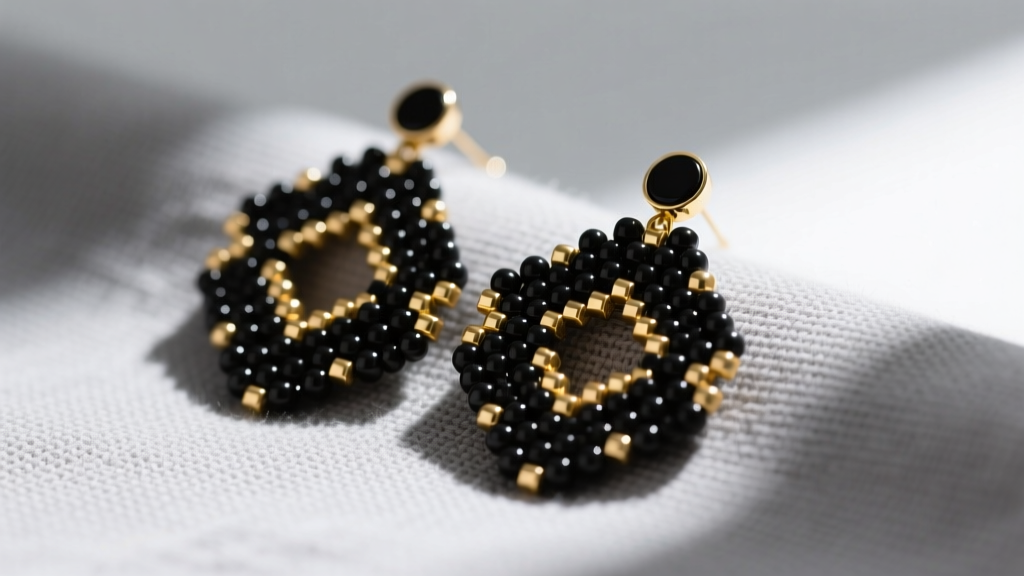
The Anatomy of Brick Stitch Earrings: Why Standard Cleaning Fails
Brick stitch earrings are a marvel of textile-based jewelry. Unlike cast metal hoops or solid gemstone studs, these intricate pieces are woven structures. They are typically crafted using uniform cylindrical beads, such as 11/0 or 15/0 Miyuki Delicas or Toho seed beads, interlocked with high-tensile threads like Fireline (braided polyethylene) or Nymo (nylon). Because of this unique anatomy, treating your brick stitch earrings like standard metal jewelry is a fast track to ruining them.
Standard jewelry dips, ultrasonic cleaners, and even mild soap soaks can catastrophically degrade the structural integrity of the piece. Water and chemicals can weaken nylon threads, strip delicate metallic coatings off galvanized beads, and dissolve the adhesives used to secure the finishing knots. According to Interweave, a leading authority on beadwork techniques, the tension and friction of the weave are what hold the earring together; compromising the thread compromises the entire piece. Replacing a custom artisan brick stitch pair can cost anywhere from $45 to $120, making proper, specialized maintenance an absolute necessity for longevity.
The Golden Rules of Beadwork Cleaning
Before you attempt to clean your brick stitch earrings, you must understand the vulnerabilities of the materials involved. The Gemological Institute of America (GIA) notes that organic and treated materials require vastly different care than crystalline gems. While seed beads are glass, their surface treatments are highly sensitive.
- Never Submerge: Never soak brick stitch earrings in water. Even water-resistant threads like Fireline can trap moisture in the bead holes, leading to unseen mildew or thread rot over time.
- Avoid Ultrasonic Cleaners: The high-frequency vibrations will shatter glass seed beads and instantly strip finishes like Aurora Borealis (AB) or luster coatings.
- Ban Harsh Chemicals: Ammonia, bleach, acetone, and rubbing alcohol (isopropyl) will strip galvanized and dyed bead finishes, leaving you with dull, patchy beads.
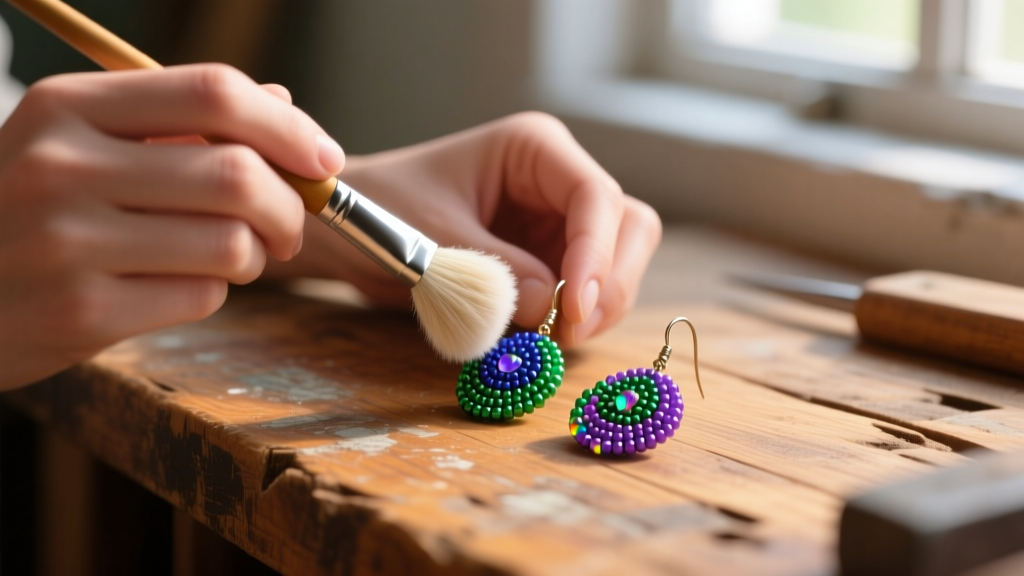
Step-by-Step Dry Cleaning Protocol
To safely remove oils, makeup, and environmental dust from your beaded earrings, you must rely on mechanical dry-cleaning methods. This protocol ensures the beads remain vibrant while the internal thread stays completely dry.
Tools Required
- Soft-bristle makeup brush (unused, clean)
- Microfiber polishing cloth
- Compressed air duster (optional, for deep crevices)
- Cotton swabs
The Cleaning Process
First, lay the earrings flat on a clean, soft towel to prevent any beads from popping off and rolling away if the tension is loose. Take your soft-bristle makeup brush and gently sweep across the surface of the beadwork. Move in the direction of the bead rows to avoid catching the thread that bridges the gaps. For stubborn dust trapped between the 15/0 seed beads, use short, controlled bursts of compressed air from a distance of at least six inches.
If the beads have accumulated skin oils or lotion, lightly dampen a corner of the microfiber cloth with distilled water—ensure it is barely damp, not wet. Gently dab the surface of the beads. Immediately follow up with the dry side of the cloth to absorb any residual moisture. Never rub aggressively, as friction can generate static or pull on the woven thread.
Hardware Maintenance: Hooks and Jump Rings
While the beadwork requires a gentle touch, the metal hardware—usually 20-gauge or 22-gauge sterling silver or gold-filled ear wires—requires traditional metal care. The challenge is cleaning the metal without exposing the adjacent thread to polishing compounds.
| Metal Type | Recommended Cleaner | Application Method | Thread Risk Level |
|---|---|---|---|
| Sterling Silver | Sunshine Polishing Cloth | Rub wire only, avoid jump ring connection | Low (if kept away from weave) |
| Gold-Filled | Mild dish soap on dry Q-tip | Dab hook, wipe immediately with dry cloth | Medium (moisture risk) |
| Niobium / Titanium | Isopropyl Alcohol (70%) | Apply to cotton swab, swipe hook only | High (alcohol degrades thread) |
Always polish the ear wire while it is detached from the beadwork if possible. If the earring is permanently assembled, use a piece of painter's tape to mask off the jump ring and the top row of beads, protecting the thread from abrasive polishing compounds.
Thread Integrity and Knot Sealing
The most common failure point in brick stitch earrings is the top knot where the beadwork connects to the metal jump ring. This area endures the most kinetic stress as the earring swings during wear. Over time, the thread can fray against the metal edge of the jump ring.
When and How to Reapply Adhesive
Inspect the top connection point every six months. If you see fuzzy thread fibers or notice the knot slipping, it is time to reseal it. Do not use super glue (cyanoacrylate), as it dries brittle and can crack the glass beads or snap under tension. Instead, use GS Hypo Cement, a flexible, precision-tip adhesive favored by professional jewelers and beadworkers. Apply a microscopic drop directly to the knot. Allow it to cure for 24 hours in a low-humidity environment before wearing. According to The Beadsmith, maintaining the flexibility of the thread is crucial for the drape and lifespan of woven jewelry.
Environmental Threats and Proper Storage
How you store your brick stitch earrings is just as critical as how you clean them. Improper storage leads to two major issues: thread stretching and bead fading.
- Never Hang Beadwork: While hanging metal dangle earrings is fine, hanging heavy brick stitch pieces puts continuous gravitational stress on the top rows of thread, particularly if woven with Nymo. This will cause the beadwork to warp and sag over time.
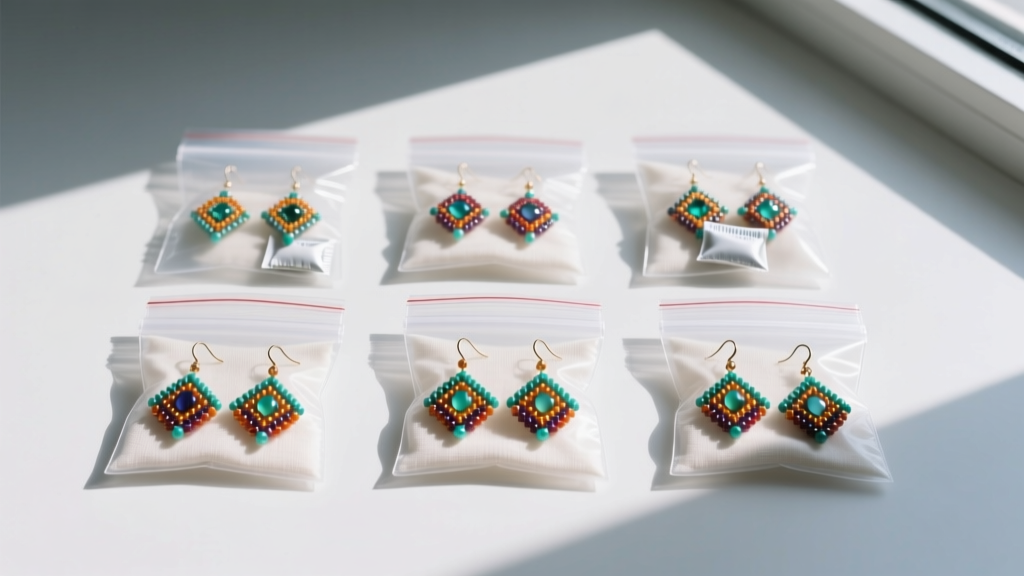
- Flat Lay Storage: Store your earrings flat in a jewelry box with divided compartments. Line the compartments with anti-tarnish cloth to protect the metal hooks.
- UV Protection: Dyed seed beads (especially vibrant reds, purples, and pinks) are highly susceptible to UV fading. Store your earrings in a dark drawer or an opaque box, away from direct sunlight or harsh vanity lighting.
- Moisture Control: If you live in a high-humidity climate, place a small silica gel packet in your jewelry box to prevent ambient moisture from degrading the nylon threads.
Troubleshooting Common Brick Stitch Issues
Even with meticulous care, beaded earrings can encounter issues. Here is how to handle the most common problems without causing further damage.
Problem: A single bead has cracked or shattered.
Solution: Do not attempt to pull the broken glass out with tweezers, as the sharp edges will slice the internal thread. Use a pair of flush cutters to carefully crush the broken bead into dust, then tap it out. If the design allows, you can weave a replacement bead into the gap using a separate needle and Fireline thread, anchoring it to the surrounding beads.
Problem: The earring hook has bent out of shape.
Solution: Remove the hook from the beadwork jump ring before attempting to bend it back. Bending the wire while attached transfers torque directly to the top row of seed beads, which can crack them under the pressure.
By treating your brick stitch earrings as delicate textile art rather than standard metal accessories, you ensure their intricate geometric patterns and vibrant colors remain flawless for years of daily wear.


