Troubleshooting Large Black Hoop Earrings: Weight & Tarnish Fixes
Struggling with heavy or fading large black hoop earrings? Discover expert troubleshooting for lobe sag, coating wear, and clasp snags in this deep dive.

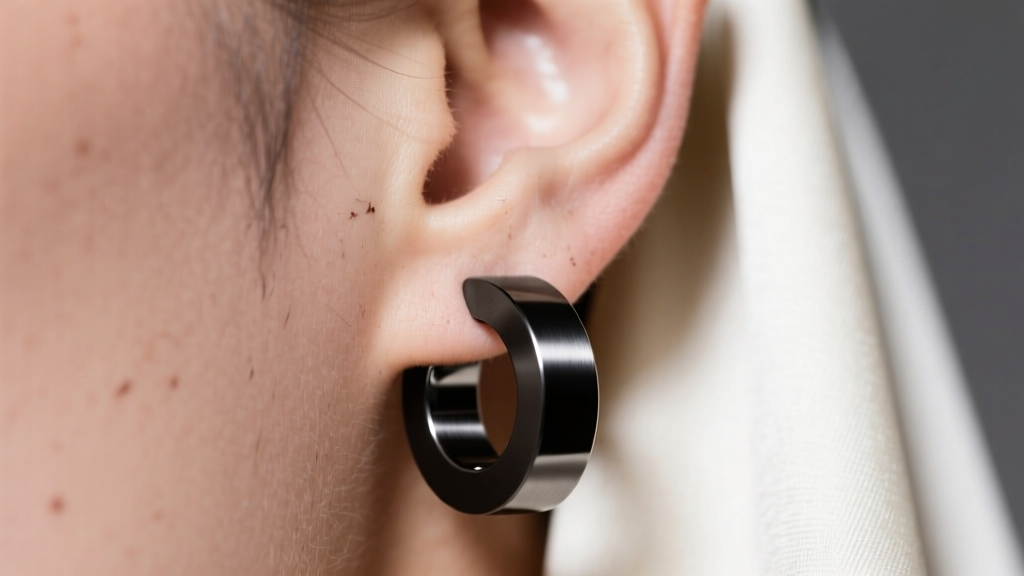
Large black hoop earrings are a staple of bold, modern jewelry styling, offering a striking silhouette that frames the face beautifully. However, their dramatic scale and dark finishes introduce a unique set of structural and metallurgical challenges. From the dreaded 'pendulum effect' that stretches earlobes to the frustrating reality of black plating rubbing off onto your skin, these statement pieces require specific engineering to function properly. As a jewelry specialist, I frequently see expensive black hoops relegated to the back of the drawer due to unwearable weight or premature tarnishing. This comprehensive troubleshooting guide addresses the exact failure modes of oversized black hoops and provides actionable, expert-level solutions to restore their comfort and longevity.
The Hidden Engineering Flaws of Oversized Black Hoops
The primary issue with any hoop exceeding 50mm in diameter is the shift in the center of gravity. Unlike a lightweight 15mm huggie that sits flush against the lobe, a 60mm hoop acts as a pendulum. Every time you turn your head or walk, the kinetic energy transfers directly to the piercing fistula. When you compound this pendulum effect with the dense base metals often used to achieve a black color (such as brass or bronze alloys), the weight can easily exceed 12 grams per ear. According to guidelines from the Association of Professional Piercers (APP), sustained wear of heavy jewelry in standard 20-gauge (0.81mm) or 18-gauge (1.0mm) piercings accelerates tissue migration and lobe thinning. The immediate troubleshooting step for any heavy black hoop is to evaluate the wire thickness and the internal tubing structure.
Troubleshooting Lobe Sag: Weight Distribution & Support Hacks
If your large black hoops are pulling your earlobes down or causing the piercing hole to angle forward, you are dealing with a weight distribution failure. Here is how to diagnose and fix the issue without sacrificing the oversized aesthetic.
Hollow Tubing vs. Solid Wire Diagnostics
Tap your earring lightly with a fingernail. If it produces a high-pitched, solid 'clink,' it is likely crafted from solid wire or cast metal. A solid 14-gauge (1.6mm) steel or brass hoop at 60mm will cause severe lobe fatigue. The permanent fix is to replace solid wire hoops with hollow tubing alternatives. High-end manufacturers use seamless hollow titanium or aluminum tubing, which reduces the overall weight by up to 70% while maintaining the exact same outer diameter and visual impact.
The Earlobe Support Patch Method
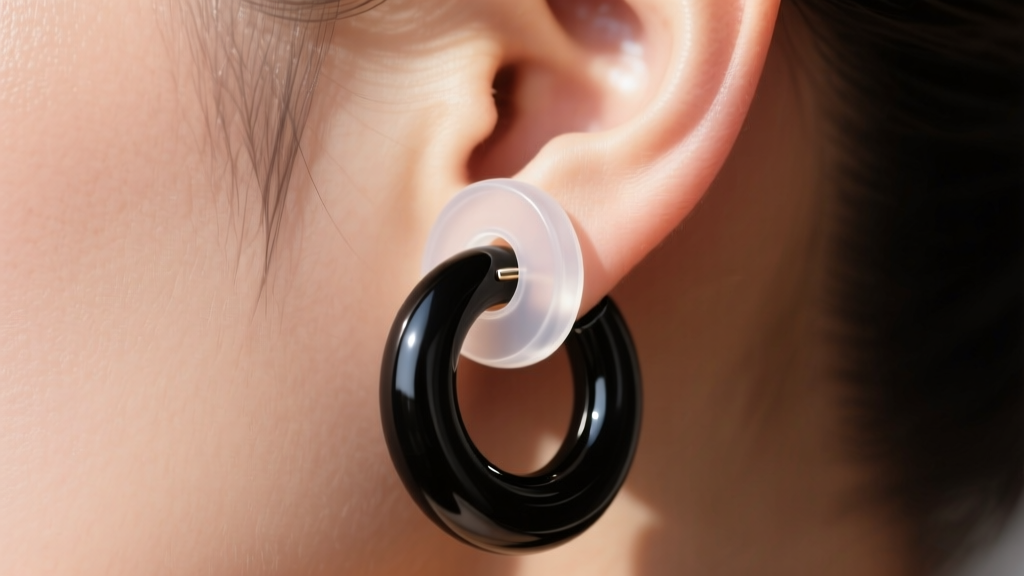
If you already own a heavy pair of solid black hoops that you refuse to part with, you must mechanically reinforce the earlobe. Invisible silicone earring support patches (often sold under brand names like Lobe Wonder) are essential. These adhesive, medical-grade silicone discs feature a slit that slides over the earring post, distributing the downward drag of the hoop across a 10mm surface area on the back of the earlobe rather than concentrating it on the 1mm fistula.
Solving the 'Fading Black' Problem: Material Breakdown
The most common complaint I encounter with dark jewelry is the 'brassy bleed'—the phenomenon where the black coating wears away at friction points, revealing a yellowish or silver base metal underneath. Black is not a natural metal color; it must be engineered. Understanding how your specific hoop was blackened is the key to troubleshooting its lifespan.
| Material & Method | Durability Rating | Common Failure Mode | Troubleshooting Fix |
|---|---|---|---|
| PVD Coated Titanium | Exceptional (10/10) | Extremely rare; may scratch if dropped on concrete. | Clean with mild soap; avoid abrasive polishing cloths. |
| Black Rhodium over Silver | Moderate (6/10) | Wears off at the clasp and inner curve due to friction. | Re-plate at a local jeweler every 12-18 months. |
| E-Coating / Enamel | Low (3/10) | Chips or flakes off when exposed to cosmetics or impact. | Apply a micro-thin layer of clear jewelry shield to high-wear areas. |
| Oxidized Sterling Silver | Low (4/10) | Surface patina rubs off onto skin, turning it grey/black. | Seal with a matte clear acrylic spray designed for metals. |
For the ultimate permanent solution, seek out hoops made from Niobium. Niobium is a highly biocompatible reactive metal that can be heat-treated or anodized to achieve a deep, permanent black color that will never chip, flake, or rub off, as the color is a structural change to the metal's surface oxide layer, not a topical coating. The Silver Institute notes that while silver takes black rhodium beautifully, the electroplated layer is inherently sacrificial and requires ongoing maintenance.
Clasp Failures: Snagging and Slipping Out
Large black hoops catch on hair, scarves, and turtleneck collars. When a snag occurs, the clasp is the weakest point of failure. Troubleshooting the clasp mechanism is vital to prevent losing your jewelry.
- The Fishhook (Latch-back) Warp: Many budget black hoops use a thin fishhook wire that pushes into a catch. On heavy hoops, a simple snag will bend the fishhook wire, preventing it from clicking securely into place. Fix: Use a pair of nylon-jaw jewelry pliers to gently bend the hook back to its original 45-degree angle. Never use bare metal pliers, as they will scratch the black finish.
- The Saddleback Hinge Loosening: Saddleback clasps feature a hinged post that snaps into a groove. Over time, the hinge pin can loosen, causing the clasp to pop open under the hoop's own weight. Fix: Place the earring on a soft pad and use a plastic mallet to gently tap the hinge barrel, compressing the metal slightly to increase tension.
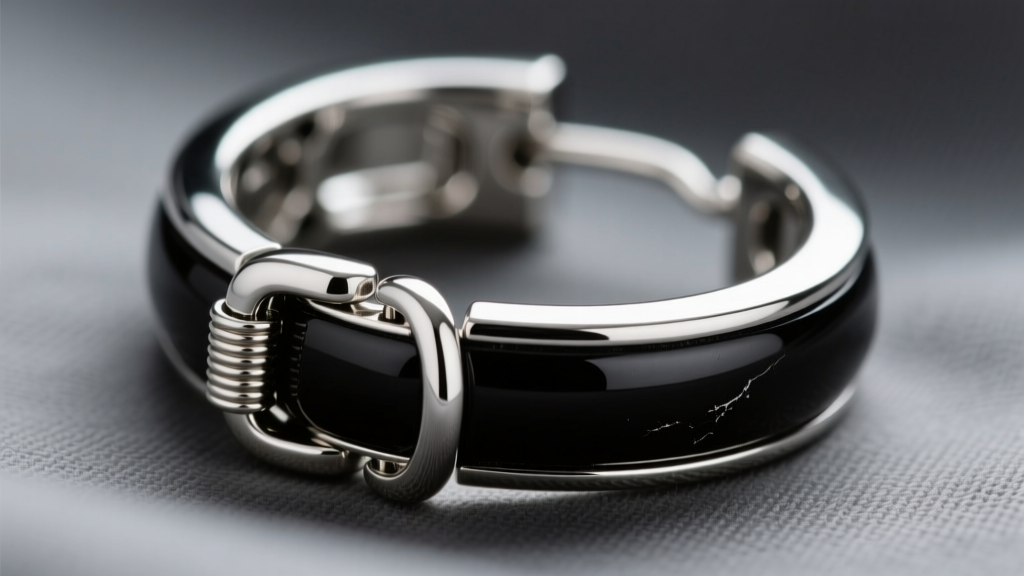
- The Clicker Spring Failure: High-end black PVD titanium hoops often use a continuous clicker ring. If the clicker stops snapping shut, debris (like lotion or dead skin) is likely jamming the micro-spring. Fix: Soak the clasp area in warm distilled water with a drop of dish soap, then use a soft-bristled baby toothbrush to clear the seam.
Step-by-Step Restoration and Care Guide
Improper cleaning is the fastest way to ruin the finish on large black hoop earrings. Many consumers mistakenly use silver polishing cloths or ultrasonic cleaners, both of which will strip black rhodium, oxidized patinas, and e-coatings in seconds. Follow this strict restoration protocol to maintain the deep black hue:
- The Soak: Mix lukewarm distilled water with a few drops of pH-neutral baby shampoo. Submerge the hoops for exactly 3 minutes to break down sebum and hairspray buildup.
- The Agitation: Use a cotton swab (never a brush) to gently trace the inner curve of the hoop where it rests against the neck and hair.
- The Rinse: Rinse under a gentle stream of cool distilled water. Avoid tap water, as the chlorine and hard minerals can leave cloudy white spots that are difficult to buff off black surfaces without abrasion.
- The Dry: Pat dry immediately with a lint-free microfiber cloth. Air-drying black metal often results in water spots that mimic the appearance of fading.
Never store large black hoops loose in a jewelry box where they can rub against harder gemstones or diamond studs. The friction will act like sandpaper on black rhodium and enamel finishes. Always store them individually in soft anti-tarnish flannel pouches.
Final Verdict: When to Retire the Hoop
While many issues with large black hoop earrings can be engineered around or repaired, there is a point of no return. If your earrings feature a black e-coating that has begun to peel in large flakes, exposing a nickel-containing base metal underneath, it is time to retire them immediately to prevent severe contact dermatitis. Similarly, if the wire at the base of the clasp has developed visible micro-fractures from years of bending and pendulum stress, the metal is fatigued and will inevitably snap. By prioritizing hollow PVD titanium or anodized niobium from the start, and utilizing silicone lobe supports for heavier pieces, you can enjoy the dramatic, face-framing impact of oversized black hoops without the structural headaches.


