Best Metals and Materials for Hoop Earrings on Guys
Discover the best metals for men's hoops. We compare titanium, surgical steel, and gold alloys for durability, weight, and skin biocompatibility.

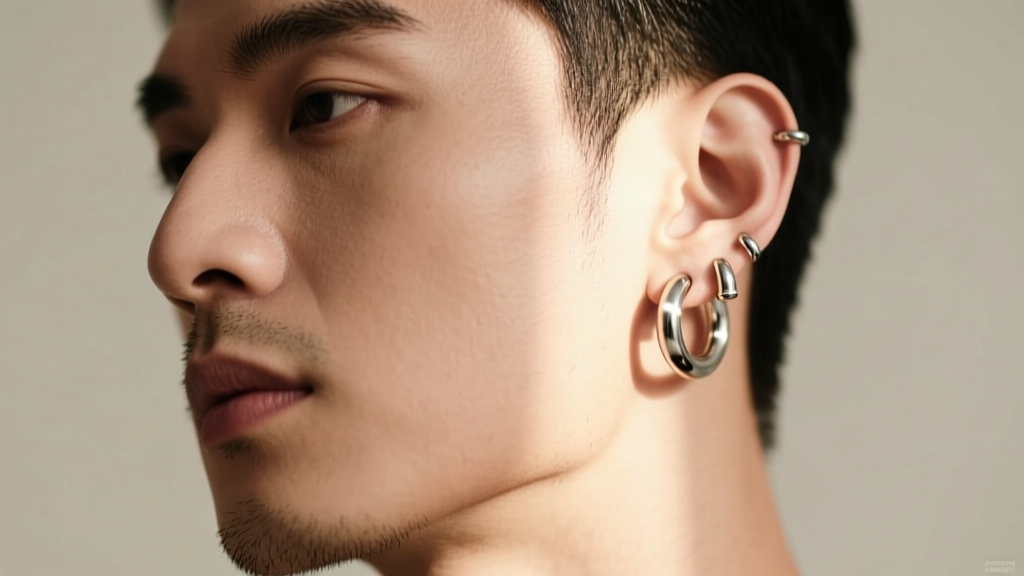
The Evolution of Men's Ear Styling
The landscape of men's jewelry has shifted dramatically over the last decade. No longer confined to basic stainless steel studs or novelty pieces, the modern market offers highly engineered materials tailored for continuous wear. When evaluating hoop earrings on guys, material choice dictates not only the visual weight and aesthetic but also long-term tissue health, structural resilience, and maintenance requirements. A hoop earring is a continuous loop that interacts with the piercing channel from multiple angles, meaning the metal must withstand friction, tension, and exposure to environmental elements without degrading or causing contact dermatitis.
In this comprehensive metallurgical guide, we break down the exact material grades, alloy compositions, and physical properties that define the best metals for men's hoop earrings. Whether you are looking for an indestructible daily beater or a high-end precious metal statement piece, understanding the science behind the metal is crucial for making an informed purchase.
Core Metrics for Evaluating Jewelry Metals
Before diving into specific materials, it is essential to understand the three primary metrics used by jewelers and professional piercers to evaluate body jewelry:
- Vickers Hardness (HV): This measures the metal's resistance to scratching and deformation. Hoops are prone to snagging on clothing or hair; a higher HV means the hoop will retain its perfect circular shape longer.
- Specific Gravity (Density): This determines the weight of the earring. Heavy metals can cause lobe stretching or migration over time, especially in larger diameter hoops.
- Biocompatibility and Nickel Release: The most critical factor for tissue health. According to the American Academy of Dermatology, nickel contact dermatitis is the most common metal allergy, requiring strict adherence to nickel-free or low-release alloys for sensitive skin.
Material Breakdown: From Implant-Grade to Precious Metals
1. ASTM F136 Implant-Grade Titanium
For those prioritizing biocompatibility and lightweight durability, Titanium is the undisputed champion. However, not all titanium is created equal. The Association of Professional Piercers strictly recommends ASTM F136 implant-grade titanium (Ti 6Al-4V ELI) over commercial pure grades like ASTM B265. The F136 grade contains aluminum and vanadium, which significantly increase its tensile strength and fatigue resistance.
Titanium has a Vickers hardness of approximately 334 HV, making it highly resistant to bending. Furthermore, its specific gravity is remarkably low (4.43 g/cm³), meaning a thick 14-gauge titanium hoop will feel virtually weightless on the ear. Titanium is also completely nickel-free and can be anodized to produce vibrant colors like bronze, teal, or dark gunmetal without using surface plating that could chip or flake.
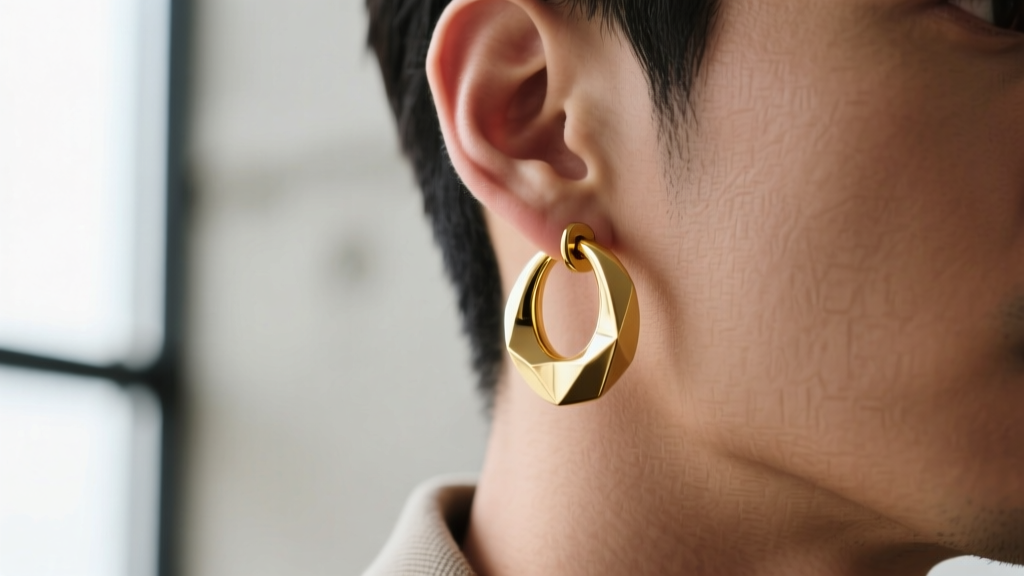
2. 316L Surgical Steel vs. Standard Alloys
316L surgical steel remains the most common and affordable material for men's hoop earrings, but it requires a nuanced understanding of its chemical composition. The 'L' stands for low carbon, and the alloy contains roughly 16-18% chromium, 10-14% nickel, and 2-3% molybdenum. The chromium creates a passive oxide layer that traps the nickel inside the metal matrix.
While this passive layer makes 316L safe for the majority of the population, it is not foolproof. Prolonged exposure to chlorides (like sweat or swimming pool water) can break down the oxide layer, leading to microscopic nickel release. For guys with known metal sensitivities or those who wear their hoops 24/7 through intense workouts, 316L poses a moderate risk of localized irritation. However, its high polishability and low price point ($15 to $40 per pair) make it an excellent entry-level option for casual wear.
3. 14k vs. 18k Solid Gold
Gold is the traditional standard for luxury jewelry, but pure 24k gold is far too soft (25 HV) for continuous-wear hoops. Therefore, gold must be alloyed with metals like copper, silver, and zinc. According to the Gemological Institute of America, the karat system dictates the ratio of pure gold to alloy metals, which drastically alters the physical properties of the final piece.
14k Gold (58.5% Pure): With a Vickers hardness ranging from 130 to 160 HV, 14k gold is the superior choice for men's hoops. The higher alloy content provides excellent tensile strength, ensuring the hoop will not easily warp or oval out if snagged. It also offers a slightly warmer, more subdued tone that aligns well with masculine styling preferences.
18k Gold (75% Pure): Softer (around 115 HV) and significantly more expensive, 18k gold offers a richer, deeper yellow hue. However, 18k seamless hoops are more susceptible to scratching and bending. If you opt for 18k, it is highly recommended to choose a thicker gauge (14g or 12g) to compensate for the metal's inherent softness.

Comprehensive Material Comparison Matrix
The following table summarizes the critical data points for the most common metals used in men's hoop earrings, providing a quick-reference framework for your purchasing decision.
| Metal / Grade | Hardness (HV) | Specific Gravity | Nickel Content | Avg. Price Range |
|---|---|---|---|---|
| ASTM F136 Titanium | ~334 | 4.43 g/cm³ | 0% (None) | $35 - $80 |
| 316L Surgical Steel | ~150-190 | 7.99 g/cm³ | 10-14% (Trapped) | $15 - $40 |
| 14k Solid Gold | ~130-160 | 13.5 g/cm³ | Varies (Usually 0%) | $150 - $400 |
| 18k Solid Gold | ~110-130 | 15.6 g/cm³ | Varies (Usually 0%) | $250 - $600+ |
| Platinum (950) | ~120-140 | 21.45 g/cm³ | 0% (None) | $500 - $1,200+ |
Gauge Thickness and Sizing for Masculine Aesthetics
Material is only half the equation; the physical dimensions of the hoop dictate both comfort and visual proportion. For men's lobe piercings, the standard jewelry wire thickness (gauge) differs slightly from women's fine jewelry standards.
- 18-Gauge (1.0mm): Generally too thin for men's hoops. Thin wire can create a 'cheese-cutter' effect, slowly migrating through the lobe tissue over time due to the weight of the hoop.
- 16-Gauge (1.2mm): The industry standard for initial lobe piercings and a highly versatile thickness for medium-sized hoops (8mm to 10mm inner diameter). It provides a solid visual presence without feeling bulky.
- 14-Gauge (1.6mm): The ideal choice for a bold, masculine aesthetic. A 14g hoop offers substantial structural integrity, virtually eliminating the risk of the metal bending out of shape. It is highly recommended for seamless clicker rings and larger diameter hoops (10mm to 14mm).
When selecting the inner diameter, 8mm to 10mm provides a snug 'huggie' fit that sits flush against the lobe, minimizing the chance of snagging on collars or headphones. Diameters of 12mm to 15mm offer a more relaxed, traditional hoop silhouette.
Maintenance and Patina: Long-Term Wear Realities
Different metals age in vastly different ways. 316L steel and Titanium are virtually maintenance-free; they will not tarnish, rust, or oxidize, and can be cleaned with simple soap and water. However, high-polish steel will accumulate micro-scratches over time, developing a matte patina that some men prefer for a rugged look.
Gold alloys, particularly those with higher copper content (like rose gold or certain 14k yellow gold blends), can develop a slight surface oxidation when exposed to sulfur compounds in the air or sweat. This is easily remedied by occasional polishing with a jeweler's cloth. Platinum, while incredibly dense and hypoallergenic, is prone to developing a soft, frosted patina due to its unique displacement properties—scratches on platinum move the metal rather than removing it, requiring professional repolishing to restore a mirror finish.
Final Verdict: Matching Metal to Lifestyle
Choosing the right material for hoop earrings on guys ultimately comes down to your lifestyle, budget, and skin sensitivity. If you lead an active lifestyle, work with your hands, or have a history of contact dermatitis, ASTM F136 Titanium is the only logical choice. It offers unmatched strength-to-weight ratios and absolute biocompatibility. For those seeking a premium, luxury aesthetic that balances durability with traditional value, 14k Solid Gold in a 14-gauge thickness provides the perfect intersection of hardness, rich color, and lifelong wearability. Avoid cheap, unverified alloys and plated metals, as the friction inherent to hoop earrings will quickly wear away surface coatings, exposing the reactive base metals underneath.


