Troubleshooting Garnet Drop Earrings Gold Settings & Care
Learn how to fix cloudy stones, bent posts, and loose prongs on your garnet drop earrings gold settings with expert gemology and jewelry care tips.

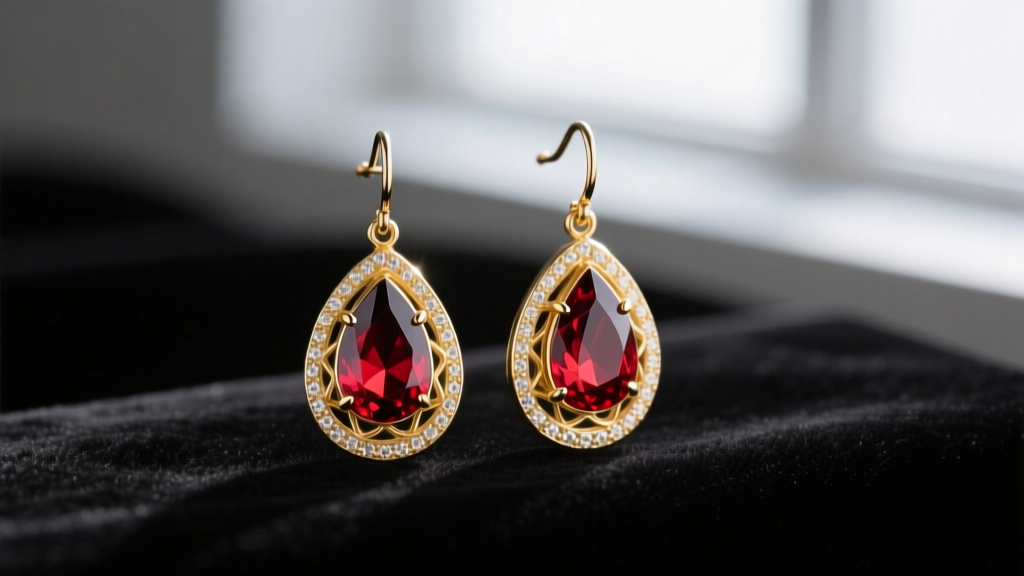
Garnet drop earrings in gold are a timeless staple in fine jewelry, offering a rich, deep red hue that catches the light beautifully. However, because drop earrings are subject to constant movement, they face unique structural and gemological challenges. From bent posts and snagging prongs to cloudy gemstones, owning garnet drop earrings gold settings requires specialized maintenance. As a senior jewelry stylist and gemology enthusiast, I frequently help clients troubleshoot these exact issues. Below is a comprehensive, expert-level guide to diagnosing and fixing the most common problems associated with gold and garnet drop earrings.
Issue 1: The Garnet Stone is Cloudy, Scratched, or Fractured
Garnet is not a single mineral, but a group of silicate minerals. The most common deep red garnets used in drop earrings are almandine and pyrope, which rank between 7 and 7.5 on the Mohs hardness scale. While this makes them reasonably durable for everyday wear, they are significantly softer than diamonds (10) or sapphires (9).
The Ultrasonic Cleaner Mistake
The most frequent cause of cloudy or fractured garnets is improper cleaning. Many owners drop their earrings into an ultrasonic cleaner, assuming it is safe for all fine jewelry. Ultrasonic cleaners use high-frequency sound waves to create cavitation bubbles in a liquid solution. If your garnet contains natural liquid inclusions or microscopic internal fractures—which is incredibly common in almandine garnets—the intense vibrations can cause the stone to shatter or fracture internally, leading to a cloudy, milky appearance.
The Fix: Never use ultrasonic or steam cleaners on garnets. According to the Gemological Institute of America (GIA), the safest method for cleaning garnet jewelry is using warm water, a mild dish soap, and a soft-bristled baby toothbrush. If your stone is already scratched, a lapidary must professionally repolish the table and crown facets to restore its optical clarity.
Issue 2: Gold Prongs are Snagging, Wearing Down, or Loosening
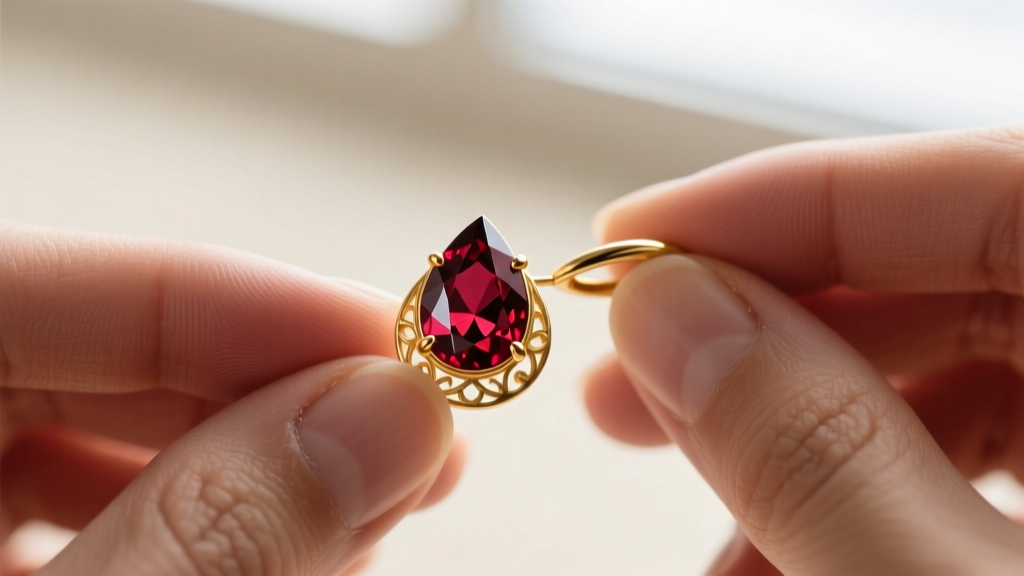
Drop earrings operate like pendulums. Every time you turn your head, the kinetic energy transfers down the earring, causing the gemstone setting to swing and catch on hair, scarves, or collars. This constant snagging puts immense lateral stress on the gold prongs holding the garnet.
14k vs. 18k Gold Prong Durability
The karat of your gold dramatically impacts prong longevity. Pure 24k gold is too soft for jewelry, so it is alloyed with metals like copper, silver, and zinc.
- 18k Gold (75% pure): Has a richer, warmer yellow color but is relatively soft. Prongs in 18k gold will wear down and flatten faster, requiring more frequent retipping.
- 14k Gold (58.5% pure): Contains more alloy metals, making it significantly harder and more resistant to bending. For heavy garnet drop earrings, 14k gold is metallurgically superior for securing the stone.
The Fix: Inspect your prongs every six months using a 10x jeweler's loupe. If the prong tips are flattened or you can feel them catching on your fingernail, take them to a bench jeweler for prong retipping. If you lead an active lifestyle, consider having your garnets reset into a bezel setting, where a continuous rim of gold surrounds the stone, eliminating the risk of snagging entirely.
Issue 3: The Earring Post Bends or Causes Lobe Irritation
Garnets are dense, heavy gemstones. A 15mm almandine garnet drop can easily weigh over 4 carats per stone. When this weight is suspended from a standard, thin earring post, it creates a structural failure point.
The "Cheese-Cutter" Effect and Post Bending
Standard friction-post earrings are typically manufactured at 20-gauge (0.81mm thick) or 22-gauge (0.64mm thick). When a heavy gold and garnet drop earring is worn on a 20g post, the weight pulls downward. Over time, the post bends. Worse, the thin wire presses into the bottom of your earlobe piercing, creating a "cheese-cutter" effect that can slowly migrate the piercing downward and cause chronic irritation or tearing.
Nickel Allergies in White Gold
If your drop earrings are set in white gold and your earlobes are red and itchy, the culprit is likely nickel. White gold is created by alloying yellow gold with white metals, historically including nickel. As the rhodium plating on the post wears off from friction, the nickel is exposed to your skin, triggering contact dermatitis.
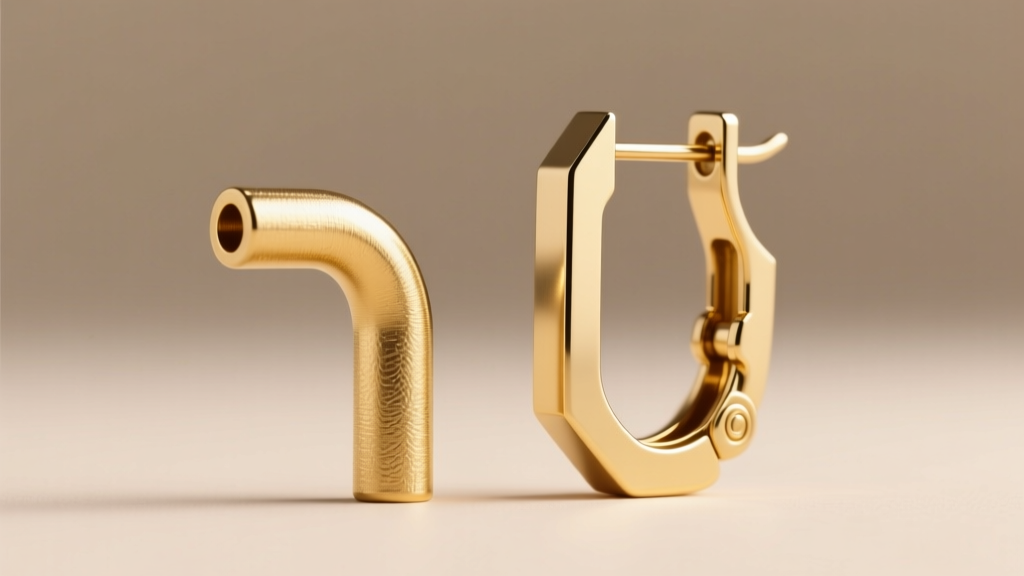
The Fix: Upgrade your earring backs and posts. Ask a jeweler to swap the standard 20g post for a thicker 18-gauge (1.02mm) or 19-gauge post to distribute the weight. Alternatively, convert the earrings to leverback or shepherd hook wires, which provide a wider surface area of support inside the piercing. For white gold irritation, request a hypoallergenic palladium-white gold alloy or switch to platinum posts.
Troubleshooting Matrix: Quick Fixes for Common Problems
Use this diagnostic table to quickly identify and resolve issues with your gold garnet earrings.
| Symptom | Probable Cause | Expert Solution |
|---|---|---|
| Stone looks milky or cloudy | Internal fracture from ultrasonic cleaning or hard impact. | Professional lapidary repolishing; avoid ultrasonic cleaners. |
| Prongs catching on hair | Prong tips worn flat or lifted due to pendulum swinging. | Bench jeweler prong retipping; consider bezel reset. |
| Earring hangs crookedly | 20g or 22g post bent from the heavy carat weight of the garnet. | Replace with an 18g post or convert to a leverback wire. |
| Itchy, red earlobes | Rhodium plating worn off, exposing nickel in white gold alloy. | Re-plate with rhodium, or upgrade to palladium-white gold/platinum. |
| Garnet color looks black in low light | Almandine garnets are naturally very dark; poor facet cutting. | Upgrade to a Rhodolite garnet, which has a lighter, purplish-red tone. |
Verifying Authenticity: Is Your Gold and Garnet Real?
The market is flooded with synthetic glass garnets and gold-plated brass masquerading as fine jewelry. If you are troubleshooting an earring that is tarnishing or chipping unnaturally, you may not have solid gold or natural garnet.
Checking the Gold Hallmark
Inspect the earring post or the back of the drop setting with a loupe. You should see a hallmark indicating the gold purity: 14K, 18K, 585 (European for 14k), or 750 (European for 18k). If the earring is plated, the underlying brass or copper will eventually oxidize, leaving a green or black residue on your skin. According to the American Gem Society, reputable jewelers will always stamp solid gold pieces and provide a certificate of authenticity for the gemstones.
Identifying Natural vs. Synthetic Garnet
Natural garnets almost always contain microscopic inclusions, such as tiny rutile needles or fingerprint-like liquid patterns. Synthetic garnets (like YAG - Yttrium Aluminum Garnet) or red glass will be completely flawless and may contain perfectly round gas bubbles. If your drop earrings are completely flawless under 10x magnification and lack the deep, complex light return of a natural stone, they are likely synthetic.
"A true almandine garnet possesses a subtle, velvety depth that glass simply cannot replicate. When troubleshooting a dull stone, always verify its natural origin before attempting aggressive polishing, as synthetic glass will scratch and pit under lapidary wheels meant for silicate minerals."
Final Thoughts on Earring Maintenance
Troubleshooting garnet drop earrings gold settings is largely about understanding the physics of how jewelry moves and the gemology of the stones involved. By respecting the Mohs hardness of garnet, upgrading to thicker gauge posts for heavy drops, and maintaining your gold prongs, you can ensure your earrings remain secure, comfortable, and brilliant for decades. Always consult a certified bench jeweler for structural repairs, and stick to mild, non-vibrational cleaning methods to protect the internal integrity of your gemstones.


