Expert Guide to Earrings Connected With Chain: Mechanics & Fit
Discover the technical mechanics, material stress points, and ergonomic fit of earrings connected with chain in our expert jewelry engineering guide.

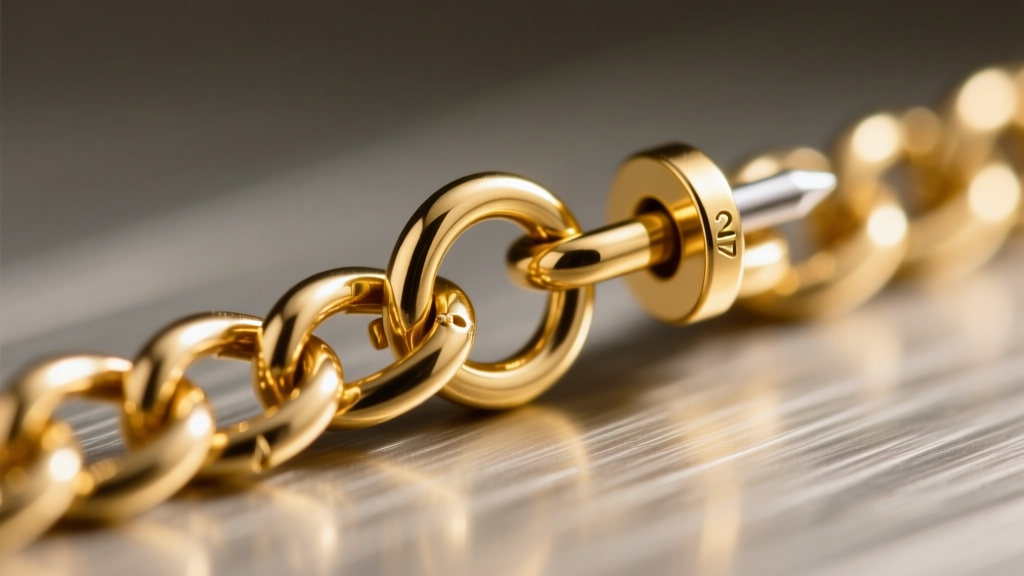
The Engineering Behind Earrings Connected With Chain
As we navigate the jewelry landscape of 2026, the aesthetic of multi-piercing curation has evolved from simple styling into a complex exercise in wearable engineering. Among the most sought-after and technically demanding designs are earrings connected with chain. Whether configured as helix-to-lobe ear chains, dual-lobe connectors, or delicate threader styles, these pieces introduce dynamic kinetic forces that standard stud or hoop earrings simply do not face.
From a structural perspective, an ear chain acts as a suspended bridge between two or more independent anatomical anchor points. Unlike a rigid barbell, a chain is a flexible linkage system. When the wearer moves, talks, or changes elevation, the chain creates a pendulum effect. This kinetic energy transfers directly to the fistula (the piercing channel) and the surrounding dermal tissue. If the tension, gauge, or link architecture is miscalculated, the result is not merely discomfort, but tissue migration, micro-tearing, and catastrophic jewelry failure.
This deep dive examines the metallurgy, tensile mechanics, and anatomical fitting protocols required to design, select, and wear chain-connected earrings safely and comfortably.
Chain Link Architectures and Tensile Strength
The structural integrity of earrings connected with chain relies entirely on the geometry of the links. Each link type distributes mechanical stress differently. A common mistake in mass-market jewelry is utilizing lightweight cable chains for heavy multi-piercing setups, leading to rapid elongation and breakage.
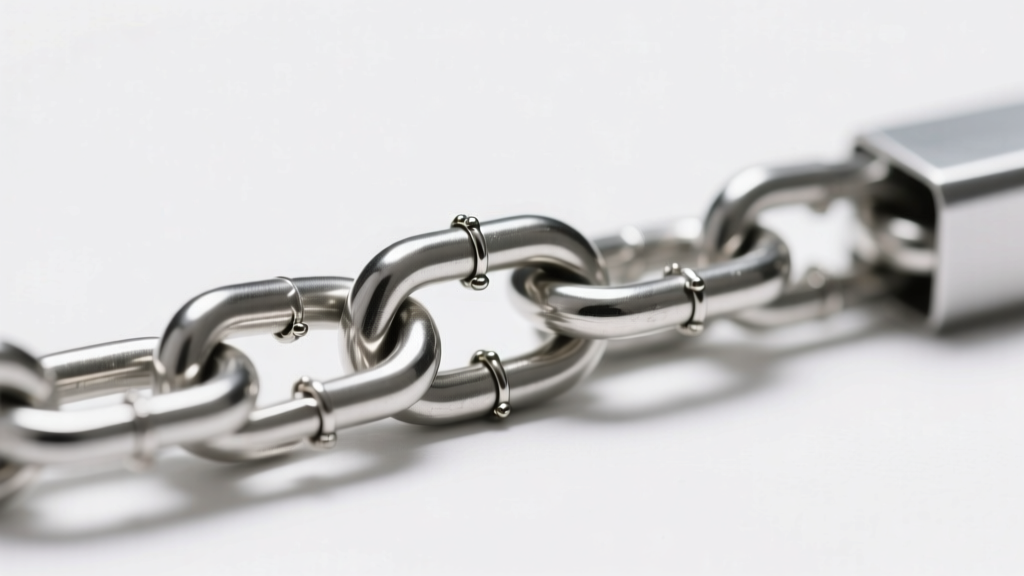
Below is a technical comparison of the four most common chain link architectures used in fine ear chains:
| Link Type | Standard Gauge | Tensile Yield | Flexibility | Best Application |
|---|---|---|---|---|
| Cable | 22G - 20G | Low | High | Single-ear threaders, lightweight drape |
| Rolo | 20G - 18G | Medium-High | Medium | Helix-to-lobe connectors, charm anchors |
| Box | 22G - 20G | High | Low | Geometric aesthetic, rigid structural drops |
| Wheat | 22G - 18G | Very High | Medium-Low | Heavy pendant support, multi-lobe bridges |
For structural connectors that span cartilage and lobe piercings, Rolo and Wheat chains are the industry standard. Their interlocking geometries resist lateral torsion, meaning they are less likely to kink when the ear folds against a pillow or headphones. According to metallurgical standards outlined by the Gemological Institute of America (GIA), the alloy composition combined with the link shape dictates the ultimate tensile strength; a 20-gauge 14k gold rolo chain can withstand significantly more sheer force than a 20-gauge box chain due to the rounded stress distribution of the circular links.
Gauge Sizing, Piercing Friction, and Lobe Stress
The wire gauge—the thickness of the metal passing directly through the fistula—is a critical variable in chain-connected earrings. The standard ear piercing is performed at 18G (1.02mm) or 20G (0.81mm). However, the chain itself is rarely this thick, as a chain made entirely of 18G links would be too heavy and rigid for the ear's delicate topography.
The Threader Mechanism and Friction Coefficients
Threader earrings (a subset of chain earrings) utilize a stiff wire leader to pull a fine chain (usually 22G or 0.64mm) through the piercing. The friction coefficient between the metal and the mucosal tissue of the fistula is paramount. If the transition point between the rigid leader and the flexible chain features a sharp solder joint or a micro-burr, it will act like a microscopic saw, causing fistula irritation and hypertrophic scarring.
Expert Rule: Always inspect the transition zone of a threader chain under a 10x jeweler's loupe. The jump ring connecting the leader wire to the chain must be flush-soldered and polished to a mirror finish to prevent tissue micro-trauma during insertion.
Calculating the Drop and Tension Arc
When designing or purchasing earrings connected with chain for two distinct piercings (e.g., a lobe and a mid-helix), you must calculate the tension arc. The human jaw joint (temporomandibular joint) sits mere millimeters from the lower ear lobe. When the jaw opens fully, the earlobe shifts downward and outward by approximately 3mm to 5mm. Simultaneously, the cartilage of the helix remains relatively static.
- Static Measurement: The distance between the two piercings while the face is at rest.
- Dynamic Measurement: The distance between the two piercings while the mouth is fully open and the head is tilted to the opposite shoulder.
- The Slack Rule: The chain must be manufactured to the dynamic measurement plus an additional 4mm of slack. Failure to account for this kinetic shift will result in the chain acting as a tension wire, slowly pulling the top piercing downward and causing cartilage migration.
Failure Modes: Where Chain-Connected Jewelry Breaks
Understanding how earrings connected with chain fail allows collectors and jewelers to preemptively address structural weaknesses. The pendulum effect of walking generates continuous low-grade fatigue on the metal.
- Jump Ring Gapping (The #1 Failure): Jump rings are the small circular links used to attach the chain to the earring post or clasp. If a jump ring is merely twisted shut rather than soldered, the lateral torque of a swinging chain will eventually pull the gap open, resulting in lost jewelry. High-end ear chains mandate laser-soldered jump rings.
- Link Elongation: Soft metals like 24k gold or low-grade sterling silver will stretch under continuous tension. Over time, round links deform into ovals, weakening the structural interlock and creating weak points where the chain will eventually snap.
- Clasp Spring Fatigue: For ear chains that wrap around the auricle and secure behind the ear, micro-lobster clasps are common. The internal steel spring in cheap clasps corrodes from skin pH and sebum exposure, leading to a failure to close securely.
Ergonomic Fitting for Multi-Piercing Setups
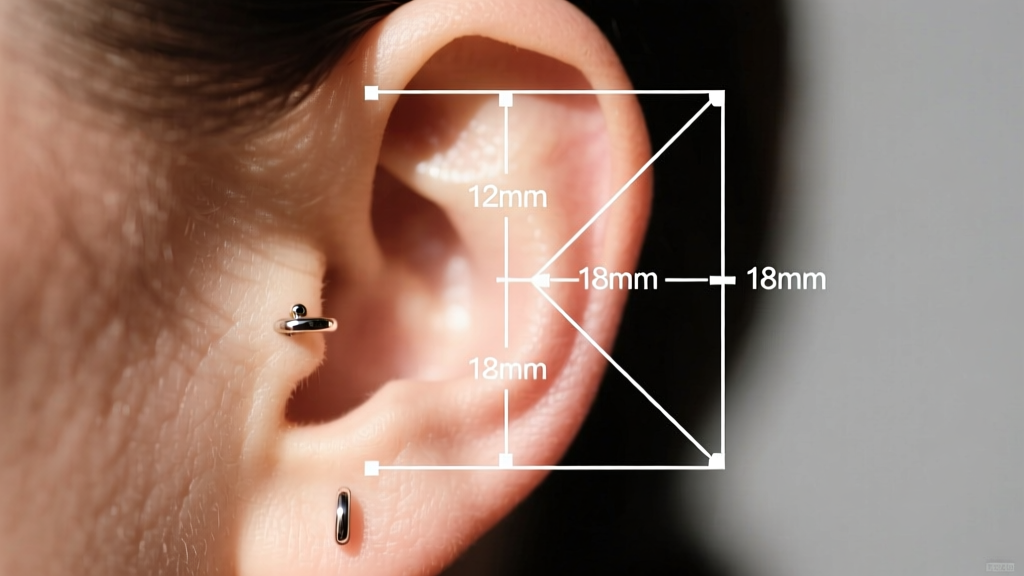
Curating a setup with ear chains requires precise anatomical mapping. Because piercing placements vary wildly from person to person, off-the-rack chain lengths frequently result in poor drape or excessive tension. Professional piercing studios in 2026 increasingly utilize digital calipers to map the exact millimeter distance between fistulas before ordering custom-length chains from jewelers.
For a standard helix-to-lobe drape, the chain should follow the natural concave curve of the scapha (the inner ridge of the ear). If the chain is too tight, it will bow outward, catching on hair and clothing. If it is too loose, it will droop below the anti-tragus, creating a snag hazard that can lead to traumatic tearing of the lower lobe piercing.
According to the Association of Professional Piercers (APP), any jewelry that bridges two piercings must accommodate natural bodily movement and swelling. The APP strongly advises against using rigid or semi-rigid connectors in fresh piercings, recommending that chain-connected setups only be worn in fully healed, mature fistulas (typically 9 to 12 months post-piercing for cartilage).
Material Selection for Long-Term Wearability
The material composition of the chain dictates both its biocompatibility and its mechanical lifespan. Because ear chains cover a larger surface area and trap more sebum and environmental debris than simple studs, material reactivity is a primary concern.
- ASTM F136 Implant-Grade Titanium: The gold standard for sensitive ears and newly healed setups. Titanium offers an exceptional strength-to-weight ratio, allowing for 22G chains that possess the tensile strength of 18G steel. It is entirely nickel-free and highly resistant to corrosion.
- 14k and 18k Solid Gold: Preferred for luxury fine jewelry. However, jewelers must use specific hardening alloys (like copper and silver mixtures) to ensure the gold is not too soft. 18k gold is softer and more prone to link elongation than 14k, making 14k the superior choice for high-tension structural ear chains.
- Sterling Silver (925): Generally discouraged for long-term, multi-piercing chain wear. The copper content in sterling silver oxidizes when exposed to the varying pH levels of different ear zones, leading to tarnish that can stain the skin and degrade the structural integrity of micro-soldered joints over time.
Ultimately, mastering the use of earrings connected with chain requires a shift in perspective. You are not merely selecting an accessory; you are engineering a dynamic suspension system for the human body. By prioritizing soldered connections, calculating dynamic tension arcs, and selecting appropriate link geometries, you ensure that your ear curation remains as structurally sound as it is visually striking.


