How to Clean and Restore Vintage Richelieu Earrings Safely
Learn expert techniques to clean, restore, and store vintage Richelieu earrings without damaging delicate rhinestone foils or gold plating.

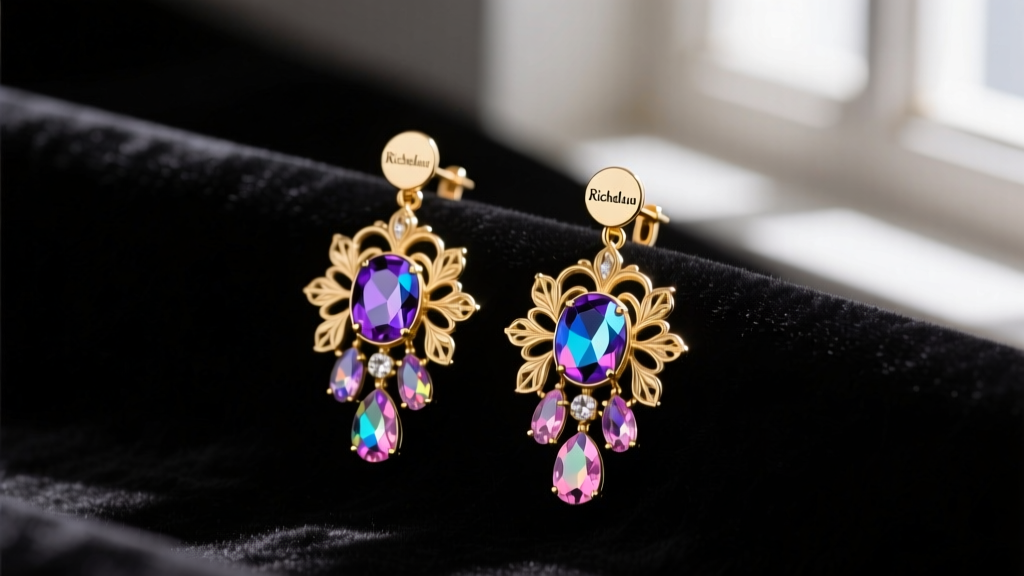
The Legacy and Material Composition of Richelieu
As we navigate the vintage jewelry market in 2026, Richelieu earrings remain some of the most highly sought-after collectible accessories. Founded in 1911 and peaking in influence during the mid-20th century, the Richelieu brand was synonymous with high-quality costume jewelry. Unlike fine jewelry crafted from solid gold and precious gems, Richelieu pieces were masterclasses in metallurgy and glasswork. They primarily utilized brass or pot-metal bases plated in gold, rhodium, or silver, adorned with premium Austrian and Czech glass rhinestones.
Understanding this material composition is the absolute prerequisite for proper care. The glass stones were often backed with delicate metallic foils or early vacuum-sputtered coatings to mimic the refractive index of diamonds. The base metals, while durable, are highly susceptible to environmental degradation, specifically oxidation and copper corrosion. Treating these vintage pieces with modern, aggressive jewelry cleaners will permanently destroy their historical and monetary value.
The Cardinal Rule: Moisture and Foil-Backed Stones
The most common and catastrophic mistake novice collectors make is submerging vintage costume jewelry in liquid. According to gemological conservation standards outlined by the Gemological Institute of America (GIA), glass itself is non-porous, but the metallic foil backing applied to vintage rhinestones is incredibly vulnerable. When water, ultrasonic cleaning solutions, or even heavy steam breaches the microscopic gap between the glass stone and the metal prong, it becomes trapped against the foil.
This trapped moisture causes the foil to oxidize, turn black, or flake away entirely. Once a Richelieu rhinestone loses its foil backing, it appears dull, gray, and "dead." There is no DIY method to reverse this damage; the stone must be professionally unseated and re-foiled, a costly and risky procedure. Therefore, all cleaning protocols for Richelieu earrings must be strictly moisture-controlled or entirely dry.
Step-by-Step Dry Cleaning Protocol
To safely remove decades of accumulated skin oils, cosmetics, and environmental dust from your Richelieu earrings, you must employ a meticulous, low-impact cleaning strategy.
Essential Tools
- Soft-bristled makeup brushes: Unused, clean eyeshadow or blending brushes are ideal for dislodging dust from intricate filigree without scratching gold plating.
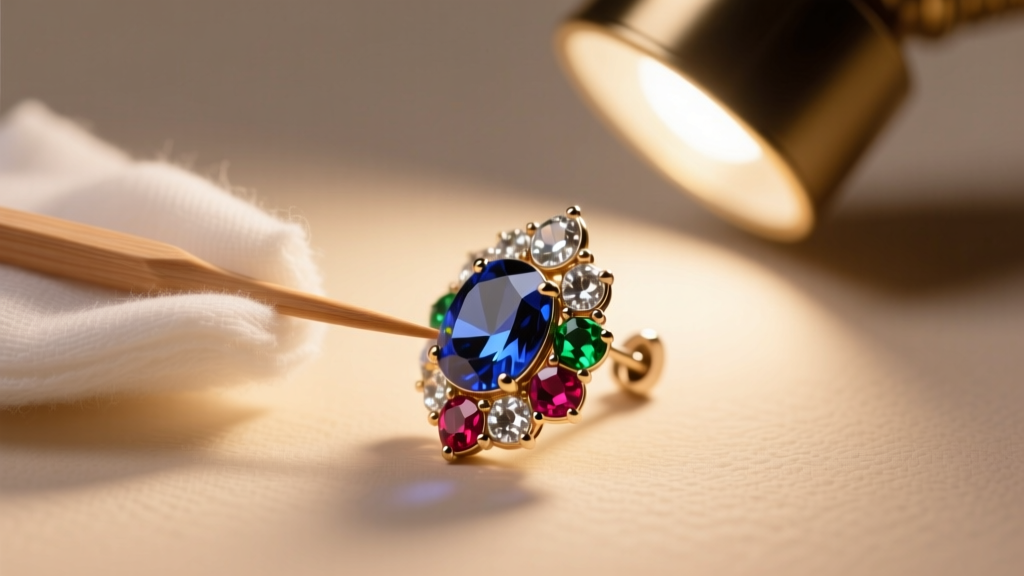
- Wooden toothpicks: Essential for gently scraping gunk from the crevices around prongs.
- Microfiber polishing cloths: Specifically, untreated, high-density optical cloths.
- Isopropyl alcohol (91% or higher): Used in microscopic amounts only on metal, never on stones. High concentrations evaporate instantly, preventing moisture seepage.
The Execution
- Dry Dusting: Lay the earrings on a clean, white microfiber towel. Use the soft makeup brush to gently sweep across the surface of the rhinestones and into the metal settings. This removes abrasive silica dust that could cause micro-scratches during the polishing phase.
- Prong Detailing: Take a wooden toothpick and carefully trace the perimeter where the metal prongs meet the glass. Do not apply downward pressure on the glass; use a lateral sweeping motion to lift hardened lotion or sebum.
- Surface Polishing: Gently buff the glass stones with a dry microfiber cloth. For the aurora borealis (AB) coated stones Richelieu famously used post-1955, use only the lightest touch to avoid wearing down the iridescent surface layer.
Eradicating Verdigris Without Damaging Plating
Verdigris is the green, crusty copper carbonate buildup that frequently appears on vintage brass and pot-metal jewelry. It occurs when the copper in the base metal reacts with moisture, oxygen, and the acids in human sweat or environmental pollutants. The American Institute for Conservation (AIC) notes that copper corrosion can actively spread and degrade surrounding materials if left untreated.
Never use vinegar, lemon juice, or commercial liquid tarnish removers on Richelieu earrings. Acids will strip the gold or rhodium plating right off the base metal. Instead, use mechanical removal and targeted solvent application.
| Agent / Tool | Safety Level | Application Method |
|---|---|---|
| Wooden Toothpick | Safe | Scrape crusty buildup from crevices and prong bases. |
| Fiberglass Scratch Pen | Caution | Use ONLY on exposed base metal, never on plated areas or near stones. |
| 91% Isopropyl Alcohol | Safe (Metal Only) | Apply to a cotton swab, squeeze out excess, and dab the green corrosion. |
| Baking Soda Paste | Unsafe | Too abrasive; will scratch gold plating and cloud glass stones. |
| Commercial Silver Dip | Dangerous | Will instantly destroy rhinestone foil backings and strip plating. |
To treat localized verdigris, dip a cotton swab into 91% isopropyl alcohol and squeeze it firmly against a paper towel so it is barely damp. Roll the swab strictly over the green corrosion on the metal. The alcohol helps break down the organic acids binding the verdigris without introducing lingering moisture. Follow up immediately with a dry swab.
Restoring Hardware: Clip-Ons and Screw-Backs
Richelieu produced thousands of earring styles utilizing non-pierced hardware, most notably the hinged clip-on and the adjustable screw-back. Over decades, these mechanisms suffer from metal fatigue, loss of tension, and seized threads.
If a clip-on earring feels too tight and causes earlobe pain, do not bend it with your bare hands or metal pliers, which will mar the finish. Use nylon-jaw jewelry pliers to gently bend the tension arm outward by a millimeter or two. Conversely, if the clip-on is too loose, apply gentle inward pressure. For the padded inserts often found on 1960s Richelieu clip-ons, if the original foam has disintegrated, you can purchase modern silicone comfort pads that adhere via static friction rather than degrading adhesives.
For screw-back earrings that have frozen or become difficult to turn, avoid standard WD-40, which leaves a sticky residue that attracts dust. Instead, apply a microscopic drop of synthetic watch oil or dry PTFE lubricant to the threaded post using a needle oiler. Work the screw back and forth gently to distribute the lubricant, then wipe away any excess with a dry microfiber cloth.
Archival Storage for Long-Term Preservation
Proper storage is arguably more critical than cleaning when it comes to preserving Richelieu earrings. The enemies of vintage costume jewelry are humidity, sulfur, and PVC plastics.
- Avoid PVC: Never store vintage earrings in soft, flexible plastic bags (like Ziploc). PVC off-gasses chemicals that react with base metals, causing rapid tarnishing and a sticky film on rhinestones.
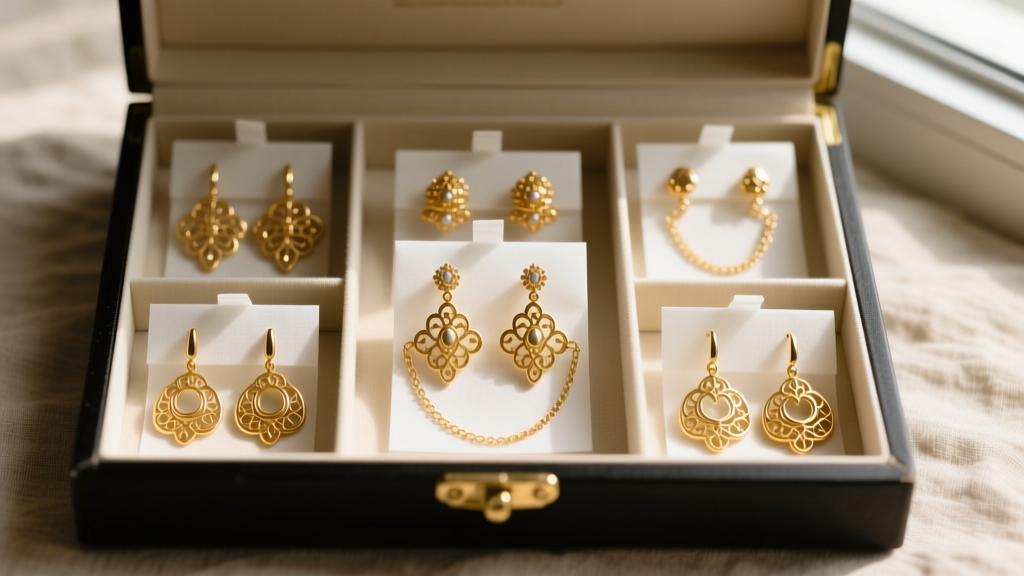
- Acid-Free Environments: Store pieces in archival-quality, acid-free tissue paper or unbleached cotton muslin bags. This allows the jewelry to "breathe" while preventing the transfer of corrosive acids from standard wood-pulp paper.
- Tarnish Inhibitors: Place 3M anti-tarnish strips or activated charcoal sachets inside your jewelry boxes. These materials actively absorb airborne sulfur compounds that cause silver and rhodium plating to blacken.
- Climate Control: Keep your collection in a climate-controlled room. Attics and basements experience humidity fluctuations that accelerate both verdigris formation and the delamination of rhinestone adhesives.
Professional Conservation vs. DIY Repair
While routine maintenance and surface cleaning can be safely performed at home, certain issues require professional intervention. If a Richelieu earring has missing stones, attempting to glue in modern replacements with cyanoacrylate (Super Glue) will ruin the piece. Super glue emits fumes as it cures that cause a permanent white haze on surrounding glass stones, and it degrades into a brittle, crusty mess over time.
Similarly, if the gold plating has worn through to the base metal on a high-value mid-century Richelieu chandelier earring, consult a professional electroplating specialist who understands the nuances of vintage costume jewelry. They can mask the delicate glass stones and apply a fresh layer of 24k gold flash plating, restoring the piece's original luster while maintaining its historical integrity. By respecting the unique chemistry and construction of Richelieu earrings, collectors can ensure these mid-century masterpieces continue to sparkle for generations to come.


