Gold Crystal Teardrop Earrings: Gemological & Structural Deep Dive
Explore the technical anatomy of gold crystal teardrop earrings. Learn about karat alloys, lapidary cuts, structural stress points, and grading.

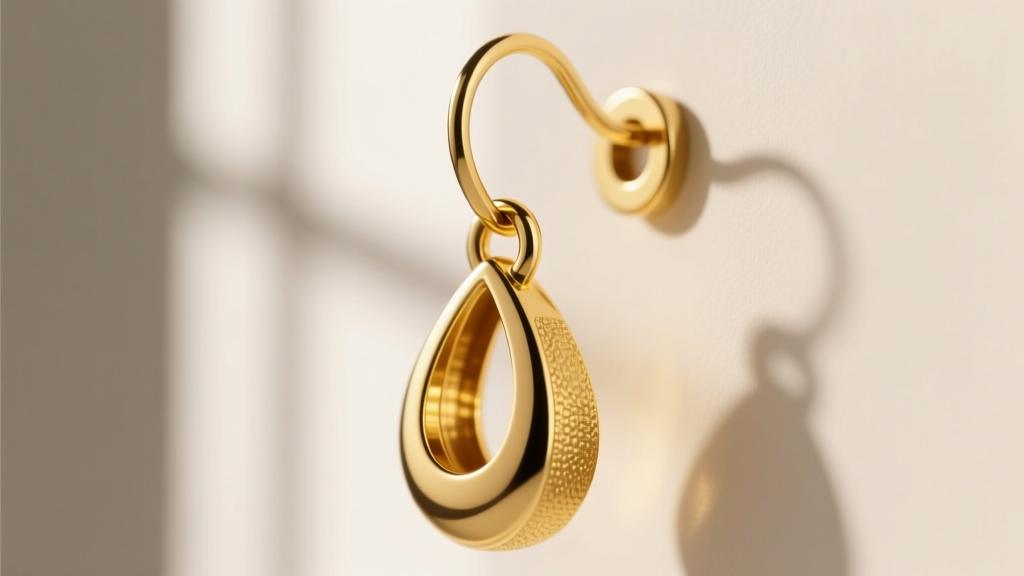
The Architecture of Elegance: Beyond the Silhouette
When evaluating fine jewelry, the untrained eye is often captivated purely by the silhouette and sparkle. However, as we navigate the 2026 landscape of advanced lapidary techniques and metallurgical engineering, the true value of gold crystal teardrop earrings lies in their structural anatomy and gemological precision. The teardrop shape—known in gemology as the pear modified brilliant or the briolette—presents unique optical and physical challenges. Unlike static studs, drop earrings are subject to continuous kinetic stress, requiring a meticulous balance between the gold alloy's tensile strength and the crystal's internal fracture resistance. This expert deep dive dissects the technical specifications, material grades, and failure modes that separate master-crafted teardrop earrings from mass-produced costume alternatives.
Metallurgical Specifications: Gold Alloys and Tensile Strength
The structural foundation of any high-end drop earring is its gold setting and ear wire. Pure 24k gold, while chemically inert and hypoallergenic, possesses a Vickers Hardness (HV) of merely 25-30, making it entirely unsuitable for the mechanical stress of a dangling teardrop. Consequently, jewelers rely on precise alloying to achieve the necessary structural integrity.
14k vs. 18k Gold in Drop Settings
For the ear wire and the critical jump rings that connect the teardrop crystal, 14k gold (58.5% pure gold) is often the engineering standard. Alloyed with copper, silver, and zinc, 14k yellow gold achieves a Vickers Hardness of approximately 120-150 HV. This provides the requisite 'spring' and memory to ensure the ear wire does not permanently deform when subjected to the pendulum motion of a heavy crystal drop. Conversely, 18k gold (75% pure gold, ~135-160 HV depending on the specific alloy mix) is typically reserved for the bezel, prongs, or the decorative bail. While slightly softer, 18k gold offers superior malleability for stone-setting and a richer optical reflectivity that complements high-refractive-index crystals. According to metallurgical benchmarks outlined by Ganoksin's comprehensive guide to gold alloys, the specific ratio of copper to silver in the alloy matrix directly dictates the metal's yield strength and its susceptibility to stress-corrosion cracking over decades of wear.
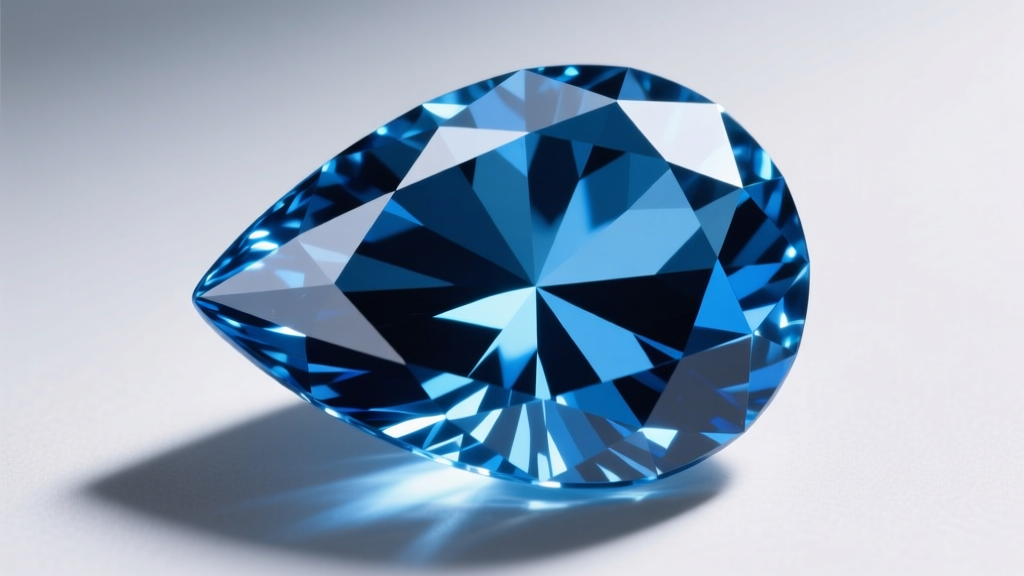
Lapidary Science: The Physics of the Teardrop Cut
The term 'crystal' in fine jewelry encompasses a wide spectrum of materials, from natural macrocrystalline quartz to synthetic corundum and high-lead optical glass. However, the physics of cutting these materials into a teardrop shape remains universally complex. The pear cut combines the triangular geometry of the marquise with the rounded belly of the oval, typically utilizing 58 facets in a standard modified brilliant arrangement.
Mitigating the Bow-Tie Extinction Effect
The most critical technical challenge in faceting a teardrop crystal is the 'bow-tie' effect—a dark, bow-tie-shaped shadow that appears across the width of the stone's belly. This extinction occurs when light entering the pavilion facets is not reflected back through the crown, but instead leaks out the bottom. Master lapidaries mitigate this by adjusting the pavilion main facet angles. While a standard round brilliant utilizes pavilion angles of 40.75 degrees, the elongated geometry of a teardrop requires the lapidary to dynamically shift the pavilion angles between 38 and 42 degrees depending on the stone's specific length-to-width ratio (ideally between 1.45:1 and 1.75:1 for optimal optical performance). The GIA Gem Encyclopedia notes that precise symmetry in the wing facets is paramount; even a 2-degree deviation can result in severe light leakage and an unbalanced visual weight.
Kinetic Stress and Mechanical Failure Modes
Drop earrings operate as physical pendulums. Every step the wearer takes transfers kinetic energy through the ear lobe, down the ear wire, and into the connection points of the teardrop crystal. Understanding these stress vectors is crucial for evaluating jewelry longevity.
Gauge Specifications and Jump Ring Integrity
The most common point of catastrophic failure in gold crystal teardrop earrings is the jump ring connecting the crystal bail to the ear wire. If an unsoldered jump ring is used, the repetitive lateral swinging will eventually cause the metal to fatigue and the gap to pull open, resulting in the loss of the crystal. To prevent this, structural best practices dictate the following wire gauges:
- Ear Wire: 20-gauge (0.81mm) half-hard gold wire. This thickness provides optimal comfort for the ear piercing while resisting bending under the weight of a 5-15 carat teardrop.
- Headpin/Bail Wire: 22-gauge (0.64mm) dead-soft wire for wrapping, or 20-gauge for rigid soldered bails.
- Jump Rings: Must be laser-welded or torch-soldered shut. A 4mm outer-diameter jump ring crafted from 18-gauge (1.02mm) wire offers a tensile strength exceeding 40 Newtons, more than sufficient to secure heavy briolette crystals.
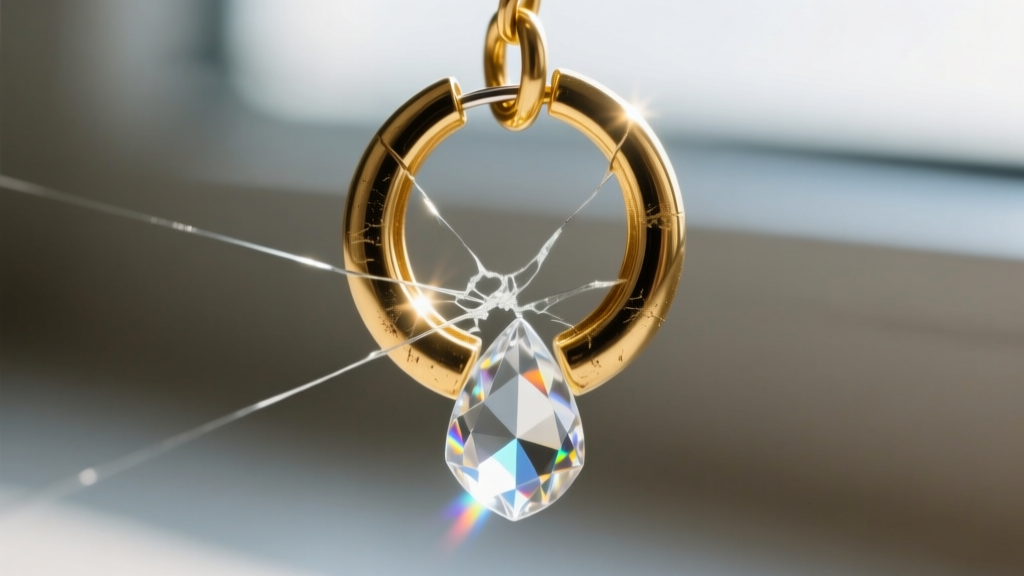
Material Comparison: Crystal Types and Optical Properties
As of 2026, the market for teardrop crystals is dominated by both natural and lab-grown alternatives. The selection of the crystal material drastically alters the earring's durability, optical fire, and pricing structure. Below is a technical comparison of the most common materials utilized in premium teardrop settings.
| Material Type | Mohs Hardness | Refractive Index (RI) | Dispersion (Fire) | Avg. Price per Carat (USD) |
|---|---|---|---|---|
| Natural Blue Topaz | 8.0 | 1.62 - 1.64 | 0.014 | $25 - $45 |
| Hydrothermal Quartz | 7.0 | 1.54 - 1.55 | 0.013 | $8 - $15 |
| Lab-Grown Sapphire | 9.0 | 1.76 - 1.77 | 0.018 | $150 - $350 |
| Leaded Optical Crystal | 5.5 - 6.0 | 1.70 - 1.80 | 0.045 (High) | $2 - $5 (Synthetic) |
| Moissanite (Pear Cut) | 9.25 | 2.65 - 2.69 | 0.104 (Extreme) | $300 - $600 |
While leaded optical crystal (often branded under names like Swarovski) offers exceptional dispersion and 'fire' due to its high lead-oxide content, its lower Mohs hardness makes it highly susceptible to abrasion and chipping at the teardrop's delicate point. For everyday wear, lab-grown sapphire or natural topaz provides vastly superior scratch resistance, as detailed in the GIA's Quartz and Gemstone Encyclopedia.
Advanced Care: The Dangers of Ultrasonic Cleaning
Maintaining the brilliance of gold crystal teardrop earrings requires an understanding of crystalline lattice structures and inclusion dynamics. Many consumers default to ultrasonic jewelry cleaners, which operate at frequencies typically between 40kHz and 80kHz. While safe for solid diamond and sapphire, ultrasonic cavitation can be catastrophic for certain teardrop crystals.
If a natural quartz or topaz teardrop contains liquid inclusions, internal stress fractures, or has been subjected to fracture-filling treatments (a common practice for lower-clarity stones), the microscopic shockwaves generated by the ultrasonic bath will cause the stone to shatter from the inside out. Furthermore, if the teardrop is secured via a tension setting or a delicate glued bail, the high-frequency vibrations will degrade the adhesive bond. The only universally safe cleaning protocol for all crystal types involves a soft-bristled brush, a solution of distilled water and pH-neutral surfactant, and gentle manual agitation, followed by drying with compressed air to prevent water spots in the pavilion facets.
Conclusion: Engineering Meets Aesthetics
Gold crystal teardrop earrings represent a complex intersection of gemological physics and metallurgical engineering. By prioritizing 14k or 18k gold alloys with appropriate Vickers hardness, demanding precision pavilion angles to eliminate light extinction, and insisting on soldered connection points to withstand pendulum kinetics, collectors and consumers can ensure their pieces endure both as structural marvels and optical masterpieces.


