Small Earrings for Men: The Ultimate Material Comparison
Discover the best metals for small earrings for men. Compare titanium, tungsten, and gold based on durability, gauge sizing, and skin safety.


When building a refined jewelry rotation, selecting small earrings for men requires looking far beyond the surface design. Whether you prefer a subtle 3mm stud, a minimalist huggie hoop, or a sleek cartilage cuff, the underlying metallurgy dictates the piece's longevity, comfort, and biological safety. Men often subject their jewelry to harsher environmental stressors—ranging from gym sweat and friction during sleep to accidental impacts. Consequently, understanding material properties, alloy compositions, and structural engineering is non-negotiable for making a smart investment.
This comprehensive guide breaks down the exact metallurgical profiles, hardness scales, and failure modes of the most popular metals used in men's earrings, providing a practical framework for your next purchase.
The Benchmark: Implant-Grade Titanium
Titanium is the undisputed champion of biocompatibility, but not all titanium is created equal. When shopping for small earrings for men, you will frequently encounter the term 'implant-grade.' According to the Association of Professional Piercers (APP), true implant-grade titanium must meet the ASTM F136 standard (Ti6Al4V ELI). This specific alloy contains aluminum and vanadium, processed with extra-low interstitial elements to eliminate impurities that could cause tissue irritation.
Grade 23 vs. Commercial Pure Titanium
Many mass-market brands use Grade 2 or Grade 4 Commercial Pure (CP) titanium. While CP titanium is hypoallergenic, it lacks the tensile strength of Grade 23. For small hoop earrings or huggies that experience constant tension and bending, Grade 23 (ASTM F136) offers superior structural memory, meaning the metal will not warp or lose its circular shape over time. Furthermore, titanium can be anodized to create a spectrum of colors without using surface paints or platings that might chip off in the ear canal.
The Indestructible Myth: Tungsten Carbide
Tungsten carbide has gained massive popularity in men's rings, and its use in small earrings for men is growing. It boasts an extraordinary Mohs hardness rating of 8.5 to 9, making it virtually impervious to scratching. If you work with your hands or frequently wear over-ear headphones that rub against your lobes, tungsten will maintain its mirror polish indefinitely.
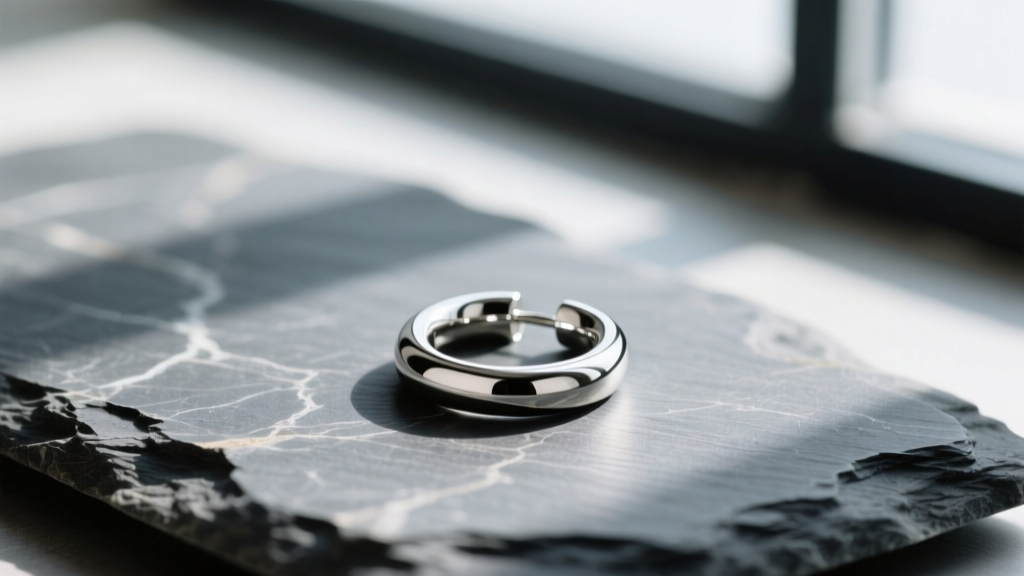
However, extreme hardness introduces a critical vulnerability: brittleness. Unlike gold or titanium, which will bend or dent upon severe impact, tungsten carbide can shatter or chip if dropped onto a hard tile floor or struck at a precise angle. Additionally, tungsten cannot be resized or easily modified by a jeweler. When purchasing tungsten huggies or studs, ensure the hinge mechanisms or post welds are reinforced with steel, as the tungsten itself cannot be soldered using traditional jewelry torches.
Precious Metals: Decoding Karats and Alloys
Gold and platinum remain the standard for luxury men's earrings, but their elemental purity directly impacts their durability in daily wear scenarios.
14k vs. 18k Gold
Pure 24k gold is far too soft for body jewelry. Therefore, it is alloyed with metals like copper, silver, and zinc. 18k gold (75% pure gold) offers a rich, warm color but is relatively soft, making it prone to micro-scratches and post-bending. 14k gold (58.5% pure gold) is significantly harder and more resilient, making it the superior choice for active men. Warning regarding White Gold: Most white gold alloys contain nickel to achieve their silver hue. Because nickel is a primary contact allergen, white gold earrings are often plated with rhodium. Once this plating wears off from friction, the nickel is exposed, leading to severe dermatitis.
Platinum: The Dense Alternative
Platinum (usually 95% pure, alloyed with ruthenium or iridium) is incredibly dense and heavy. Unlike white gold, platinum's white color is natural and will never require rhodium replating. When scratched, platinum does not lose metal; it merely displaces it, creating a 'patina' that many men appreciate for its rugged, vintage aesthetic. However, its high density makes it expensive and slightly heavier on the earlobe, which can cause stretching in 20-gauge piercings over time.
Material Properties Comparison Matrix
Use the following data table to compare the physical properties and market realities of standard earring materials.
| Metal / Alloy | Vickers Hardness (HV) | Nickel Risk | Price Range (Studs) | Best Use Case |
|---|---|---|---|---|
| ASTM F136 Titanium | 330 - 360 HV | None | $30 - $80 | Fresh piercings, active lifestyles, sleep |
| Tungsten Carbide | 1500+ HV | None | $25 - $60 | High-friction environments, scratch-averse |
| 14k Yellow Gold | 140 - 170 HV | Low (if nickel-free) | $120 - $300 | Everyday luxury, professional settings |
| 18k White Gold | 130 - 150 HV | High (unless Pd alloy) | $150 - $400 | Occasional wear, requires maintenance |
| 950 Platinum | 110 - 135 HV | None | $250 - $600+ | Heirloom pieces, patina lovers |
The Hidden Variable: Threading and Gauge Standards
Material quality is irrelevant if the structural engineering of the earring post damages your piercing. For small earrings for men, the standard lobe gauge is 20g (0.81mm) or 18g (1.02mm), while cartilage and huggies often utilize 16g (1.29mm).
External vs. Internal Threading
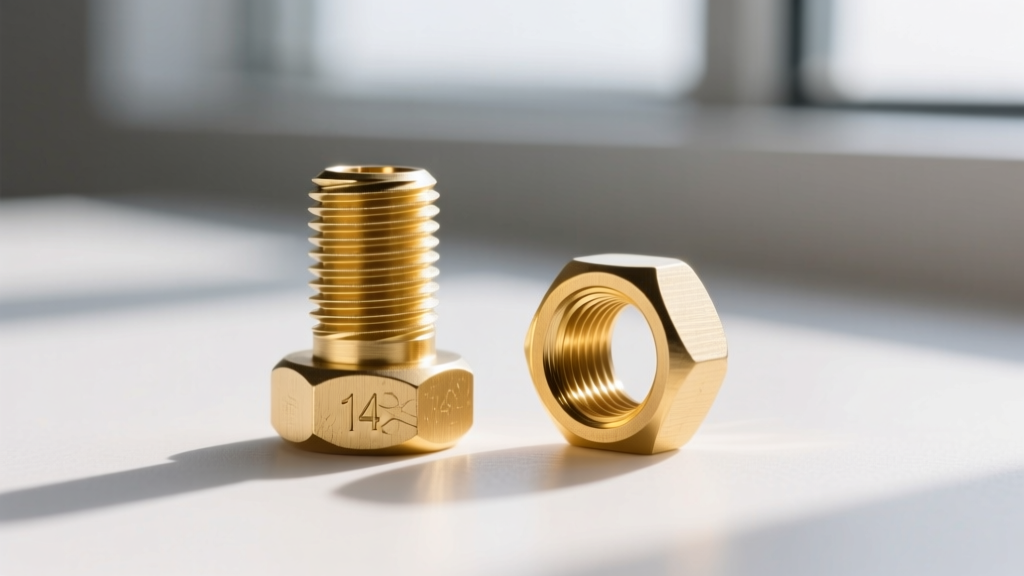
Never purchase externally threaded earrings (where the screw pattern is on the post itself). Forcing a threaded post through a fistula causes micro-tears in the tissue, introducing bacteria and causing scar tissue buildup. High-end jewelers utilize internal threading (the screw is on the backing, and the post is smooth) or threadless (push-pin) systems. Threadless systems use the tension of a slightly bent pin inside a hollow post to secure the earring, offering the most secure fit for men who frequently pull shirts over their heads or wear motorcycle helmets.
Allergic Contact Dermatitis & Failure Modes
According to the National Center for Biotechnology Information (NCBI), allergic contact dermatitis from jewelry is predominantly triggered by nickel salts reacting with sweat. Men generally have higher sebum and sweat production around the jawline and ears, accelerating the oxidation of cheap alloys like 'surgical steel' (which often contains up to 10% nickel). If you experience itching, flaking, or a clear fluid discharge, remove the jewelry immediately and switch to ASTM F136 titanium or solid 14k nickel-free gold.
Daily Maintenance Protocol
To maximize the lifespan of your small earrings, adopt the following maintenance habits:
- Sweat Neutralization: After gym sessions, rinse your earrings with distilled water. The chloride and lactic acid in sweat can corrode lower-karat gold alloys and dull anodized titanium.
- Ultrasonic Caution: While ultrasonic cleaners are excellent for diamond studs, never use them on tungsten carbide with glued inlays or plated white gold, as the high-frequency vibrations can shatter the carbide or strip the rhodium.
- Friction Backs vs. Screw Backs: For men with active routines, replace standard butterfly friction backs with silicone O-rings or locking screw backs to prevent the earring from being ripped out by towels or clothing.
By prioritizing metallurgical integrity and structural design over fleeting trends, you ensure that your small earrings for men remain a permanent, comfortable, and stylish fixture in your daily wardrobe.


