How to Choose and Style Rectangular Earrings for Your Face Shape
Discover how to choose the perfect rectangular earrings for your face shape. Learn about materials, weight distribution, and expert styling tips.


The Geometry of Style: An Introduction to Rectangular Earrings
Rectangular earrings have cemented their place as a staple in modern jewelry design, offering a striking departure from traditional circular hoops and spherical studs. Characterized by their clean lines, sharp angles, and architectural silhouettes, these pieces draw immediate attention to the jawline and neck. Whether you are looking at minimalist titanium bars, Art Deco-inspired diamond pavé drops, or bold enameled geometric blocks, the rectangular shape provides a versatile canvas for personal expression.
However, because of their distinct linear geometry, rectangular earrings interact with facial features and earlobe anatomy differently than other shapes. Choosing the right pair requires an understanding of facial proportions, material durability, and the physics of weight distribution on your piercings. This beginner-friendly guide will walk you through the exact specifications, material grades, and styling frameworks you need to confidently select and wear rectangular earrings in 2026 and beyond.
Matching Rectangular Proportions to Your Face Shape
The most common mistake beginners make when buying geometric jewelry is ignoring the underlying proportions of their face. Because rectangles inherently create vertical or horizontal lines, they can either balance or exaggerate your natural bone structure. Here is a data-driven framework for matching earring dimensions to your specific face shape.
| Face Shape | Ideal Rectangle Proportion | Styling Goal | What to Avoid |
|---|---|---|---|
| Round | Long, narrow vertical drops (2:1 ratio or higher) | Elongate the face and create the illusion of a sharper jawline. | Short, wide horizontal blocks that emphasize cheek width. |
| Square | Mid-length rectangles with softened or beveled edges | Complement strong jawlines without adding harsh, competing angles. | Extremely sharp, boxy studs that mirror the jaw's exact geometry. |
| Oval | Any proportion; wide horizontal bars or medium drops | Maintain natural balance; oval faces can anchor bold architectural pieces. | Overly long drops that extend past the collarbone, dragging the face down. |
| Heart | Bottom-heavy rectangles or inverted trapezoids | Add visual weight to the lower half of the face to balance a wider forehead. | Top-heavy geometric clusters that draw all attention upward. |
When shopping, pay attention to the exact millimeter (mm) dimensions listed in the product specs. A 10mm x 30mm drop will elongate a round face beautifully, while a 20mm x 10mm horizontal bar is perfect for adding width to a long, narrow face.
Material Grades: Durability and Hypoallergenic Requirements
Because rectangular earrings often feature sharp corners and flat planes, they are prone to scratching and denting if made from soft metals. Furthermore, the flat backs of many geometric studs sit flush against the skin, making material purity critical for preventing contact dermatitis. According to the Association of Professional Piercers (APP), only specific implant-grade materials should be worn in healing or sensitive piercings.
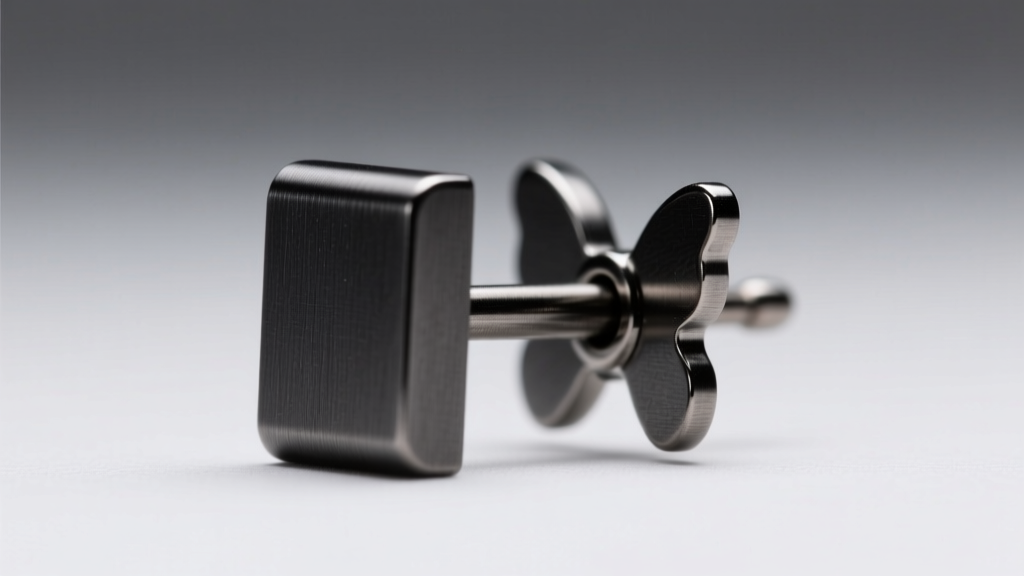
The Best Metals for Geometric Earrings
- ASTM F-136 Implant-Grade Titanium: The gold standard for sensitive ears. It is completely nickel-free, lightweight, and highly resistant to scratching. Expect to pay $40–$90 for high-quality titanium geometric studs from brands like BVLA or Industrial Strength.
- 316L Surgical Steel: A budget-friendly option ($15–$40), but it contains trace amounts of nickel. If you have a known nickel allergy, the flat surface area of a rectangular stud will likely trigger a reaction.
- 14k or 18k Solid Gold: Ideal for luxury rectangular drops. 14k gold offers a better balance of durability and color for everyday wear, while 18k is softer and more prone to scratching on sharp geometric edges. Prices range from $150 for minimalist bars to over $1,500 for diamond-set pieces.
- Niobium: A highly reactive metal that can be anodized into vibrant colors (like deep blues or purples) without using dyes or plating. Excellent for lightweight, colorful rectangular ear cuffs.
Avoid gold-plated or vermeil rectangular earrings if you plan to wear them daily. The sharp edges and corners of geometric designs are the first places where thin plating wears away, exposing the brass or copper base metal underneath and turning your skin green.
Weight Distribution and Piercing Health
The physics of a long rectangular drop earring present a unique challenge to your earlobe. Unlike a circular hoop, which distributes weight somewhat evenly around the piercing hole, a long vertical rectangle acts as a lever. The bottom-heavy nature of the design pulls downward and forward, creating a fulcrum effect on the fistula (the piercing channel).
Understanding Gauge and the Cheese-Cutter Effect
Standard fashion earrings typically use a 20-gauge (0.8mm) or even 22-gauge (0.7mm) post. If you hang a heavy 15-gram rectangular brass drop from a 20-gauge wire, the thin metal will slowly slice through your earlobe tissue over time—a phenomenon piercers call the "cheese-cutter effect."
Expert Tip: For any rectangular drop earring longer than 30mm or heavier than 5 grams, always look for an 18-gauge (1.0mm) or 16-gauge (1.2mm) post. The increased surface area distributes the downward force and protects your lobe from stretching or tearing.
If you already own heavy geometric drops with thin posts, you can mitigate the damage by using silicone earring support patches (like BlingDots). These adhesive backing pads sit behind the earlobe, reinforcing the tissue and preventing the earring from drooping forward, which is a common issue with top-heavy rectangular studs.
Practical Styling Frameworks for the Curated Ear
Rectangular earrings are not limited to standard lobe piercings; they are exceptional tools for building a "curated ear" project. Because their straight lines contrast beautifully with the natural curves of the ear's cartilage, they create a highly structured, intentional look.
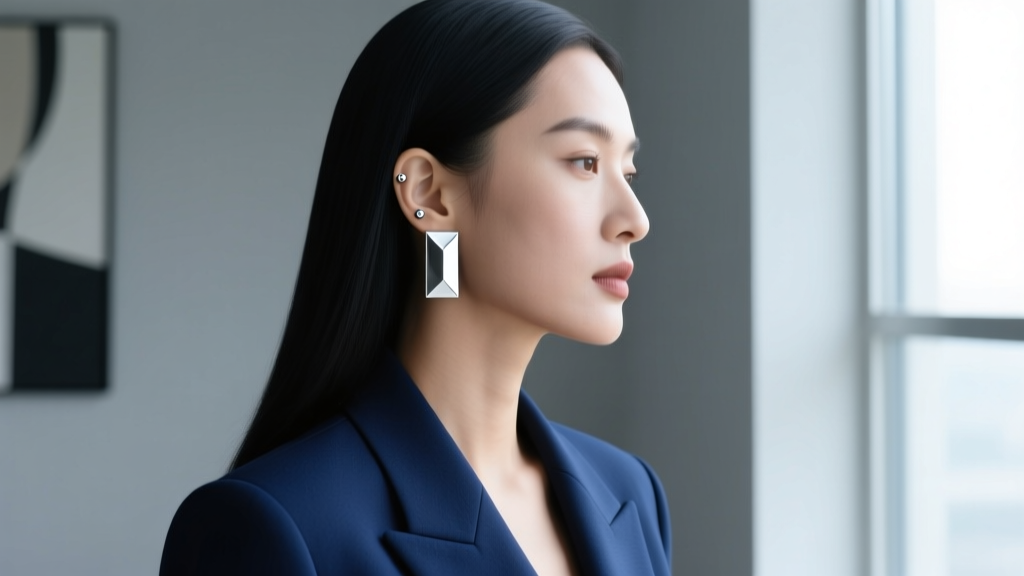
Building a Geometric Constellation
- The Lobe Anchor: Start with a medium-sized rectangular drop (e.g., 15mm x 25mm) in your primary lobe piercing. This sets the vertical theme.
- The Helix Contrast: In your upper helix piercing, use a horizontal rectangular barbell or a geometric ear cuff. The 90-degree angle shift between the lobe drop and the helix bar creates dynamic visual tension.
- The Conch Bridge: If you have a conch piercing, a flat-backed rectangular stud with a bezel-set baguette gemstone bridges the gap between the lobe and the helix, tying the geometric theme together.
Maintaining Sharp Edges and Pristine Surfaces
The flat planes of rectangular earrings act like mirrors, reflecting light but also highlighting fingerprints, smudges, and soap scum. To maintain the crisp, architectural look of your jewelry, clean them weekly using an ultrasonic jewelry cleaner with a mild, ammonia-free solution. Avoid using harsh polishing cloths on brushed or matte-finished rectangular pieces, as the friction will inadvertently polish the matte texture into a high shine, ruining the designer's intended contrast.
For deeper insights into gemstone and metal care, the Gemological Institute of America (GIA) provides extensive resources on maintaining the integrity of precious metals and the specific cleaning requirements for any diamonds or sapphires set into your geometric designs.
Final Thoughts on Geometric Elegance
Rectangular earrings offer a masterclass in modern minimalism and architectural beauty. By carefully selecting the right proportions for your face shape, insisting on implant-grade or solid metals, and respecting the physics of weight distribution on your piercings, you can wear these striking pieces comfortably and confidently. Whether you are stepping into the boardroom with a pair of sleek titanium bars or attending a gala with cascading Art Deco diamond drops, the right rectangle will frame your face with unmatched precision.


