White Coral Earrings: 2026 Trend Analysis & Styling Guide
Discover the 2026 trajectory of white coral earrings. Explore ethical sourcing, styling frameworks for organic marine gems, and care tips for lasting wear.

The 2026 Shift: Why White Coral is Overtaking Precious Red
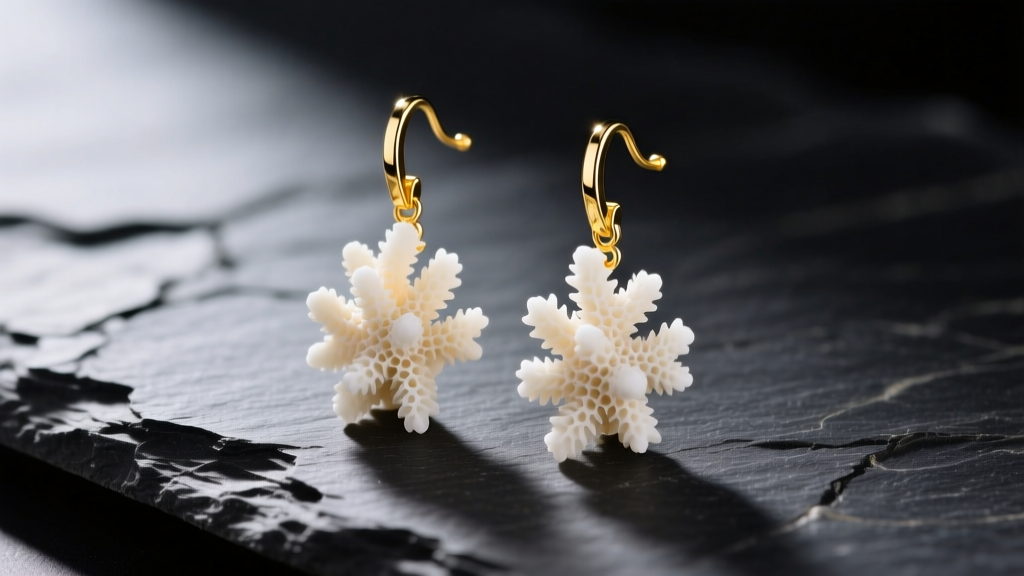
The fine jewelry landscape in 2026 has decisively pivoted toward organic, marine-inspired minimalism, and white coral earrings are at the absolute epicenter of this movement. For decades, the market was dominated by the deep, opaque hues of Mediterranean red coral (Corallium rubrum). However, stringent international trade regulations and a growing consumer demand for sustainable, neutral-toned accessories have propelled white coral into the spotlight. Unlike the heavy, ornate carvings of the 2010s, today's white coral earrings favor sleek cabochons, geometric inlays, and raw, unpolished textures that align perfectly with the 'quiet luxury' and 'coastal minimalist' aesthetics.
From a trend analysis perspective, white coral offers a versatile palette that bridges the gap between casual daytime wear and high-end evening elegance. Its natural ivory-to-cream gradient pairs exceptionally well with both warm 18k yellow gold and cool recycled platinum, making it a staple for designers focusing on capsule jewelry collections. According to the Gemological Institute of America (GIA), the gemological appeal of coral lies in its unique organic structure, and the modern preference for white varieties reflects a broader industry shift toward understated, nature-derived materials.
Material Deep Dive: Mineralogy and Wearability Constraints
To truly understand the value and limitations of white coral earrings, one must look at the material's mineralogical profile. Coral is not a stone; it is a biogenic gemstone primarily composed of calcium carbonate (CaCO3) in the form of aragonite or calcite, secreted by marine polyps.
The Mohs Scale and Structural Porosity
White coral registers between 3.5 and 4.0 on the Mohs hardness scale, making it significantly softer than quartz (7.0) or sapphire (9.0). This relative softness dictates specific design constraints. Prong settings for white coral studs or drops must be carefully engineered—often utilizing bezel or semi-bezel settings in 14k or 18k gold to protect the gem's edges from chipping. Furthermore, coral is inherently porous. Its specific gravity ranges from 2.60 to 2.70, and its microscopic skeletal structure can easily absorb oils, lotions, and acidic perspiration, which can degrade its natural luster over time if not properly managed.
Natural White vs. Bleached Alternatives
Not all white coral on the market is naturally white. While species like Corallium konojoi (white/pink coral) and certain deep-sea bamboo corals exhibit natural pale hues, a significant portion of commercial white coral is actually darker coral that has been chemically bleached. Bleaching degrades the calcium carbonate matrix, resulting in a chalky, brittle material that is prone to micro-fracturing. When sourcing white coral earrings, always request documentation from the jeweler confirming that the material is either naturally white or fossilized, rather than chemically stripped.
Ethical Sourcing Framework: What to Look For
Sustainability is no longer a niche concern; it is the baseline expectation for 2026 jewelry consumers. The harvesting of living coral reefs is heavily restricted under international conservation agreements, and ethical jewelers have completely abandoned wild-harvested shallow-water corals. When evaluating white coral earrings, you will typically encounter three distinct material categories. The Federal Trade Commission (FTC) Jewelry Guides mandate clear disclosure regarding gemstone treatments and origins, ensuring buyers can make informed, ethical choices.
| Coral Type | Origin & Formation | Sustainability Rating | Avg. Price Range (Earrings) |
|---|---|---|---|
| Fossilized (Agatized) Coral | Inland deposits (e.g., Florida, Indonesia) where ancient coral has been replaced by silica. | Excellent (No marine impact) | $120 - $350 |
| Natural White Bamboo Coral | Deep-sea harvested dead stock or sustainably managed deep-water yields. | Moderate (Requires strict chain-of-custody) | $60 - $180 |
| Lab-Created / Imitation | Synthesized calcium carbonate or carved porcelain/resin composites. | Excellent (Zero ecological footprint) | $25 - $85 |
Styling White Coral Earrings by Face Shape & Occasion
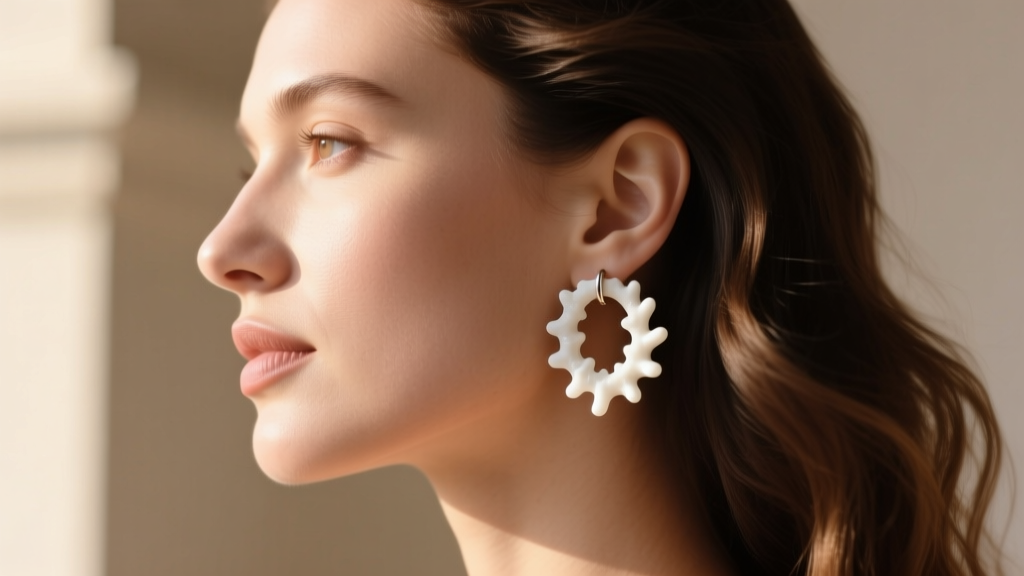
The matte, light-absorbing quality of white coral makes it a unique tool for facial framing. Unlike high-refractive-index gemstones like diamonds that draw the eye with sparkle, white coral provides a soft, sculptural contrast against the skin. Here is a practical styling framework for 2026:
- Round Face Shapes: Opt for elongated white coral drop earrings or linear dangles. The vertical lines of a 1.5-inch white coral and gold drop earring will visually lengthen the face and draw the eye downward, balancing wider cheekbones.
- Square Face Shapes: Choose softly curved white coral hoops or huggies with inlaid coral accents. The organic, rounded edges of the coral will soften a strong jawline. Avoid sharp, geometric white coral studs, which can exaggerate angular features.
- Oval Face Shapes: You have the versatility to pull off almost any style. For a modern 2026 look, try asymmetrical white coral ear cuffs or bold, oversized cabochon studs set in brushed platinum.
- Heart Face Shapes: Teardrop-shaped white coral dangles or chandelier earrings that are wider at the bottom will add visual weight to the lower half of the face, balancing a narrower chin.
Care and Maintenance: Preserving the Organic Luster
Because white coral is an organic gemstone, it requires a highly specific care protocol. The most common mistake consumers make is treating coral like a traditional silicate gemstone. Never place white coral earrings in an ultrasonic cleaner. The high-frequency cavitation bubbles will literally shatter the porous skeletal structure of the coral, causing irreversible surface pitting and internal fracturing.
The 'Last On, First Off' Rule
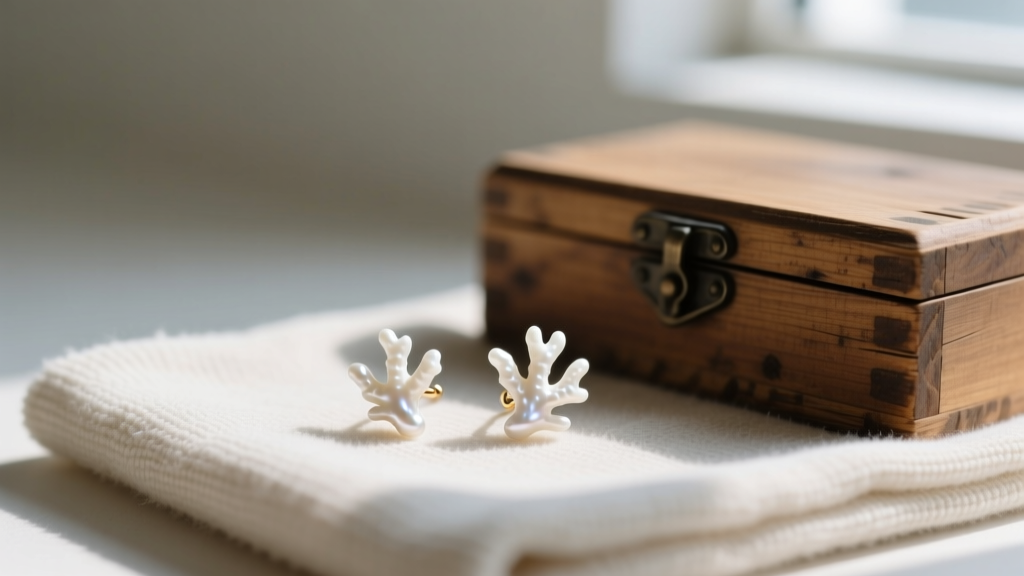
White coral is highly sensitive to acids, including the mild lactic and uric acids present in human sweat, as well as the alcohol and synthetic compounds found in perfumes and hairsprays. Always adhere to the 'Last On, First Off' rule: put your coral earrings on after your cosmetics, perfumes, and hair products have fully dried, and remove them immediately upon returning home.
To clean them, simply wipe the coral gently with a dry, untreated microfiber cloth. If they require a deeper clean, use a slightly damp cloth with a drop of pH-neutral, non-detergent soap, and dry them immediately. Store your white coral earrings in a soft pouch away from direct sunlight and extreme heat; prolonged UV exposure and low humidity can cause the natural moisture within the coral to evaporate, leading to a yellowish tint and structural cracking.
Final Verdict: Is White Coral a Worthy Investment?
As we navigate the 2026 jewelry market, white coral earrings represent a sophisticated, ethically conscious alternative to traditional precious gems. While they may not hold the same liquid resale value as diamonds or sapphires, their value lies in their unique organic beauty, their alignment with sustainable sourcing practices, and their unparalleled versatility in modern wardrobe styling. By prioritizing fossilized or naturally white varieties and adhering to strict care protocols, you can ensure these marine treasures remain a staple in your collection for decades to come.


