Did Shakespeare Have an Earring? History & Modern Hoop Guide
Discover the truth behind 'did Shakespeare have an earring,' explore Elizabethan jewelry history, and learn to style classic gold hoops.

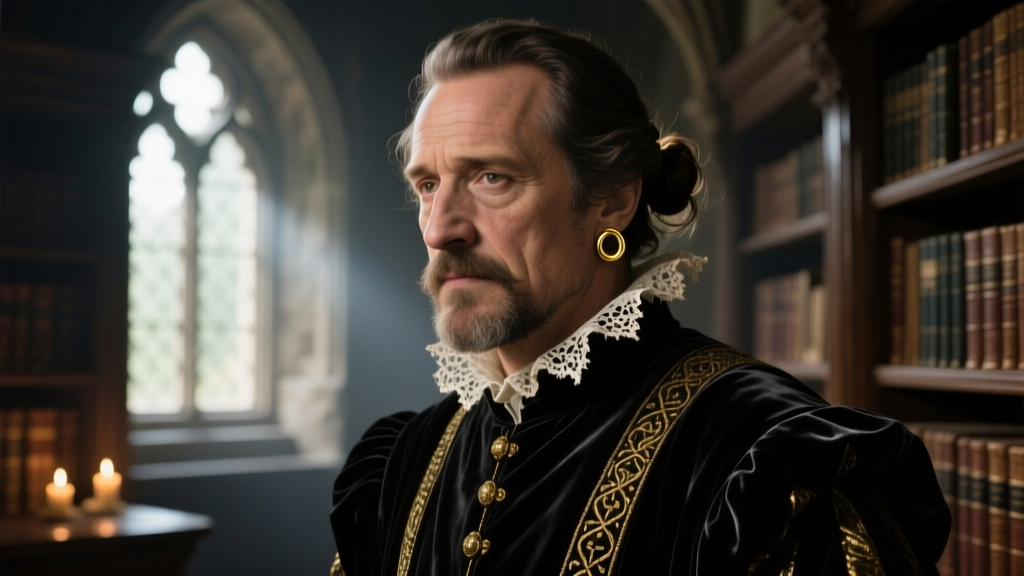
The Chandos Portrait: A Literary and Sartorial Mystery
When we think of William Shakespeare, we often picture the iconic Chandos portrait. Painted by John Taylor around 1610, it is the only portrait with a strong claim to have been painted from life. In this painting, the legendary playwright is depicted with a soft lace collar, a slightly unbuttoned tunic, and, most notably, a glinting gold hoop earring in his left ear. For centuries, this single piece of jewelry has sparked intense debate among historians, literary scholars, and jewelry enthusiasts alike. Was it a genuine reflection of his personal style, a symbolic addition by the artist, or simply a later overpainting? To answer the question of whether the Bard actually wore ear jewelry, we must dive deep into the sartorial habits of the Elizabethan and Jacobean eras, and then explore how you can adopt this timeless, bohemian aesthetic today.
So, Did Shakespeare Have an Earring? The Historical Context
The short answer is: almost certainly, yes. During the late 16th and early 17th centuries, men wearing earrings was not an anomaly; it was a recognized marker of specific social and professional identities. According to the Victoria and Albert Museum, Elizabethan jewelry was heavily gender-fluid among the aristocracy and the artistic classes. Men of the court, poets, and actors frequently adorned themselves with pearls, jewels, and gold hoops.
However, the placement and style of the earring carried distinct cultural weight. The left ear was predominantly the chosen side for artists, writers, and bohemians. It was a subtle rebellion against the rigid conservatism of the era, signaling a worldly, creative, and slightly roguish disposition. Conversely, sailors and pirates also wore left-ear hoops, but for deeply superstitious reasons: a gold earring was believed to be the exact price of a Christian burial should the sailor drown and wash ashore, and some maritime myths even claimed that piercing the left earlobe improved long-distance eyesight. Given Shakespeare's life as an actor, a playwright, and a globe-trotting creative, the left-ear gold hoop was the ultimate Elizabethan accessory for a man of the arts.
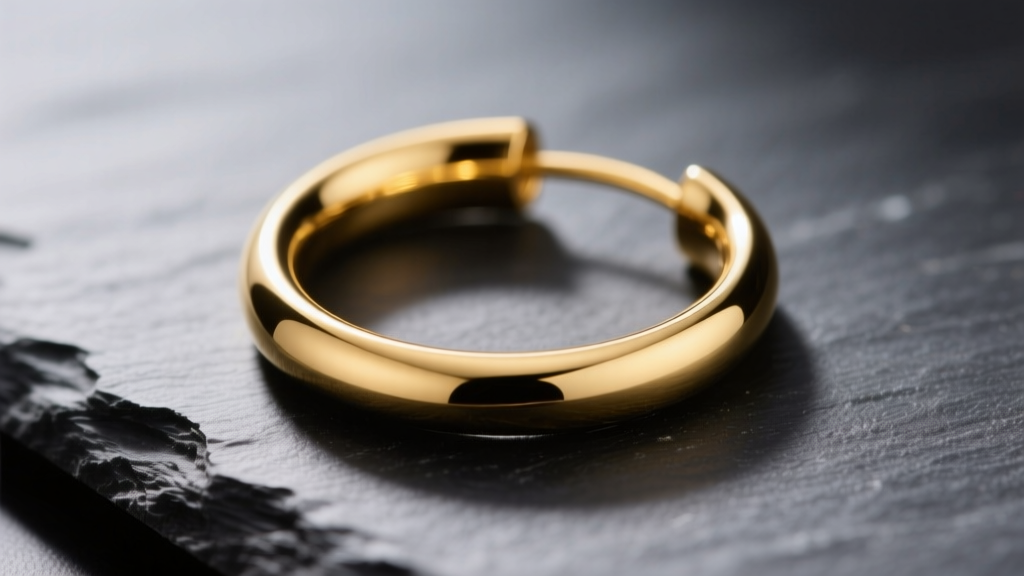
Elizabethan Specs vs. Modern Ear Jewelry
If you are looking to recreate the Shakespearean look, it is crucial to understand how historical jewelry manufacturing differs from modern ear styling. The metallurgy and structural engineering of earrings have evolved significantly over the last 400 years.
| Feature | Elizabethan Era (c. 1600) | Modern Era (2026 Standards) |
|---|---|---|
| Material | 22k or 24k Gold (Highly malleable, prone to bending) | 14k or 18k Gold, Implant-Grade Titanium (ASTM F136) |
| Wire Gauge | Thick, hand-forged wires (approx. 14G to 12G) | Standard 20G (0.81mm) or 18G (1.02mm) for standard lobes |
| Closure Type | Simple hook or continuous wire loop (no secure clasp) | Clicker, hinged latch-back, or endless hoop with tension fit |
| Piercing Method | Hot needle or bodkin (high infection risk) | Sterile, single-use hollow piercing needle (14G to 18G) |
How to Wear the 'Shakespeare Hoop' Today: A Beginner's Guide
Transitioning from historical trivia to practical styling, the classic gold hoop remains a staple in men's and unisex jewelry. If you are a beginner looking to channel the Bard's bohemian energy, you need to select the right diameter, gauge, and material to ensure both comfort and aesthetic accuracy.
Choosing the Right Diameter and Gauge
The earring depicted in the Chandos portrait is relatively modest in size. It is not a massive, shoulder-dusting pirate hoop, nor is it a tight huggie. It sits perfectly in the middle. For a historically inspired look, you should look for a hoop with an inner diameter of 12mm to 15mm. This size clears the earlobe comfortably without swinging excessively or catching on clothing collars.
Regarding wire thickness (gauge), most modern standard lobe piercings are done at 20G (0.81mm) or 18G (1.02mm). If you buy a 14k gold hoop, ensure the wire thickness matches your piercing. Forcing a 16G (1.29mm) wire into an 18G piercing will cause micro-tears and irritation bumps. If your lobes were stretched or pierced with a standard 14G (1.6mm) needle, you have a wider selection of vintage-style, thicker wire hoops available.
Material Grades for Sensitive Lobes
While Shakespeare likely wore high-karat gold, pure 24k gold is far too soft for modern continuous hoops; it will easily pull apart and lose its shape. The modern standard for luxury ear jewelry is 14k or 18k solid gold. 14k gold (58.5% pure gold) is alloyed with silver, copper, and sometimes zinc, giving it the tensile strength required to maintain a perfect circle while retaining a rich, warm yellow hue. If you suffer from nickel allergies—a common issue with cheaper white gold alloys—opt for 18k yellow gold or ASTM F136 implant-grade titanium, which is completely biocompatible and hypoallergenic.

Face Shape Guide for Men's and Unisex Hoops
The beauty of the Shakespearean hoop is its versatility, but adjusting the diameter by just a few millimeters can dramatically alter how it frames your face. Here is a quick decision framework for selecting your hoop size based on facial geometry:
- Square Jawlines: Opt for smaller, rounded hoops (10mm to 12mm). The circular shape softens the sharp angles of the jaw, while keeping the diameter small prevents the jewelry from overwhelming your facial structure.
- Round Faces: Choose slightly elongated drop earrings or larger hoops (18mm to 20mm). The vertical drop creates an illusion of length, balancing out the width of the cheeks.
- Oval Faces: You have the most versatility. A classic 15mm continuous hoop (the exact Shakespearean specification) will sit perfectly in proportion to your balanced facial features.
- Heart-Shaped Faces: Avoid heavy, bottom-weighted dangles. Stick to medium-sized hoops (12mm to 15mm) that sit close to the earlobe to draw attention upward toward the eyes and cheekbones.
The Anatomy of a Secure Closure
Elizabethan wire loops relied entirely on the tension of the metal and gravity to stay in the ear. Today, losing a solid gold earring is an expensive mistake. When shopping for your Shakespeare-inspired hoop, prioritize the closure mechanism:
1. The Endless (Continuous) Hoop: This is the most historically accurate and seamless option. The thin wire end slips into a hollow tube on the opposite side of the hoop. It offers a clean, uninterrupted circle of gold, but requires a bit of dexterity to insert and remove.
2. The Clicker Ring: A modern marvel for cartilage and lobe piercings alike. It features a hinged segment that snaps securely into place with an audible 'click.' While slightly more visible than an endless hoop, it is infinitely easier to put on and virtually impossible to lose.
3. The Latch-Back (Saddleback):strong> Common in slightly thicker, heavier hoops. A hinged wire passes through the ear and snaps into a grooved catch on the other side. It provides excellent security for heavier 14k gold pieces.
Final Thoughts on Historical Ear Styling
When visitors view the Chandos portrait at the National Portrait Gallery in London, they are looking at more than just a playwright; they are looking at a master of self-expression. The gold hoop in his left ear was a deliberate choice, a nod to his artistic identity and his connection to the vibrant, rule-breaking world of the Elizabethan theater.
Today, adopting the Shakespeare earring is less about maritime superstition and more about embracing a timeless, gender-fluid accessory that bridges the gap between historical romance and modern minimalism. Whether you choose a seamless 15mm 18k gold endless hoop or a secure titanium clicker, you are participating in a 400-year-old tradition of creative rebellion. Start with a modest diameter, ensure your gauge matches your piercing, and let the gold do the talking.


