How to Choose the Best Fish Hook Earring Wires for Sensitive Ears
Master the art of selecting fish hook earring wires. Compare gauge sizes, hypoallergenic metals, and secure stoppers for drops.

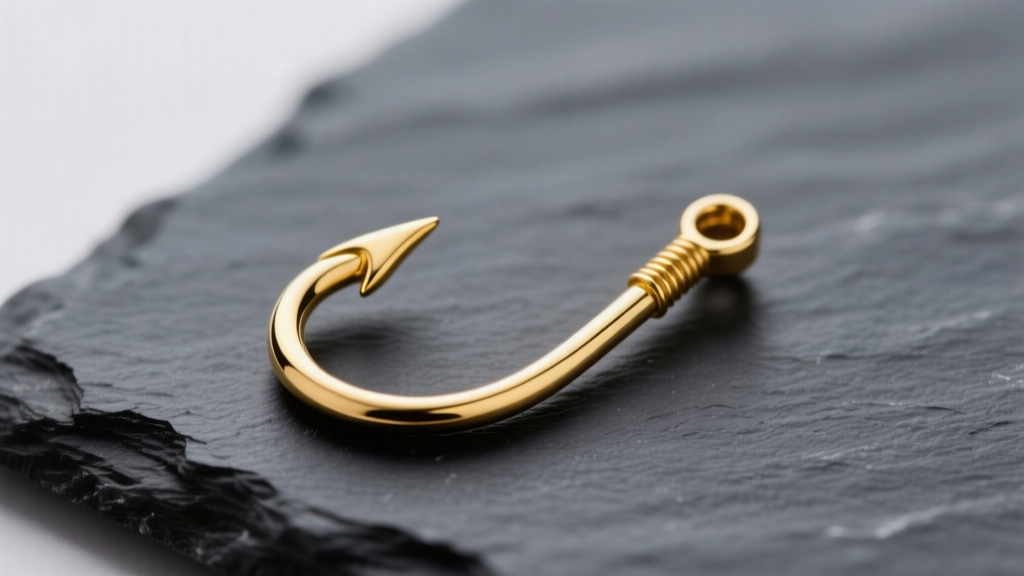
When investing in fine drop or dangle earrings, the focal point is usually the gemstone or the intricate metalwork of the drop itself. However, the structural foundation—the fish hook earring wire—dictates not only the comfort and security of the piece but also the long-term health of your piercing. Often referred to as French wires or shepherd hooks, these findings are deceptively simple. Yet, variations in gauge thickness, metallurgical composition, and tensile strength separate a comfortable, secure earring from one that causes lobe migration, allergic contact dermatitis, or catastrophic failure.
This comprehensive buying guide dissects the exact specifications you need to evaluate when purchasing fish hook earring wires, ensuring your selections are anatomically sound, hypoallergenic, and mechanically durable.
The Anatomy of a Fish Hook Earring Wire
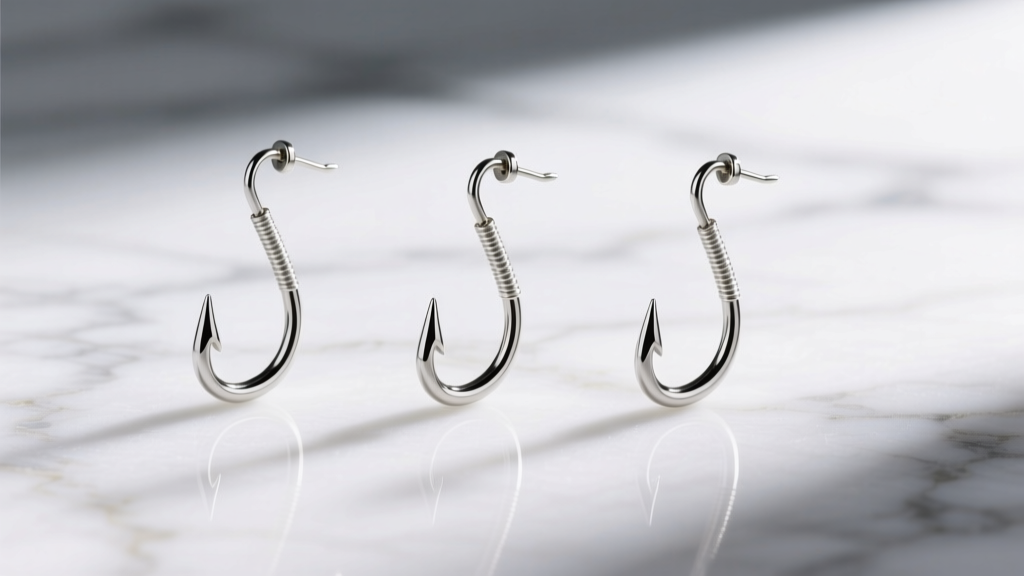
Before evaluating materials, it is critical to understand the three distinct zones of a standard fish hook wire, as each serves a unique mechanical purpose:
- The Eyelet (Loop): The small, closed circle at the top that connects to the jump ring or drop component. This area endures the highest degree of friction and rotational stress.
- The Stem: The straight vertical section that passes through the earlobe. Its length determines how far the drop will hang below the ear, and its thickness (gauge) dictates the weight capacity.
- The French Curve (Hook): The sweeping, U-shaped bend that rests over the back of the ear cartilage. This acts as a counterbalance and a secondary security measure against forward-falling drops.
A common variation is the kidney wire, which features a hinged closure that latches into a tiny catch at the front of the stem. While kidney wires offer superior security without the need for stoppers, traditional fish hook wires remain the industry standard for high-end drops due to their seamless aesthetic and ease of insertion.
Critical Gauge Sizes and Weight Limits
The most frequent mistake consumers and novice jewelers make is ignoring wire gauge. The gauge determines the wire's thickness, which directly correlates to its load-bearing capacity. Using a wire that is too thin for a heavy stone will result in permanent deformation, leading to a condition known as 'cheese-cutter effect,' where the thin metal slowly slices through the earlobe tissue.
| Wire Gauge | Millimeter (mm) | Max Drop Weight | Best Use Case | Risk Profile |
|---|---|---|---|---|
| 22-Gauge | 0.64 mm | Under 5 grams | Featherweight pearls, delicate chains | High: Bends easily, can slice heavy lobes |
| 20-Gauge | 0.81 mm | 5 to 12 grams | Standard gemstone drops, medium hoops | Low: Industry standard, highly versatile |
| 18-Gauge | 1.02 mm | 12 to 20 grams | Heavy statement pieces, large cabochons | Medium: May not fit smaller/tighter piercings |
| 16-Gauge | 1.29 mm | Over 20 grams | Cartilage dangles, heavy tribal drops | High: Requires stretched or specifically gauged piercings |
Why 20-Gauge is the Gold Standard
For 90% of commercial and fine jewelry applications, 20-gauge (0.81mm) is the optimal choice. It provides enough tensile strength to support semi-precious stones and small diamonds without stretching a standard earlobe piercing. According to dermatological guidelines on piercing health, maintaining a minimum thickness of 0.8mm prevents the localized pressure necrosis that causes lobe migration.
Material Grades for Sensitive and Stretched Lobes
The metal alloy used in fish hook earring wires is in constant contact with the internal fistula (the skin tunnel of the piercing). For individuals with sensitive ears or nickel allergies, the metallurgical grade is non-negotiable.
Implant-Grade Titanium (ASTM F136)
If you suffer from severe contact dermatitis, ASTM F136 implant-grade titanium is the ultimate solution. Unlike commercial-grade titanium, which may contain trace alloying elements, implant-grade titanium is entirely nickel-free and highly polished to prevent micro-abrasions inside the piercing. The Association of Professional Piercers strictly recommends this specific alloy for any jewelry worn in healing or highly reactive piercings.
Niobium
Niobium is a highly biocompatible, elemental metal that is naturally hypoallergenic. While softer than titanium, it is an excellent choice for fish hook wires because it is highly malleable, allowing jewelers to create smooth, seamless curves without work-hardening the metal to the point of brittleness. It can also be anodized to produce a spectrum of vibrant colors without the use of chemical dyes or plating.
14k and 18k Gold Alloys
While pure 24k gold is hypoallergenic, it is far too soft for earring wires. Therefore, gold must be alloyed. When purchasing gold fish hook earring wires, always verify the alloy composition. Yellow and rose gold are generally safe, as they are alloyed with copper, silver, and zinc. However, white gold is frequently alloyed with nickel to achieve its silvery hue. If you require white metal, opt for palladium-white gold or platinum to avoid allergic flare-ups. The Gemological Institute of America (GIA) provides extensive documentation on how specific gold alloys interact with skin chemistry.
Securing Your Drops: Stopper and Clutch Compatibility
A fish hook wire is an open system, meaning it relies on secondary friction devices to prevent the earring from sliding off the ear. The interaction between the wire's stem and the earring back is a frequent point of failure.
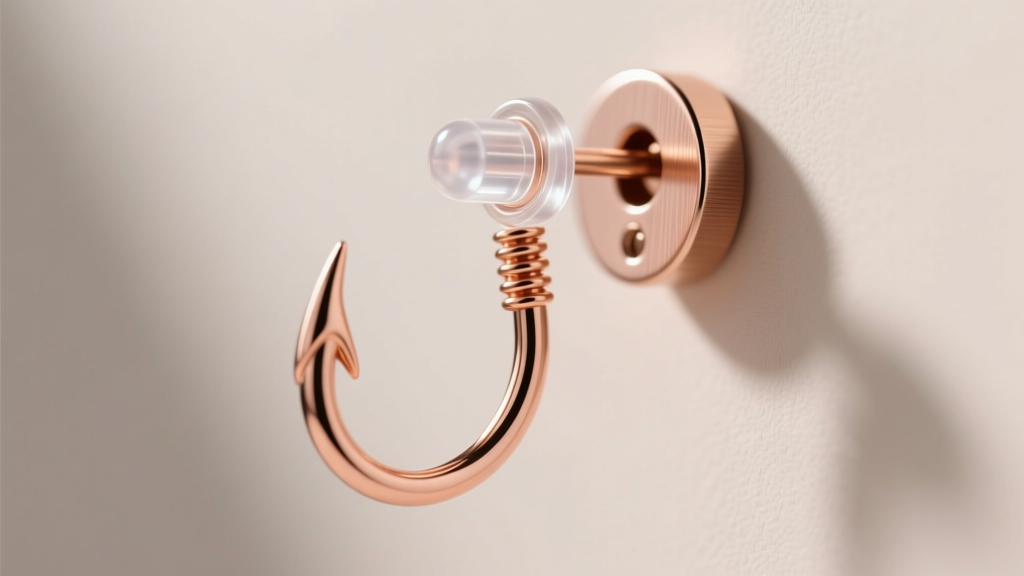
- Silicone Bullets: These are popular for their comfort and low profile. However, silicone stretches over time. If used on a 20-gauge wire, a silicone stopper will eventually lose its internal tension and fall off, taking your earring with it. They are best reserved for temporary wear or 18-gauge wires where the friction fit is tighter.
- Metal Friction Clutches (Butterfly Backs): These provide superior security due to the internal metal tabs that grip the wire. However, the notches on the stem required to hold a butterfly back can weaken the structural integrity of a 22-gauge wire. For fish hooks, smooth-stemmed metal bullet clutches with internal silicone inserts offer the best hybrid of security and wire preservation.
- Ear Nuts with Flanges: For heavy drops, a wide-flange metal back distributes the weight across a larger surface area of the earlobe, preventing the earring from drooping forward and putting undue stress on the French curve.
Common Failure Modes and How to Avoid Them
Even high-quality fish hook earring wires can fail if subjected to improper mechanical stress. Understanding these failure modes will help you inspect your jewelry and make better purchasing decisions.
1. Metal Fatigue at the Eyelet
The connection point where the eyelet is crimped or soldered shut is the weakest link. Repeated rotational stress from a heavy, swinging drop can cause microscopic fractures in the metal. Solution: Look for wires where the eyelet is seamlessly soldered rather than merely crimped closed. Soldered loops distribute stress evenly across the entire circumference.
2. Work Hardening and Snapping
When a wire is bent out of shape and then bent back, the metal undergoes 'work hardening.' The crystalline structure of the metal becomes rigid and brittle. If a consumer continually adjusts the French curve to fit their ear, the wire will eventually snap at the apex of the bend. Solution: Purchase annealed wires (which are heat-treated to remain soft) or accept that the wire's shape should only be adjusted once by a professional jeweler.
3. Snagging and Loop Deformation
If the tip of the French hook is not perfectly rounded and polished (often called a 'French tip' or 'ball tip'), it will catch on hair and sweaters. This snagging pulls the wire forward, deforming the loop and stretching the piercing. Always run your fingernail over the tip of the hook before purchasing; it should feel completely smooth and seamless.
Expert Verdict: What to Buy Based on Your Needs
To synthesize the technical data into actionable buying advice, match your specific requirements to the following specifications:
- For Everyday Wear & Sensitive Ears: Choose a 20-gauge, ASTM F136 titanium or palladium-white gold wire with a soldered eyelet and a smooth French tip. Pair with a wide-flange metal clutch.
- For Heavy Statement Drops (15g+): Upgrade to an 18-gauge wire in 14k yellow gold or platinum. The increased thickness prevents the cheese-cutter effect. Use a silicone-lined metal bullet back to manage the downward torque.
- For Delicate, Featherweight Drops: A 22-gauge niobium or 14k rose gold wire is acceptable, provided the drop weighs less than 4 grams. Use a small silicone stopper, but inspect it monthly for stretching.
The earring wire is the unsung hero of jewelry design. By prioritizing precise gauge thickness and biocompatible metallurgy over mere aesthetics, you ensure that your fine jewelry remains secure, comfortable, and structurally sound for a lifetime of wear.


