Ring Earring Buying Guide: Budget vs. Value in 2026
Discover the true value of a ring earring in 2026. Compare materials, gauge sizes, and pricing tiers to make smart, hypoallergenic jewelry investments.

The True Cost of a Ring Earring: Beyond the Price Tag
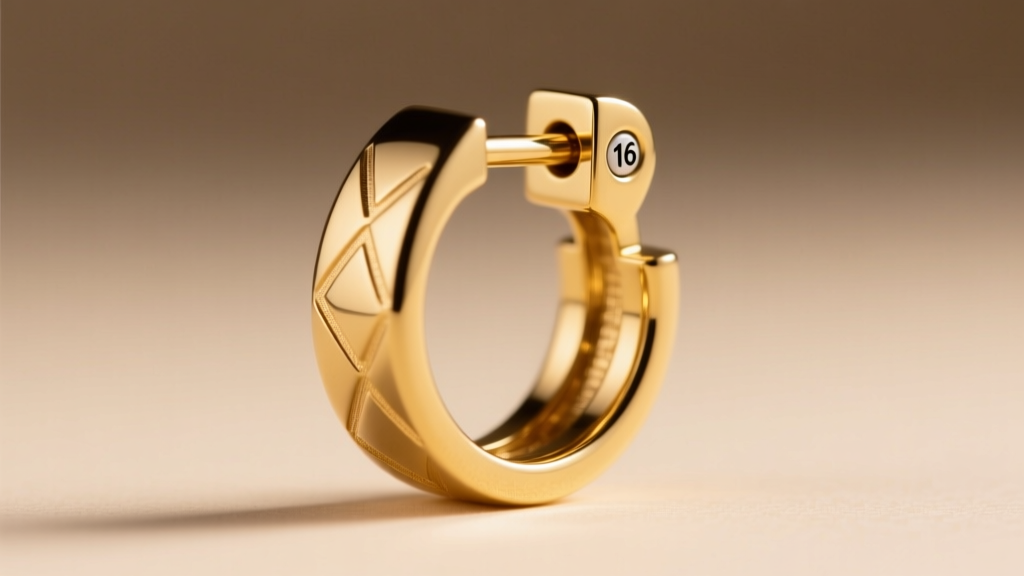
When shopping for body jewelry, the term ring earring encompasses a vast spectrum of styles, from captive bead rings (CBRs) and seamless hoops to hinged clickers. In 2026, the market is more saturated than ever, with prices ranging from $3 for a multi-pack of mystery-metal hoops to over $200 for a single, custom-fitted 14k gold clicker. But how do you determine the actual value of these pieces? A budget-friendly ring earring might seem like a steal until it causes contact dermatitis, loses its tension, or warps during sleep. True value in body jewelry is calculated by assessing material biocompatibility, mechanical longevity, and precision sizing. This guide breaks down exactly where your money goes and how to maximize your investment without overpaying for brand markup.
Material Grades: Where Your Money Actually Goes
The single most critical factor in the value assessment of any ring earring is the base material. Cheap alloys often contain high levels of nickel, which is the leading cause of allergic contact dermatitis in piercings. When evaluating budget versus fine jewelry, you must look at the metallurgical grade, not just the marketing name.
ASTM F-136 Implant-Grade Titanium
This is the gold standard for fresh piercings and sensitive ears. Implant-grade titanium is highly biocompatible, virtually nickel-free, and can be electropolished to a mirror finish that resists bacterial adhesion. A high-quality titanium ring earring typically costs between $25 and $60. The value here is immense: you are paying for medical-grade safety and a piece that will never tarnish or rust.
316L Surgical Steel vs. Commercial 'Surgical' Steel
The term 'surgical steel' is largely unregulated. True 316LVM (Vacuum Melted) steel is safe for healed piercings but still contains 8-10% nickel. Budget rings ($5 to $15) often use lower-grade stainless steel that can pit, corrode, and trigger severe allergic reactions. According to the Association of Professional Piercers (APP), steel should only be worn in fully healed piercings by individuals with no known nickel sensitivities.
Solid Gold: 14k vs. 18k
Gold is a premium investment. However, 24k gold is too soft for body jewelry. The Gemological Institute of America (GIA) notes that alloying gold is necessary for durability. For a ring earring, 14k solid gold offers the best balance of value, hardness, and color retention. Expect to pay $85 to $250+ depending on the brand and gemstone accents. Avoid 'gold-plated' or 'gold-filled' rings for cartilage, as the thin outer layer will eventually wear off, exposing the reactive brass or copper core underneath.
| Material | Avg. Price Range | Nickel Content | Best Use Case |
|---|---|---|---|
| ASTM F-136 Titanium | $25 - $60 | None / Trace | Fresh piercings, sensitive ears |
| 316L Surgical Steel | $8 - $20 | 8% - 10% | Healed lobes, budget-conscious |
| 14k Solid Gold | $85 - $250+ | Varies by alloy | Lifelong wear, fine jewelry |
| Gold-Plated Brass | $3 - $12 | High (in core) | Temporary fashion, un-pierced |
Construction & Mechanics: Assessing Long-Term Value
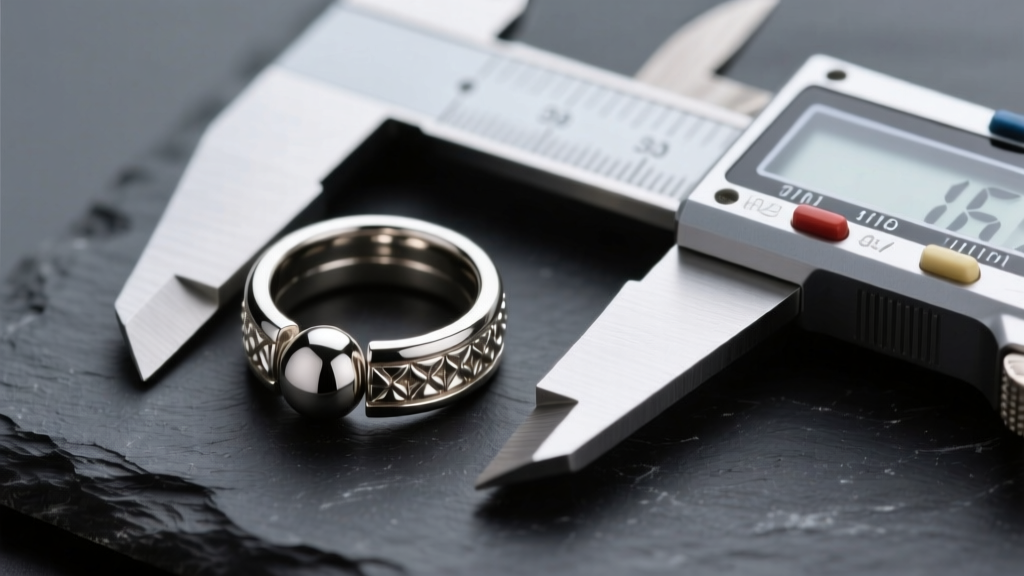
A ring earring is a mechanical device. The way it opens, closes, and maintains tension dictates its lifespan. Budget manufacturers often cut corners on the threading, hinges, and tension points, leading to frustrating failure modes.
Captive Bead Rings (CBR)
CBRs rely on the natural tension of the metal ring to hold a small bead in place. In budget models, the metal is often too soft or improperly tempered. Over time, opening and closing the ring with pliers causes metal fatigue, resulting in a loss of tension. The bead falls out, and the ring is rendered useless. High-end CBRs are crafted from tempered titanium or hardened gold, maintaining their snap for years.
Seamless Rings
These rings feature a straight pin that inserts into a hollow tube. While they offer a continuous, minimalist look, cheap seamless rings frequently suffer from misaligned seams. This creates a microscopic 'step' or burr that will tear through delicate fistula tissue (the piercing channel) every time the earring rotates. Always inspect the seam of a seamless ring earring under a magnifying glass before insertion.
Hinged Clickers
Clickers are the most user-friendly and secure option, featuring a hidden hinge and a satisfying 'click' closure. They are inherently more expensive to manufacture. A budget $15 clicker will likely suffer from hinge failure or a warped clasp within six months. Investing $60+ in a machined titanium or solid gold clicker guarantees a secure closure that won't accidentally open when catching on a towel or hair.
The 2026 Pricing Matrix: What You Should Pay
To avoid overpaying for marketing or underpaying for dangerous materials, use this 2026 pricing matrix as your baseline for assessing ring earring value.
- The Danger Zone ($1 - $15): Typically made of mystery alloys, zinc, or nickel-heavy brass. High risk of infection, allergic reaction, and mechanical failure. Value verdict: Avoid entirely.
- The Mid-Tier Sweet Spot ($25 - $65): This is where you find high-quality, unbranded ASTM F-136 titanium and 316LVM steel from reputable body jewelry wholesalers. You are paying purely for material safety and precision machining. Value verdict: Excellent for everyday wear.
- The Premium Brand Tier ($70 - $150): Features 14k solid gold, anodized titanium, and intricate designs (like prong-set gemstones). You are paying for fine metals and brand quality control. Value verdict: Worth it for curated ear projects and lifelong pieces.
- The Custom/Luxury Tier ($200+): Hand-fabricated pieces, custom inner diameters, and high-end gemstone cuts (e.g., VS clarity diamonds). Value verdict: For collectors and fine jewelry enthusiasts.
Gauge and Sizing: Avoiding Costly Piercing Mistakes
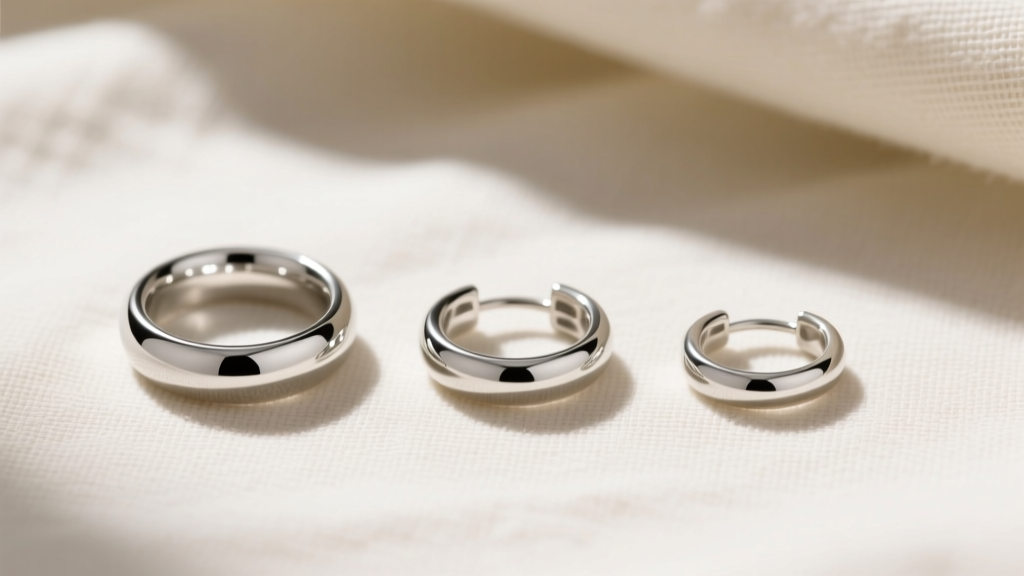
Even a $200 gold ring earring is a terrible value if it doesn't fit your anatomy correctly. Cartilage piercings require precise inner diameters (ID) and gauge thicknesses to prevent migration, rejection, and hypertrophic scarring.
Standard Gauge Thicknesses
Purchasing the wrong gauge can cause the 'cheese-cutter effect,' where a ring that is too thin slowly slices through the tissue.
- 18G (1.0mm): Standard for traditional earlobe piercings and some delicate nostril rings.
- 16G (1.2mm): The universal standard for most cartilage piercings, including the helix, tragus, and conch.
- 14G (1.6mm): Required for high-stress areas like the daith, rook, and industrial piercings to provide structural stability.
Inner Diameter (ID) Matters
Budget multi-packs usually offer only one generic size (often 8mm or 10mm). However, a daith piercing might require a 9mm ID, while a lower helix might need a 12mm ID to accommodate swelling and the natural curvature of the ear. Paying a premium for a retailer that offers half-millimeter ID increments (e.g., 8.5mm, 9mm, 9.5mm) is a massive value-add that ensures a custom, comfortable fit without putting pressure on the healing fistula.
Final Verdict: Maximizing Your Ring Earring Investment
When evaluating a ring earring, look past the initial sticker price. A $40 implant-grade titanium clicker that lasts a decade and keeps your piercing healthy offers infinitely more value than a $12 gold-plated hoop that turns your ear green and breaks after a week. Prioritize verified material grades, secure mechanical closures, and anatomically correct sizing. By treating your body jewelry as a long-term investment rather than a disposable accessory, you protect your health and curate an ear aesthetic that truly stands the test of time.
Expert Tip: Always ask the retailer for a mill certificate or material verification for titanium body jewelry. Reputable brands proudly provide documentation proving their alloys meet ASTM F-136 or F-67 standards.


