Ultimate Care and Cleaning Guide for Stingray Earrings
Discover expert tips to clean, maintain, and protect your stingray earrings. Learn how to preserve shagreen texture and prevent hardware tarnish.

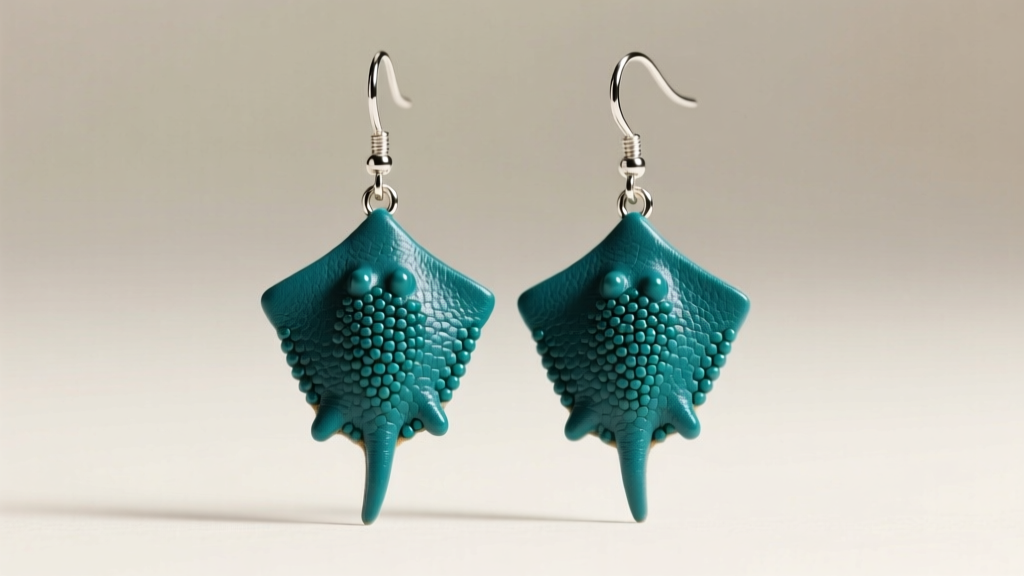
The Unique Anatomy of Stingray Leather in Jewelry
Stingray leather, historically known as shagreen, is one of the most exotic and durable materials used in high-end earring design. Unlike traditional bovine or ovine leathers, stingray skin is characterized by its unique dorsal surface, which is covered in calcified papillae. These enamel-like denticles are composed primarily of fluorapatite and calcium carbonate, giving the material its signature beaded texture and remarkable resistance to scratching. However, as of 2026, with exotic leathers becoming more prevalent in sustainable luxury markets, understanding the specific care requirements of these earrings is critical for longevity.
The primary vulnerability of stingray earrings does not lie in the scales themselves, but in the interstitial gaps between them. These microscopic crevices easily trap sebum, dead skin cells, cosmetic residues, and environmental dust. Furthermore, most stingray earrings are constructed using an inlay or cabochon method, where the leather is bonded to a metal backing using jeweler's epoxy or cyanoacrylate adhesives. Improper cleaning techniques can compromise these adhesives, leading to delamination and irreversible damage to the piece.
Essential Cleaning Tools for Exotic Skin Earrings
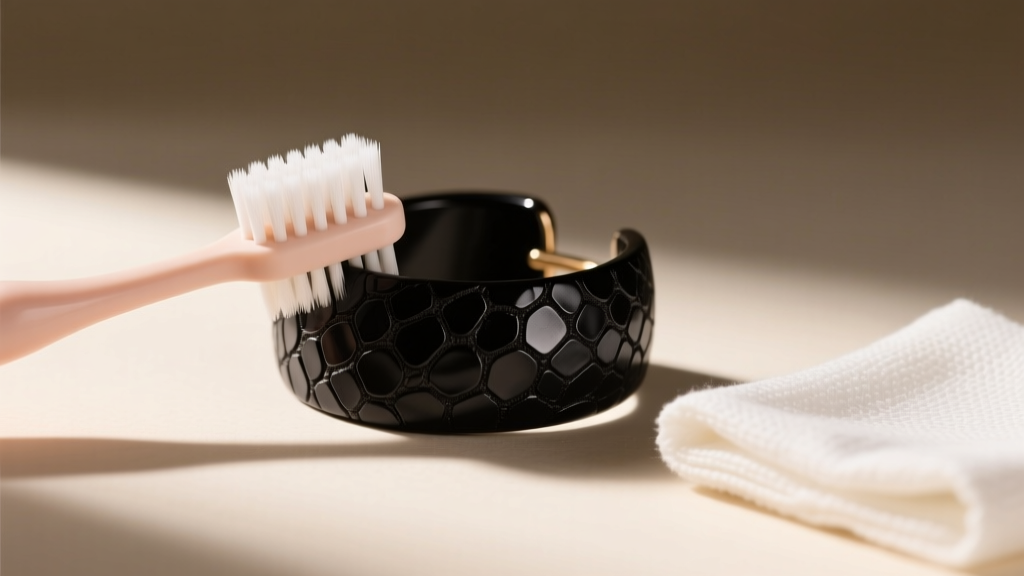
To properly maintain shagreen earrings, you must abandon standard jewelry cleaning methods. Ultrasonic cleaners, steamers, and chemical dips are strictly prohibited. Instead, assemble a specialized, gentle cleaning kit:
- Extra-Soft Infant Toothbrush: The nylon bristles must be ultra-soft to avoid dislodging the calcified scales while effectively reaching into the microscopic gaps.
- pH-Neutral Leather Cleaner: Opt for a cleaner with a pH between 5.5 and 7.0. Avoid alkaline soaps, which can degrade the protein structure of the leather backing.
- Distilled Water: Tap water contains minerals and chlorine that can leave white, chalky deposits in the texture of the stingray skin.
- Microfiber Cloths: Use lint-free, high-GSM microfiber to prevent fibers from snagging on the beaded surface.
- Cotton Swabs (Q-Tips): Essential for precision cleaning around the metal hardware junctions.
What to Avoid at All Costs
Never submerge stingray earrings in water. The leather backing is highly porous and will absorb moisture, causing it to swell, warp, and eventually rot, while simultaneously dissolving the adhesive bond to the metal setting.
Step-by-Step Cleaning Routine for Stingray Earrings
Follow this meticulous protocol every 4 to 6 weeks, or more frequently if the earrings are worn daily in humid climates.
1. Dry Dusting and Debris Removal
Before introducing any moisture, use a clean, dry infant toothbrush to gently sweep across the surface of the earring in a circular motion. This dislodges dry particulate matter, dust, and dried sebum from the gaps between the calcified papillae. Brush over a dark towel so you can see the debris being removed.
2. Damp Surface Cleaning
Dampen a microfiber cloth with a small amount of distilled water mixed with a single drop of pH-neutral leather cleaner. Wring the cloth out until it is barely damp—not wet. Gently wipe the surface of the stingray leather. Do not apply heavy pressure; let the mild surfactant do the work of lifting oils.
3. Targeted Crevice Cleaning
For stubborn buildup (such as hairspray or sweat salts) trapped deep in the texture, dip the infant toothbrush into the diluted cleaning solution, shake off the excess, and gently agitate the affected area. Immediately wipe away the lifted residue with a dry section of your microfiber cloth.
4. Drying and Conditioning
Allow the earrings to air dry at room temperature, away from direct sunlight or heat sources, which can cause the leather backing to crack. Once completely dry, apply a minuscule amount of exotic leather conditioner to a cotton swab and lightly buff the surface. This restores the natural luster of the scales without clogging the crevices.
Hardware Maintenance: Protecting the Metal Settings
Stingray earrings are typically set in sterling silver, gold vermeil, or surgical stainless steel. The challenge lies in polishing the metal without staining the adjacent leather. Liquid silver polishes and chemical tarnish removers will permanently stain the porous edges of the stingray skin if they seep into the seams.
| Metal Type | Recommended Cleaning Agent | Application Method |
|---|---|---|
| Sterling Silver | Dry anti-tarnish polishing cloth | Gently rub metal only, avoiding leather seams |
| Gold Vermeil | Mild dish soap and distilled water | Apply with a cotton swab, dry immediately |
| Surgical Steel | Isopropyl alcohol (70%) | Apply strictly to metal posts using a micro-swab |
| PVD Coated Titanium | Warm distilled water | Wipe with a damp microfiber cloth |
For the earring posts that penetrate the ear, use a cotton swab lightly dampened with 70% isopropyl alcohol to sanitize the metal. Ensure the alcohol does not touch the stingray inlay, as it will strip the natural oils from the leather backing and cause premature brittleness.
Proper Storage and Humidity Control
Environmental control is just as important as active cleaning. According to guidelines from the Smithsonian Museum Conservation Institute, organic materials like exotic leathers require stable environmental conditions to prevent structural degradation.
Store your stingray earrings in a climate-controlled environment with a relative humidity (RH) level between 45% and 55%. If the air is too dry (below 30% RH), the underlying corium layer of the leather will desiccate and shrink, pulling away from the metal bezel. If the humidity exceeds 65% RH, the microscopic gaps in the shagreen texture become breeding grounds for mold and mildew spores.
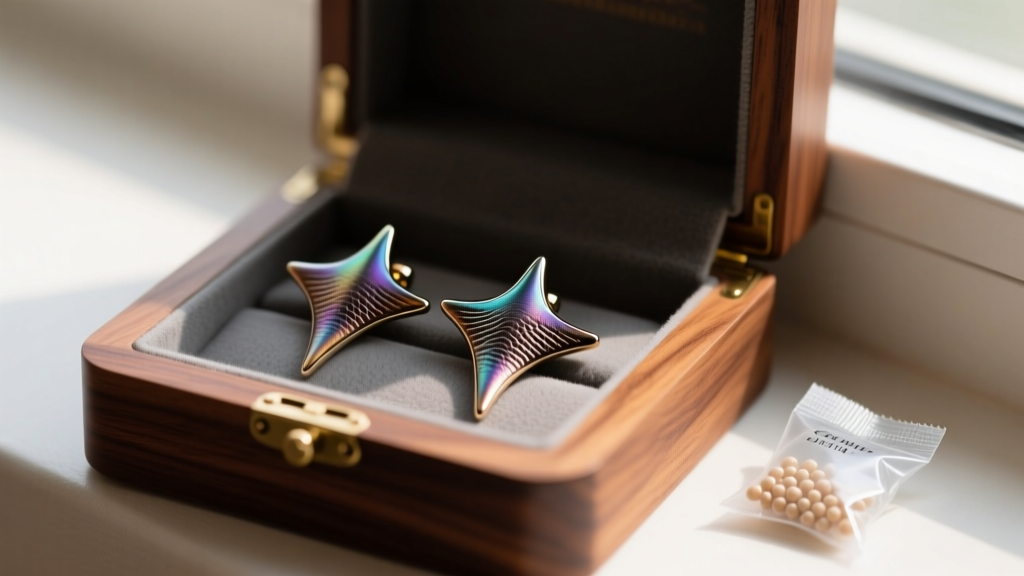
- Use a cedar-lined wooden jewelry box, which naturally buffers humidity fluctuations.
- Include a small, rechargeable silica gel desiccant packet in the storage compartment to absorb excess ambient moisture.
- Store the earrings flat or hanging by their hooks; never stack them under heavy items, as sustained pressure can cause the calcified scales to fracture along fault lines.
Troubleshooting Common Stingray Earring Issues
White Crusty Buildup in the Crevices
This is typically a buildup of sodium chloride (salt) and urea from perspiration. To remove it, create a solution of 50% distilled water and 50% white vinegar. Dip a cotton swab into the solution and carefully roll it over the affected scales. The mild acidity dissolves the alkaline salt deposits. Follow up immediately with a swab dampened only with distilled water to neutralize the area, then dry thoroughly.
Adhesive Failure and Lifting Edges
If you notice the edges of the stingray leather lifting away from the metal bezel, stop wearing the earrings immediately. Do not attempt to glue them back down with standard super glue, which cures rigid and can shatter the scales under stress. Take the piece to a professional jeweler who can carefully clean the channel and re-bond the leather using a flexible, archival-grade jeweler's epoxy.
Faux vs. Genuine Shagreen Identification
As the demand for exotic leathers grows, so does the market for polyurethane (PU) stamped imitations. Genuine stingray leather has a high thermal conductivity; it will feel distinctly cool to the touch when first picked up, whereas faux leather will quickly match your body temperature. Furthermore, genuine calcified papillae follow a random, organic, non-repeating pattern, while stamped faux shagreen will reveal a repeating geometric grid upon close macro inspection. For ethical sourcing and verification, always refer to CITES guidelines on exotic species to ensure your jewelry complies with international wildlife trade regulations.


