Gold Lace Earrings: Filigree, Dipped, and Laser-Cut Materials Compared
Compare the metallurgy, durability, and pricing of gold lace earrings. Discover the differences between filigree, electroformed, and laser-cut gold.

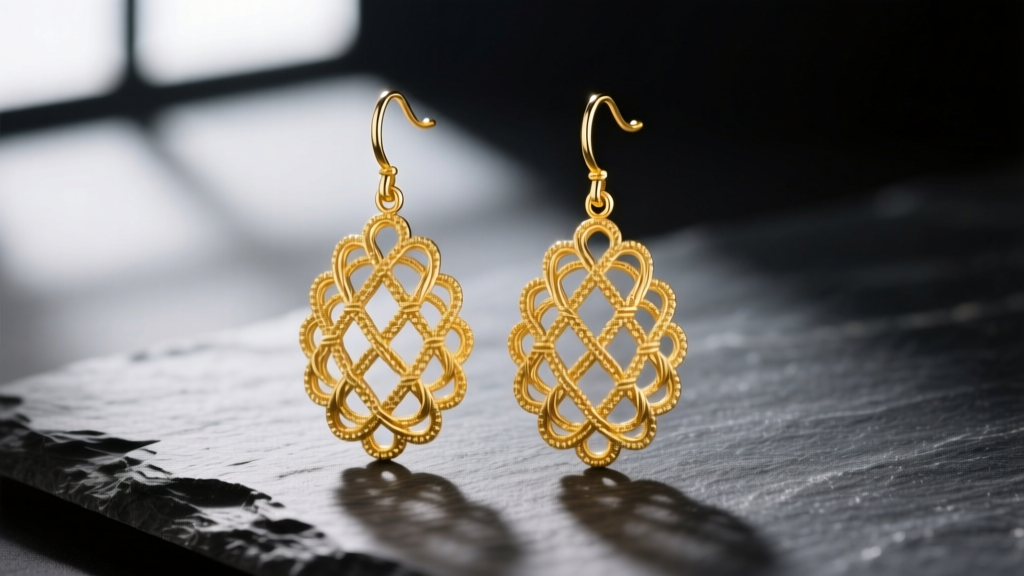
When shoppers search for gold lace earrings, they are often met with a dizzying array of prices and styles that all claim to feature 'lace-like' gold. However, from a metallurgical and manufacturing standpoint, 'gold lace' is not a single material. It is a visual descriptor applied to three vastly different fabrication techniques: hand-woven filigree, electroformed organic lace, and laser-cut solid sheet. As of 2026, advancements in jewelry manufacturing have blurred the visual lines between these techniques, but their structural properties, durability, and intrinsic values remain worlds apart.
Understanding the material science behind your earrings is critical, especially for intricate designs where structural failure points are magnified. This guide deconstructs the material properties of gold lace earrings to help you make an informed, expert-level purchasing decision.
The Three Material Realities of Gold Lace Earrings
1. Hand-Woven Gold Filigree
True filigree is the original 'gold lace.' It involves twisting, curling, and soldering microscopic threads of gold wire (often as thin as 0.2mm) into intricate, lace-like patterns. The material here is solid gold alloy throughout. The tensile strength of filigree relies heavily on the solder joints. Master jewelers use three grades of solder (hard, medium, and easy) with varying melting points to build complex lace structures without melting previously joined wires. Because the wire is drawn and annealed, it retains a slight spring-back, giving filigree earrings a delicate flexibility that prevents snapping under minor pressure.
2. Electroformed (Dipped) Organic Lace
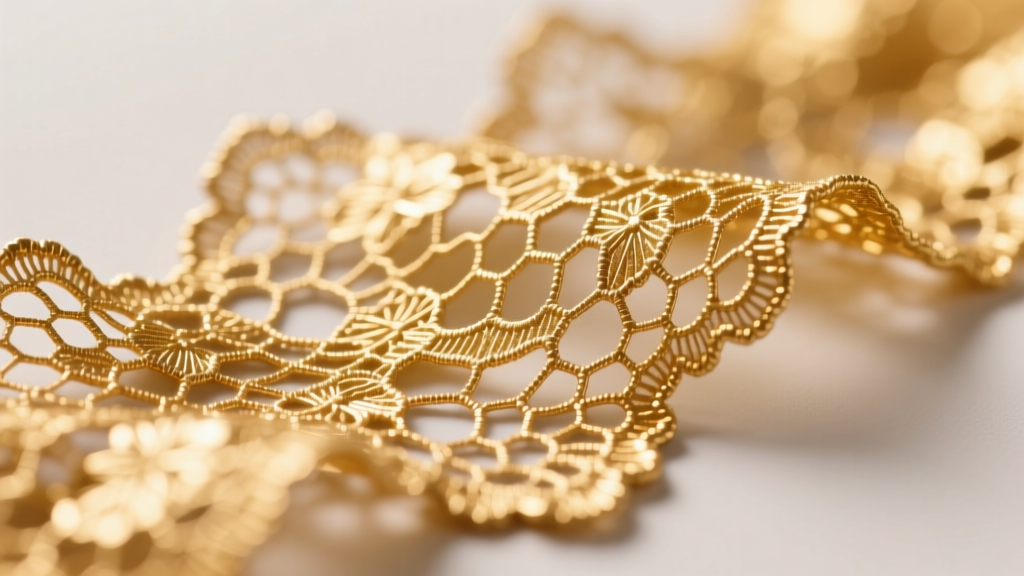
Electroforming utilizes actual fabric lace—usually cotton or silk. The organic lace is painted with a conductive medium, such as graphite or cyanoacrylate mixed with copper powder, and then submerged in an electrolytic bath. A base metal (typically copper) is electrodeposited onto the fabric, followed by a flash plating of 24k gold. The organic material either burns away in a kiln or remains encased in the metal. These earrings are astonishingly lightweight and capture the exact microscopic weave of real fabric. However, the material is essentially a thin metallic shell. If the gold flash is less than 0.5 microns thick, it is highly susceptible to wear and cannot be polished without stripping the gold layer entirely.
3. Laser-Cut Solid Gold Sheet
Modern CNC and fiber laser cutting allow manufacturers to slice intricate lace patterns directly from solid gold sheet metal, typically ranging from 0.5mm to 1.2mm in thickness. Unlike filigree, which has a three-dimensional, woven depth, laser-cut lace is flat. The material properties here are defined by the sheet's gauge and the post-cut tumbling process. If the laser kerf (the width of the cut) leaves microscopic burrs, the earrings can snag on hair or clothing. High-quality laser-cut lace earrings undergo extensive vibratory tumbling with ceramic media to round the edges, resulting in a structurally rigid, highly durable piece of solid gold.
Material Properties & Durability Matrix
To quantify the differences, we must look at the physical properties of each manufacturing method. The table below outlines what you can expect regarding weight, strength, and market pricing.
| Fabrication Method | Base Material | Gold Purity | Tensile / Structural Strength | Avg. Weight (Pair) | Market Price Range |
|---|---|---|---|---|---|
| Hand-Woven Filigree | Solid Gold Wire | 14k or 18k | High (Flexible, spring-back) | 3g - 8g | $350 - $1,500+ |
| Electroformed Dip | Copper Shell / Organic | 24k Flash Plate | Low (Brittle, prone to denting) | 0.5g - 2g | $40 - $120 |
| Laser-Cut Sheet | Solid Gold Sheet | 14k or 18k | Very High (Rigid, impact resistant) | 4g - 12g | $150 - $600 |
Karat Weight: 14k vs. 18k in Intricate Lace Designs
The karat weight of the gold fundamentally alters how the 'lace' behaves over time. According to the Gemological Institute of America (GIA), pure 24k gold is far too soft for intricate jewelry, necessitating alloy mixes. For gold lace earrings, the choice between 14k and 18k is a balance of color richness and structural integrity.
- 14k Gold (58.5% Gold): Alloyed with higher amounts of copper, silver, and zinc. 14k gold has a higher Vickers Hardness (HV) rating, making it significantly more resistant to bending. For filigree wire and laser-cut sheets, 14k is the superior choice for everyday wear, as the intricate lace appendages will not easily warp when grabbed or bumped.
- 18k Gold (75% Gold): Offers a deeper, richer yellow hue but is inherently softer. In laser-cut lace designs, 18k gold is more prone to micro-scratches and edge deformation. In filigree, 18k wire requires thicker gauges to maintain the same structural rigidity as 14k, which can make the earrings appear slightly bulkier and heavier.
Hypoallergenic Profiles and Skin Sensitivities
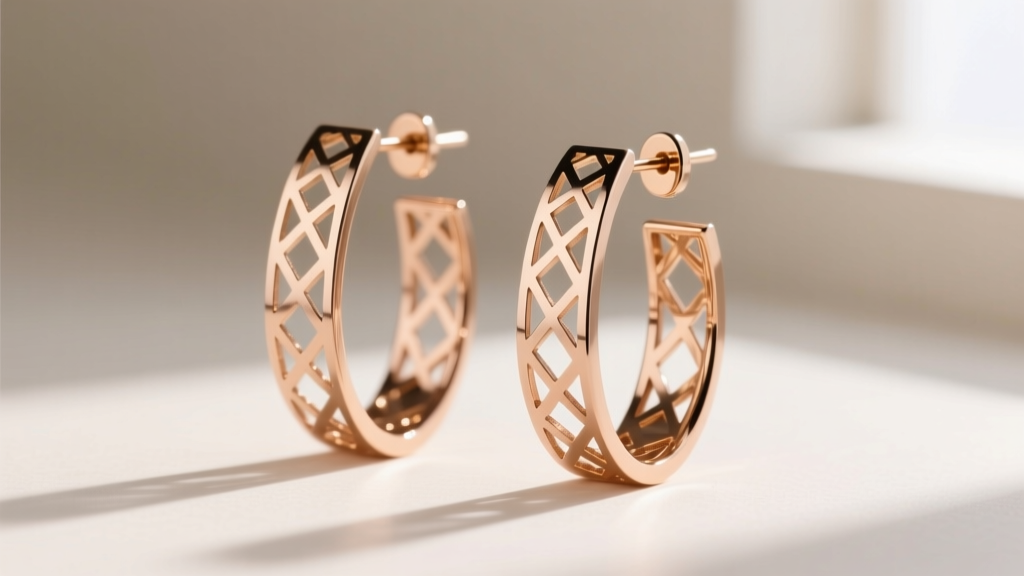
Intricate lace earrings often feature posts, hooks, or clips that sit directly against the sensitive skin of the earlobe or cartilage. The alloy composition of the gold lace dictates its biocompatibility. White gold lace earrings are particularly problematic for sensitive ears; to achieve a white color, manufacturers historically alloyed gold with nickel. While many modern jewelers now use palladium or manganese to comply with the EU Nickel Directive (EN 1811:2011), vintage or poorly sourced white gold lace may still leach nickel ions when exposed to sweat, causing contact dermatitis.
Electroformed lace earrings pose a different risk. Because the base metal is usually copper, any breach in the 24k gold flash plating—common on the high-friction areas of ear wires—will expose the copper to the skin. Copper oxidation can cause green discoloration and localized irritation. If you have metal sensitivities, solid 14k or 18k yellow or rose gold filigree and laser-cut options are the safest, most biocompatible choices, provided the ear wires are also crafted from the same hypoallergenic alloy.
Structural Failure Points and Maintenance
Maintaining the delicate appearance of gold lace earrings requires understanding their specific failure modes. Jewelry fabrication experts at Rio Grande note that intricate designs trap oils, lotions, and environmental debris, which can dull the metal and accelerate localized corrosion in lower-karat alloys.
Expert Care Tip: Never use ultrasonic cleaners on electroformed gold lace earrings. The high-frequency cavitation bubbles will easily fracture the fragile copper-gold shell. Ultrasonic cleaning is generally safe for solid 14k laser-cut and filigree pieces, provided there are no tension-set gemstones integrated into the lace pattern.
For daily maintenance, use a soft-bristled baby toothbrush and a mild, phosphate-free dish soap to gently agitate debris from the lace crevices. Store filigree and laser-cut earrings in individual anti-tarnish pouches to prevent the intricate wires and sheets from scratching against other jewelry. By matching the material fabrication to your lifestyle and maintenance habits, your gold lace earrings will retain their structural integrity and visual brilliance for decades.


