Expert Care & Cleaning Guide for Copper Hoop Earrings
Discover expert tips to clean, polish, and maintain your copper hoop earrings. Prevent oxidation and restore shine with proven metallurgy-backed methods.

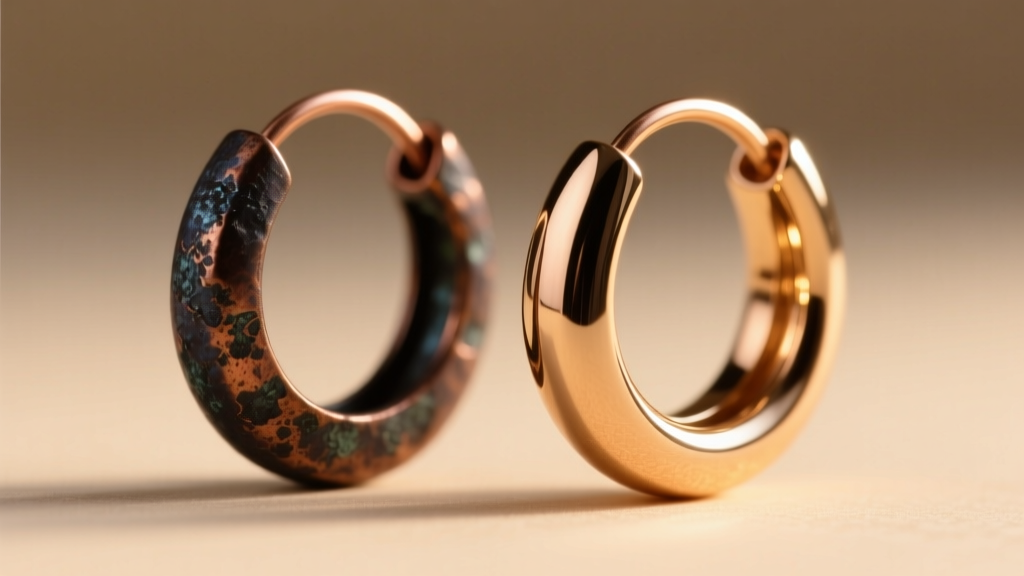
Copper is one of the oldest and most beloved metals used in jewelry, prized for its warm, earthy tones and incredible malleability. However, anyone who owns copper hoop earrings knows that this beautiful metal comes with a significant caveat: rapid oxidation. Without proper care, your bright, sunset-orange hoops can quickly degrade into a dull, muddy brown or even develop a crusty green patina. In this comprehensive 2026 maintenance guide, we dive deep into the metallurgy of copper, providing you with actionable, science-backed methods to clean, polish, and permanently seal your favorite hoops.
The Metallurgy of Copper: Why Your Hoops Tarnish
To effectively clean copper, you must first understand why it tarnishes. Pure copper (Cu) is a highly reactive transition metal. When exposed to atmospheric oxygen, it undergoes a chemical reaction to form cuprous oxide (Cu2O), which manifests as a dull reddish-brown film. As exposure continues, and particularly when introduced to environmental sulfur or the sulfur-containing amino acids in your skin's sweat, it forms cupric sulfide (CuS). This is the dark, black tarnish that makes your hoops look dirty and neglected.
Furthermore, the dreaded 'green skin' phenomenon is not a sign of cheap jewelry or an allergic reaction. It is a simple chelation process. When copper interacts with the lactic acid in your sweat or the acidic pH of your lotions and perfumes, it creates copper salts (like copper chloride). These salts are green, water-soluble, and easily absorbed into the outermost layer of your skin. While completely harmless, it is an aesthetic nuisance that proper cleaning and sealing can easily prevent.
Daily Wear & Prevention Strategies
Prevention is always less labor-intensive than restoration. According to guidelines from the Gemological Institute of America (GIA), the way you put on and store your jewelry drastically impacts its lifespan. For copper hoops, follow these daily protocols:
- The 'Last On, First Off' Rule: Always put your copper hoops on after applying makeup, hairspray, and perfume. The alcohols and aerosols in cosmetics accelerate the breakdown of the copper's surface.
- Friction and Gauge Awareness: Copper is a relatively soft metal. If you wear delicate 20-gauge or 22-gauge continuous hoops, avoid sleeping in them. The pressure can warp the wire and weaken the work-hardened temper of the metal, causing the hoops to lose their perfect circular tension.
- Proper Storage: Store your hoops in an airtight anti-tarnish bag with a silica gel packet. Moisture is the primary catalyst for oxidation; removing it from the storage environment halts the chemical reaction.
The Cleaning Matrix: Choosing the Right Method
Not all tarnish is created equal, and using the wrong cleaning method can strip intentional antiquing or scratch high-polish finishes. Use the matrix below to determine the best approach for your specific pair of copper hoop earrings.
| Tarnish Level | Visual Cue | Recommended Agent | Application Time | Abrasion Risk |
|---|---|---|---|---|
| Light | Slight dulling, loss of mirror shine | Mild Dish Soap & Warm Water | 5 minutes | None |
| Moderate | Brownish-red oxidation (cuprous oxide) | Baking Soda & Water Paste | N/A (Gentle Rub) | Low |
| Heavy | Black, muddy sulfide buildup | Lemon Juice & Salt Acid Bath | 3 to 5 minutes | None (Chemical) |
| Severe | Green, crusty verdigris (carbonate) | White Vinegar & Soft Brush | 10 minutes | Low (Mechanical) |
Method 1: The Lemon & Salt Acid Bath (Heavy Tarnish)
For hoops that have turned completely black, you need an acid to dissolve the cupric sulfide. The combination of citric acid from lemon juice and sodium chloride (table salt) creates a mild, highly effective chemical stripping solution. Note: Do not use this method if your hoops feature intentional dark patinas in their crevices or if they are set with porous gemstones like turquoise or opals.
- Squeeze half a lemon into a glass bowl and stir in one tablespoon of coarse sea salt until dissolved.
- Submerge your copper hoops entirely in the solution.
- Watch the chemical reaction occur. Within 60 to 120 seconds, the black tarnish will dissolve, revealing the bright, raw orange copper beneath.
- Remove the hoops, rinse them thoroughly under distilled water (tap water contains chlorine which can cause new tarnish), and pat dry with a microfiber cloth.
Method 2: Baking Soda Paste (Moderate Oxidation)
If your hoops only have moderate brown dullness and you want to avoid liquid baths, a baking soda paste offers a gentle mechanical abrasion. Mix three parts baking soda with one part water to form a thick paste. Using a soft-bristled baby toothbrush, gently work the paste into the wire of the hoop, paying special attention to the clasp mechanism or the tension gap of continuous hoops. Rinse thoroughly and buff dry. This method is exceptionally safe for 14-gauge and 16-gauge thick statement hoops.
Sealing and Protecting Your Copper Hoops
Cleaning your copper hoop earrings is only half the battle. Because copper is so reactive, it will begin to oxidize the moment it is exposed to air again. To lock in the shine and prevent the 'green skin' effect, you must apply a barrier sealant.
The Copper Development Association notes that commercial lacquers are often used in industrial applications, but for jewelry, you need skin-safe, flexible options. The two gold standards for jewelry sealing are:
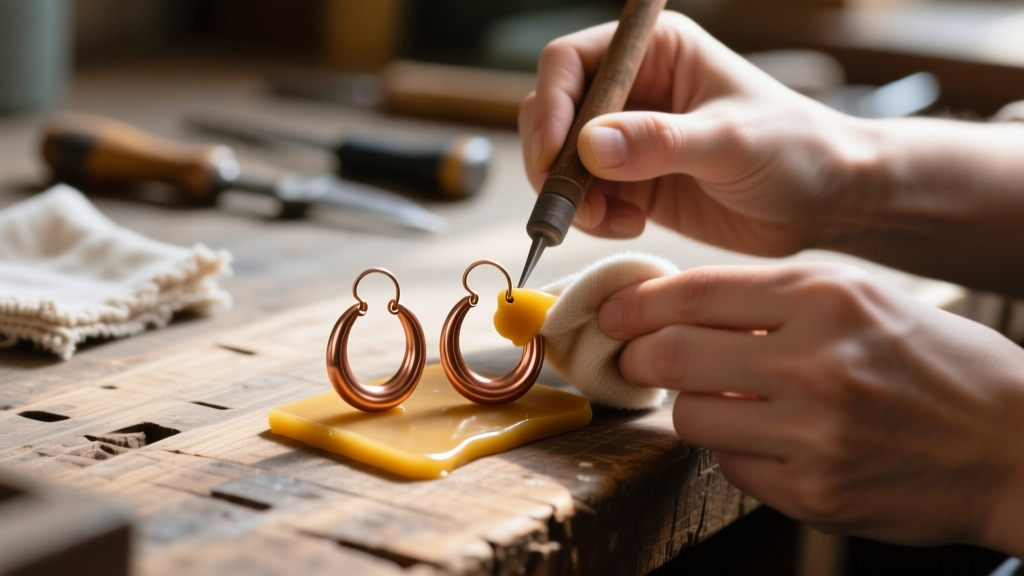
- Renaissance Wax: A microcrystalline wax originally developed by the British Museum for preserving historical artifacts. It is applied with a soft cloth, allowed to dry for 10 minutes, and then buffed to a hard, invisible shell. It requires reapplication every few months.
- ProtectaClear: A polyurethane-based, skin-safe coating that cures into a durable, flexible resin. It is applied via a small brush or by dipping. One coat will protect your hoops from sweat, lotions, and oxygen for up to a year of daily wear. This is the superior choice for continuous hoops that experience high friction against the earlobe.
Troubleshooting Common Copper Earring Issues
Even with meticulous care, copper jewelry presents unique mechanical and chemical challenges. Here is how to troubleshoot the most common issues faced by copper hoop enthusiasts.
Issue 1: Verdigris Buildup in Clasps
If you wear hinged copper hoops or hoops with a latch-back closure, you may notice a powdery green substance building up in the hinge. This is verdigris (copper carbonate), which forms when copper reacts with carbon dioxide and moisture. Verdigris is mildly toxic and can cause contact dermatitis. To remove it, dip a cotton swab in pure white vinegar and carefully swab the hinge. The acetic acid will dissolve the carbonate instantly. Follow up by applying a microscopic drop of mineral oil to the hinge pin to keep it moving smoothly. Never use WD-40, as it contains petroleum distillates that are unsafe for prolonged skin contact.
Issue 2: Wire Softening and Warping
Copper work-hardens when bent, but it can also anneal (soften) if exposed to high heat or simply over-manipulated over time. If your 18-gauge hoops are losing their perfect circle shape, you can re-harden them. Gently twist the hoop along its axis or tap it lightly with a rawhide or nylon jewelry mallet against a steel bench block. This realigns the crystalline structure of the metal, restoring its 'spring' and tension without altering the gauge thickness.
Issue 3: Persistent Green Staining on the Earlobe
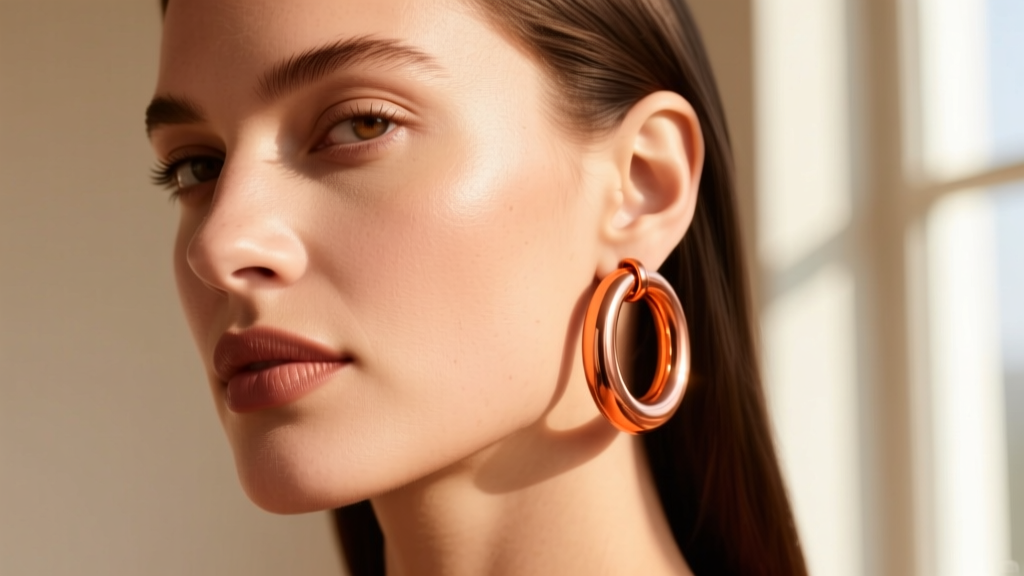
If you have cleaned and sealed your hoops but are still experiencing green staining, the issue is likely micro-abrasions in the sealant at the point where the earring passes through the piercing. The post or the wire entering the ear canal experiences the most friction. For this specific contact point, apply a secondary layer of a dedicated jewelry barrier cream or a thin coat of clear, flexible nail polish strictly to the 5mm section of wire that enters the piercing. Allow it to cure for 24 hours before wearing.
Conclusion
Copper hoop earrings offer an unmatched, organic warmth that precious metals like silver and gold simply cannot replicate. While the maintenance requires a bit more hands-on chemistry than wearing stainless steel or platinum, the reward is a deeply personal, evolving piece of jewelry. By understanding the metallurgy of oxidation, utilizing the correct acid-base cleaning matrix, and properly sealing your hoops with modern polymers or microcrystalline waxes, you can keep your copper hoops shining brilliantly for decades.


