Cabochon Ruby Earrings: The Beginner's Guide to Buying & Care
Discover everything about cabochon ruby earrings. Learn how to grade star rubies, choose the right bezel settings, and avoid treated fakes.

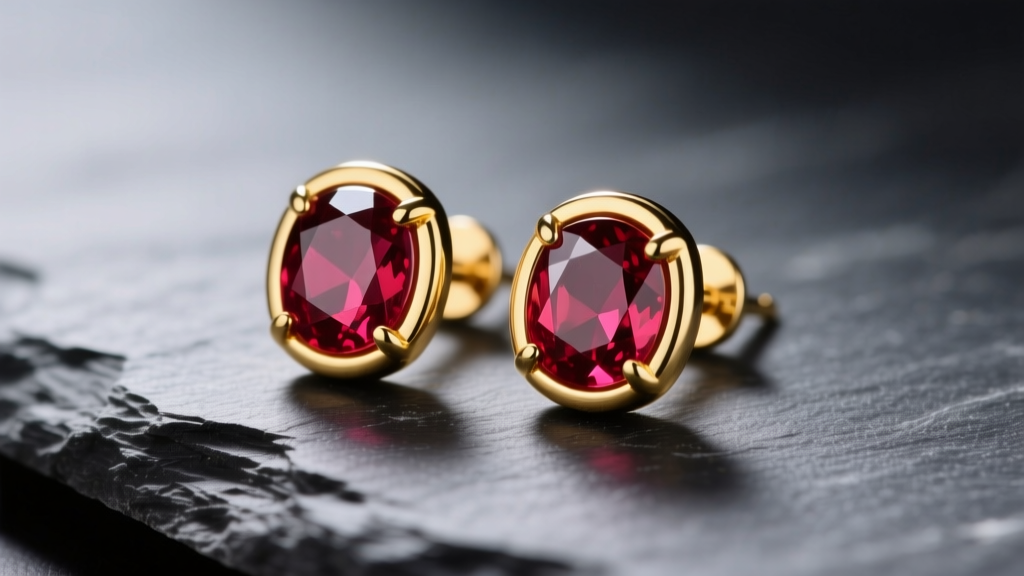
When most people think of ruby earrings, they picture highly faceted, brilliantly sparkling gemstones catching the light. However, the world of gemology offers a completely different, deeply historic aesthetic: the cabochon cut. For beginners stepping into the realm of colored gemstones, cabochon ruby earrings present a unique blend of vintage elegance, fascinating optical phenomena, and distinct buying rules that differ vastly from their faceted counterparts.
Whether you are drawn to the mysterious allure of a star ruby or the smooth, tactile appeal of a deep crimson dome, understanding how to evaluate, set, and care for cabochon rubies is essential. This beginner-friendly guide will walk you through the mineralogy, grading specifics, hardware requirements, and pricing realities of cabochon ruby earrings in 2026, ensuring you make an informed and confident purchase.
The Anatomy of a Cabochon Ruby
Unlike faceted stones that are cut with precise geometric planes to maximize light return and brilliance, a cabochon (often abbreviated as "cab") is shaped and polished into a smooth, rounded dome with a flat or slightly convex base. The term originates from the Old French word caboche, meaning head or dome.
In the context of rubies—which belong to the corundum mineral family and rank a 9 on the Mohs hardness scale—the cabochon cut is not a fallback for "low quality" stones, as some beginners mistakenly believe. Instead, it is a deliberate lapidary choice used to highlight specific optical phenomena that faceting would destroy. According to the Gemological Institute of America (GIA), cabochon cutting is the primary method used to display asterism (the star effect) and chatoyancy (the cat's eye effect) in corundum.
The Magic of Asterism: Star Ruby Earrings
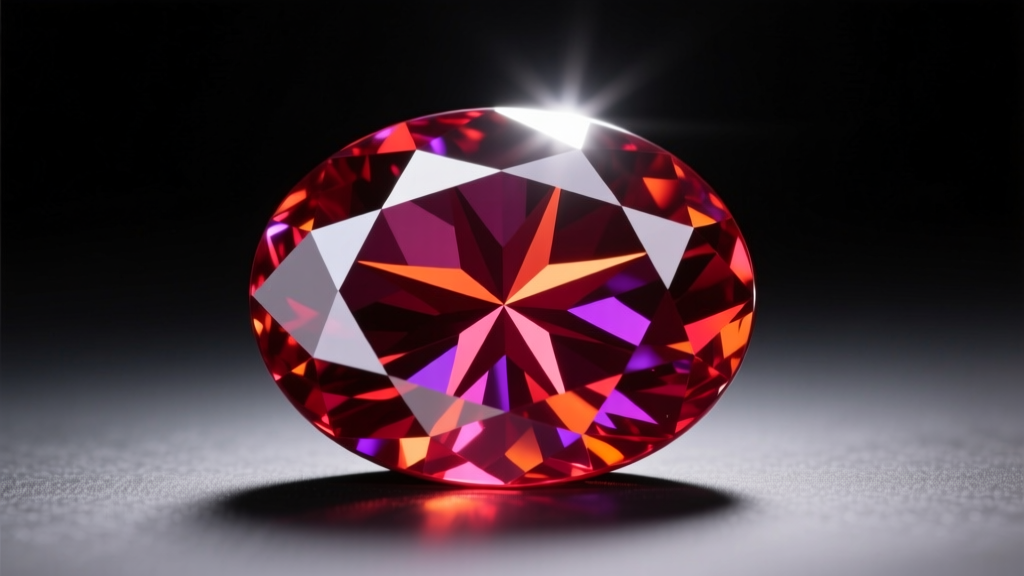
The most highly prized cabochon ruby earrings feature "star rubies." This phenomenon occurs when microscopic, needle-like inclusions of rutile (often called "silk") align in a specific hexagonal pattern within the crystal lattice. When cut into a properly proportioned cabochon and illuminated by a single, direct light source, these needles reflect light to create a sharp, six-rayed star that glides across the dome's surface as the earring moves.
Grading Cabochon Rubies: A Beginner's Framework
Grading a cabochon ruby requires a different eye than grading a faceted diamond or sapphire. While the standard 4Cs (Color, Clarity, Cut, Carat) still apply, their hierarchy shifts dramatically. The American Gem Society (AGS) emphasizes that in cabochons, color saturation and the precision of the dome's symmetry take precedence over flawless clarity.
Faceted vs. Cabochon: What Changes?
| Feature | Faceted Ruby Earrings | Cabochon Ruby Earrings |
|---|---|---|
| Primary Goal | Maximize brilliance and light return | Showcase color depth, asterism, or chatoyancy |
| Clarity Expectation | Eye-clean is highly preferred | Inclusions (rutile silk) are required for star effects |
| Ideal Cut | Oval, cushion, or round brilliant | High, symmetrical dome with a smooth polish |
| Best Setting | Prong settings to allow light entry | Bezel or half-bezel settings to protect the girdle |
| Price Driver | "Pigeon's Blood" color and high clarity | Sharpness of the star and translucency of the body |
Color: While faceted rubies command top dollar for vibrant, fluorescent "pigeon's blood" reds, cabochon rubies often lean slightly darker or more purplish. The ideal cabochon possesses a rich, saturated red that doesn't look black in low light.
Symmetry and Proportion: A well-cut cabochon should have a smooth, continuous curve without flat spots or "shoulders." The base should be flat or only slightly rounded to allow the earring setting to sit flush. If the dome is too shallow, the star effect (if present) will be weak and dispersed; if it is too high, the stone will look bulbous and be difficult to set securely in an earring mount.
Hardware and Settings: Engineering for Durability
Because cabochon rubies lack the protective geometric angles of faceted stones and often feature a smooth, continuous curve, they require specific jewelry engineering to remain secure in earring settings. This is especially critical for earrings, which are subject to hair-snagging, accidental bumps, and the constant pull of gravity.
The Superiority of the Bezel Setting
For cabochon ruby earrings, the bezel setting is the undisputed champion. A full bezel involves a thin rim of metal (usually 14k or 18k gold, or platinum) that wraps entirely around the stone's girdle (its widest edge). This protects the most vulnerable part of the cabochon from chipping. Prong settings, while popular for faceted stones, leave the smooth edges of a cabochon exposed and rely on tension that can easily slip off a polished, domed surface.
Post Gauges and Backings for Heavy Stones
Cabochon rubies are often cut from opaque or heavily included rough, meaning they are frequently cut larger to showcase the star or color. A standard 6x8mm oval cabochon can easily weigh 1.5 to 2.0 carats. This weight creates a forward drag on the earlobe.
- Standard 20-Gauge (0.81mm) Posts: Suitable only for small, lightweight cabochon studs (under 1.0 carat). Always pair with secure screw-backs or silicone ear nuts to prevent drooping.
- 18-Gauge (1.02mm) Posts: The ideal standard for medium-sized cabochon studs and light drop earrings. The thicker metal resists bending under the weight of the dome.
- 16-Gauge (1.29mm) Posts or Wires: Necessary for large, heavy cabochon ruby dangles or chandelier styles to ensure the earring hangs plumb and doesn't irritate the piercing hole.
Pricing Realities and Avoiding Treated Fakes
Navigating the pricing of cabochon ruby earrings can be treacherous for beginners. The market is currently flooded with treated stones that mimic the look of high-end natural rubies but lack the durability and intrinsic value.
Natural vs. Treated vs. Synthetic
1. Lead-Glass Filled (Composite) Rubies: This is the most common trap for beginners. Low-quality, heavily fractured ruby rough is infused with lead-glass to improve transparency and color. While they look like bright red cabochons, they are extremely fragile. The glass can melt or shatter if exposed to a jeweler's torch or even harsh ultrasonic cleaners. These earrings typically retail for $15 to $50 and should be avoided for everyday wear.
2. Natural Opaque Cabochons: Non-star, opaque natural rubies with visible inclusions are affordable and beautiful for a rustic or vintage look. Expect to pay between $50 and $150 per carat. A pair of 2-carat earrings might cost $200 to $400, depending on the gold setting.
3. Natural Star Rubies: The price of a natural star ruby cabochon is dictated by the sharpness of the star, the translucency of the body, and the richness of the red color. A sharp, well-defined star in a semi-translucent body commands premium prices, ranging from $1,000 to over $10,000 per carat. Beware of synthetic star rubies (created via the Linde star process), which have unnaturally perfect, bright stars that look painted on. These are worth only a fraction of natural stones.
Care and Maintenance for Cabochon Earrings
While corundum is incredibly hard (second only to diamond), the inclusions within a cabochon ruby can make it susceptible to thermal shock or chemical damage. Furthermore, the high polish of the dome can be dulled by abrasive contact.
- Cleaning: Never use ultrasonic or steam cleaners on cabochon rubies, especially if you are unsure whether the stone has been fracture-filled. The safest method is a bowl of lukewarm water with a drop of mild, phosphate-free dish soap. Use a baby-hair brush to gently sweep around the bezel setting where lotion and skin cells accumulate.
- Storage: Because rubies can easily scratch softer gemstones (like opals, pearls, or gold metal itself), store your cabochon ruby earrings in a dedicated, fabric-lined compartment or a soft microfiber pouch.
- Wear Order: Always put your earrings on after applying hairspray, perfumes, and cosmetics. The polished surface of a cabochon can attract oily residues, which will temporarily mask the stone's natural luster and any asterism present.
Final Thoughts for the Aspiring Collector
Cabochon ruby earrings offer a sophisticated departure from the conventional sparkle of faceted gems. They are tactile, historic, and visually captivating. By prioritizing symmetrical domes, insisting on protective bezel settings, matching the post gauge to the stone's weight, and demanding full disclosure regarding lead-glass treatments, you can confidently build a jewelry collection that is both beautiful and structurally sound. Whether you are hunting for a subtle pair of opaque crimson studs or investing in a rare, translucent star ruby drop, the cabochon cut remains a timeless testament to the natural artistry of the earth.


