The Ultimate Care Guide for Heart Hoop Earrings Gold
Discover expert cleaning and maintenance tips for heart hoop earrings gold styles. Learn how to polish, store, and protect your 14k and 18k gold hoops.

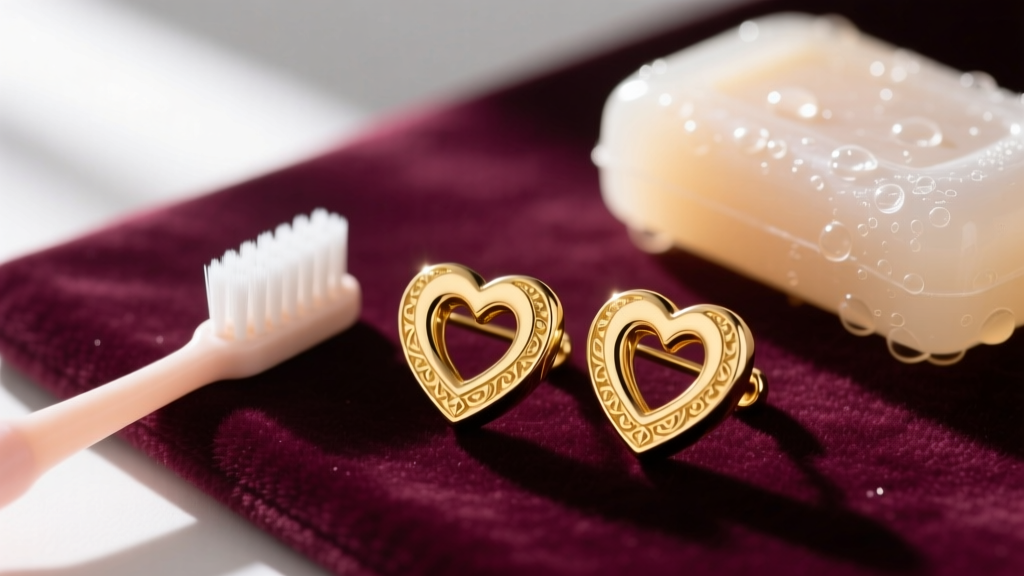
Heart hoop earrings gold designs are a timeless staple in any jewelry collection, blending romantic silhouettes with everyday versatility. However, the intricate curves of the heart shape and the crevices of the hoop hinge make them magnets for sebum, dead skin cells, and environmental pollutants. Proper maintenance is not just about keeping them shiny; it is about preserving the structural integrity of the gold alloy and the mechanical function of the clasp.
Understanding Your Gold: 14k vs. 18k vs. Vermeil
Before applying any cleaning solution, you must identify the exact metallurgical composition of your earrings. Pure 24k gold is rarely used for hoops because it is too malleable and will easily bend out of shape. Instead, jewelers use alloys.
- 14k Gold (58.5% Pure Gold): The industry standard for daily-wear hoops. The higher percentage of alloy metals (like copper and silver) provides excellent tensile strength, making the thin wire of the hoop resistant to bending.
- 18k Gold (75% Pure Gold): Offers a richer, deeper yellow hue but is noticeably softer. The flat, polished surfaces of an 18k heart face are highly susceptible to micro-scratches from improper cleaning tools.
- 14k Rose Gold: Achieves its pink hue through a higher copper content. Copper is highly reactive to moisture and salts, meaning rose gold heart hoops require more frequent drying and cleaning to prevent localized oxidation.
- Gold Vermeil: According to the Federal Trade Commission (FTC), vermeil must be a sterling silver base plated with at least 2.5 microns of gold. Warning: Never use ultrasonic cleaners or harsh polishing cloths on vermeil, as you will strip the gold layer entirely.
The Step-by-Step Lukewarm Cleaning Protocol
For solid 14k and 18k gold heart hoops, the safest and most effective cleaning method relies on gentle surfactants and distilled water. Tap water contains chlorine and dissolved minerals that can leave microscopic water spots or interact with the copper alloys in your gold over time.
- Prepare the Solution: Mix one cup of lukewarm distilled water with three drops of pH-neutral dish soap (such as original Dawn). Avoid soaps with added moisturizers or citrus extracts, which can leave a filmy residue.
- The Soak: Submerge your earrings for exactly 10 to 15 minutes. This softens hardened sebum and cosmetic buildup trapped in the inner curve of the heart.
- Agitation: Use a brand-new, extra-soft baby toothbrush. Gently brush the front, back, and especially the hinge area. Never use a standard adult toothbrush, as the bristles are stiff enough to inflict micro-scratches on high-polish gold.
- Rinse and Dry: Rinse under a gentle stream of distilled water. Pat dry with a lint-free microfiber cloth. Air-drying is not recommended, as it can lead to mineral spotting.
Polishing vs. Cleaning: Knowing the Difference
It is vital to understand that cleaning removes foreign debris, while polishing removes a microscopic layer of the metal itself to eliminate scratches. For 18k gold heart hoops, frequent polishing is detrimental. Every time you use an abrasive jeweler's cloth or a rouge compound, you are stripping away a tiny fraction of the gold.
If your hoops have developed light surface scratches from daily wear, you can use a specialized, non-abrasive gold polishing cloth (impregnated with gentle jeweler's rouge) no more than once every six months. Rub the cloth in a single direction along the curve of the heart, rather than in circular motions, to maintain a uniform finish. Never use these treated cloths on the hinge mechanisms, as the rouge can build up inside the joint and cause the clicker to seize.
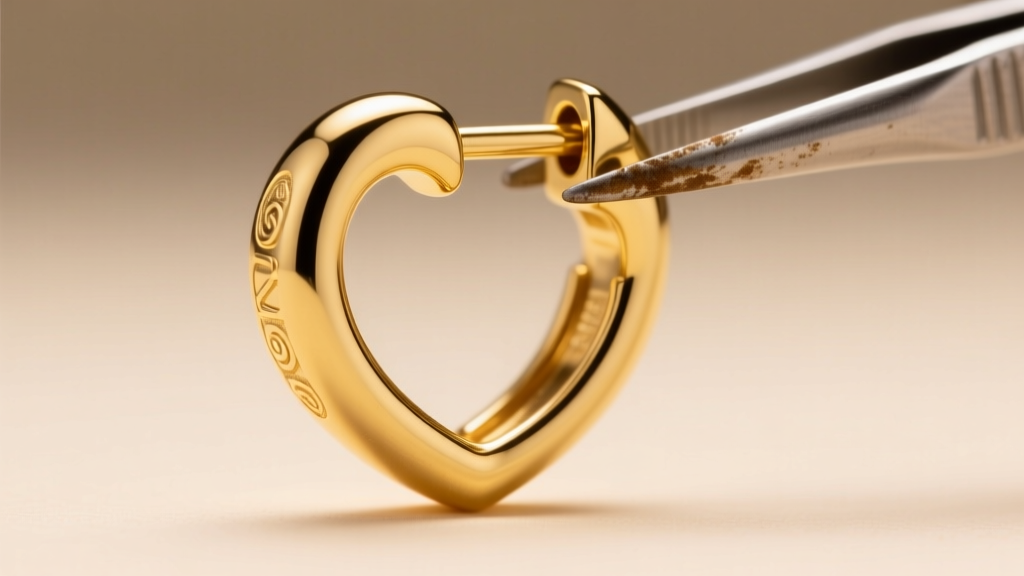
Structural Integrity: Hinges, Clickers, and Gauge Sizes
The most common failure point for any hoop earring is the closure mechanism. Heart hoops typically utilize either a saddle hinge or a continuous clicker wire. Most standard lobe heart hoops are crafted in 18-gauge (1.0mm) or 16-gauge (1.2mm) thicknesses to ensure the wire glides smoothly through the piercing without causing irritation.
If your clicker hinge stops making that satisfying snap or feels loose, it is almost always due to microscopic debris lodged in the joint. Do not use a metal pin to clear it, as this will gouge the soft gold. Instead, use a wooden toothpick or a blast of compressed air to dislodge the grit. The Jewelers of America recommends checking the tension of your hoop clasps every three months to prevent accidental loss.
Daily Wear and Chemical Exposure Risks
Gold is a noble metal, meaning it does not rust or tarnish in its pure form. However, the alloy metals mixed into 14k and 18k gold are highly reactive to specific household and environmental chemicals. Understanding these risks is crucial for maintaining the structural integrity of your heart hoops.
| Chemical Agent | Effect on Gold Alloys | Risk Level |
|---|---|---|
| Chlorine (Pools/Hot Tubs) | Causes stress corrosion cracking, making the hoop wire brittle and prone to snapping at the hinge. | Severe |
| Sulfur (Hot Springs/Pollution) | Reacts with copper and silver alloys, causing a dark, tarnished film on the gold surface. | Moderate |
| Retinol and AHA Skincare | Builds up in the crevices of the heart design, dulling the finish and potentially irritating the earlobe. | Low-Moderate |
| Hairspray and Perfume | Creates a sticky, invisible film that attracts dust and dead skin cells. | Low |
Proper Storage Solutions to Prevent Scratching
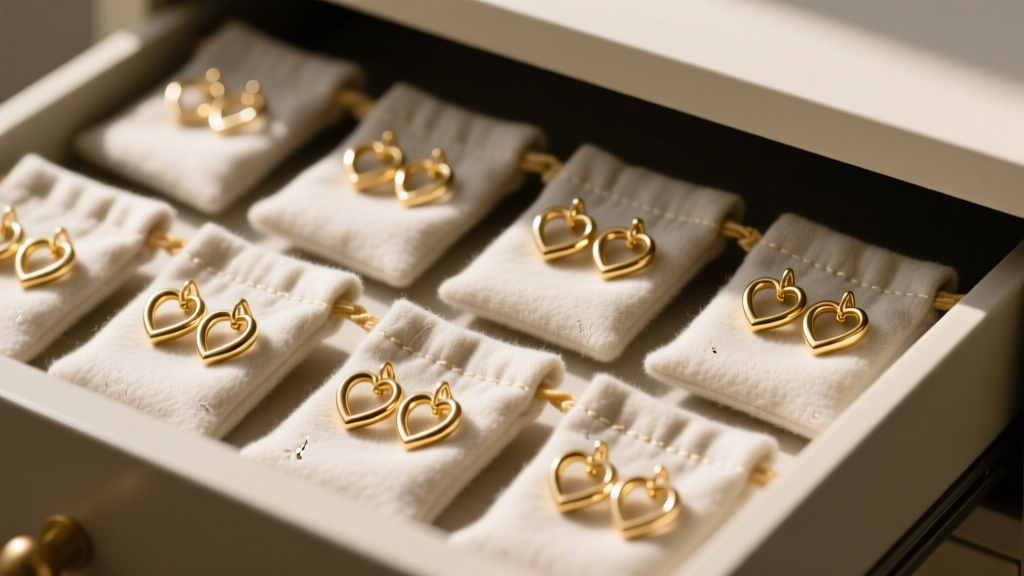
How you store your heart hoop earrings gold pieces is just as important as how you clean them. The pointed cleft and bottom tip of the heart shape act as natural scratchers. If you toss multiple pairs into a single jewelry box compartment, the harder gold alloys will easily scratch softer pieces, and the heart points can snag on delicate chains or gemstone settings.
Store each pair in its own individual anti-tarnish flannel pouch. These pouches are treated with microscopic silver particles that absorb sulfur and other airborne pollutants before they can reach your jewelry. For an extra layer of protection, place a small silica gel packet in your storage drawer to control ambient humidity, which accelerates the oxidation of the copper alloys in your gold.
When to Seek Professional Jewelry Repair
While routine cleaning can be done at home, certain maintenance tasks require a professional jeweler. If your heart hoops feature pavé diamonds or gemstone accents along the curve, the tiny prongs holding the stones can wear down or snag on clothing. According to the Gemological Institute of America (GIA), you should have prong-set jewelry professionally inspected and tightened at least once a year.
Additionally, if the hoop wire becomes bent or the solder joint at the hinge shows signs of hairline cracking, stop wearing them immediately. A jeweler can easily re-solder the joint and re-round the hoop on a steel mandrel, restoring the perfect circular geometry and ensuring the earring remains secure in your lobe for years to come.


