The Ultimate Cleaning Guide for Kate Spade Blue Earrings
Learn expert cleaning, storage, and maintenance tips for Kate Spade blue earrings. Protect gold plating and enamel from tarnish and damage.

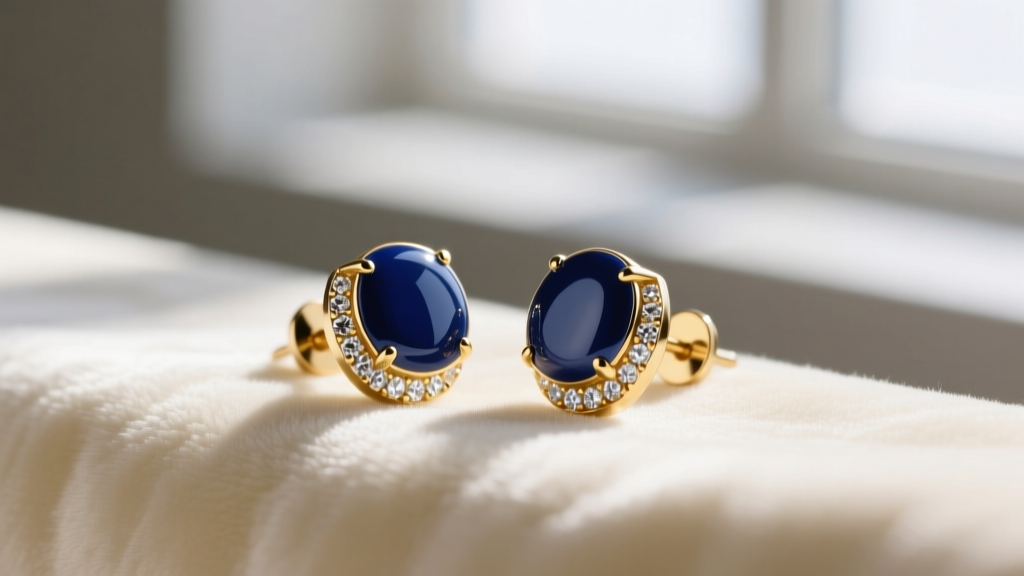
Kate Spade New York has built a legacy on playful sophistication, and their blue earrings—ranging from deep navy spade motifs to vibrant turquoise initial studs—are among their most sought-after accessories. However, maintaining the brilliant color and metallic luster of these pieces requires specific, knowledgeable care. As of 2026, the brand continues to utilize advanced cold enamel resins and gold-tone plating over brass bases. While beautiful, these materials are highly susceptible to chemical degradation, micro-scratches, and galvanic corrosion if cleaned improperly.
This comprehensive guide provides actionable, expert-level maintenance protocols to ensure your Kate Spade blue earrings remain pristine for years to come.
The Anatomy of Kate Spade Blue Earrings
Before applying any cleaning solution, it is critical to understand the material composition of fashion jewelry. According to the Jewelers of America, fashion jewelry requires vastly different care than fine solid gold or platinum pieces. Kate Spade earrings typically feature three distinct material layers:
- The Base Metal: Usually a brass alloy (copper and zinc). Brass is durable but highly reactive to sulfur and moisture, which causes tarnish and the dreaded 'green skin' effect if the outer plating wears away.
- The Plating: A micro-layer of 12k or 14k gold, typically ranging from 0.5 to 1.5 microns in thickness. This plating is soft and easily stripped by abrasive cleaners.
- The Blue Colorant: Most Kate Spade blue pieces utilize 'cold enamel' (an epoxy-based resin) rather than vitreous enamel (fused glass). Cold resin provides brilliant, opaque color but is vulnerable to UV yellowing, acetone dissolution, and thermal shock.
The Golden Rule: What to Strictly Avoid
Many mainstream jewelry cleaning hacks will permanently ruin the resin enamel and gold plating on your earrings. Never use the following:
1. Ultrasonic Cleaners
Ultrasonic waves create microscopic cavitation bubbles that implode against the jewelry surface. While excellent for solid diamonds, these shockwaves will shatter cold enamel and cause cubic zirconia accents to loosen from their adhesive settings.
2. Baking Soda and Toothpaste
Baking soda has a Mohs hardness of roughly 9, and toothpaste contains silica abrasives. Gold plating is incredibly soft (Mohs 2.5 to 3). Scrubbing with these household items will instantly scour the gold plating off the brass base, leaving dull, tarnish-prone patches.
3. Alcohol, Acetone, and Perfume
Solvents like rubbing alcohol, nail polish remover, and the ethanol found in hairsprays will chemically break down the epoxy resin used in the blue enamel, causing it to cloud, soften, or peel away from the metal backing.
Step-by-Step Cleaning Protocol
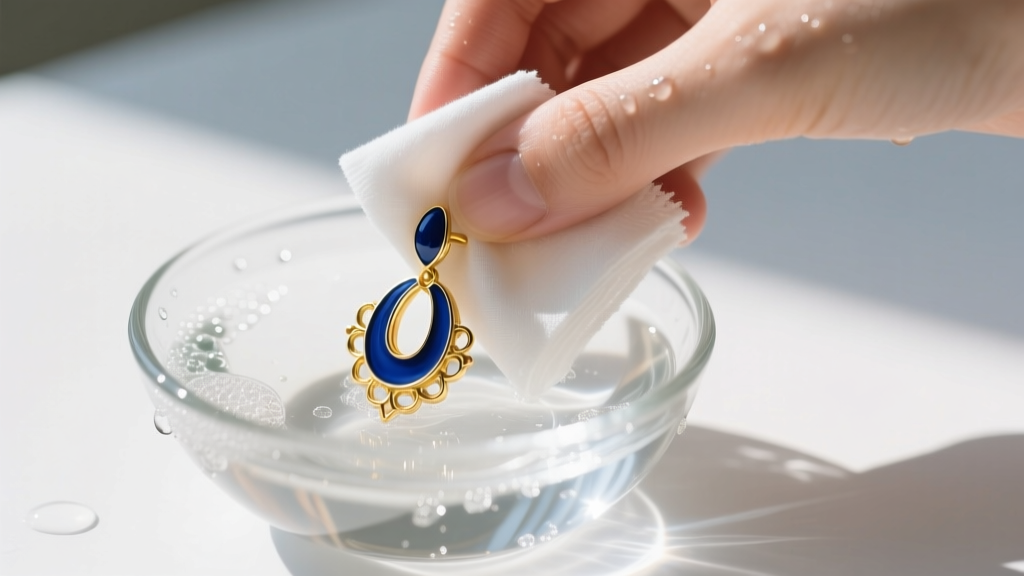
To safely remove sebum, dead skin cells, and environmental dust without compromising the gold micron layer, follow this precise cleaning routine:
Step 1: Prepare a pH-Neutral Solution
Mix two drops of pH-neutral, fragrance-free dish soap (such as original Dawn) into eight ounces of lukewarm distilled water. Tap water contains chlorine and trace minerals that can leave hard water spots on the enamel and accelerate brass oxidation.
Step 2: The Gentle Agitation
Dip an extra-soft baby toothbrush (with bristles no thicker than 0.1mm) into the solution. Gently sweep the bristles over the cubic zirconia accents and the recessed areas of the gold plating. Do not scrub the blue enamel directly; instead, let the soapy water sit on the enamel for 30 seconds to break down oils.
Step 3: Rinsing and Drying
Rinse briefly under a slow stream of distilled water. Immediately pat the earrings dry with a lint-free microfiber cloth. Never allow fashion jewelry to air dry, as water pooling near the earring post can cause localized rust or brass corrosion.
Preserving the Blue Enamel Finish
Cold enamel is essentially a hardened polymer. While it mimics the look of glass, it lacks the scratch resistance of vitreous enamel. To protect the vibrant blue hue, you must mitigate two primary threats:
- UV Degradation: Prolonged exposure to direct sunlight can cause the blue pigments within the epoxy resin to fade or take on a yellowish tint. Store your earrings away from sunlit vanity tops.
- Thermal Shock: Extreme temperature changes can cause the brass base to expand and contract at a different rate than the resin, leading to micro-cracking in the enamel. Remove your earrings before entering saunas, hot tubs, or taking hot showers.
For routine maintenance between deep cleans, simply wipe the enamel with a dry, untreated jewelry polishing cloth to remove surface oils. The Gemological Institute of America (GIA) notes that untreated microfiber is the safest mechanical cleaning method for delicate organic and synthetic gem materials.
Strategic Storage for Fashion Jewelry
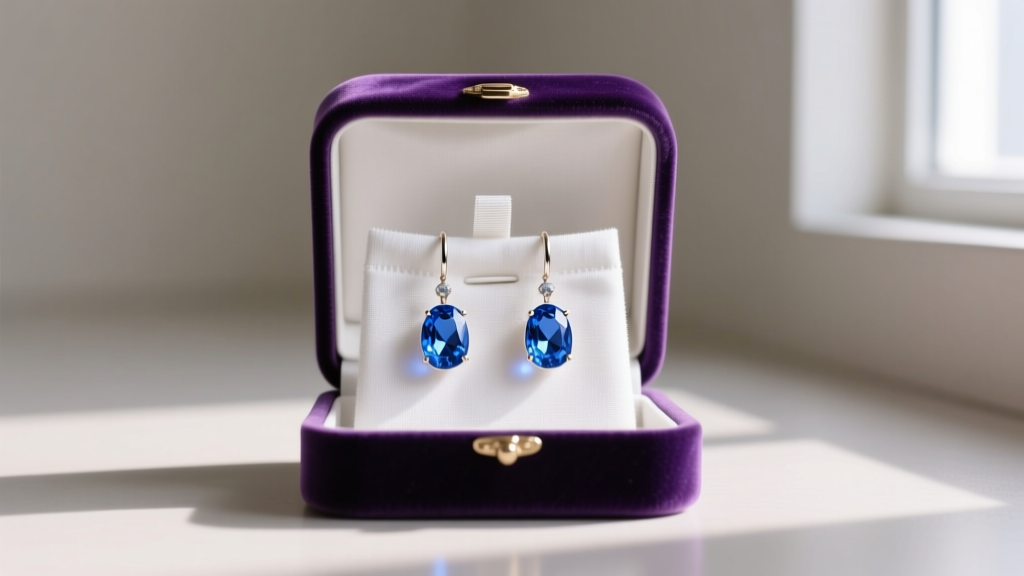
Proper storage is arguably more important than cleaning when it comes to gold-plated brass jewelry. The copper within the brass alloy reacts with sulfur compounds in the ambient air, leading to dark, unsightly tarnish. Implement the following storage framework:
- Isolate the Pieces: Never toss multiple earrings into a single compartment. The gold plating can scratch against adjacent metal zippers, clasps, or other jewelry. Use individual soft flannel pouches.
- Deploy Anti-Tarnish Strips: Place 3M anti-tarnish tabs inside your jewelry box or storage pouches. These strips absorb airborne sulfur and hydrogen sulfide, effectively neutralizing the chemical precursors to brass tarnish.
- Control Humidity: High humidity accelerates galvanic corrosion. If you live in a humid climate, store your Kate Spade earrings in an airtight acrylic organizer with a small, replaceable silica gel desiccant packet to maintain a moisture-free microclimate.
Troubleshooting Common Wear Issues
Even with meticulous care, daily-wear fashion jewelry will eventually show signs of use. Use this diagnostic table to address common issues with your Kate Spade blue earrings safely.
| Issue | Root Cause | Expert Solution |
|---|---|---|
| Skin turning green | Gold plating has worn thin, exposing reactive copper/brass to skin acids. | Apply a thin coat of clear, hypoallergenic nail polish to the earring posts and backing as a temporary barrier. |
| Cloudy or dull enamel | Micro-scratches from improper cleaning or contact with hard surfaces. | Gently buff with a jeweler's rouge cloth. Avoid liquid polishes, which can seep into cracks and stain the resin. |
| Loose cubic zirconia | Adhesive failure due to heat, oils, or mechanical impact. | Do not use superglue. Use a precision applicator with G-S Hypo Cement, wiping away excess immediately with a damp swab. |
| Dark tarnish on gold | Sulfur exposure and oxidation of the base metal bleeding through micro-pores. | Wipe gently with a specialized gold-plating polishing cloth. Do not use silver dip solutions, which will strip gold. |
When to Seek Professional Jewelry Repair
While home maintenance can extend the life of your earrings, some damage requires professional intervention. If the gold plating has completely worn off the brass base, a professional jeweler can perform an electroplating service to restore the 14k gold layer. Similarly, if a large chip has occurred in the blue enamel, a bench jeweler specializing in resin restoration can color-match and fill the void using UV-cured jewelry enamels. Attempting to paint over chipped enamel with craft acrylics or standard nail polish will result in a visibly uneven texture and further degrade the underlying metal.
By respecting the material science behind Kate Spade's designs and adhering to these strict, non-abrasive cleaning protocols, your blue earrings will retain their iconic, vibrant charm and structural integrity for countless seasons to come.


