Dangling Silver Earrings: 2026 Trend Analysis & Styling Guide
Discover the top 2026 trends for dangling silver earrings. Explore styling tips, sterling silver grades, and face-shape pairings in our expert guide.

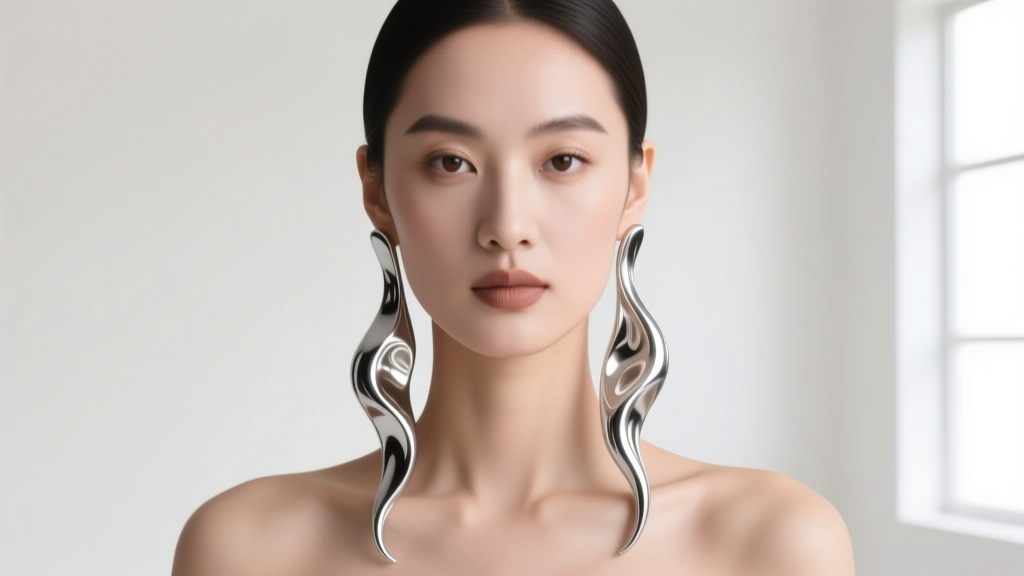
The 2026 Shift: Why Dangling Silver Earrings Are Dominating
As we navigate the 2026 jewelry landscape, the industry is experiencing a definitive pivot away from the static, ultra-minimalist studs of the early 2020s. Today, kinetic energy and fluid movement are at the forefront of ear styling, placing dangling silver earrings squarely in the spotlight. This resurgence is not merely a cyclical fashion repeat; it is driven by a consumer demand for versatile, high-impact pieces that transition seamlessly from remote-work video calls to evening events. According to trend forecasters, the visual appeal of silver—specifically its high-reflectivity and cool undertone—makes it the optimal metal for capturing light in motion.
Material Deep Dive: .925 Sterling vs. .999 Fine Silver
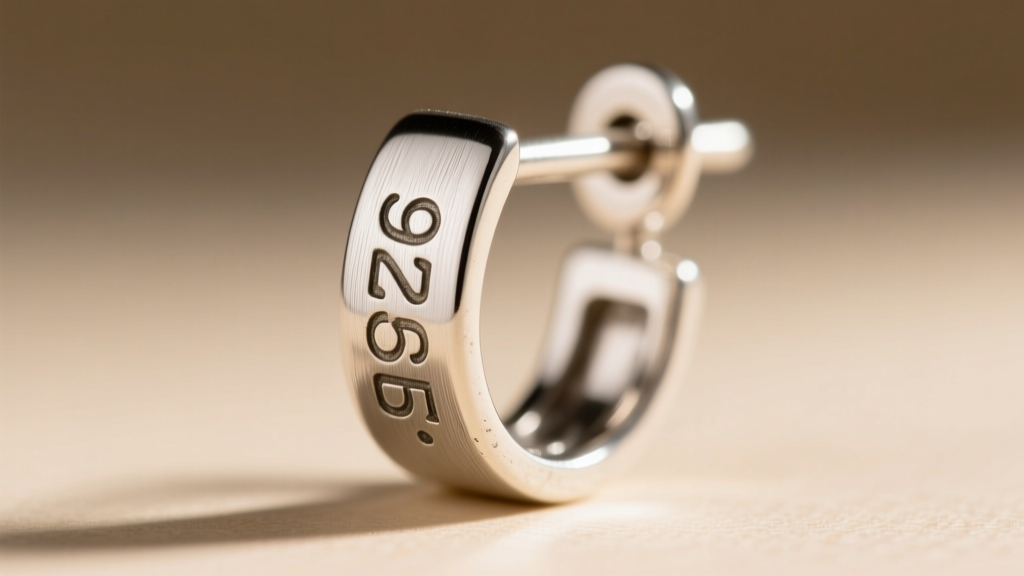
When investing in dangling silver earrings, understanding metallurgy is non-negotiable. Pure silver, also known as .999 fine silver, is exceptionally lustrous but far too malleable for structural jewelry applications. A dangle earring crafted from fine silver will bend under its own weight, and the wire loop will quickly warp, leading to inevitable loss. Therefore, the industry standard remains .925 sterling silver, an alloy comprising 92.5% pure silver and 7.5% secondary metals, typically copper. The Gemological Institute of America (GIA) notes that this specific ratio provides the necessary tensile strength to support the dynamic movement of dangle silhouettes without compromising the metal's intrinsic hypoallergenic properties.
Tarnish Resistance and Argentium Innovations
The primary failure mode of traditional .925 sterling silver is oxidation. The copper alloy reacts with sulfur and moisture in the air, creating a dark silver sulfide layer. In 2026, we are seeing a massive shift toward Argentium silver. By replacing a portion of the copper with germanium, Argentium (.935 or .960 grades) forms a transparent, self-healing oxide layer that drastically slows tarnishing. For consumers who wear their dangling silver earrings daily and lack the time for constant polishing, Argentium is a superior, albeit slightly more expensive, investment.
Trend Report: Top 3 Silhouettes for Dangling Silver Earrings
- Liquid Metal & Molten Forms: Inspired by surrealist art, these dangles feature asymmetrical, flowing shapes that mimic melting silver. They rely on high-polish finishes to create an optical illusion of perpetual motion.
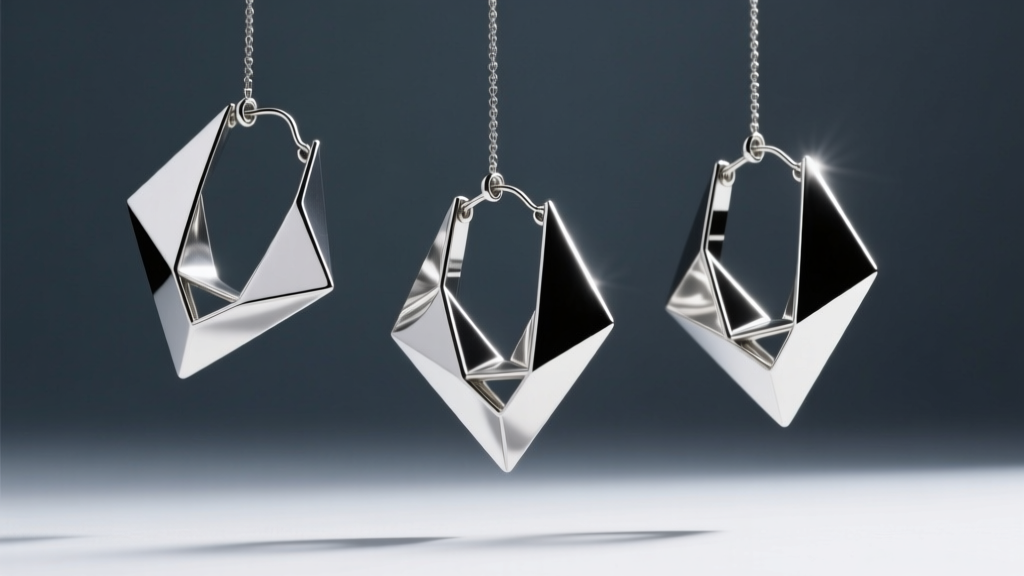
- Geometric Articulation: Hinged, multi-segmented earrings that move independently. Think Art Deco meets modern engineering. Designers are utilizing 3D CAD modeling to ensure the center of gravity sits perfectly below the earlobe, preventing the earring from awkwardly tilting forward.
- Mixed-Metal Inlays: While silver remains the dominant base, 2026 trends heavily feature flush-set 14k yellow gold accents or niello (a black metallic alloy) inlays to create high-contrast, graphic patterns on elongated silver drops.
Face Shape & Proportion Matrix
Selecting the correct length and volume of dangling silver earrings is critical for facial balancing. The wrong proportion can exaggerate features you may wish to soften. Use the matrix below as a definitive styling framework:
| Face Shape | Ideal Dangle Length | Width to Avoid | Recommended Silhouette |
|---|---|---|---|
| Round | 2.5 - 3.5 inches | Wide hoops or circular clusters | Linear drops, slender chains |
| Square | 1.5 - 2.5 inches | Sharp geometric angles | Curved teardrops, fluid waves |
| Heart | 2.0 - 3.0 inches | Top-heavy triangular shapes | Bottom-weighted chandeliers |
| Oval | Any length | None (highly versatile) | Experiment with bold, avant-garde shapes |
Lobe vs. Cartilage: Structural Considerations for Dangles
A common styling error is attempting to place heavy dangling silver earrings in cartilage piercings (such as the helix or forward helix). Cartilage lacks the dense, fibrous connective tissue found in the earlobe, making it highly susceptible to migration, tearing, and the dreaded cheese-cutter effect when subjected to the pendulum weight of a dangle. For cartilage placements, restrict your dangles to ultra-lightweight threadless ends or 22-gauge (0.64mm) micro-chains that weigh less than 2 grams. For standard lobe piercings, the tissue can comfortably support 18-gauge (1.02mm) or even 16-gauge (1.29mm) statement dangles weighing up to 15 grams per ear.
Hardware & Failure Modes: What to Check Before Buying
The structural integrity of dangling silver earrings relies entirely on the clasp mechanism and wire gauge. The traditional French wire (shepherd hook) is elegant but poses a high risk of loss, especially when removing winter scarves or headphones. If you opt for French wires, ensure they are paired with secure silicone or metal friction backs.
The Leverback Advantage
For heavy or high-value dangles, the leverback clasp is the undisputed gold standard. A hinged wire loops completely through the piercing and snaps securely into a catch mechanism. When inspecting a leverback, check the tension of the hinge; it should require a deliberate, firm push to close. If it snaps shut too easily, the internal spring mechanism is likely weak and will fail within months. Furthermore, verify that the wire gauge of the clasp matches the post—many mass-market brands use a sturdy 20-gauge (0.81mm) post but solder on a flimsy 22-gauge catch loop, creating a critical point of failure.
Price Tiers and Brand Benchmarks
Navigating the market for dangling silver earrings requires understanding what you are actually paying for. Here is a breakdown of the 2026 pricing landscape:
- Fast Fashion & Mass Market ($20 - $60): Typically .925 sterling silver with thin rhodium plating to prevent immediate tarnish. Hardware is often lightweight and hollow. Expect a lifespan of 1-2 years with regular wear.
- Mid-Tier Artisan & Contemporary ($80 - $250): Solid .925 or Argentium silver. Features superior finishing techniques like tumble-polishing and secure, soldered jump rings. When shopping in this tier, always ask the retailer if the jump rings are soldered; open jump rings are a hallmark of cost-cutting and will eventually warp open under the pendulum stress of a dangle.
- High-End Designer & Heritage ($400 - $1,200+): You are paying for brand prestige, complex articulation engineering, and often the integration of semi-precious stones. The silver is treated as a canvas for high jewelry techniques rather than just a base metal.
"The true mark of quality in a dangling silver earring isn't just the purity of the alloy, but the engineering of the jump rings. If the rings connecting the dangle segments are not perfectly flush and soldered, the piece will inevitably catch on hair and pull apart." — Master Jeweler & Metallurgist, The Silver Institute archives.
Ultimately, the 2026 revival of dangling silver earrings is a testament to the metal's enduring versatility. By prioritizing proper alloy selection, understanding the biomechanics of your specific piercing, and choosing secure hardware, you can invest in kinetic silver pieces that will define your personal style for decades to come.


