How to Clean & Care for Leopard Print Hoop Earrings
Discover expert cleaning and maintenance tips for leopard print hoop earrings. Learn how to protect enamel, acrylic, and resin prints from fading and damage.

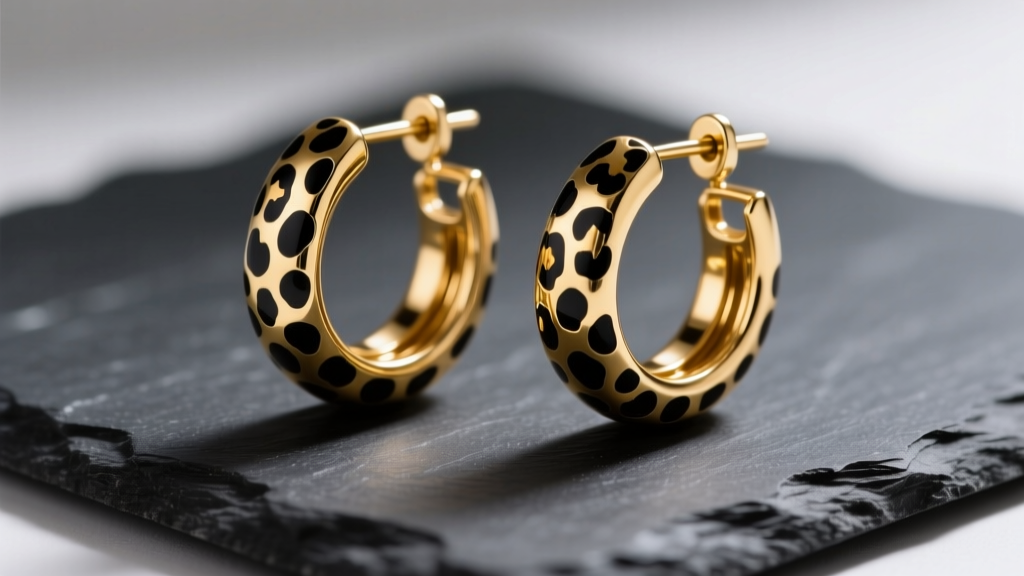
The Material Breakdown: What Are Your Leopard Print Hoops Made Of?
Leopard print hoop earrings are a bold, enduring staple in jewelry boxes worldwide. However, maintaining the high-contrast rosette patterns requires a nuanced understanding of the materials involved. In 2026, manufacturing techniques for animal print jewelry have diversified, meaning a one-size-fits-all cleaning approach will quickly ruin your favorite pieces. Before applying any cleaning solution, you must identify the base material and the print application method.
According to the Gemological Institute of America (GIA), the interaction between cleaning agents and jewelry surfaces is highly dependent on the material's porosity and hardness. Fashion hoops typically utilize one of three material combinations to achieve the leopard print effect: cold enamel over brass, UV-printed acrylic, or pigmented cast resin. Each has distinct failure modes, ranging from thermal shock cracking to photo-oxidation.
| Base Material | Print Technique | Primary Failure Mode | Safe Cleaning Agent |
|---|---|---|---|
| Brass/Stainless Steel | Cold Enamel (Epoxy) | Chipping at the bezel edge | Mild dish soap + lukewarm water |
| Acrylic Polymer | UV Surface Print | Micro-scratching & print lift | Distilled water + microfiber |
| Cast Resin | Pigment Suspension | Yellowing from UV exposure | Isopropyl alcohol (70% max) |
Step-by-Step Cleaning Protocols by Material
Enamel and Metal Base Hoops
Cold enamel, essentially a hardened epoxy resin, is the most common medium for leopard print metal hoops. Unlike vitreous (glass) enamel, cold enamel is sensitive to extreme temperatures and harsh solvents. Never use hot water; thermal shock can cause the metal base to expand faster than the enamel, resulting in micro-fractures known as crazing. Always use water at or below 85°F (29°C).
Mix a few drops of pH-neutral dish soap (like Dawn Free & Clear) into a bowl of lukewarm distilled water. Submerge the hoops for no more than three minutes to loosen sebum and cosmetic buildup. Use an extra-soft baby toothbrush with 0.1mm bristles to gently sweep the crevices where the black rosettes meet the gold or silver base. Rinse with distilled water to prevent hard water spots, and immediately pat dry with a lint-free microfiber cloth. Air drying is discouraged, as trapped moisture near the hinge can accelerate oxidation on brass bases.
Acrylic and Resin Hoops
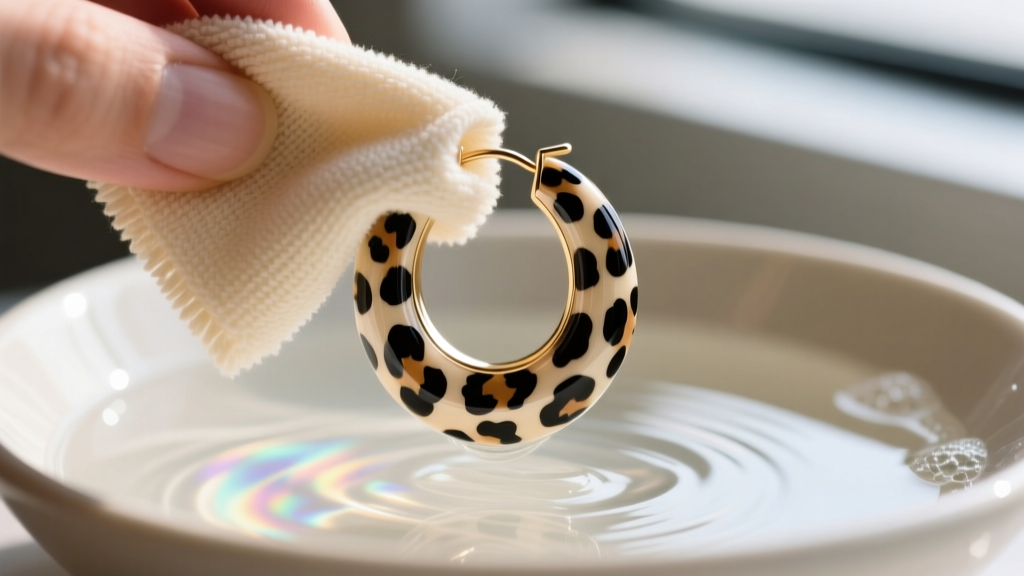
Acrylic and resin hoops offer a lightweight alternative for oversized leopard print styles, but they are notoriously prone to micro-scratches. The Mohs hardness of acrylic is roughly 3.0, meaning even a standard jewelry polishing cloth can leave microscopic abrasions that cloud the transparent or translucent base, making the leopard print look muddy.
For UV-printed acrylic, avoid alcohol-based cleaners entirely. Isopropyl alcohol degrades the polymer chains over time, leading to a frosted appearance and causing the surface-level leopard print to peel. Instead, use a damp microfiber cloth with a drop of mild soap, wiping in a single direction rather than in circles. For cast resin hoops where the pigment is suspended within the material, a quick wipe with 70% isopropyl alcohol is safe and effective for disinfecting, provided you rinse it off immediately.
Preserving Hoop Tension and Hinge Integrity
The structural integrity of a hoop earring is just as critical as its surface print. Leopard print hoops often feature hinged clicker closures or continuous friction posts. The gauge (thickness) of the wire dictates how well the hoop maintains its circular tension. Standard lobe hoops are usually 20-gauge (0.81mm), while cartilage-friendly huggies are often 18-gauge (1.02mm) or 16-gauge (1.29mm).
If your hoop loses its perfect circle, the post will no longer align with the catch groove, leading to lost earrings. Never pull a hinged hoop open by the post; this bends the wire and weakens the solder point at the hinge. Always open clicker hoops by gripping the hinged segment itself. Over time, the tiny steel pin inside the hinge barrel accumulates a black sludge of dead skin cells, sebum, and metal dust. To clear this, use a 0.4mm interdental brush or a wooden toothpick—never a metal pin, which will score the internal barrel. Apply a micro-drop of jojoba oil to the hinge joint to restore smooth snapping action without attracting excess dust.
Storage Solutions to Prevent Print Fading and Scratches
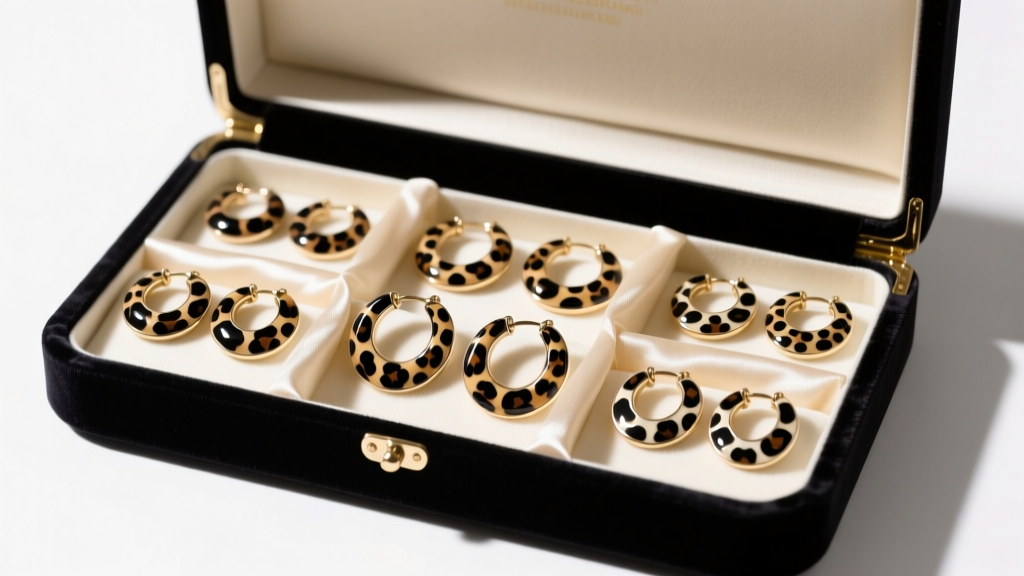
Proper storage is the ultimate defense against the degradation of leopard print patterns. Photo-oxidation is the primary enemy of resin and acrylic jewelry. Prolonged exposure to ambient UV light breaks down the chemical bonds in polyurethane and epoxy resins, causing the cream or gold base to turn a sickly yellow while the dark spots remain intact. Always store these pieces in an opaque, UV-blocking jewelry box.
Furthermore, environmental humidity plays a massive role in the lifespan of metal-based enamel hoops. High humidity accelerates the oxidation of brass and copper alloys, which can push green verdigris up through the enamel, staining the lighter sections of the leopard print. The Jewelers of America recommends maintaining a stable, low-humidity environment for fashion jewelry. Toss a few silica gel desiccant packets into your jewelry drawer or storage box to keep the relative humidity below 45%. Never toss multiple hoops into a single compartment; the metal edges will easily scratch the acrylic or resin surfaces of neighboring pieces.
Troubleshooting Common Leopard Print Hoop Failures
Expert Insight: Most fashion jewelry damage occurs during well-meaning but misguided cleaning attempts. When in doubt, less is more.
- Print Peeling on Acrylic: If the UV-printed edges begin to lift, you can temporarily seal them using a thin layer of clear, non-yellowing cyanoacrylate (super glue) applied with a toothpick. Allow it to cure for 24 hours before wearing.
- Enamel Chipping: Once cold enamel chips, it cannot be seamlessly repaired at home. However, you can prevent further flaking by painting the exposed edge with a microscopic layer of clear nail polish to bind the remaining enamel to the metal base.
- Hoops Won't Click Shut: Inspect the catch groove for bent metal or debris. If the post is slightly bent, use nylon-jaw pliers (never metal pliers, which will mar the finish) to gently coax the wire back into a true 90-degree angle relative to the hinge.
- Resin Yellowing: Unfortunately, once resin has yellowed from UV damage, the chemical change is permanent. Prevention via opaque storage is the only viable strategy.
By treating your leopard print hoop earrings with the specific care their materials demand, you ensure that the bold, high-contrast patterns remain vibrant and the mechanical closures stay secure for years of continuous wear.


